Artwork
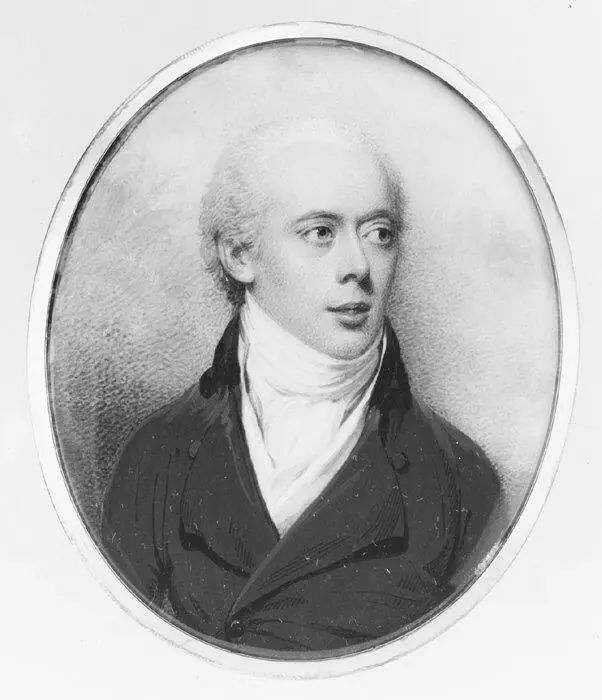
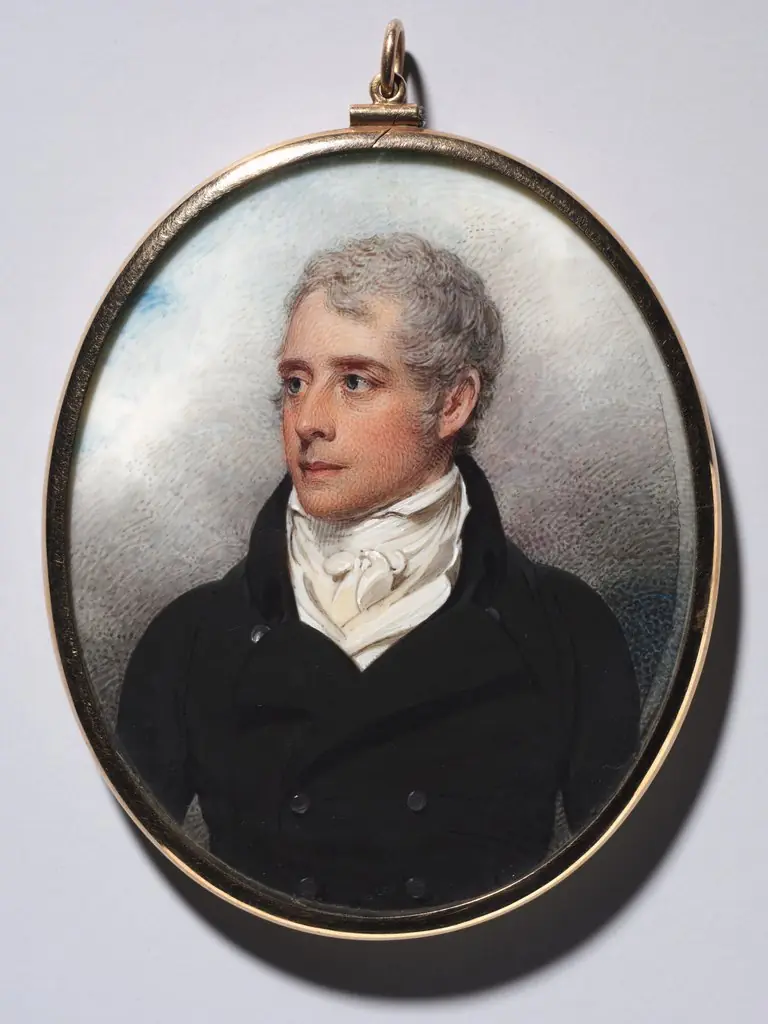
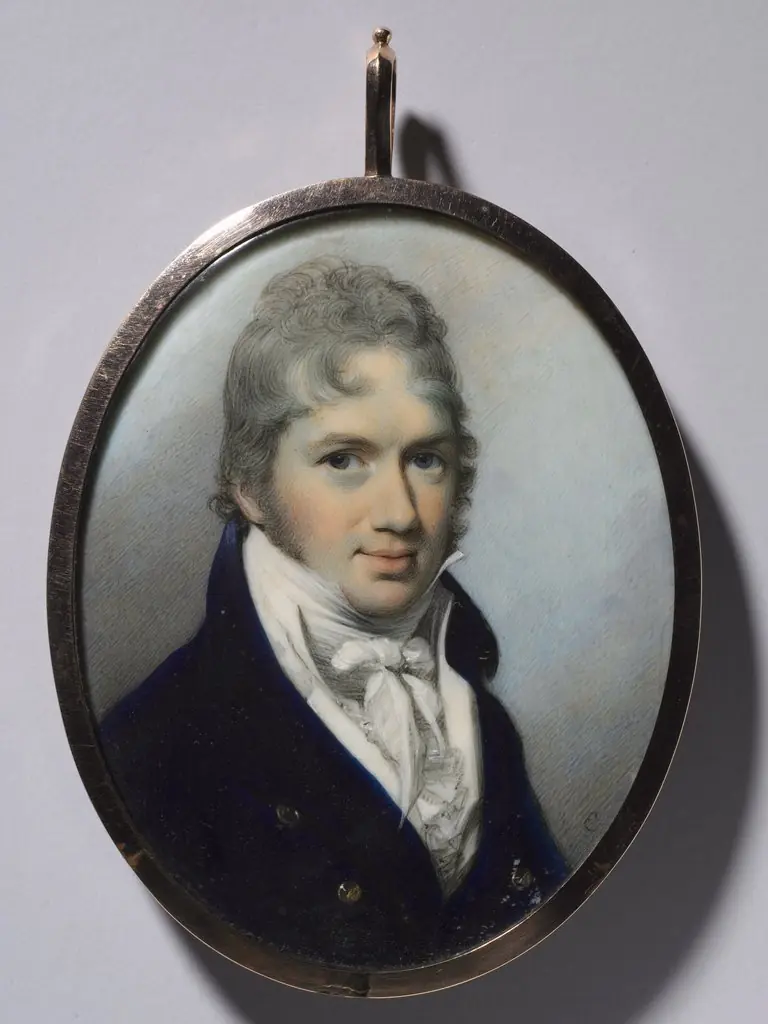
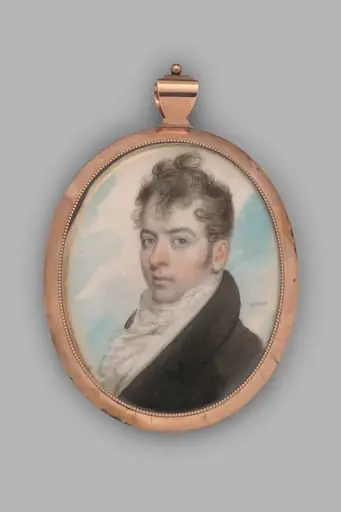
Portrait of Sandford Peacocke
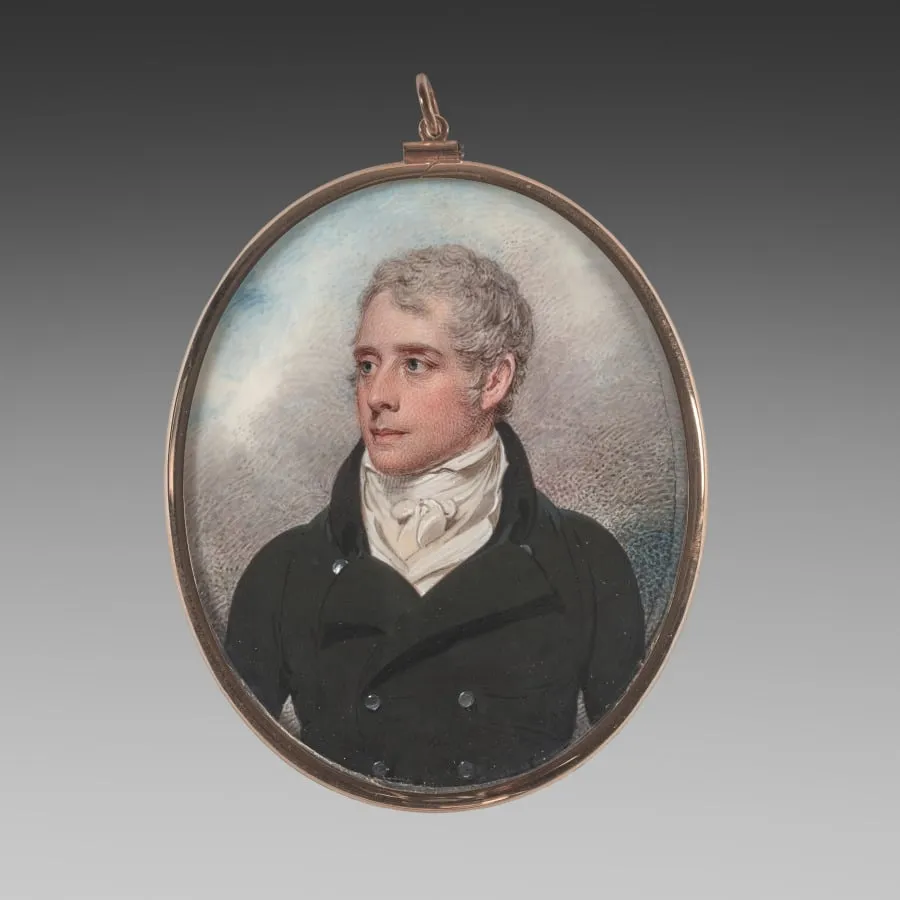
Portrait of Sandford Peacocke is an unspecified portrait miniature by the British Romanticist artist William Wood. It dates from 1801 and is held in the collection of the Cleveland Museum of Art. This small, round portrait miniature depicts a young man with powdered hair and a high white collar.
- Accession no.
- 1942.1159
- Credit line
- The Edward B. Greene Collection
About this work
Overview
This small, round portrait miniature depicts a young man with powdered hair and a high white collar. The artist, William Wood, used a distinctive technique of tiny dots and dashes to create the subject's features.
Subject & Meaning
The sitter is identified as Sandford Peacocke, but little is known about his identity or significance. The portrait presents a serene and introspective image, with a smooth face and steady gaze.
Technique & Style
Wood's technique involved building up faces with small dots and dashes of paint, rather than using smooth brushstrokes. This approach gave his subjects a subtle, nuanced appearance. His style is characterized by a high level of refinement and sensitivity.
History & Provenance
William Wood was a London-based artist who exhibited over 100 miniatures at the Royal Academy. His working process is well-documented due to the survival of a four-volume ledger, now held at the Victoria and Albert Museum, which records 1,211 miniatures painted between 1790 and 1808.
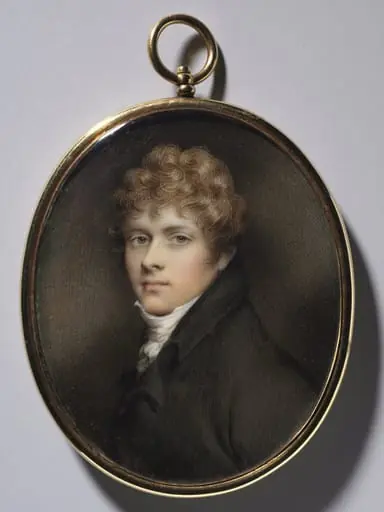
Artist & collection