Artwork
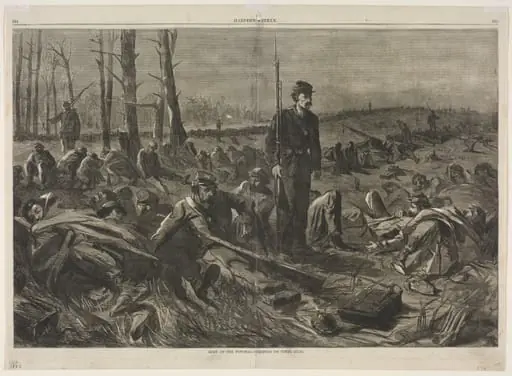
The Army of the Potomac - Our Outlying Picket in the Woods
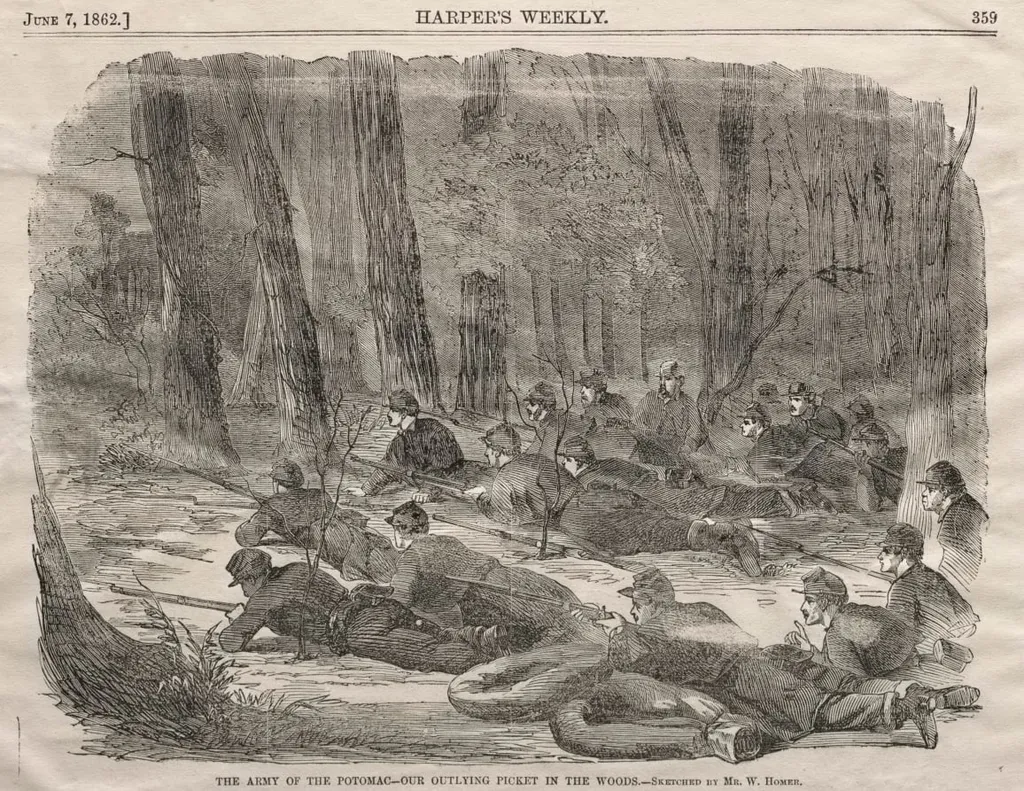
The Army of the Potomac - Our Outlying Picket in the Woods is a print by the Impressionist artist Winslow Homer. It dates from 1862 and is held in the collection of the Cleveland Museum of Art.
- Accession no.
- 1942.1256
- Credit line
- Purchase from the J. H. Wade Fund
About this work
Overview
Created in 1862, this print by Winslow Homer captures a quiet moment among Union soldiers stationed in a wooded area during the Civil War.
Created in 1862, this print by Winslow Homer captures a quiet moment among Union soldiers stationed in a wooded area during the Civil War. Originally produced as a wood engraving for publication, it reflects Homer’s early work as a battlefield illustrator for Harper’s Weekly. The composition emphasizes stillness and vigilance, contrasting with the chaos often associated with war imagery of the period.
Subject & Meaning
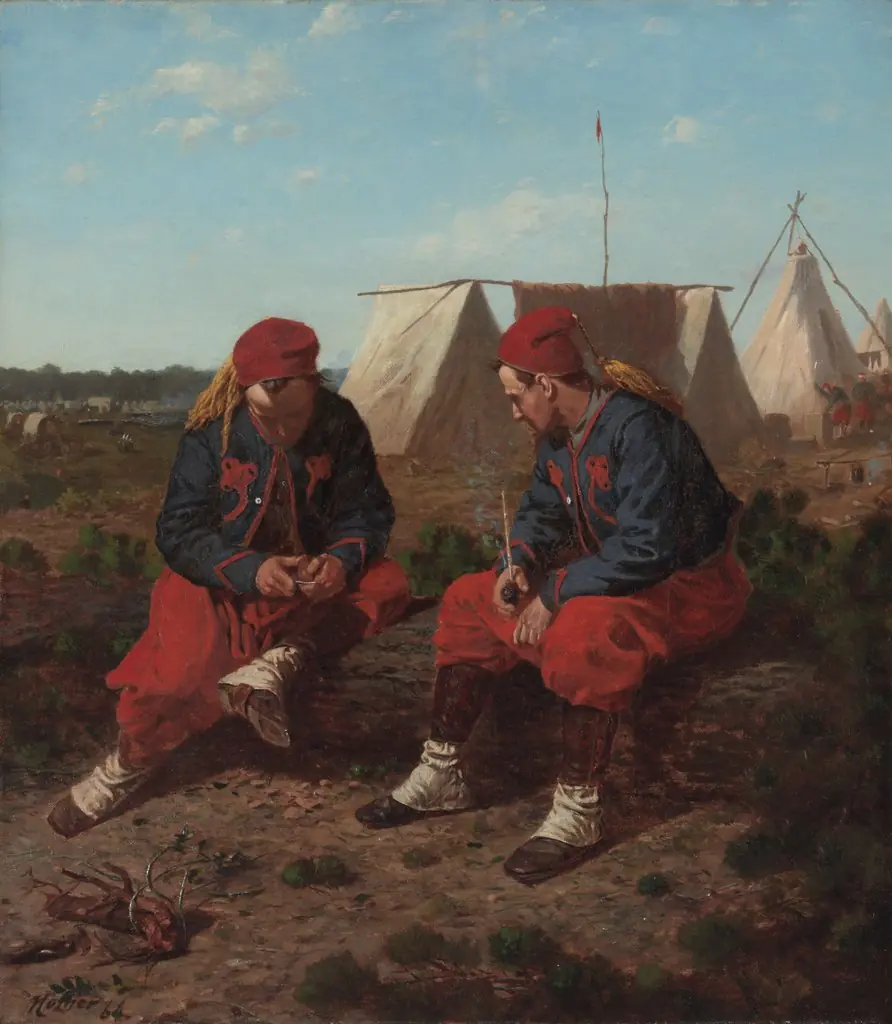
The scene portrays a group of soldiers resting in the woods, some seated, others reclining, with rifles nearby but not actively engaged. Their postures suggest fatigue and alertness coexisting, a common reality for outlying pickets tasked with surveillance. The absence of battle emphasizes the tension of waiting, conveying the psychological weight of wartime duty rather than its violence.
Technique & Style
Rendered in monochrome with fine linear engraving, the work employs contrasting tones to model form and depth. Homer uses controlled hatching and crosshatching to define fabric, foliage, and facial features, creating texture without color. The chiaroscuro effect enhances the three-dimensionality of figures and trees, guiding the viewer’s eye through the layered space with subtle gradations of light and shadow.
History & Provenance
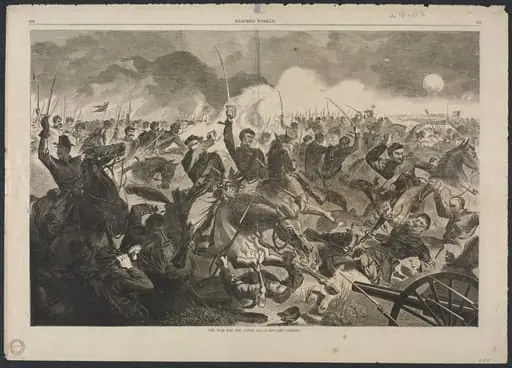
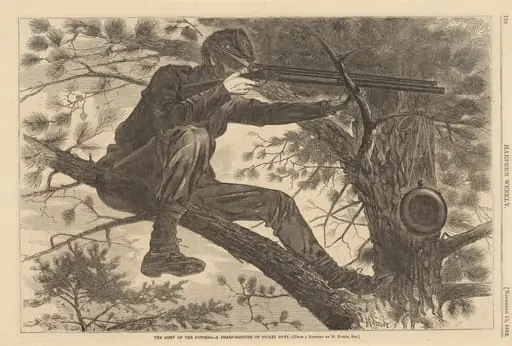
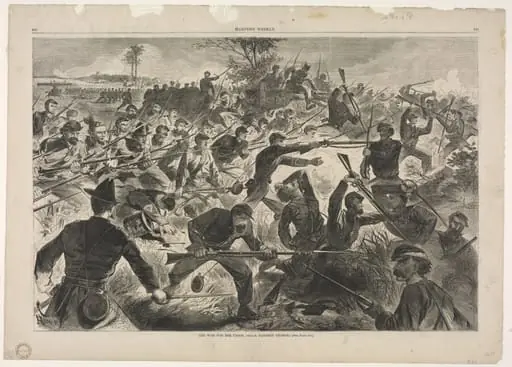
The print was made for Harper’s Weekly in 1862, during Homer’s assignment as a war correspondent. It was later acquired by the Cleveland Museum of Art, where it remains part of their permanent collection. As one of many illustrations Homer produced during the conflict, it exemplifies his transition from commercial illustration toward more introspective, documentary art.
Context
In 1862, the Army of the Potomac was engaged in prolonged campaigns in Virginia, with soldiers often stationed in remote, wooded outposts. Homer’s illustrations provided Northern audiences with firsthand glimpses of soldier life beyond the battlefield. This image reflects a growing public interest in the daily realities of war, not just its grand engagements.
Legacy
Homer’s Civil War illustrations, including this one, laid groundwork for his later career as a serious painter of American life. The restraint and observational precision seen here anticipate his mature style in oil and watercolor. These works helped redefine visual journalism, influencing how war was documented and perceived through art.
Artist & collection
Artist
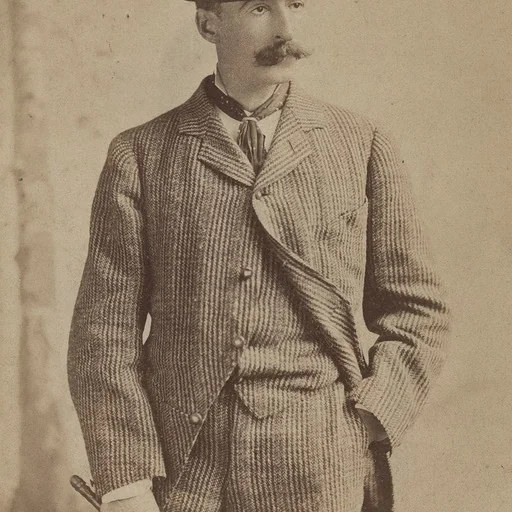
Winslow Homer (February 24, 1836 – September 29, 1910) was an American landscape painter and illustrator, best known for his marine subjects.