Artwork
Maine Coast
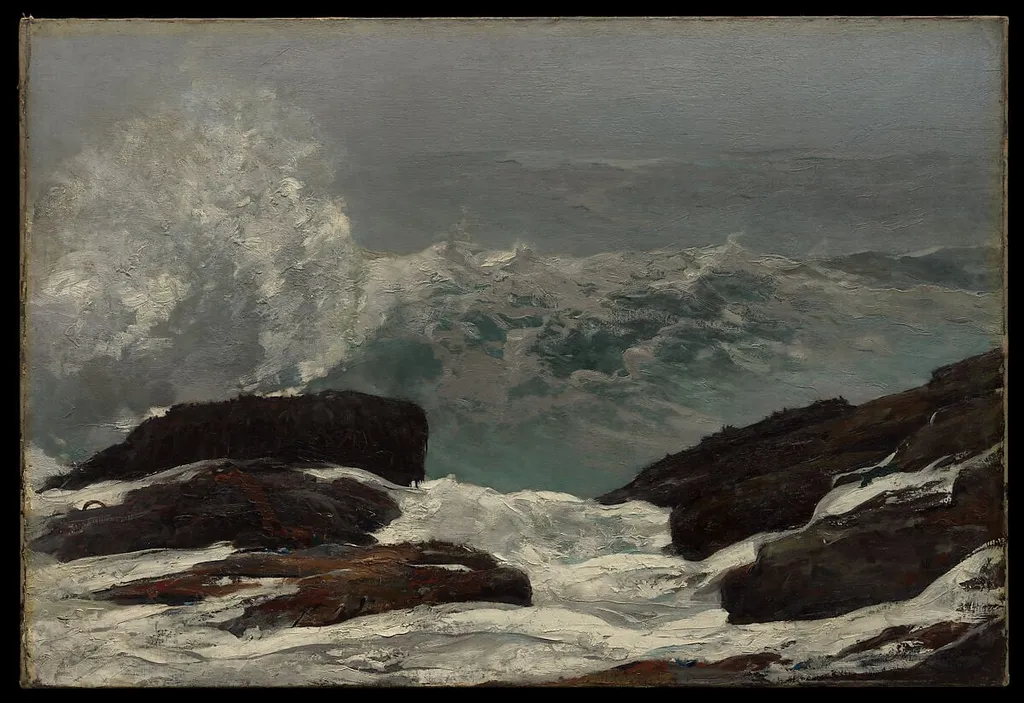
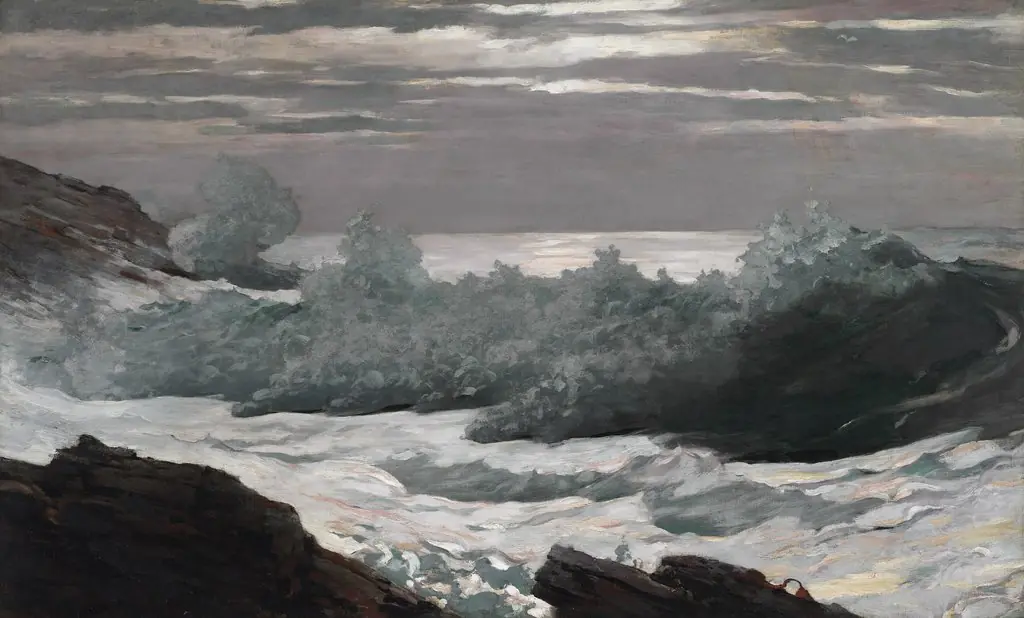
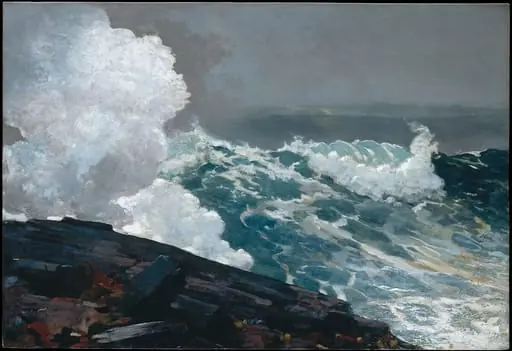
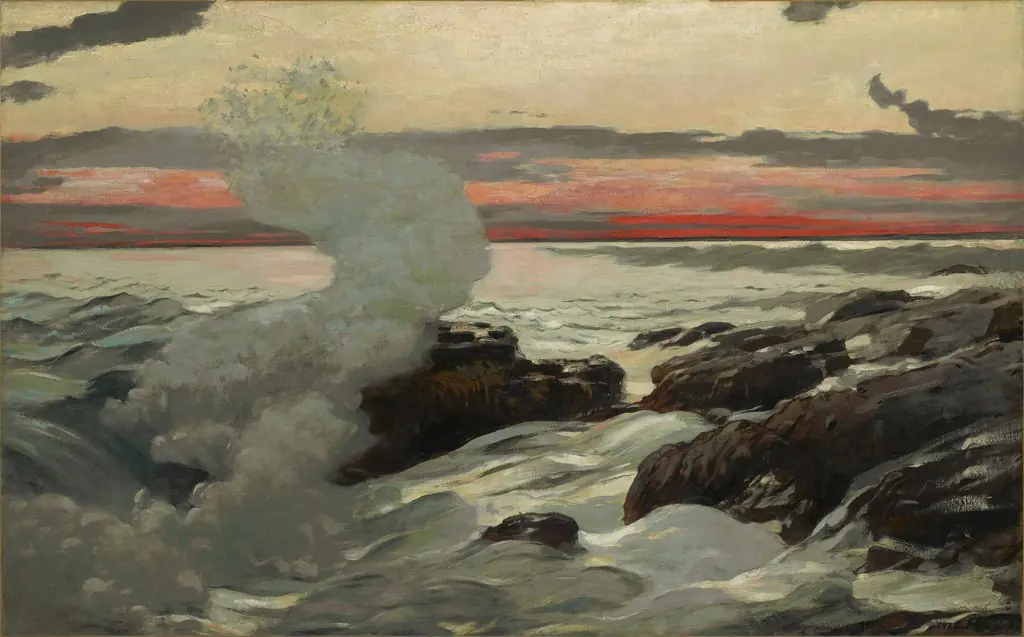
Maine Coast is an oil painting by the American Impressionist artist Winslow Homer. It dates from 1896 and is held in the collection of the Metropolitan Museum of Art.
- Accession no.
- 11.116.1
- Credit line
- Gift of George A. Hearn, in memory of Arthur Hoppock Hearn, 1911
About this work
Subject & Meaning
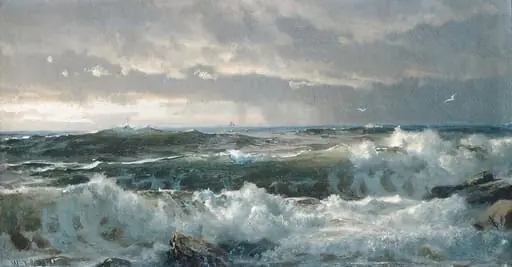
The composition captures a stormy day where a powerful wind wave rises, poised to crash against black rocks below, generating a mass of white foam.
Winslow Homer's 1896 oil painting, Maine Coast, depicts a dramatic marine scene viewed from the cliffs at Prouts Neck in Scarborough, Maine. The composition captures a stormy day where a powerful wind wave rises, poised to crash against black rocks below, generating a mass of white foam. As a work of marine art, the piece focuses entirely on the raw interaction between the turbulent ocean and the rugged coastline.
The imagery emphasizes the force of nature, presenting the sea as an overwhelming and dynamic element rather than a serene landscape. The specific depiction of the wave's motion and the stark contrast between the dark rocks and the churning water highlight the artist's observation of the Atlantic's power during inclement weather.
Technique & Style
The work is an oil painting on canvas, measuring 76.2 × 101.6 cm, and was created in 1896. Homer applies oil paint to a stretched canvas support, a technique typical of his late marine subjects, and the surface retains the smooth brushwork characteristic of his mature style. The composition presents a seaward vista from the cliffs of Prouts Neck, capturing a storm‑tossed atmosphere as a towering wave breaks against dark rocks, the foam rendered in stark white against the turbulent sea.
This dramatic handling of light and motion exemplifies the painting's formal emphasis on dynamic marine imagery and the lyrical realism of American landscape art.
History & Provenance
Maine Coast is an oil on canvas painting completed in 1896 by Winslow Homer (1836–1910). The work was produced during Homer's stay at Prouts Neck, Scarborough, Maine, and portrays a storm‑tossed shoreline with a looming wave. It measures 76.2 × 101.6 cm and is classified as a marine‑art landscape.
The painting entered the collection of the Metropolitan Museum of Art in New York, where it remains on view. No documentation indicates a specific commission; the work was created for Homer's own artistic practice and later acquired by the museum.
Overview
Winslow Homer's "Maine Coast," painted in 1896, is an oil on canvas work that captures the raw power of the Atlantic. This significant piece by the American artist is housed within the collection of the Metropolitan Museum of Art in New York, specifically featured in The American Wing. It exemplifies Homer's profound engagement with the sea, a recurring theme in his later career.
Artist & collection
Artist
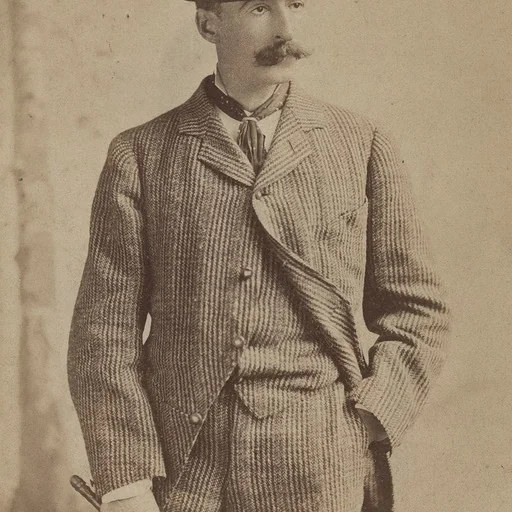
Winslow Homer (February 24, 1836 – September 29, 1910) was an American landscape painter and illustrator, best known for his marine subjects.