Artwork
Erlösungsallegorie
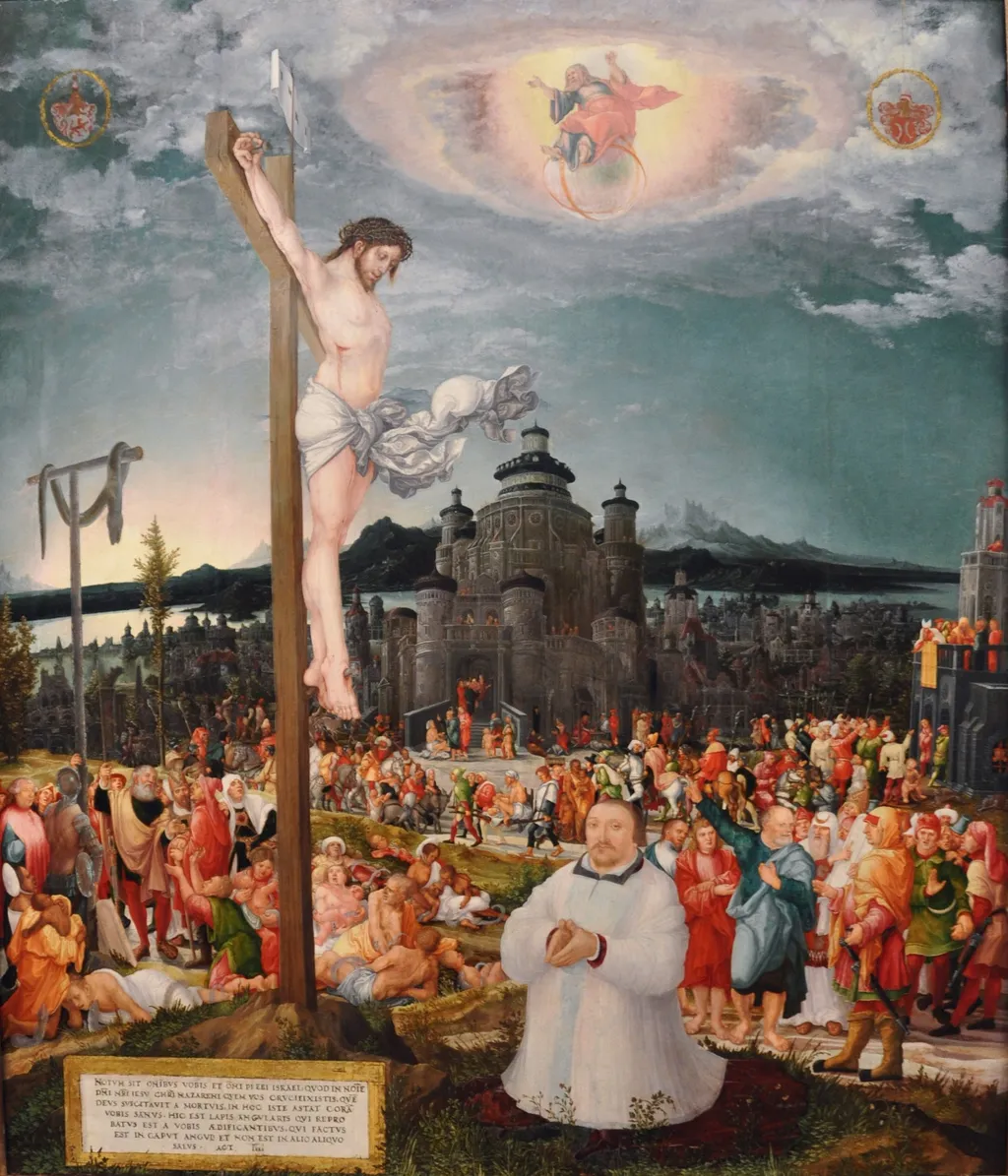
Erlösungsallegorie is an unspecified painting by the Mannerist artist Wolf Huber. It dates from 1543 and is held in the collection of the Kunsthistorisches Museum.
About this work
Subject & Meaning
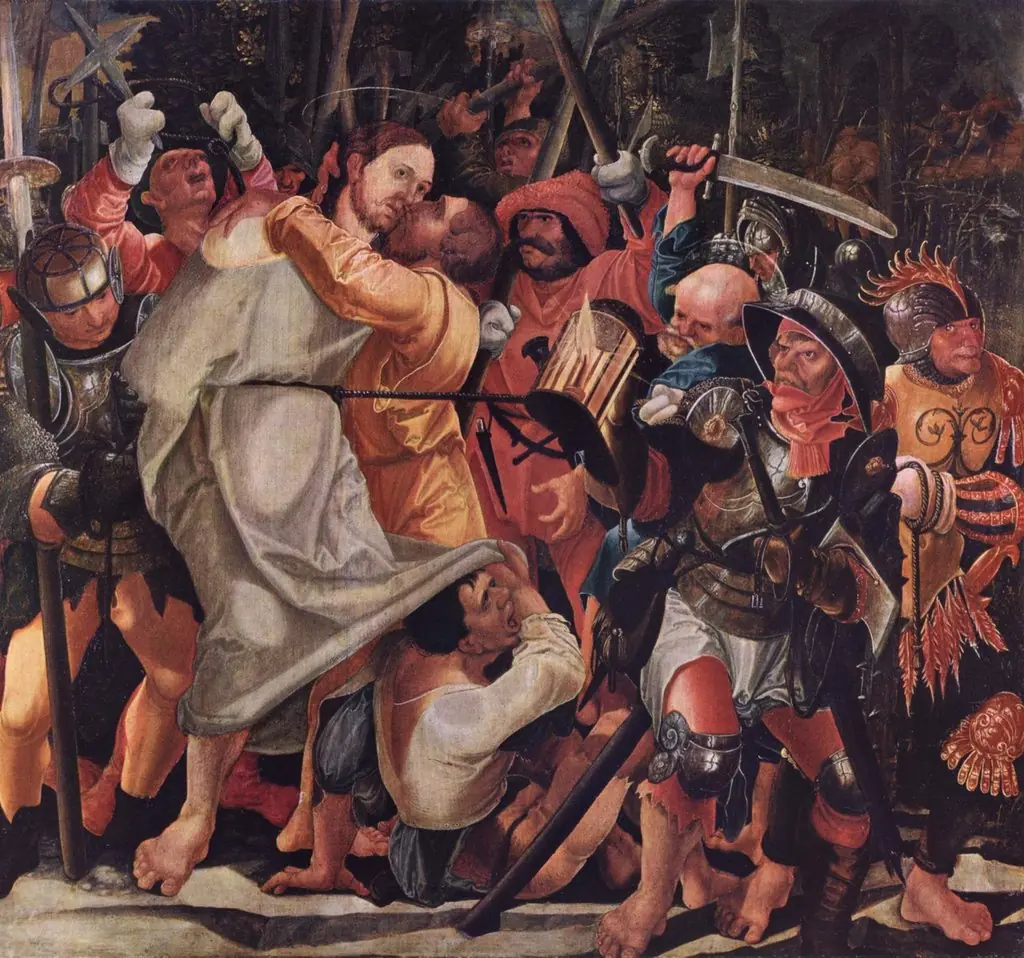
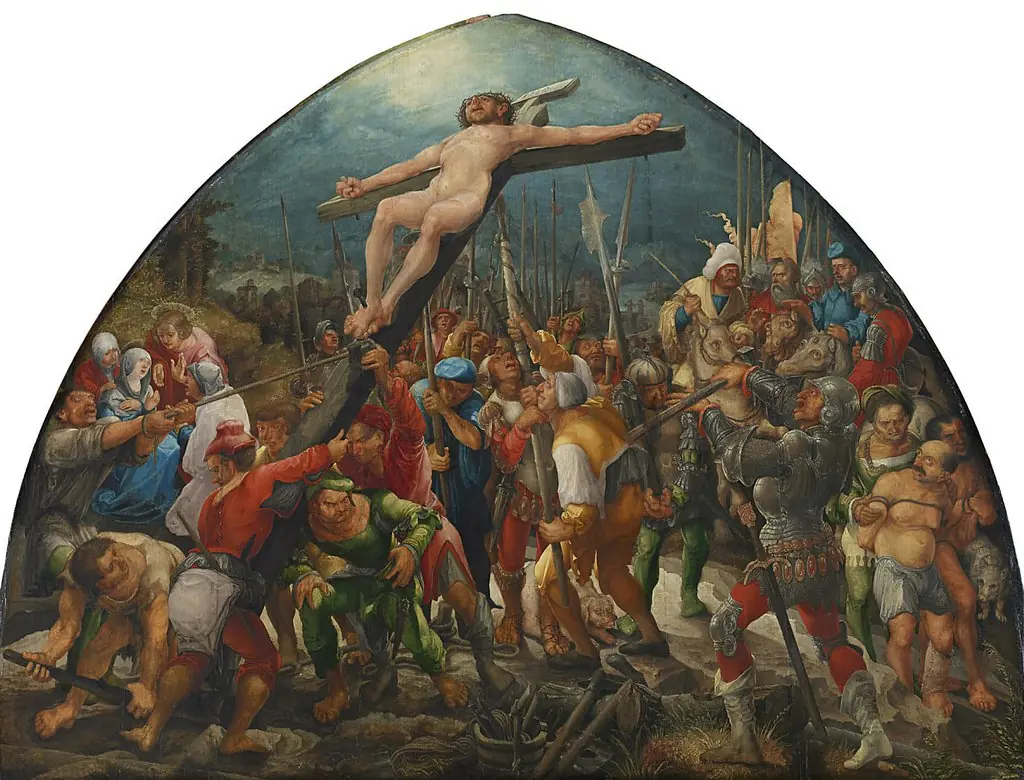
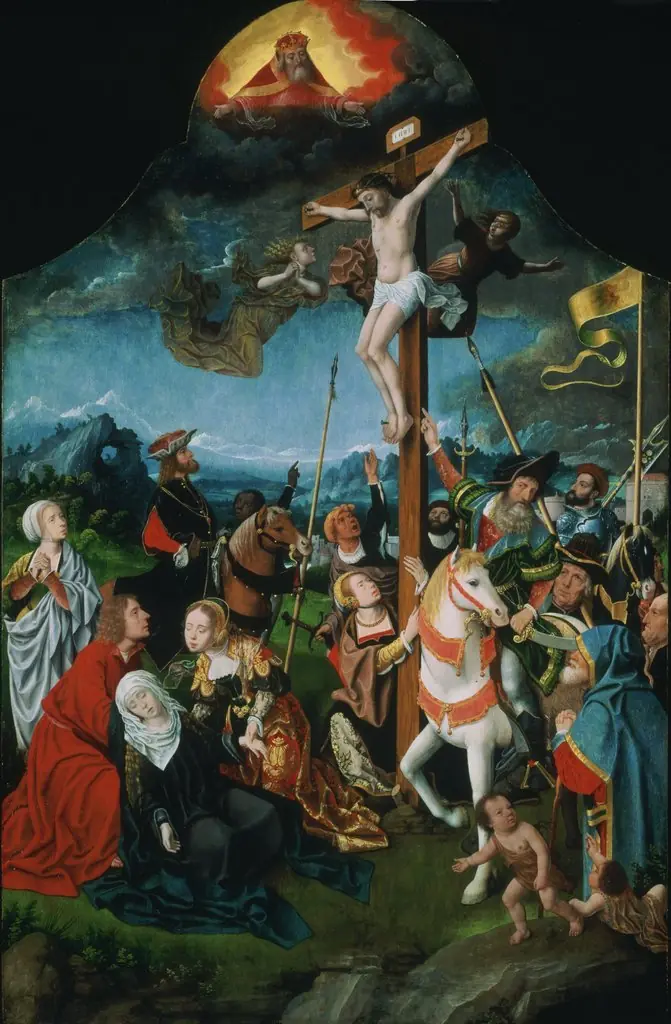
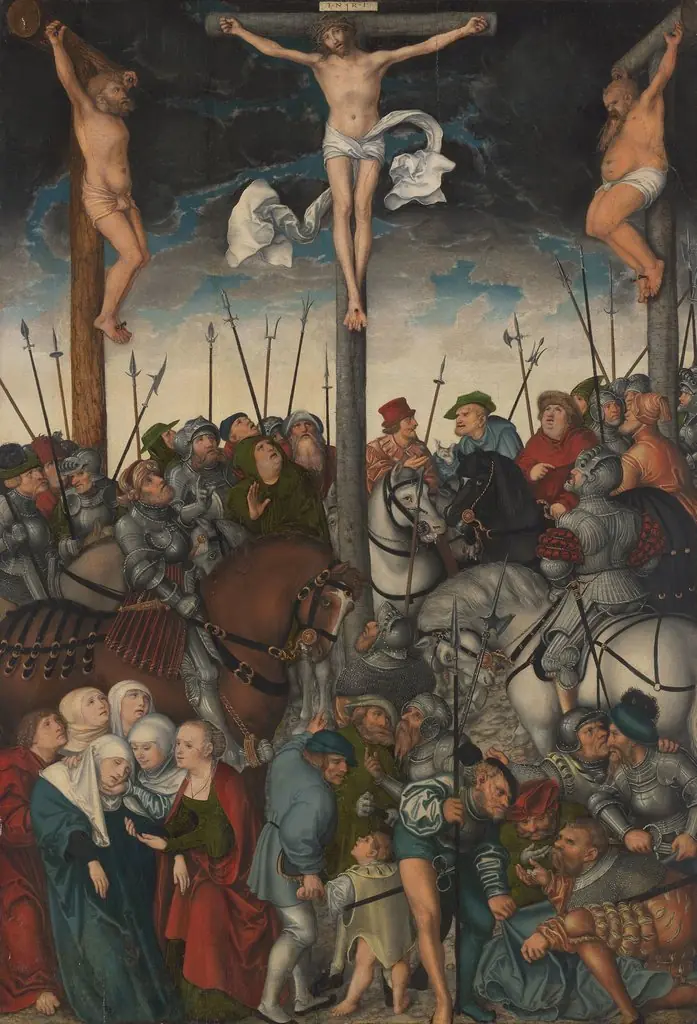
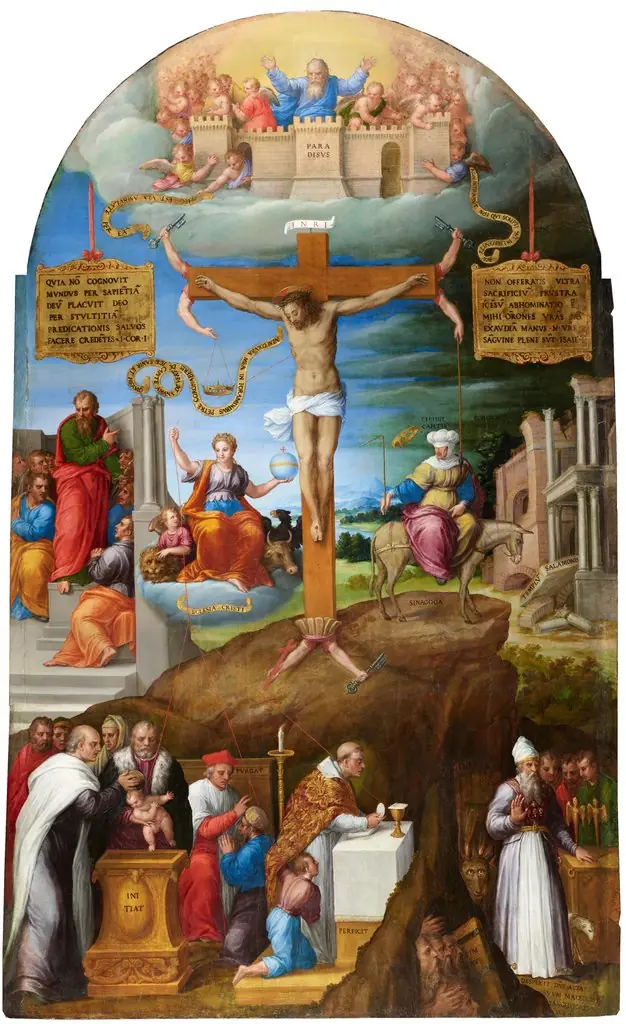
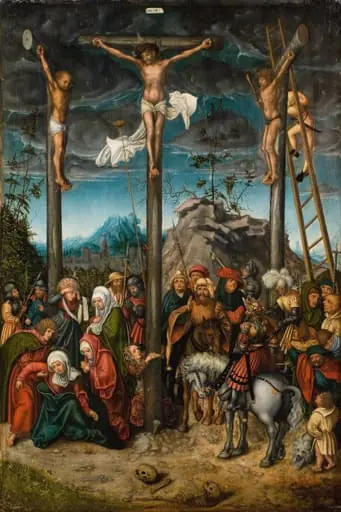
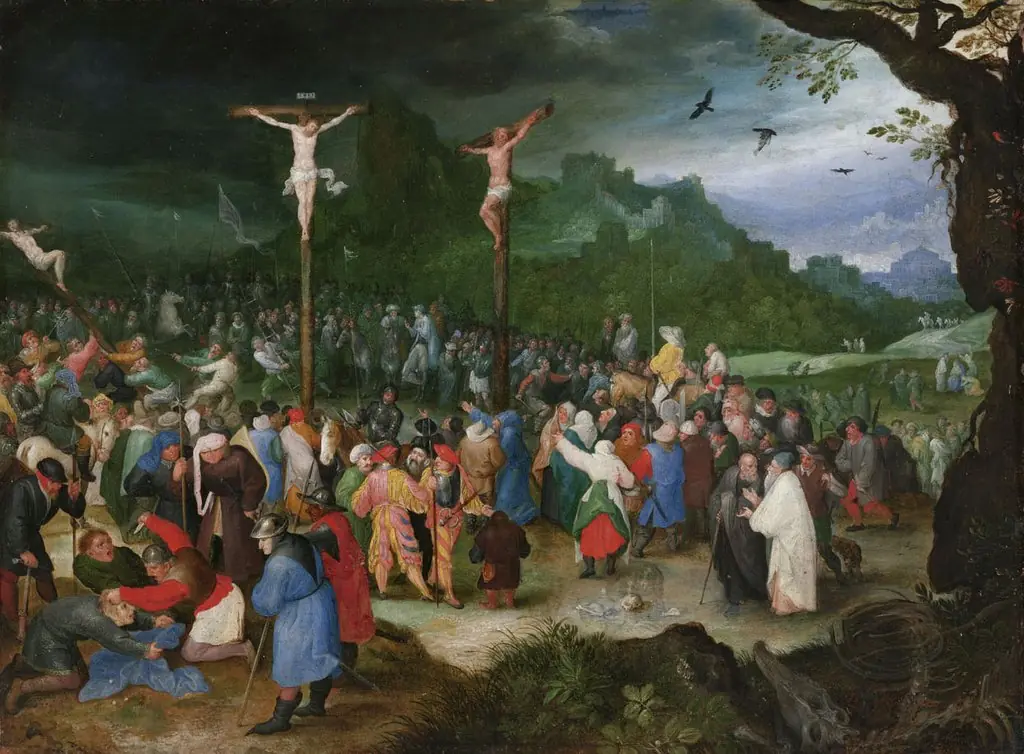
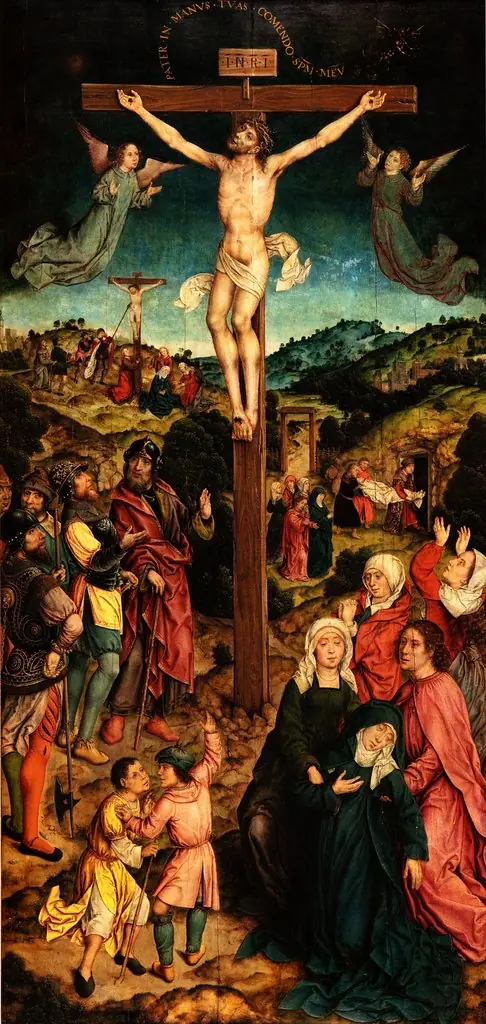
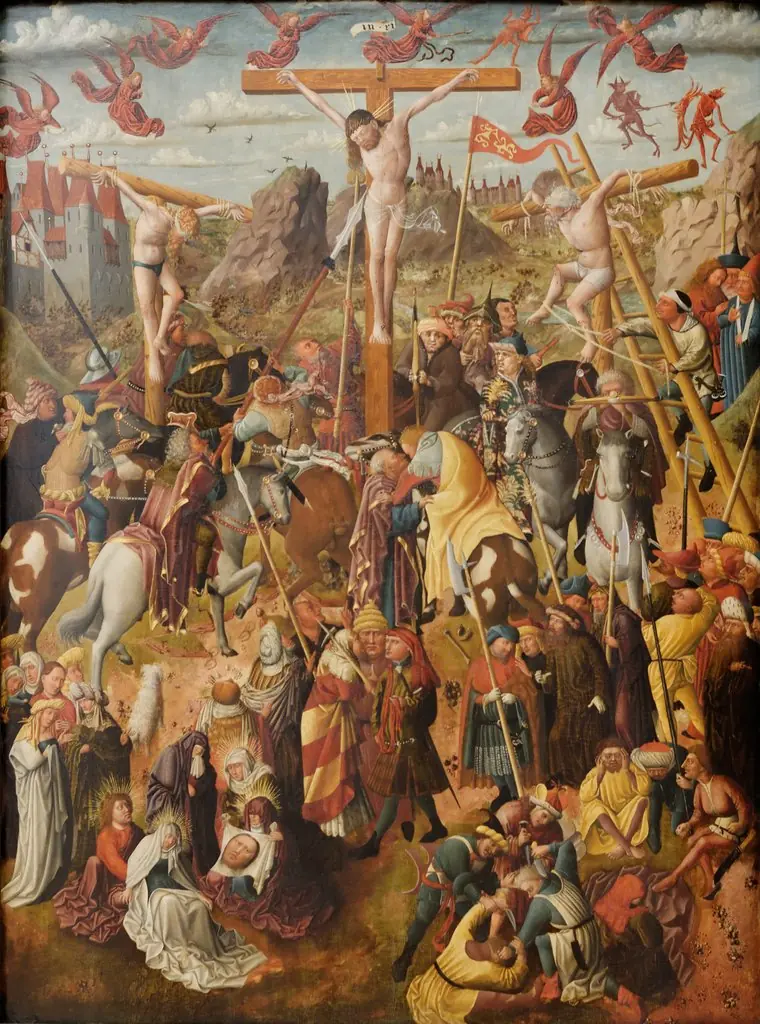
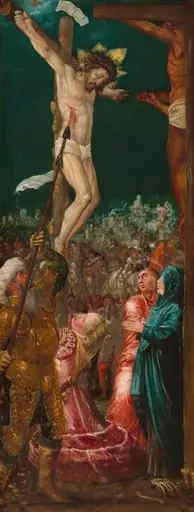
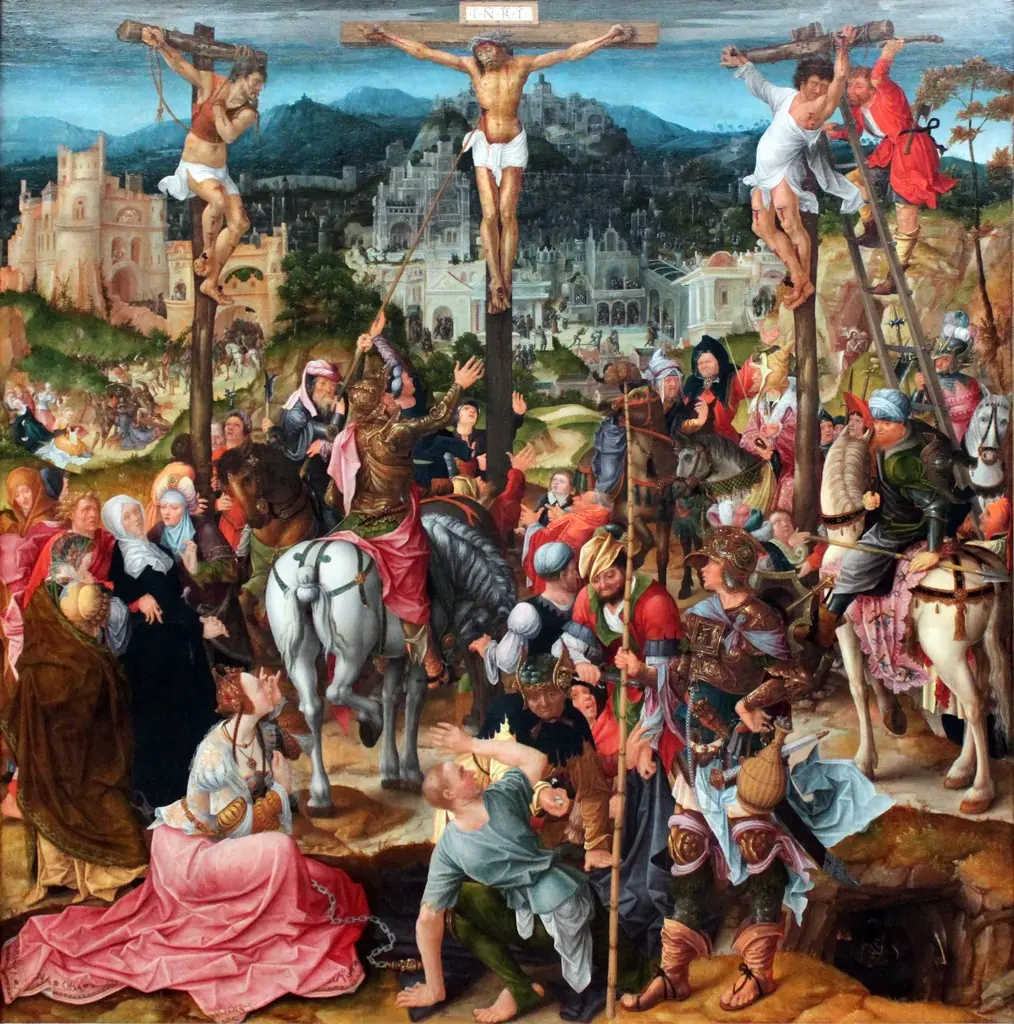
Wolf Huber's 1543 painting Erlösungsallegorie (Allegory of Redemption) is a religious work centered on the crucifixion of Jesus Christ.
Wolf Huber's 1543 painting Erlösungsallegorie (Allegory of Redemption) is a religious work centered on the crucifixion of Jesus Christ. As the main subject, the depiction of the crucifixion serves as the primary iconographic element, representing the core Christian narrative of sacrifice and salvation. The title itself frames the visual content as an allegory, indicating that the scene symbolizes the broader theological concept of redemption achieved through Christ's death.
The work functions as a visual meditation on these soteriological themes, typical of religious art from this period.
Technique & Style
The work is executed in oil on wood panel, measuring 154 cm in height by 130 cm in width. It depicts the crucifixion of Jesus within a religious allegorical composition, reflecting Wolf Huber’s mature High Renaissance style characterized by clear forms and restrained coloration. The painting is housed in the Kunsthistorisches Museum, where it has been preserved with minimal intervention, retaining its original surface integrity and varnish layer.
History & Provenance
Wolf Huber painted Erlösungsallegorie in 1543 as a religious work depicting the crucifixion of Jesus. The painting measures 154 cm in height and 130 cm in width. It has been part of the Kunsthistorisches Museum's collection since its creation, remaining in the museum's ownership without documented changes in custody.
The work was commissioned as an allegory of salvation and completed in the mid-16th century, reflecting the artistic and religious context of the period.
The Erlösungsallegorie, painted by Wolf Huber in 1543, is held in the collection of the Kunsthistorisches Museum. The work, a religious painting depicting the crucifixion of Jesus Christ, measures 154 cm in height and 130 cm in width, and its location is recorded as the Kunsthistorisches Museum. No specific inventory or accession number is documented in the available sources, and no exhibition history is recorded.
Overview
Wolf Huber, an Austrian‑German artist active in the mid‑16th century, produced the oil painting Erlösungsallegorie in 1543. Executed while he was based in Passau, the work belongs to the Danube school and is presently part of the Kunsthistorisches Museum’s collection.
Context
Erlösungsallegorie reflects the Danube school’s interest in dramatic religious narratives and the broader Mannerist tendency toward complex, crowded compositions. Its emphasis on emotional reaction among the onlookers aligns with contemporary Counter‑Reformation visual strategies.
Own this work as a print
Artist & collection
Artist
Wolf Huber (c. 1485 – 3 June 1553) was an Austrian- German painter, printmaker, and architect, who worked in Passau, Germany for most of his life as a leading member of the Danube school.