Artwork
Mount Fuji
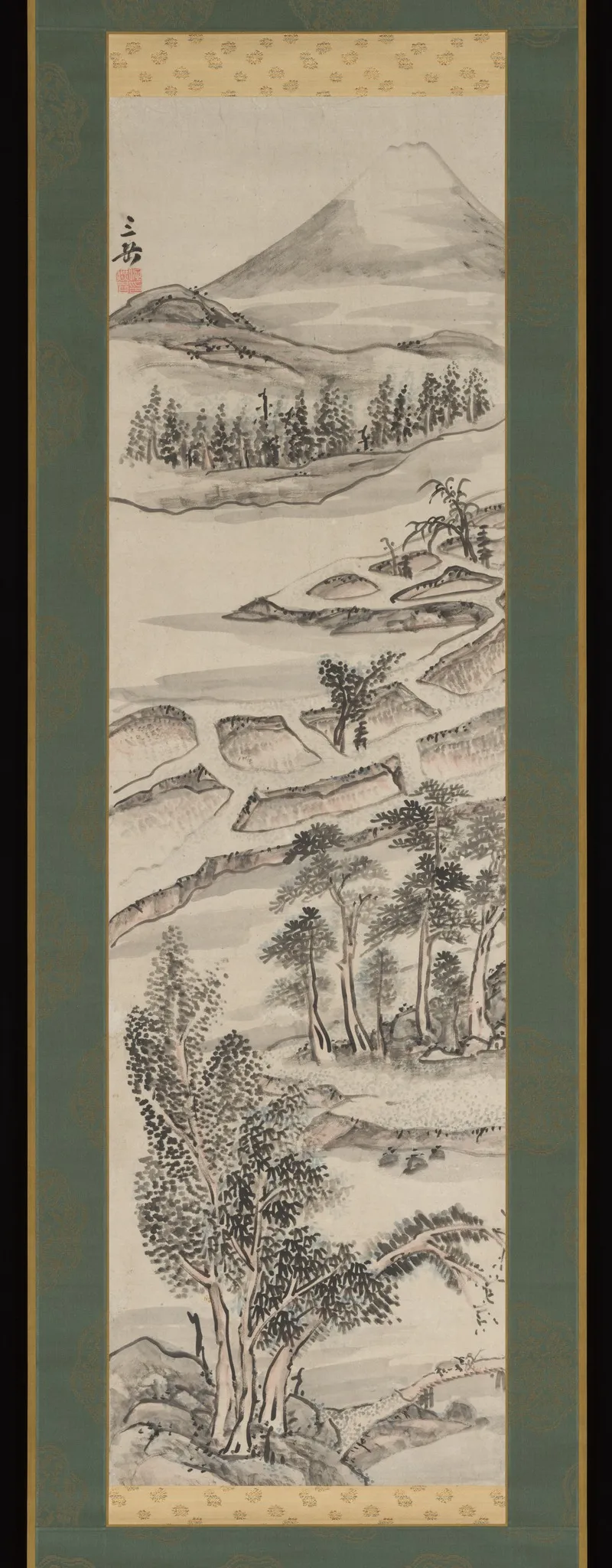
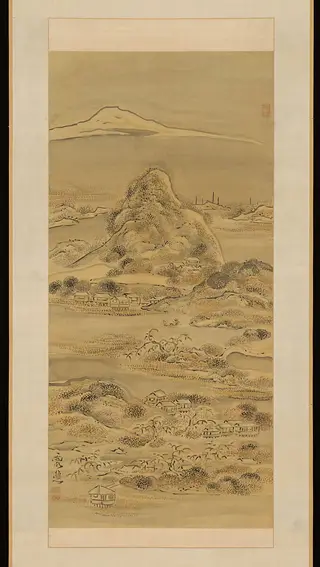
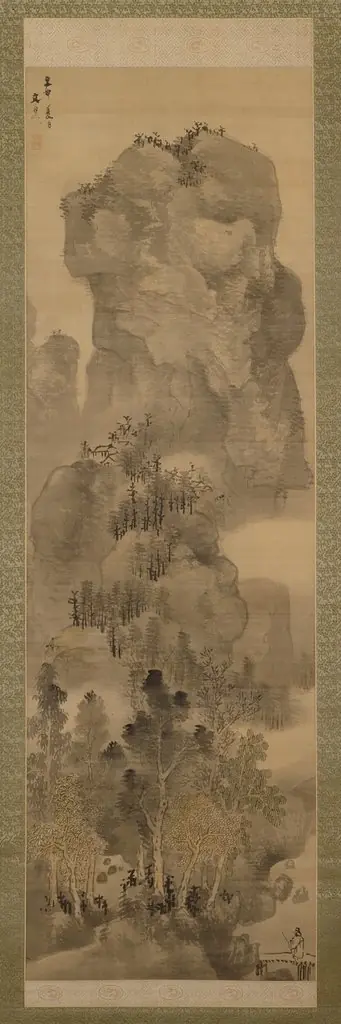
Mount Fuji is an unspecified painting by the Nanga artist Ike Taiga. It dates from 1764 and is held in the collection of the Metropolitan Museum of Art.
About this work
Subject & Meaning
The painting's subject transcends literal representation, functioning as a visual metaphor for transcendence and the sublime within the natural world.
Mount Fuji stands as a recurrent symbol in Japanese art, embodying spiritual reverence, natural grandeur, and cultural identity. In Ike no Taiga's 1764 hanging scroll, the mountain is rendered with minimalist brushwork that emphasizes its sacred silhouette against a blank expanse, inviting contemplation of its role as a site of pilgrimage and artistic inspiration. The work reflects Daoist and Zen influences through its sparse composition and emphasis on emptiness, while also celebrating the mountain's enduring presence in the national imagination.
The painting's subject transcends literal representation, functioning as a visual metaphor for transcendence and the sublime within the natural world. Its creation during the Edo period coincides with heightened scholarly interest in traditional Japanese aesthetics, positioning the artwork as both a technical achievement and a cultural statement about the mountain's symbolic resonance.
Technique & Style
The work is a hanging scroll painted in ink and light mineral colors on paper, a format and materials consistent with eighteenth-century Japanese literati practice. The composition employs soft, wet brushwork to model Mount Fuji’s gently rounded silhouette, while delicate mineral washes suggest atmospheric recession. Ink outlines remain sparing, allowing the mountain’s form to emerge through tonal variation rather than heavy contouring.
The handling privileges fluid, calligraphic strokes for foliage and clouds, contrasting with the mountain’s planar simplification. No evidence of later overpainting or significant losses is recorded, indicating the scroll’s condition remains close to its original state.
History & Provenance
Mount Fuji is held in the collection of the Metropolitan Museum of Art in New York. Its accession number is 2020.396.31. The work was last exhibited in the museum's exhibition "Japanese Art from the 17th to 19th Century," which ran from October 2019 through January 2020.
Overview
Created in 1764, Mount Fuji is a landscape ink painting by the Kyoto‑born artist Ike no Taiga. Executed within the nanga, or bunjinga, tradition, the work combines Chinese literati aesthetics with a recognizably Japanese motif. The piece is part of the permanent collection of the Metropolitan Museum of Art in New York.
Artist & collection

 Boat under the Moon
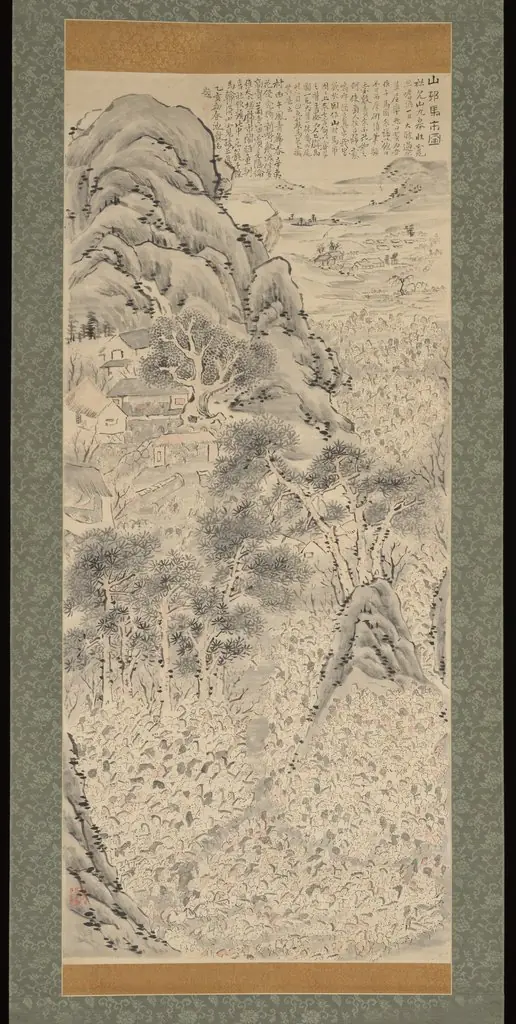 After Ike Taiga’s “Horse Market in a Mountain Village”
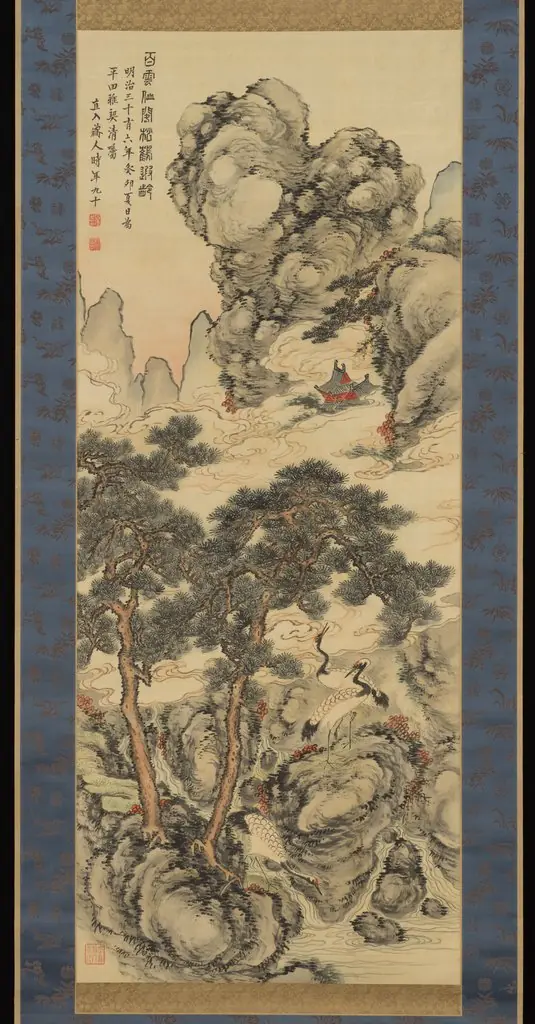 Pines and Cranes of Longevity 松鶴遐齢図
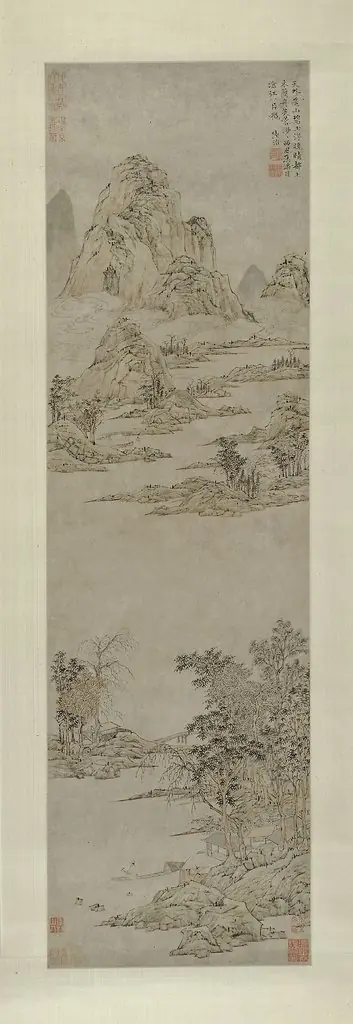 Pulling Oars under Clearing Autumn Skies (Distant Mountains)
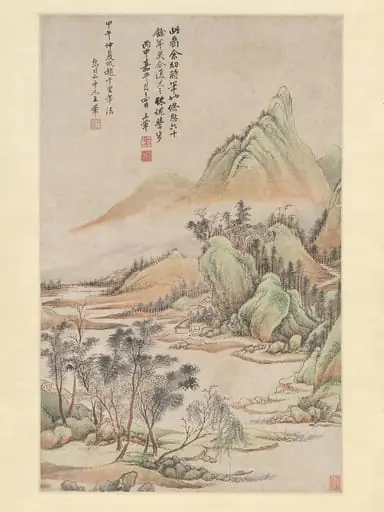 倣趙伯駒山水圖 軸|Landscape in the Style of Zhao Boju (Fang Zhao Boju shanshui)
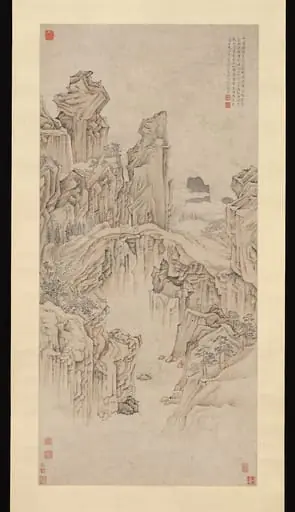 Untitled
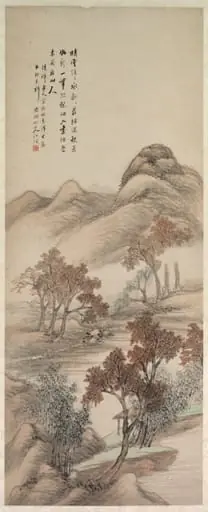 Autumn Landscape
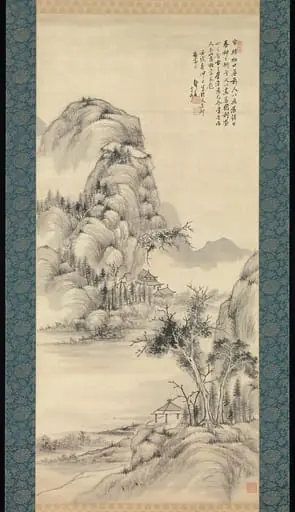 Untitled
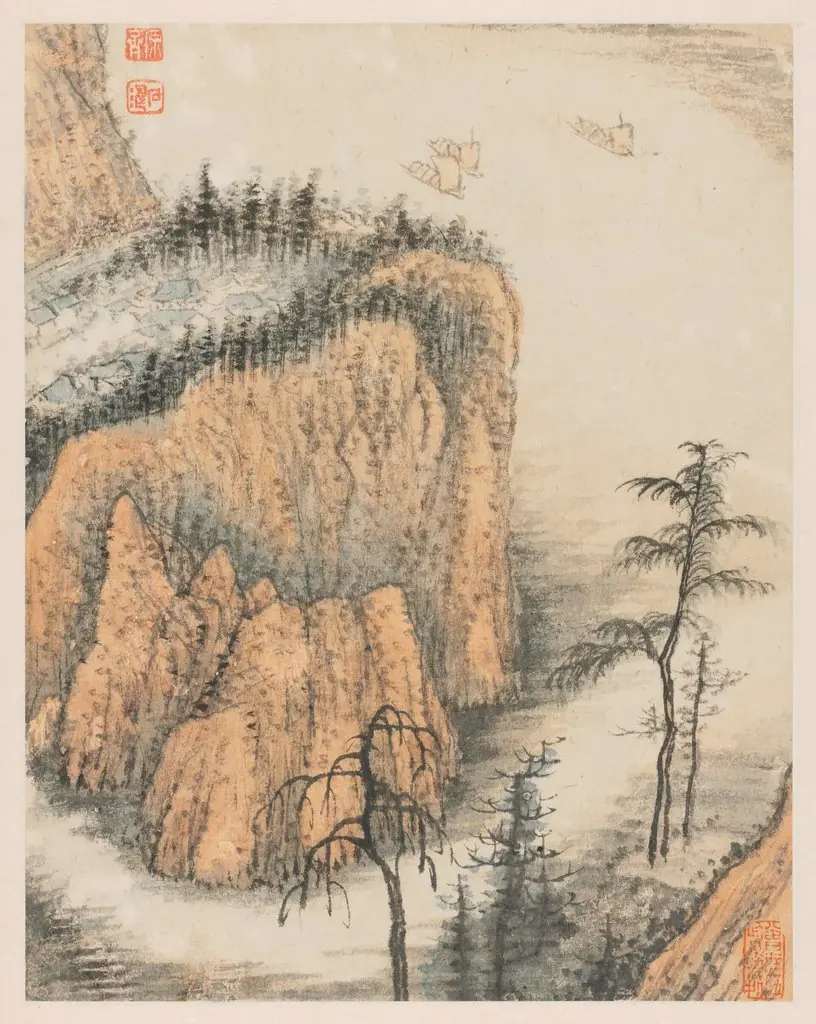 Reminiscences of Qinhuai River
 Summer Landscape
- Mount Hua