Artwork
Meditative Visit to a Mountain Retreat: In Picture and in Words

Meditative Visit to a Mountain Retreat: In Picture and in Words is an unspecified painting by the Chinese Orthodox School artist Xiang Shengmo. It dates from 1648 and is held in the collection of the Cleveland Museum of Art.
About this work
History & Provenance
The work has been exhibited in the museum's Asian art galleries as part of rotating displays of Chinese painting.
The painting Meditative Visit to a Mountain Retreat: In Picture and in Words by Xiang Shengmo (1597-1658) is held by the Cleveland Museum of Art, accessioned under inventory number 1962.42. It was created in 1648 in China and entered the museum's collection as part of its 1962 acquisitions. The work has been exhibited in the museum's Asian art galleries as part of rotating displays of Chinese painting.
Context
Meditative Visit to a Mountain Retreat: In Picture and in Words (1648) exemplifies Xiang Shengmo’s integration of Daoist contemplative themes with Southern School painting conventions, situating his work within the broader trajectory of literati art during the late Ming dynasty. The painting’s compositional balance and poetic inscription reflect scholarly engagement with nature as spiritual refuge, aligning with contemporaneous trends in Chinese art historical discourse. Its presence in the Cleveland Museum of Art collection (acquired 1962) underscores ongoing Western institutional interest in Ming dynasty painting scholarship, though specific critical reception details remain sparsely documented in available sources.
Overview
Created in 1648 by the Qing‑dynasty painter Xiang Shengmo, this narrow, horizontal composition depicts a secluded mountain retreat. The work is part of the collection of the Cleveland Museum of Art, where it is displayed as an example of literati painting that merges visual and textual elements.
Subject & Meaning
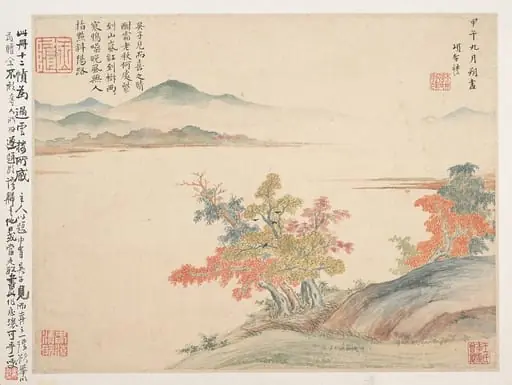
The scene presents a rocky cliff with a central cave entrance, flanked by trees, shrubs, and a winding path that leads the viewer toward the hollow. A modest structure rests near water on the left, suggesting a hermit’s dwelling. The tranquil setting invites contemplation of nature’s solitude and the scholar‑artist’s ideal of withdrawal from worldly affairs.
Technique & Style
Rendered in soft, ink‑like brushwork, the painting relies on monochrome tones and delicate line to suggest form and atmosphere. The artist employs subtle gradations to convey distant hills and a light sky, while the absence of vivid color emphasizes the contemplative mood typical of literati aesthetics.

Artist & collection


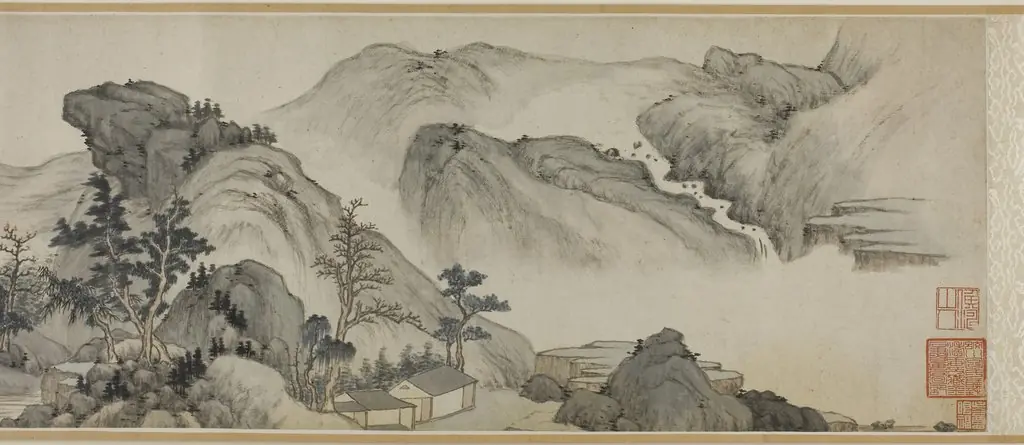 Recluse Dwellings in the Autumn Mountains
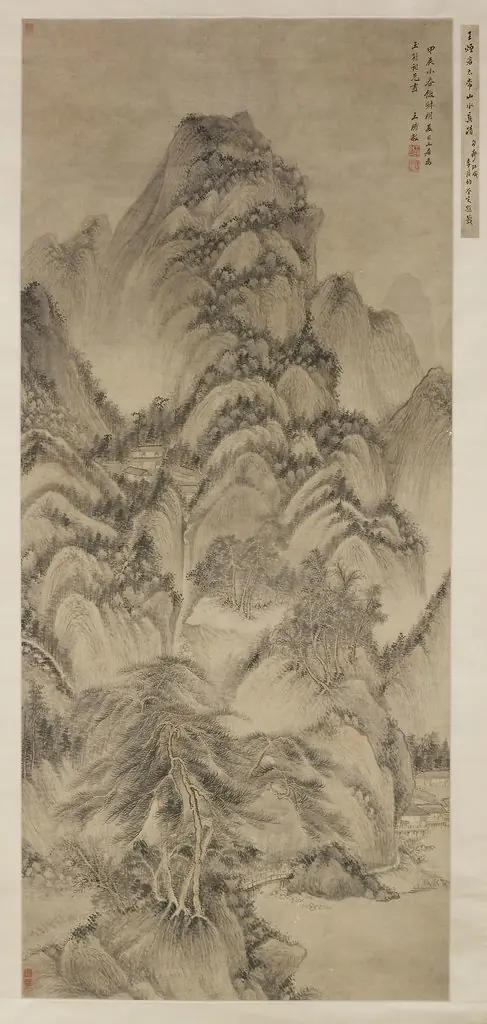 Landscape after Wang Meng
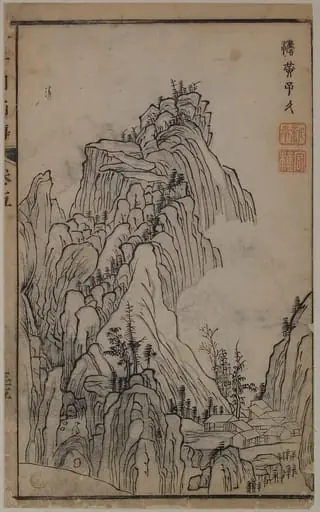 Untitled
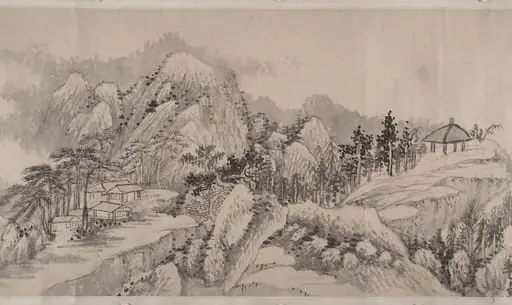 清 柳堉 幽谷深林圖 卷|Remote Valleys and Deep Forests
 Untitled
 清 蕭雲從 山水圖 冊|Landscapes
 Untitled
 清 惲壽平 倣宋元山水圖 冊|Landscapes in the manner of Song and Yuan masters
 Untitled
 Untitled
 清 王翬、王時敏 仿古山水圖 冊|Landscapes after old masters
- Meditative Visit to a Mountain Retreat: In Picture and in Words