Artwork
Weizheng Riding on an Ox
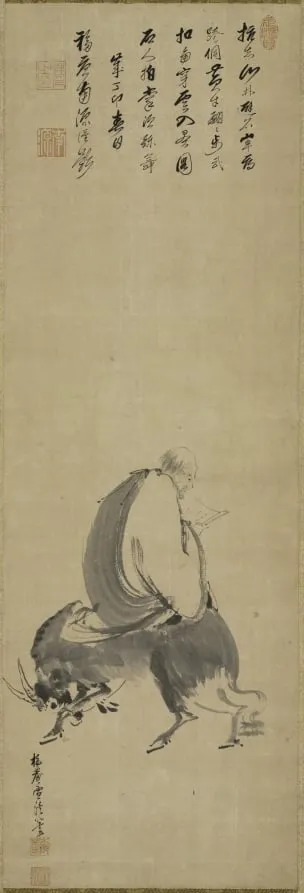
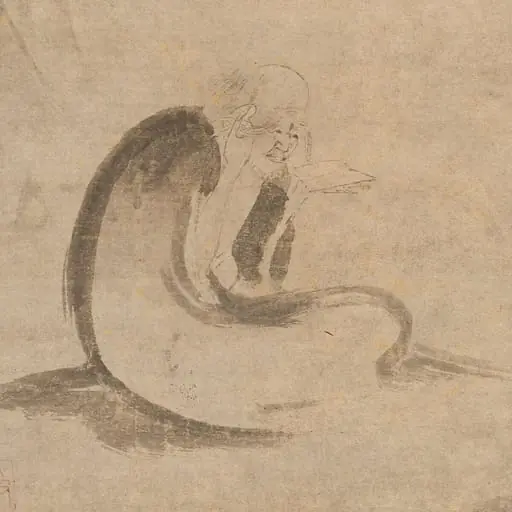
Weizheng Riding on an Ox is an unspecified painting by the Baroque artist Yamaguchi Sekkei. It dates from 1687 and is held in the collection of the Cleveland Museum of Art. This ink-on-paper painting depicts the Chinese Chan monk Weizheng riding backward on a water buffalo, engrossed in a scroll.
- Accession no.
- 1973.86
- Credit line
- Gift of Nisaburo Mizutani
About this work
The scene is simple, just black ink on paper, but the brushwork feels alive, like the wind is moving the grass.
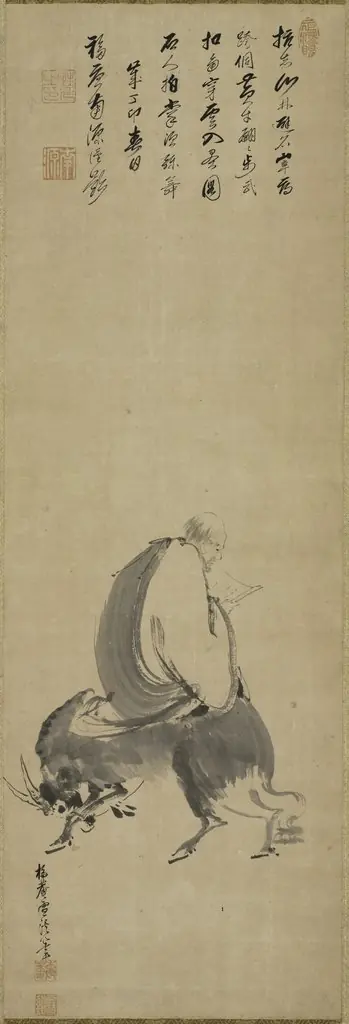
A man rides backward on a water buffalo, reading a scroll as the animal walks through misty hills. The scene is simple, just black ink on paper, but the brushwork feels alive, like the wind is moving the grass.
This painting shows a Chinese monk from the 1000s, Weizheng, who became a symbol of wisdom in Zen Buddhism. The artist, Yamaguchi Sekkei, often painted religious figures, but here he adds a playful twist: the monk faces away, as if ignoring the world to focus on his book. The calligraphy at the top was added by a Chinese monk who moved to Japan, blending two cultures in one work.
To see more quiet, ink-washed scenes like this, look up Japan, Edo period (1615–1868).
Overview
This ink-on-paper painting depicts the Chinese Chan monk Weizheng riding backward on a water buffalo, engrossed in a scroll. Executed by Japanese artist Yamaguchi Sekkei in the Edo period, the work is accompanied by a poetic inscription in Chinese calligraphy by the Chinese monk Nanyuan Xingpai, who settled in Japan. The composition is minimal, relying on subtle brushwork to evoke atmosphere and movement, reflecting the quiet introspection central to Zen aesthetics.
Subject & Meaning
Weizheng, a 11th-century monk known as 'Zheng of the Yellow Ox,' was revered in Chan Buddhism for his unorthodox behavior and deep wisdom. His backward posture on the buffalo suggests detachment from conventional perception, emphasizing inner focus over outward engagement. The act of reading while riding implies that spiritual insight arises not through formal study alone, but through embodied, unstructured experience, aligning with Zen ideals of spontaneity and non-attachment.
Technique & Style
Sekkei rendered the scene in monochrome ink, using varied brush pressure to suggest texture and motion, the ripple of fabric, the soft curve of the buffalo’s back, the suggestion of mist-laced hills. The sparse composition avoids detail, allowing negative space to carry emotional weight. The calligraphy above, executed by Nanyuan, complements the image with rhythmic strokes that echo the monk’s contemplative rhythm, uniting visual and literary expression in a single meditative gesture.
History & Provenance
Created in Kyoto during the mid-17th century, the painting emerged from a cultural exchange between Chinese Buddhist monks and Japanese artists following the migration of Nanyuan Xingpai in 1654. Sekkei, known for religious subjects, collaborated with Nanyuan, whose inscription transforms the image into a shared spiritual artifact. The work likely remained within temple or monastic circles, preserving its devotional function rather than entering secular collections.
Context
This painting reflects the Ōbaku school’s influence in Japan, which introduced Ming-era Chinese Chan practices and aesthetics. Artists like Sekkei absorbed Chinese models but adapted them to Japanese sensibilities, favoring restraint and naturalism. The blending of Chinese calligraphy with Japanese ink painting exemplifies the syncretic religious culture of Edo-period Kyoto, where Buddhist traditions from China were reinterpreted through local artistic conventions.
Legacy
The painting endures as a quiet testament to cross-cultural Buddhist exchange in early modern Japan. Its understated power lies in its ability to convey profound spiritual ideas through simplicity. Though not widely exhibited, it remains representative of a broader tradition in Japanese ink painting that values introspection over spectacle, influencing later generations of artists who sought to express Zen principles through minimal means.
Artist & collection
Artist
Yamaguchi Sekkei (Japanese: 山口雪渓) also known as Yamaguchi Sōsetsu (山口宗雪) (1644/48, Kyoto - 22 October 1732, Kyoto) was a Japanese artist of the middle Edo period. He sometimes went under the names Baian (梅庵) or Hakuin (白隠).



 元 佚名 玉谿思珉題贊 對月圖 軸|Reading a Sutra by Moonlight
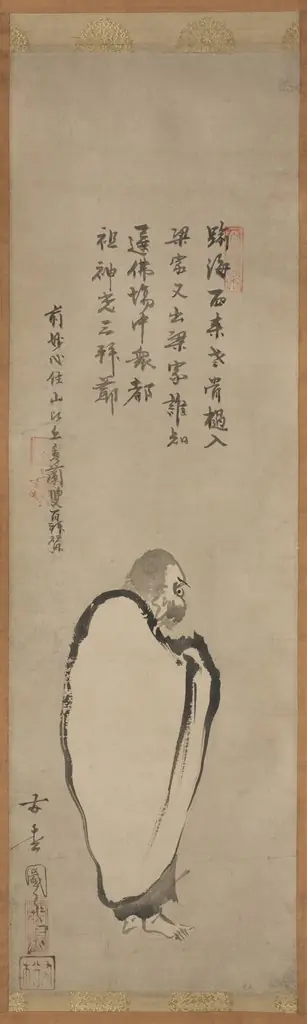 Figure of Daruma
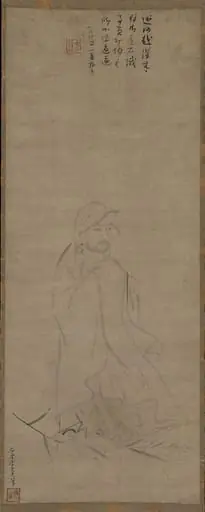 元 李堯夫,一山一寧題贊 達摩渡江圖 軸|Bodhidharma crossing the Yangzi River on a reed
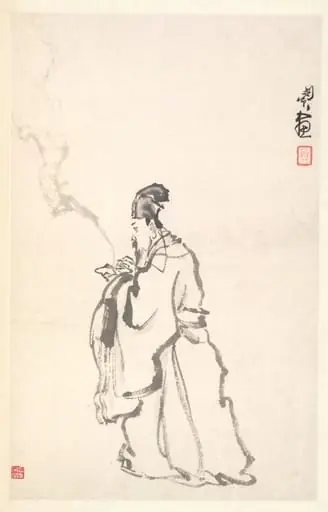 Su Dongpo
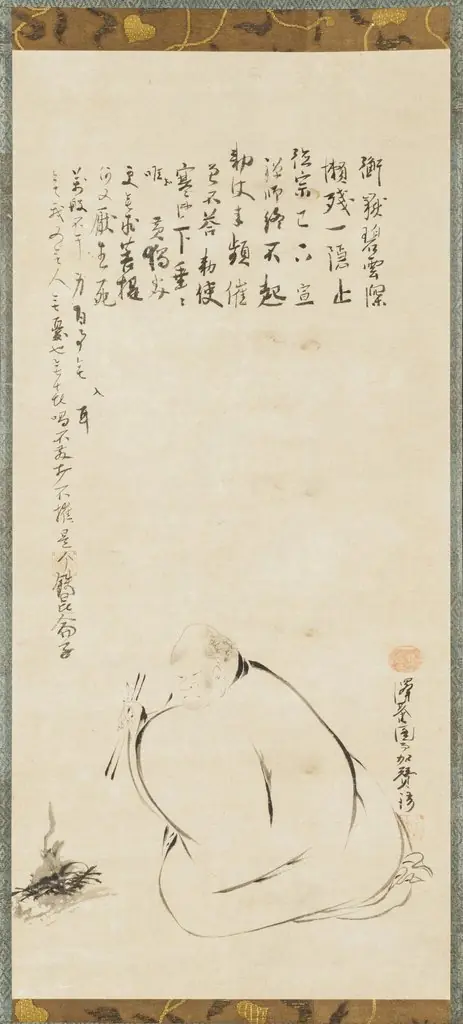 Monk Raisan
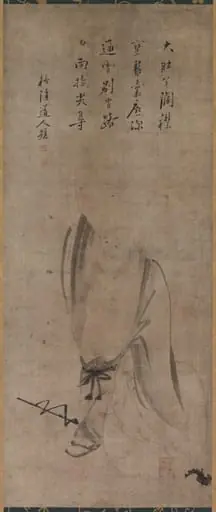 Hotei
Hotei Untitled
 Untitled
 芦葉達磨図 (Royō Daruma zu)|Bodhidharma Crossing the Yangzi River on a Reed
 清原元輔 「為重本 時代不同歌合絵巻」 断簡 |The Poet Kiyohara Motosuke, from the “Tameshige Version” of Thirty-six Poetic Immortals (Tameshige-bon Jidai fudō utawase emaki)