Artwork
明/清 佚名 林椿(僞款) 百鳥圖 卷|The Hundred Birds
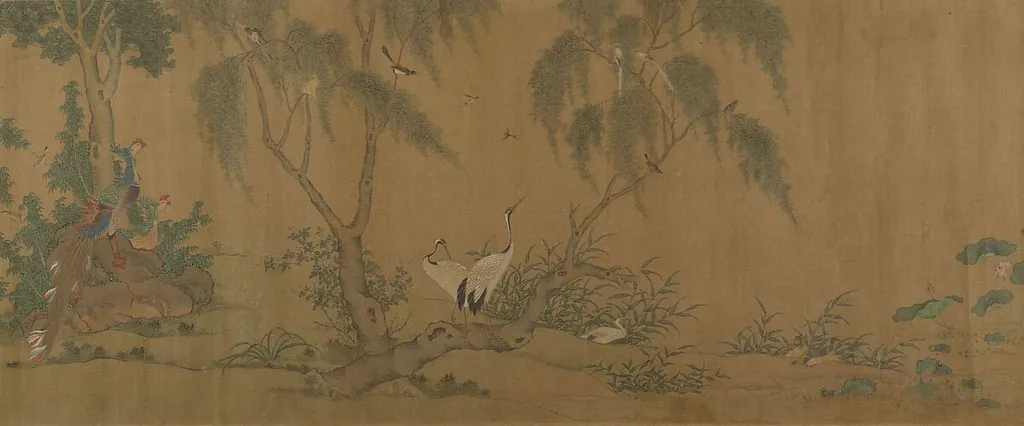
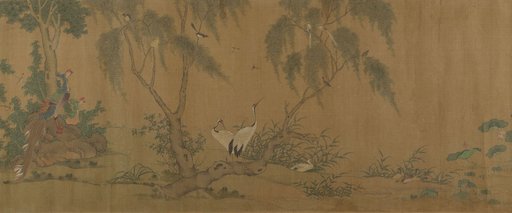
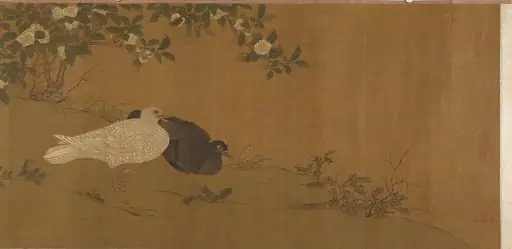
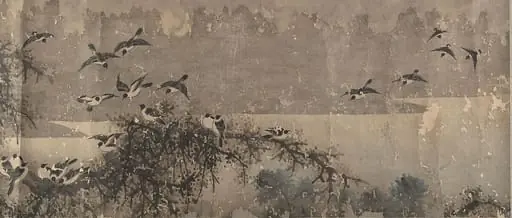
明/清 佚名 林椿(僞款) 百鳥圖 卷|The Hundred Birds is an ink painting by the Ming dynasty painting artist After Lin Chun. It dates from 1639 and is held in the collection of the Metropolitan Museum of Art. This handscroll, titled The Hundred Birds, is an anonymous work from the Ming or Qing dynasty, executed with ink and color on silk.
About this work
Subject & Meaning
Its composition follows the genre of bird imagery found in Chinese painting traditions, though the sources do not elaborate on symbolic interpretation.
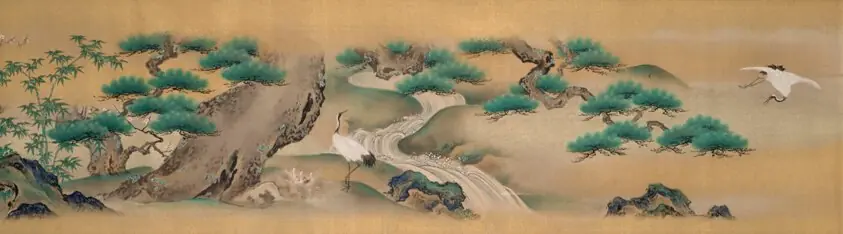
The work titled The Hundred Birds is a handscroll from 1639 that depicts a crane (Gruidae) among a hundred birds, as recorded in the catalog entries. The painting, executed in ink and color on silk, presents the crane as part of a broader avian assembly. Its composition follows the genre of bird imagery found in Chinese painting traditions, though the sources do not elaborate on symbolic interpretation.
The depiction of the crane is identified through the classification of depicted subjects, confirming the presence of this bird within the scroll.
Technique & Style
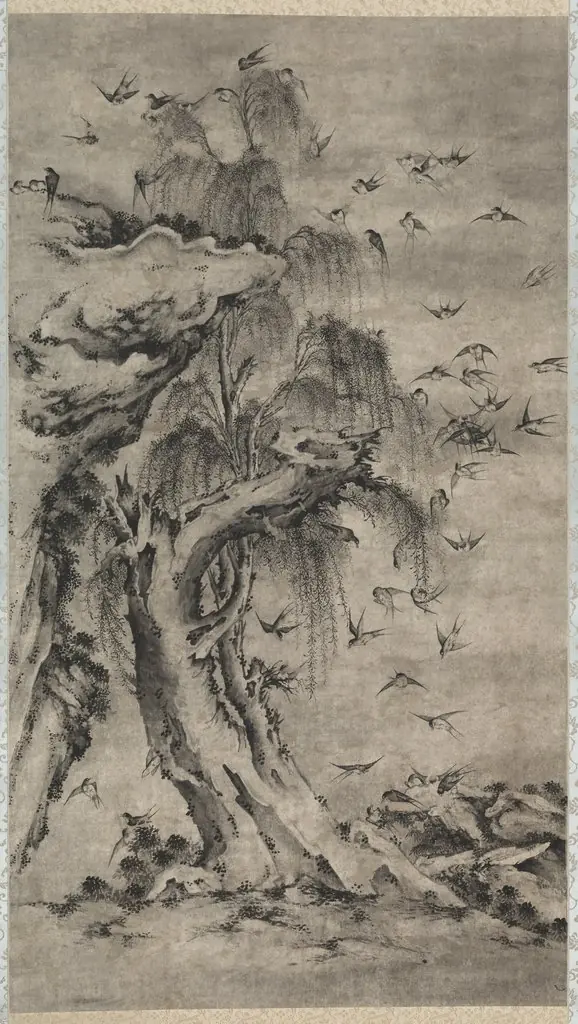
The handscroll, executed in ink and polychrome on silk, dates to around 1639 and follows the style of Lin Chun, though attributed to an anonymous hand. Its support is a long silk scroll, typical of Chinese bird-and-flower scrolls, and the composition arranges over a hundred avian figures in a rhythmic, flowing layout. Delicate brushstrokes render each bird with fine line work, while muted mineral pigments provide subtle color accents.
The painting's formal balance relies on staggered placement and varying scales, creating a sense of movement across the scroll. It is housed in the Metropolitan Museum of Art.
History & Provenance
Created in 1639 in China, this handscroll is attributed to an anonymous artist working in the style of Lin Chun, though the signature is considered spurious. Executed in ink and color on silk, the work measures approximately 29.8 by 212.4 centimeters and depicts numerous birds, including cranes, within the bird-and-flower genre. The painting entered the collection of the Metropolitan Museum of Art, where it is cataloged under the accession number 47.18.51.
The specific circumstances of its original commission and the detailed chain of ownership prior to its museum acquisition are not recorded in the available documentation, and no exhibition history is provided.
Context
Scholars place the anonymous handscroll The Hundred Birds (c. 1639) within the late Ming bird-and-flower genre, noting its stylistic affinities with the workshop of Lin Chun despite the spurious signature. The work’s composition of cranes and other Gruidae reflects contemporary interest in naturalistic depiction of avian subjects, a motif documented in museum catalogues. Its inclusion in the Metropolitan Museum of Art’s collection has prompted discussion of anonymous Chinese painting attribution practices, with recent scholarship emphasizing the importance of material analysis and provenance for works bearing false signatures.
The piece is cited as an example of how pseudo‑attributed works illuminate the transmission of artistic conventions in the Ming‑Qing transition.
Legacy
Although the attribution to Lin Chun remains contested, the handscroll titled The Hundred Birds, dated 1639, is preserved in the Metropolitan Museum of Art (MET 47.18.51) and is frequently referenced in studies of Ming‑Qing bird‑and‑flower painting. Its presence in a major Western museum has elevated awareness of anonymous Chinese masters and informed later scholarship on avian motifs in East Asian art. The work’s composition, featuring cranes among other Gruidae, exemplifies the symbolic use of birds in Chinese visual culture and continues to influence contemporary interpretations of traditional scroll painting.
Overview
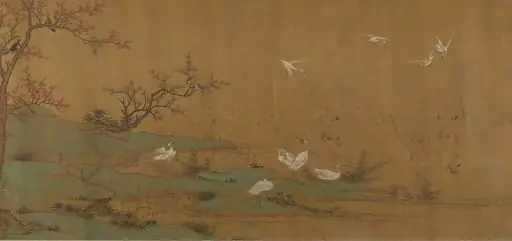
This handscroll, titled The Hundred Birds, is an anonymous work from the Ming or Qing dynasty, executed with ink and color on silk. It depicts a vibrant assembly of avian life, including herons, cranes, ducks, and various songbirds, shown both at rest on branches and in flight. Although signed "Lin Chun," scholars widely regard this inscription as a later addition, contributing to the artwork's enigmatic origins.
Artist & collection