Artwork
Untitled
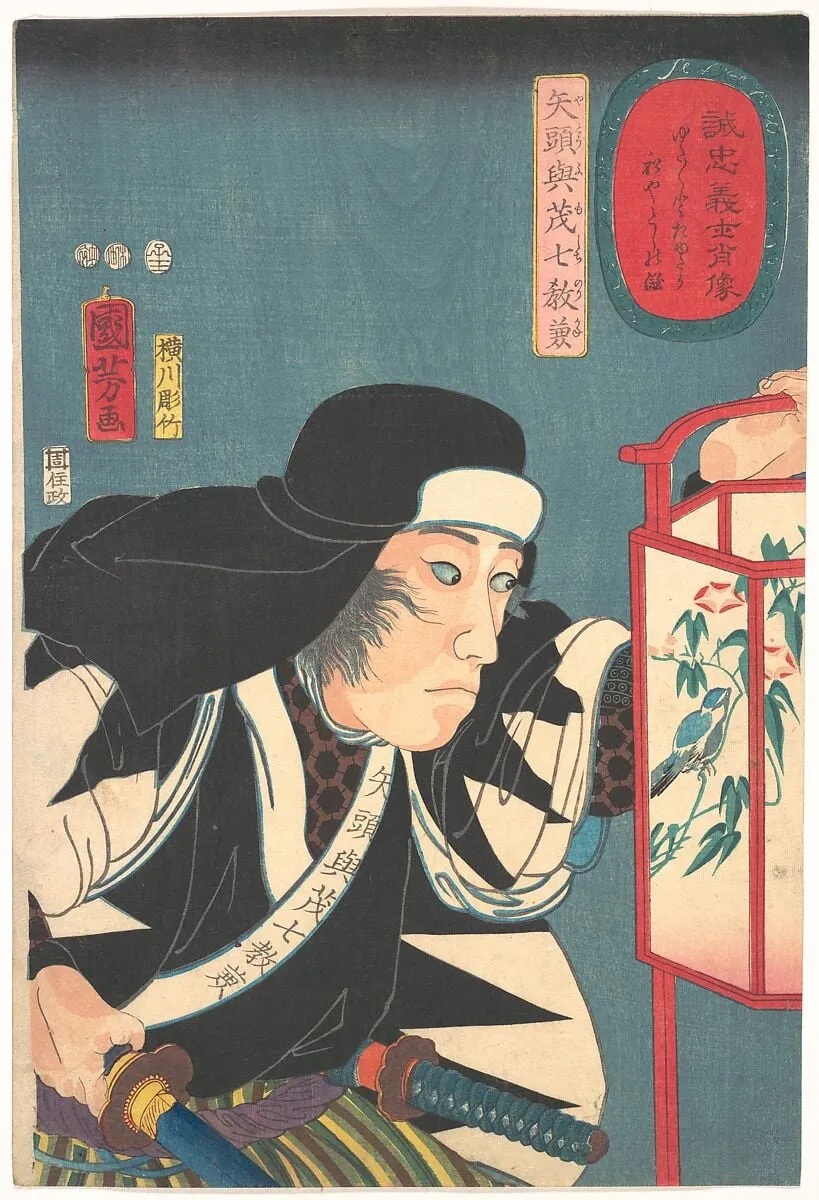
Untitled is an ink print by the Impressionist artist Yokogawa Horitake. It dates from 1852 and is held in the collection of the Metropolitan Museum of Art.
About this work
Overview
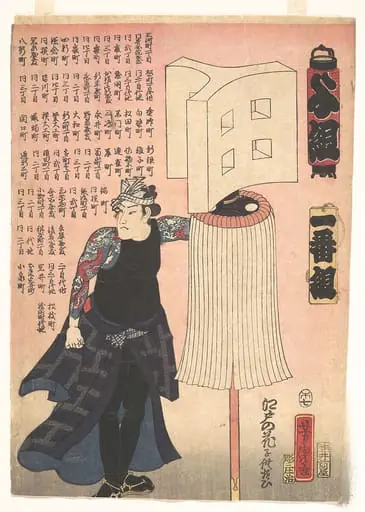
Created in 1852, this woodblock print by Yokogawa Horitake is a portrait rendered in ink and color on paper. It resides in the collection of The Metropolitan Museum of Art. The composition centers on a solitary male figure, rendered with precise lines and flat areas of color, characteristic of Edo-period printmaking traditions.
Subject & Meaning
The figure, dressed in contrasting black and white garments and wearing a dark hat, holds a sword at his side. His posture is still, suggesting composure or readiness. The Japanese characters on the wall and the red-framed object with avian motifs imply a domestic or scholarly setting, possibly referencing status, lineage, or literary culture of the time.
Technique & Style
The print employs the ukiyo-e woodblock method, with bold outlines and limited, flat color fields. The background’s blue wash and the decorative frame contrast subtly with the figure’s monochrome attire. The rendering of texture is minimal, emphasizing form over detail, aligning with conventions of mid-19th century Japanese print design.
History & Provenance
The work was produced during the late Edo period, a time when woodblock prints flourished as affordable art for urban audiences. It entered the Metropolitan Museum of Art’s collection through documented acquisition, though its earlier ownership history remains unrecorded in public archives.
Context
The imagery reflects the visual language of samurai portraiture common in prints by artists like Utagawa Kuniyoshi, though Horitake’s approach is more restrained. The inclusion of calligraphy and symbolic objects situates the subject within a literate, elite milieu, where identity was often expressed through attire and emblematic items.
Legacy
As a work by a lesser-known artist, it contributes to the broader understanding of regional print production beyond the most celebrated ukiyo-e masters. Its preservation allows study of stylistic variations within Edo-period portraiture and the dissemination of visual codes across social classes.
Artist & collection

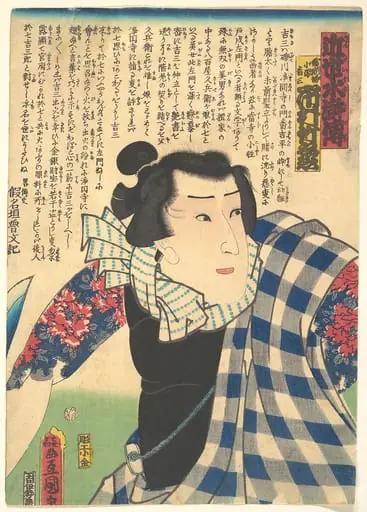
- 「湯灌場子僧吉三 市川竹之丞」(五代目) 「近世水滸伝」|Ichimura Takenojō V as Yukanba Kozō Kichiza, from A Modern Water Margin (Kinsei suikoden)
 Untitled
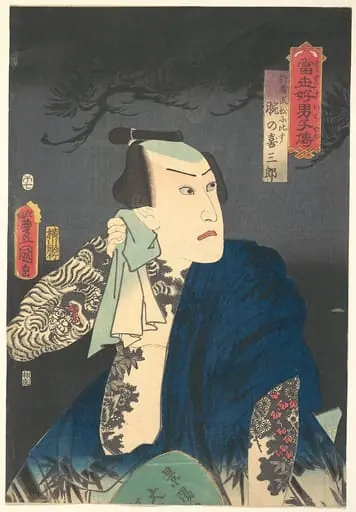 「当世好男子伝」松 「行者武松に比す腕の喜三郎」 初代河原崎権十郎|The Actor Kawarazaki Gonjūrō I as Ude no Kisaburō, likened to Wu Song the Ascetic (Gyōja Bushō ni hisu), from the “Pine” triptych of the series A Modern Water Margin (Tōsei suikoden)
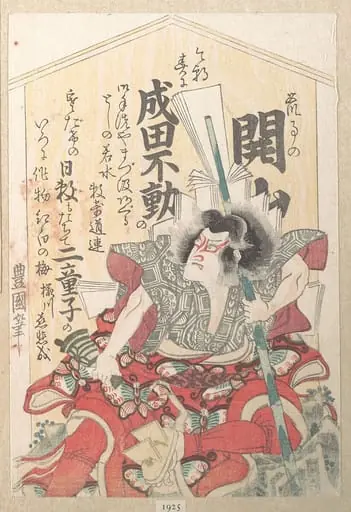
 Untitled
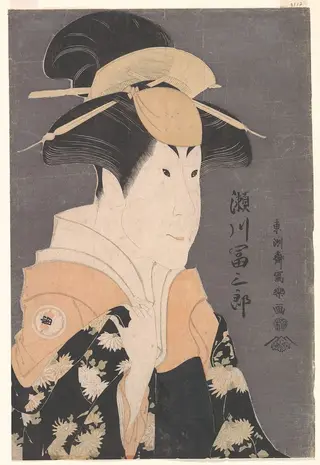
 Untitled
 Untitled
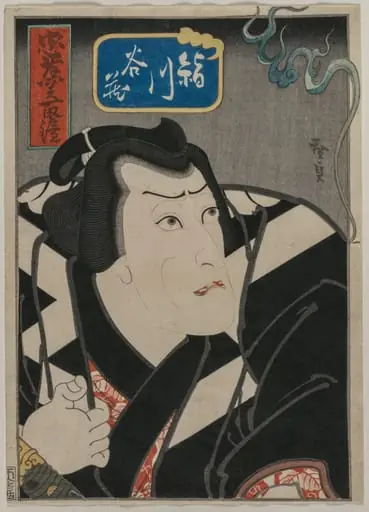 Kinugawa Tanizō in A Mirror of Brave and Loyal Wrestlers (Chūkō Sekitori Kagami)
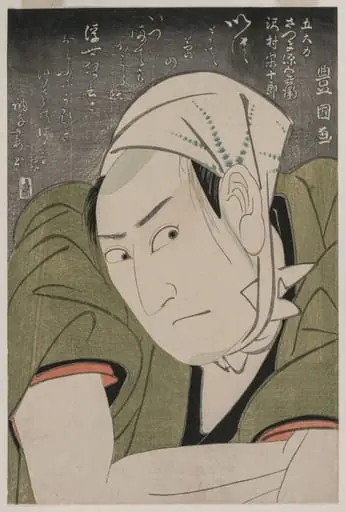 Memorial Portrait of Sawamura Sojuro III as Satsuma Gengobei
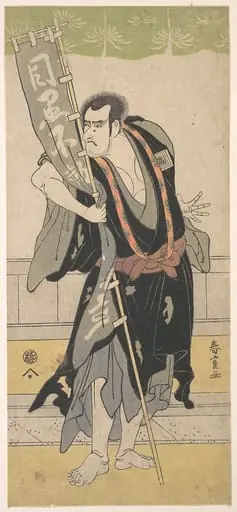 Untitled
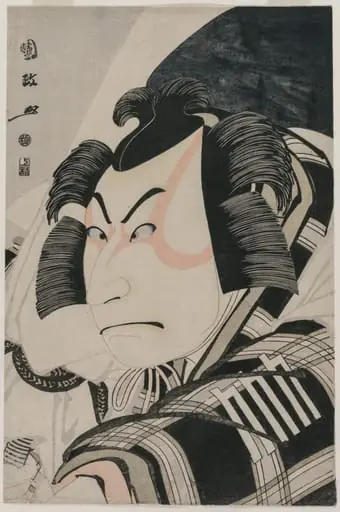 Nakamura Nakazo II as Matsuomaru in the Carriage-Stopping Scene
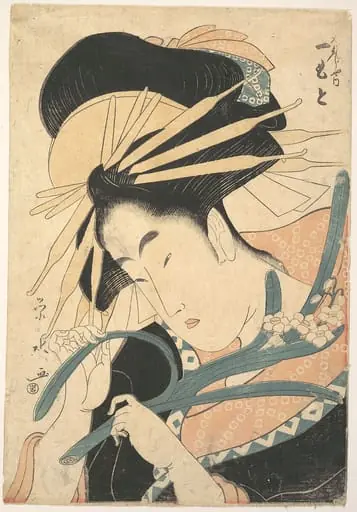 Untitled
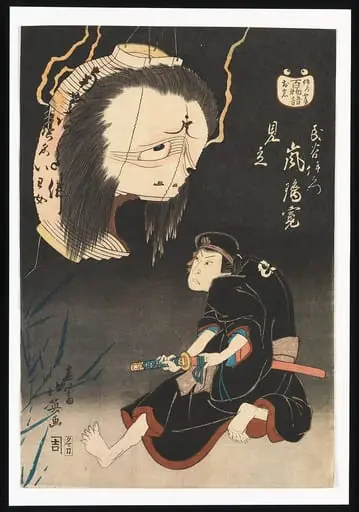 春江斎北英画 二代目嵐璃寛 見立 「百物語」|Kabuki Actor Arashi Rikan II as Iemon Confronted by an Image of His Murdered Wife, Oiwa, on a Broken Lantern, Referring to Katsushika Hokusai’s Hyaku monogatari (One Hundred Ghost Stories)