Artwork
The Barnyard
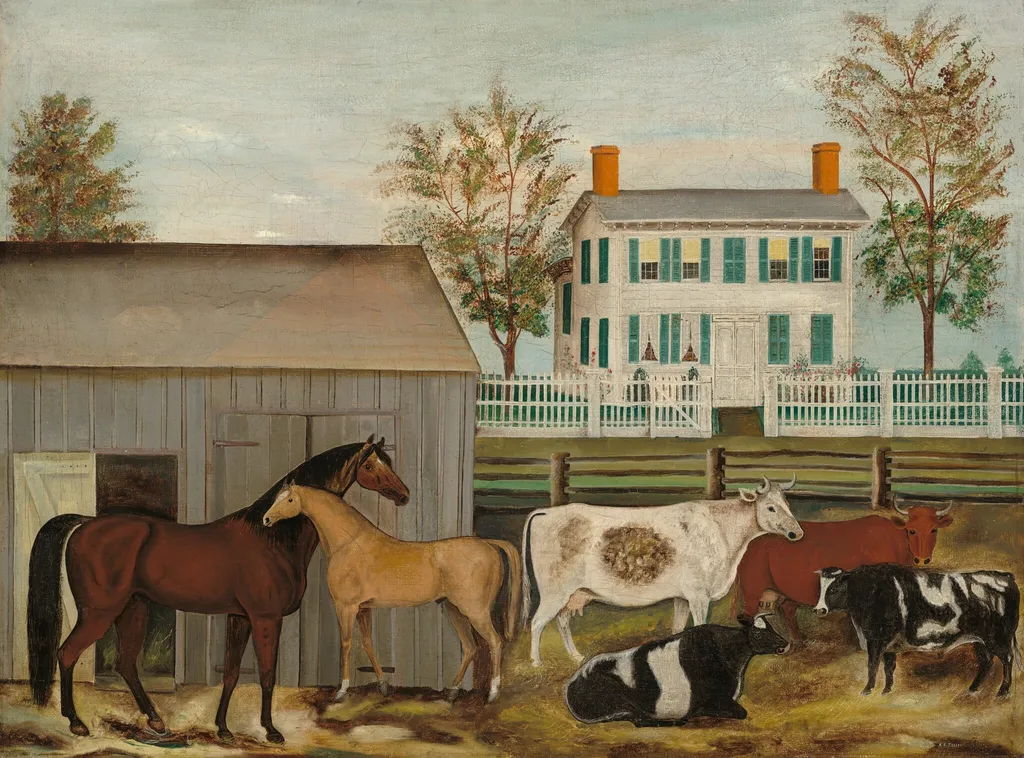
The Barnyard is an oil painting by the Impressionist artist Amzi Emmons Zeliff. It dates from 1850 and is held in the collection of the National Gallery of Art.
- Inscription
- Inscribed:lower right: A. E. ZELIFF
About this work
Technique & Style
The handling of brushwork remains modest, allowing the texture of the oil medium to register at the surface without excessive impasto.
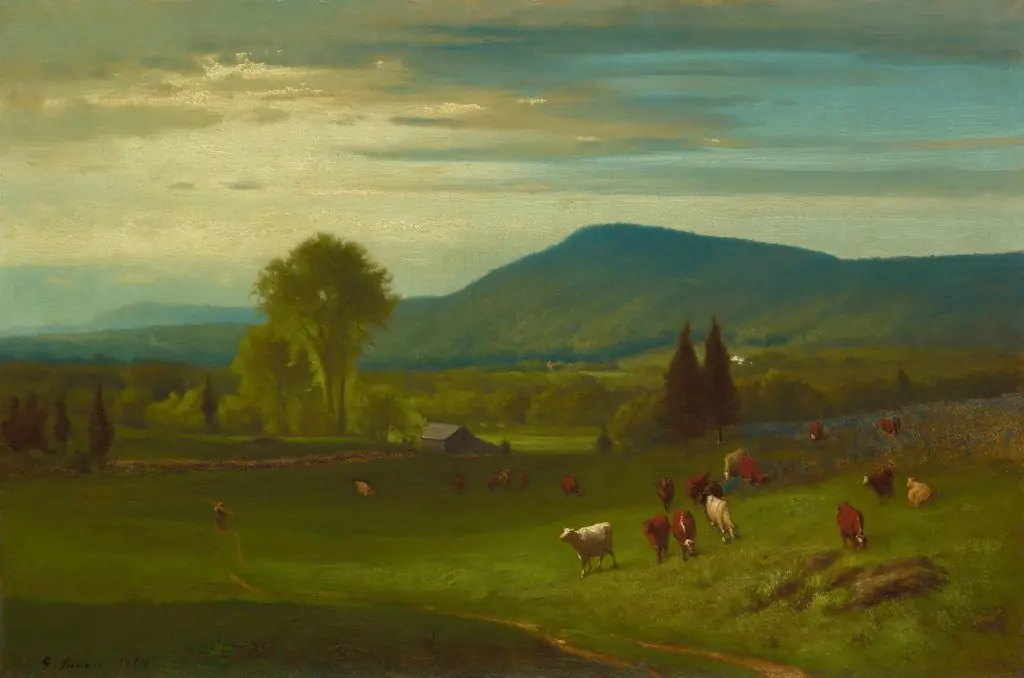
The work is an oil painting executed on canvas, measuring 60.9 cm in height by 82 cm in width. It depicts a rural barnyard scene rendered in a straightforward realist manner, emphasizing clear delineation of architectural forms and earthy tonal modulation. The handling of brushwork remains modest, allowing the texture of the oil medium to register at the surface without excessive impasto.
Compositionally, the arrangement balances foreground activity with a distant horizon, creating a modest spatial depth characteristic of mid-nineteenth-century American genre subjects, combining an academic approach to draftsmanship with a naturalistic palette.
History & Provenance
The Barnyard was painted in 1850 by Amzi Emmons Zeliff. Associated in its earliest recorded provenance with New Jersey, it was sold in 1944 by the Valentine Gallery in New York to Edgar William and Bernice Chrysler Garbisch. In 1955 the Garbisches gave the painting to the National Gallery of Art in Washington, D.C., where it remains in the collection today.
The painting measures 60.9 cm in height and 82 cm in width. No exhibition history beyond this provenance chain is recorded in the available sources.
Overview
Amzi Emmons Zeliff’s oil on canvas, The Barnyard, dates to around 1850. The work depicts a rural setting populated by livestock and structures, arranged in a compact composition that foregrounds the daily rhythms of a working farm.
Subject & Meaning
At the center, two horses, one dark brown, the other light tan, stand beside a timber barn. A white cow with a smudge of earth lies on the ground, while a red cow and a black‑and‑white calf occupy the foreground. Behind the barn, a white house with green shutters and a chimney completes the scene, suggesting a self‑contained farmstead.
Context
The work aligns with the broader Realist movement, which sought to portray ordinary people and settings without idealization. Zeliff’s attention to the practical aspects of farm work places the piece within a tradition of American artists documenting the nation’s agrarian landscape during a period of rapid change.
Own this work as a print
Artist & collection

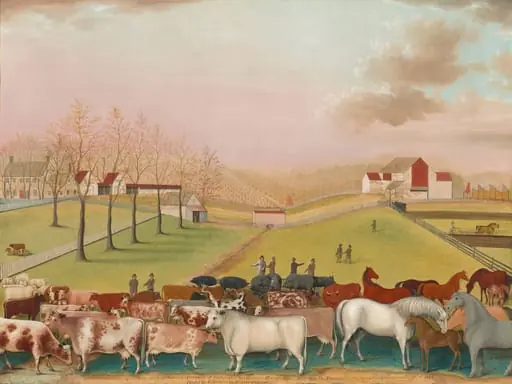 The Cornell Farm
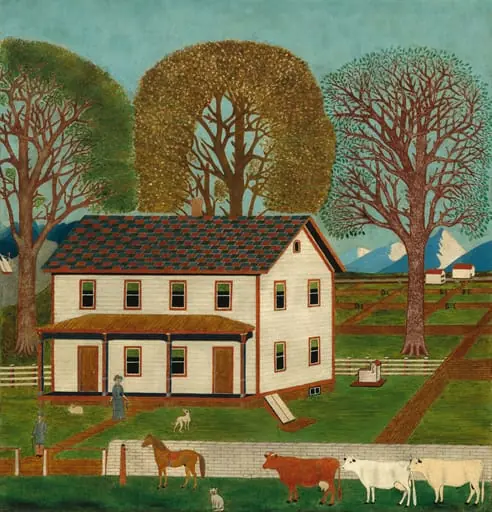 Farmhouse in Mahantango Valley
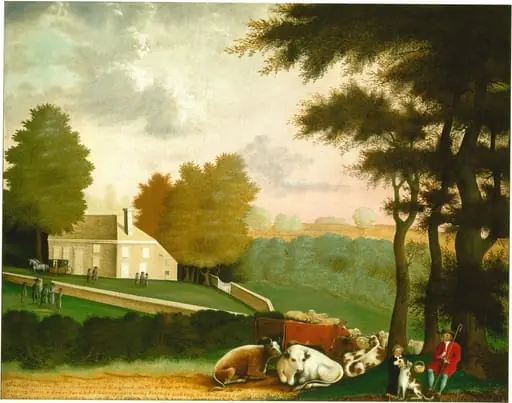 The Grave of William Penn
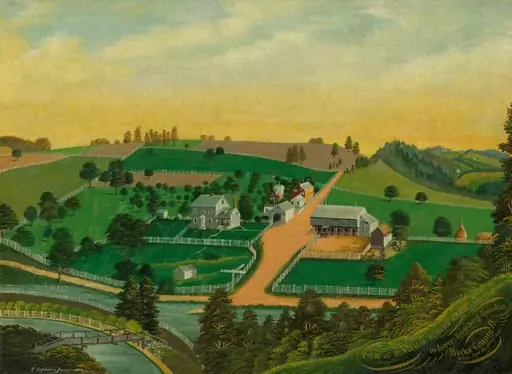 View of Benjamin Reber's Farm
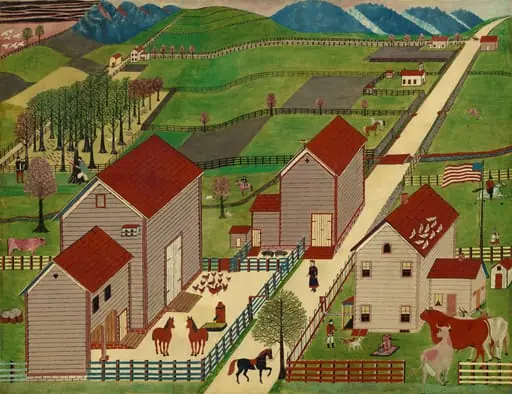 Mahantango Valley Farm
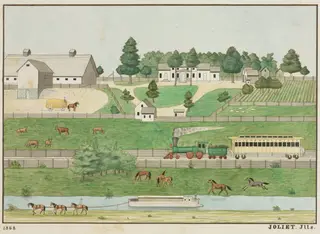 Landscape, Joliet, Illinois
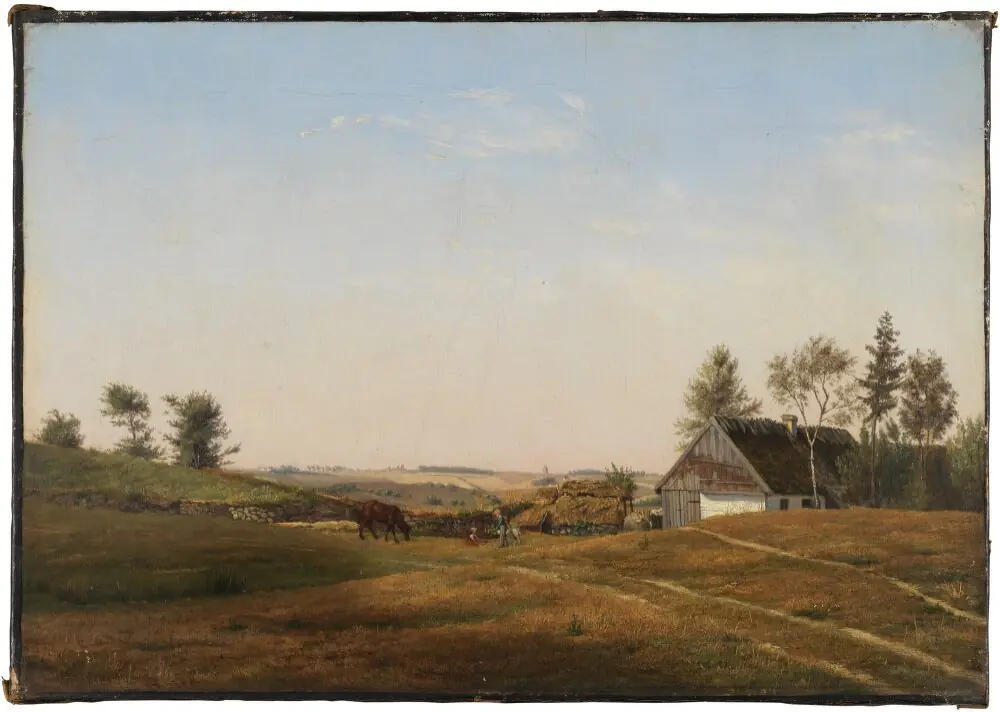 Landscape with a Farm
 Meetinghouse Hill, Roxbury, Massachusetts
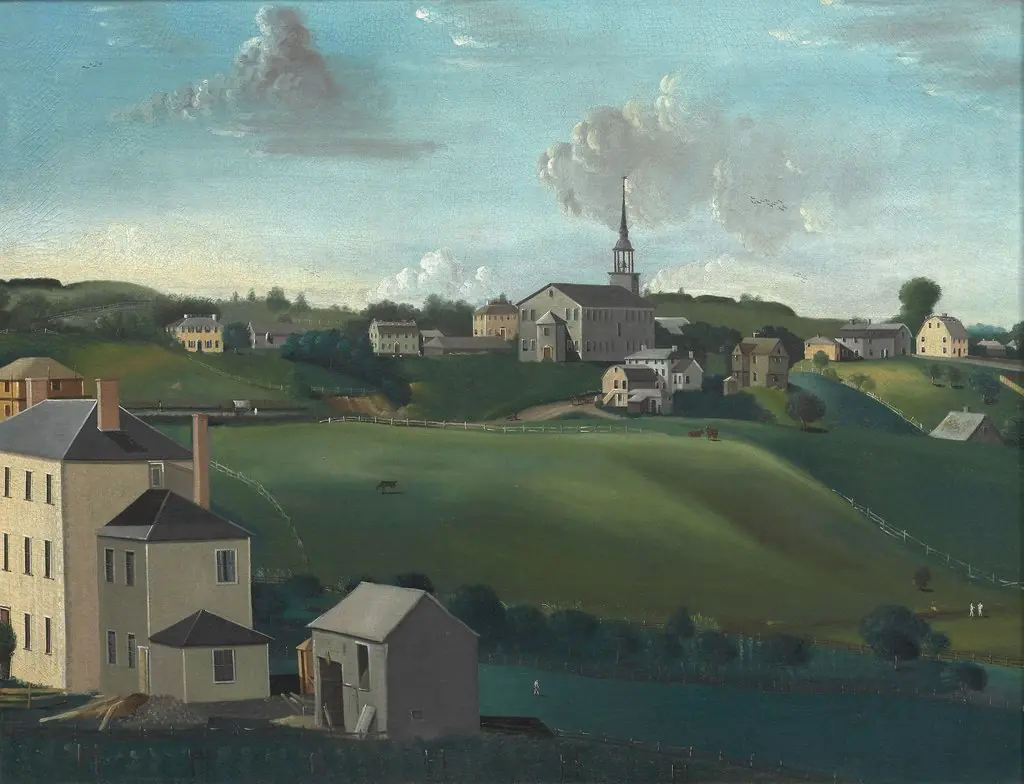 Meetinghouse Hill, Roxbury, Massachusetts
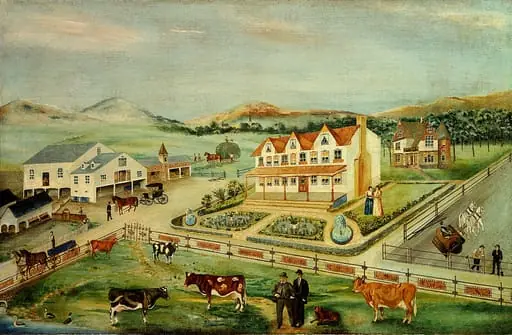 Bucks County Farm Outside Doylestown, Pennsylvania
 Summer in the Catskills
- In the barn