Artwork
Landscape
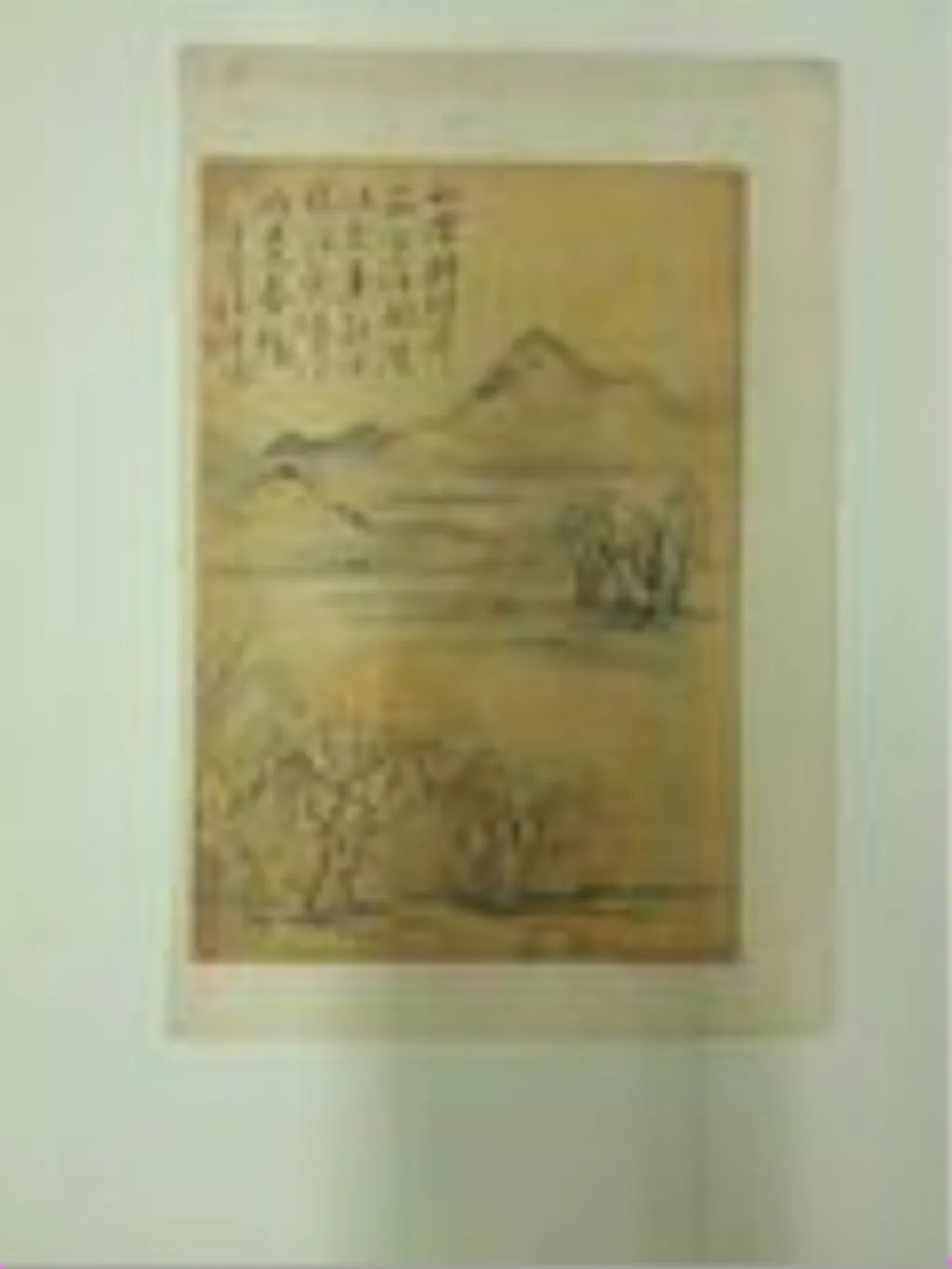
Landscape is a paint painting by the Romanticist artist Zhang Qia. It dates from 1761 and is held in the collection of the Victoria and Albert Museum.
About this work
Zhang Qia’s 1761 ink landscape shows layered hills and twisting willow branches, all in deep blacks and lighter grays.
Zhang Qia’s 1761 ink landscape shows layered hills and twisting willow branches, all in deep blacks and lighter grays. The brush moves freely with few outlines, letting ink do the work. Tiny dots mark distant trees and foreground shrubs, a trick to show both near and far.
This isn’t just scenery, it’s a quiet poem of space. The dots double as foliage and horizon, tying the whole scene together with one simple trick.
It feels like looking through a window. Next, check out Zhang Qia’s other works.
Overview
Painted in 1761, this ink landscape by Zhang Qia exemplifies the xieyi tradition, emphasizing spontaneous brushwork over detailed representation. The composition unfolds through gradations of ink, dense blacks, diluted grays, and dry strokes, without reliance on outlines. Minimalist elements like ink dots suggest foliage and distant hills, creating depth through suggestion rather than definition. A small cluster of buildings anchors the foreground, introducing human presence without narrative detail.
Subject & Meaning
The scene depicts a quiet riverside landscape with layered hills, willow thickets, and distant trees, rendered not as a literal place but as an evocation of natural rhythm. The sparse human structures imply quiet habitation, not activity. The integration of calligraphic poetry above the image transforms the painting into a multi-layered expression of contemplation, where visual and textual elements together convey a meditative engagement with nature and space.
Technique & Style
Zhang employs loose, fluid brushstrokes and varied ink tones to define form, avoiding rigid contours. Dense ink dots function dualistically: as shrubbery in the foreground and as clustered trees along distant ridges. The far horizon uses a uniform, diluted wash to suggest atmospheric recession, while foreground hills employ drier, more textured strokes. This contrast in brush handling reinforces spatial depth through material variation rather than perspective lines.
History & Provenance
Created in 1761 during the Qing dynasty, the work reflects Zhang Qia’s alignment with literati painting traditions. Its inclusion of poetry and calligraphy aligns with scholarly ideals of the time, where painting was one component of a broader cultural expression. The signature explicitly identifies the style as xieyi, affirming its roots in personal expression over formal realism. Its survival suggests it was valued within collector circles.
Context
In 18th-century China, literati painters like Zhang Qia sought to merge poetry, calligraphy, and painting into unified expressions of personal refinement. This work responds to a tradition that prioritized inner feeling over external accuracy. The use of ink washes and minimal marks reflects Daoist and Chan Buddhist influences, valuing spontaneity and the impermanence of form. The painting’s quietude aligns with scholarly retreats from courtly life.
Legacy
Zhang Qia’s approach influenced later ink painters who favored suggestion over detail. His integration of poetic script and abstracted landscape reinforced the literati ideal of the artist as cultivated scholar. The painting’s enduring appeal lies in its restraint, each dot, stroke, and wash contributes to a sense of stillness that invites prolonged contemplation rather than immediate spectacle.
Own this work as a print
Artist & collection
Artist
Zhang Qia’s 1761 Landscape belongs to the Qing dynasty’s orthodox tradition of ink painting, where brushwork and composition follow centuries-old rules.

 Dwelling in the Fuchun Mountains (Ziming Scroll)
 明/清 佚名(舊傳趙伯駒) 蘭亭圖 軸|Orchid Pavilion or Lanting
 宋馬遠華燈侍宴圖 軸
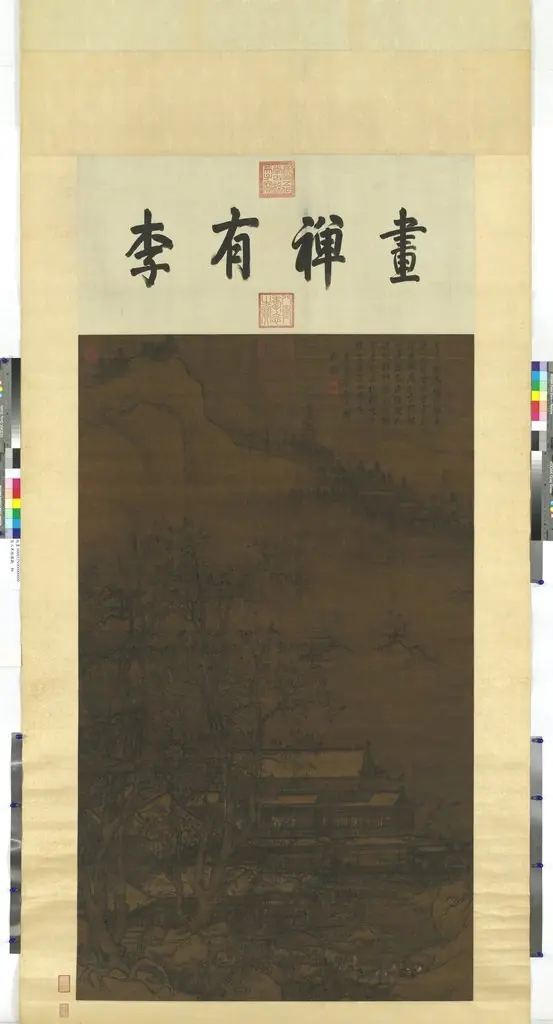 宋人寒林樓觀 軸
 Chrysanthemums and Cabbage
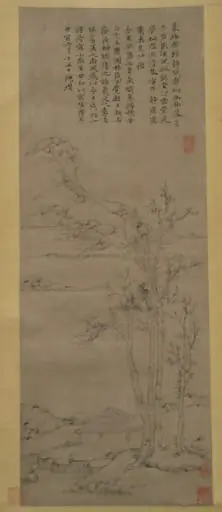 明/清 佚名 倣倪瓚 樂圃林居圖 軸|Landscape after Ni Zan (1306–1374)
 Dream Journey among Rivers and Mountains, no. 90
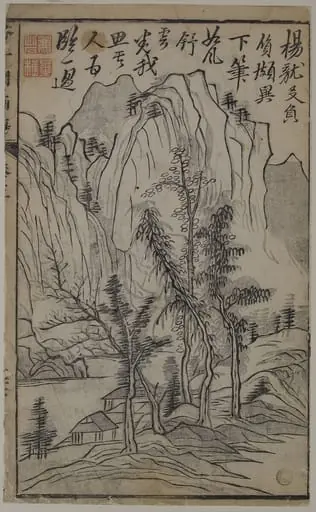 Untitled
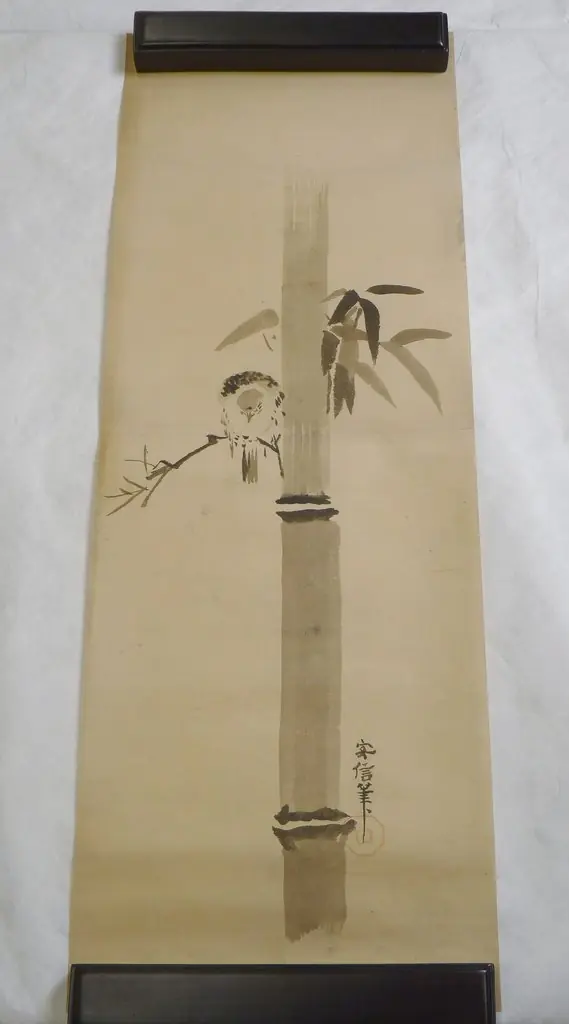 Japanese Drawing
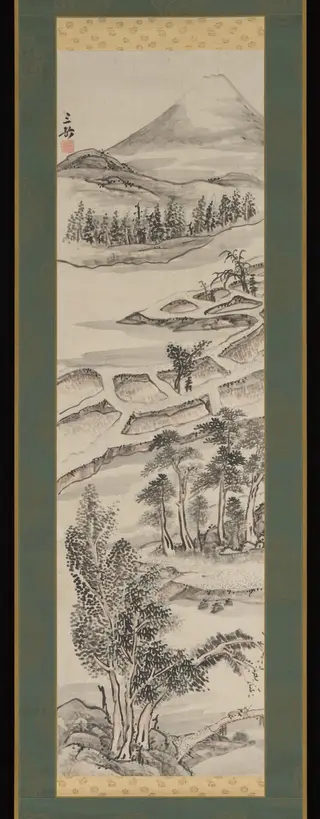 Mount Fuji
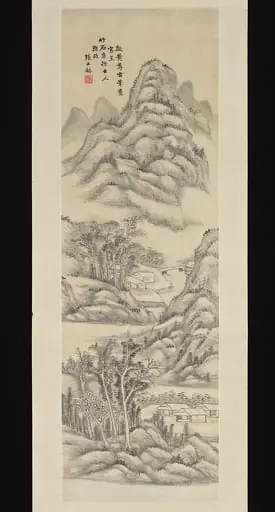 清 張上龢 山水 軸|Landscape
- 倣趙伯駒山水圖 軸|Landscape in the Style of Zhao Boju (Fang Zhao Boju shanshui)