Artwork
元 周東卿 魚樂圖 卷|The Pleasures of Fishes
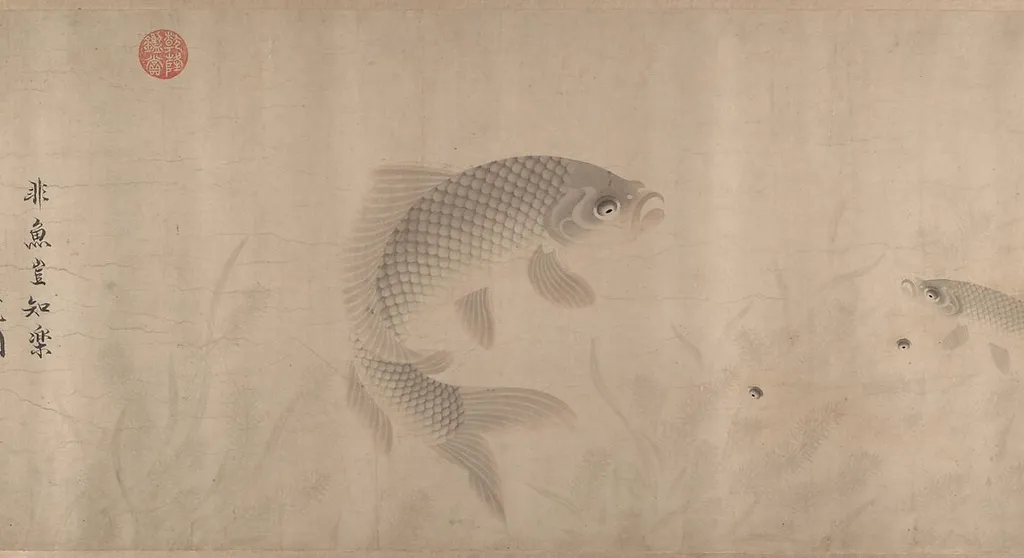
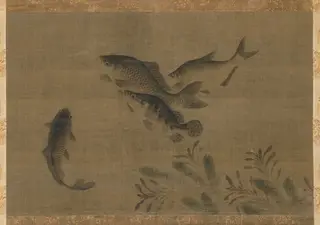
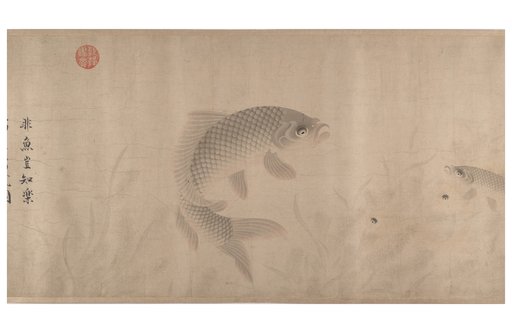
元 周東卿 魚樂圖 卷|The Pleasures of Fishes is an ink painting by the Ming dynasty painting artist Zhou Dongqing. It dates from 1291 and is held in the collection of the Metropolitan Museum of Art.
About this work
The fish look lively, but they’re also a quiet joke, “fish” sounds like the word for “surplus,” so the painting might be wishing for extra luck or money.
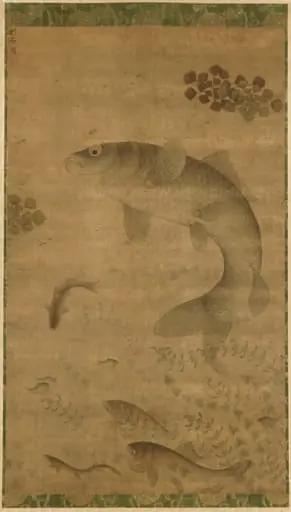
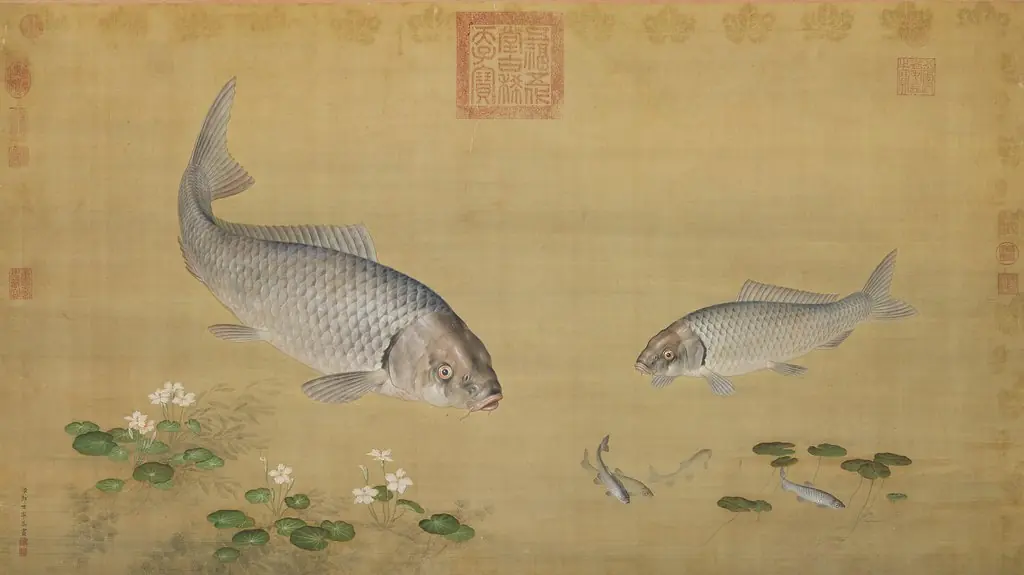
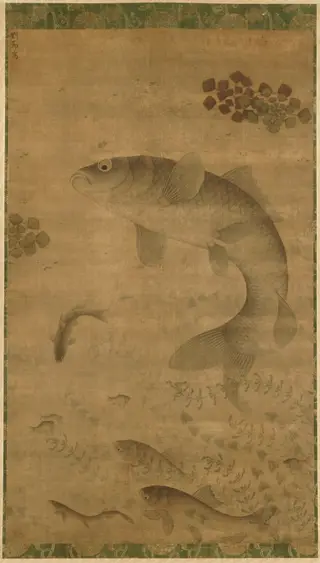
You see a long scroll of pale paper filled with fish darting through ink-blue water.
This painting is one of the earliest signed and dated Chinese scrolls we still have. Zhou Dongqing painted it in 1291, just after the Mongols took over China. The fish look lively, but they’re also a quiet joke, “fish” sounds like the word for “surplus,” so the painting might be wishing for extra luck or money.
To see more paintings like this, look up subject: fish, china.
Subject & Meaning
The handscroll The Pleasures of Fishes by Zhou Dongqing, created in 1291, depicts a marine scene focused entirely on fish. Classified as animal art, the work presents these aquatic creatures as its primary subject matter. The title suggests the painting explores the concept of the joy or pleasure inherent in the existence of the fish, serving as the core symbolic meaning of the composition.
Technique & Style
Created in 1291 by Zhou Dongqing, this work is executed as a handscroll using ink and color on paper. The painting belongs to the marine genre and specifically depicts fish, utilizing a format that allows for a continuous narrative or panoramic view typical of Chinese scroll painting. The application of both ink and pigment suggests a combination of monochromatic brushwork and polychrome detailing to render the aquatic subjects.
As an example of animal art from Yuan dynasty China, the piece demonstrates the artist's handling of traditional materials to capture naturalistic forms within a horizontal composition.
History & Provenance
The Pleasures of Fishes was created by Zhou Dongqing in 1291, during the Yuan dynasty, as a handscroll executed in ink and color on paper. The work was produced in China and is documented as depicting fish, consistent with its marine genre classification. It is held in the collection of the Metropolitan Museum of Art, where it remains located.
No further details regarding an earlier ownership chain, commission, or intermediate provenance prior to its acquisition by the museum are recorded in the available sources.
The Pleasures of Fishes by Zhou Dongqing is held in the collection of the Metropolitan Museum of Art, as recorded in the work's Wikidata entry, which lists both the collection and location as the Metropolitan Museum of Art.
No specific accession number is provided in the available sources, and no exhibition history is documented within the materials supplied.
Overview
The Pleasures of Fishes is a handscroll painted by Zhou Dongqing in 1291, executed in ink and color on paper. This work is historically significant as one of the earliest surviving Chinese scrolls that is both signed and dated. Created shortly after the Mongol conquest of China and the establishment of the Yuan dynasty, the painting depicts a lively aquatic scene where numerous fish dart through stylized, ink-washed water.
The composition utilizes a continuous narrative format typical of the handscroll genre, allowing the viewer to unroll the work gradually to follow the movement of the fish. While the imagery presents a naturalistic study of marine life, art historians often interpret the title and subject as a subtle allegory. The phrase 'pleasures of fish' alludes to a famous philosophical debate between Zhuangzi and Hui Shi regarding whether humans can truly know the happiness of fish, suggesting a layer of intellectual playfulness beneath the surface of the lively depiction.
The work stands as a rare example of Yuan dynasty painting that combines technical skill with philosophical wit, preserving a specific moment in the transition of Chinese artistic patronage and style.
Context
Zhou Dongqing created The Pleasures of Fishes shortly after the Mongol conquest of China, a period that marked the establishment of the Yuan dynasty. This political transition brought significant changes to Chinese society and culture. The painting, with its subtle symbolic message of abundance, may reflect a desire for stability and prosperity during a time of considerable upheaval and adjustment under new imperial rule.
Artist & collection
Artist
Zhou Dongqing was a Chinese painter active in the late thirteenth century, during the early Yuan dynasty.

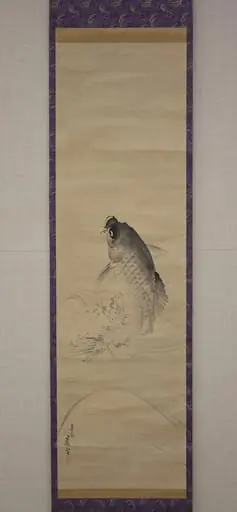
- 鯉図|Carp
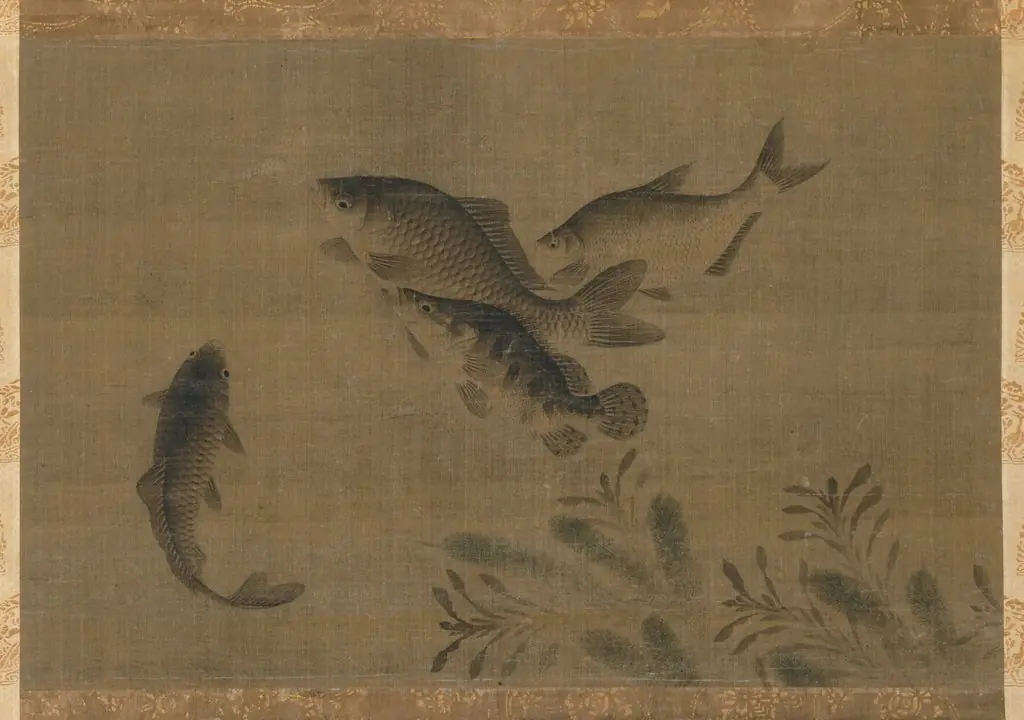 Fish
Fish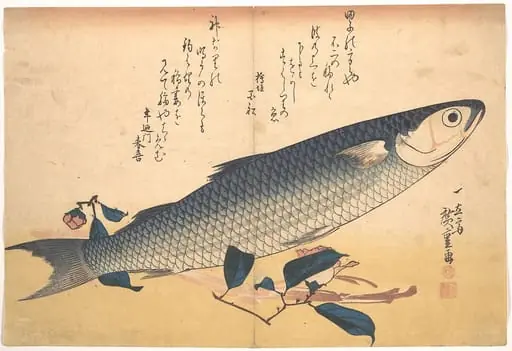 魚づくし ぼらにうど|Bora Fish with Camellia, from the series Uozukushi (Every Variety of Fish)
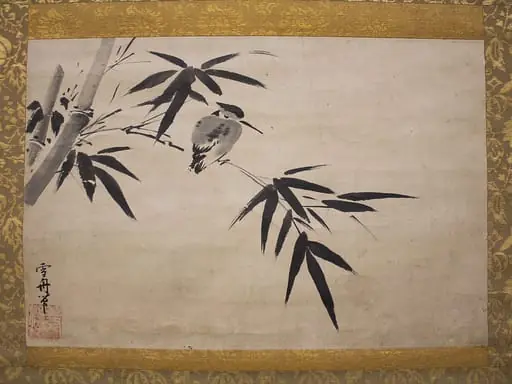 竹に翡翠図|Kingfisher and Bamboo
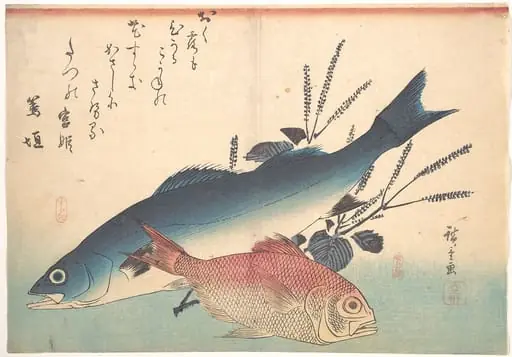 魚づくし いなだ ふぐに梅|Suzuki and Kinmedai Fish from the series Uozukushi (Every Variety of Fish)
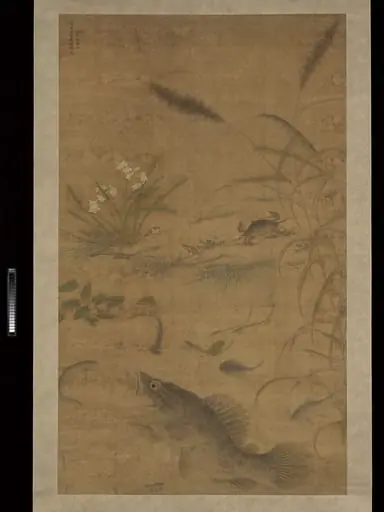 一鱖禾蟹圖|Flowers, fish, and crabs
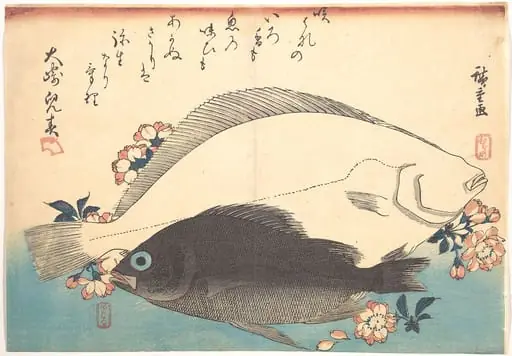 魚づくし ひらめ めばるに桜|Hirame and Mebaru Fish with Cherry Blossoms, from the series Uozukushi (Every Variety of Fish)
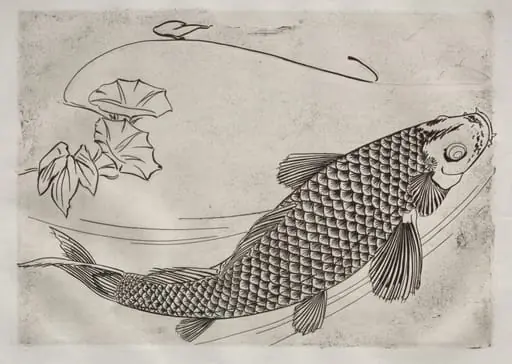 Dinner Service (Rousseau service): Large fish in a Japanese style (no. 19)