Movement
Cubo-Futurism
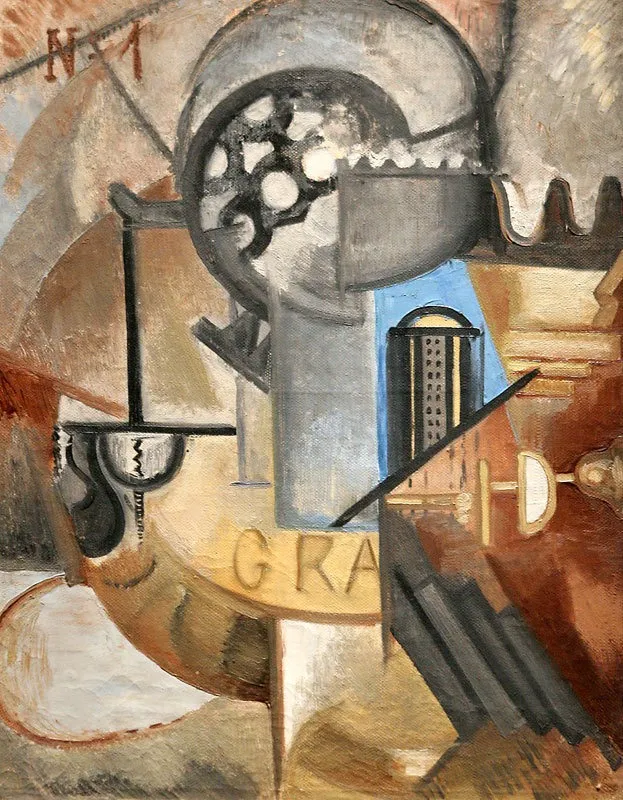
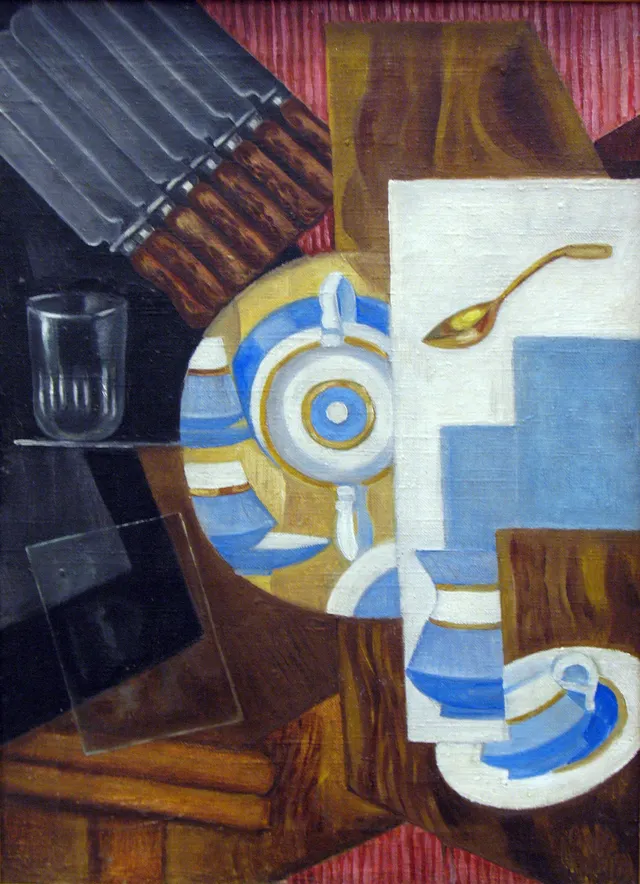
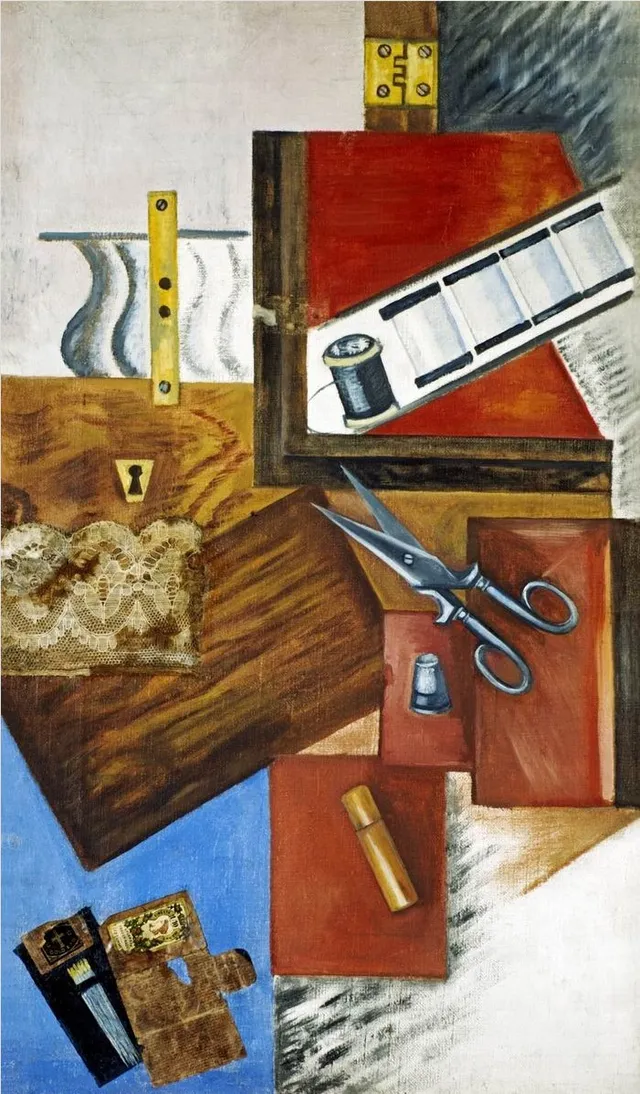
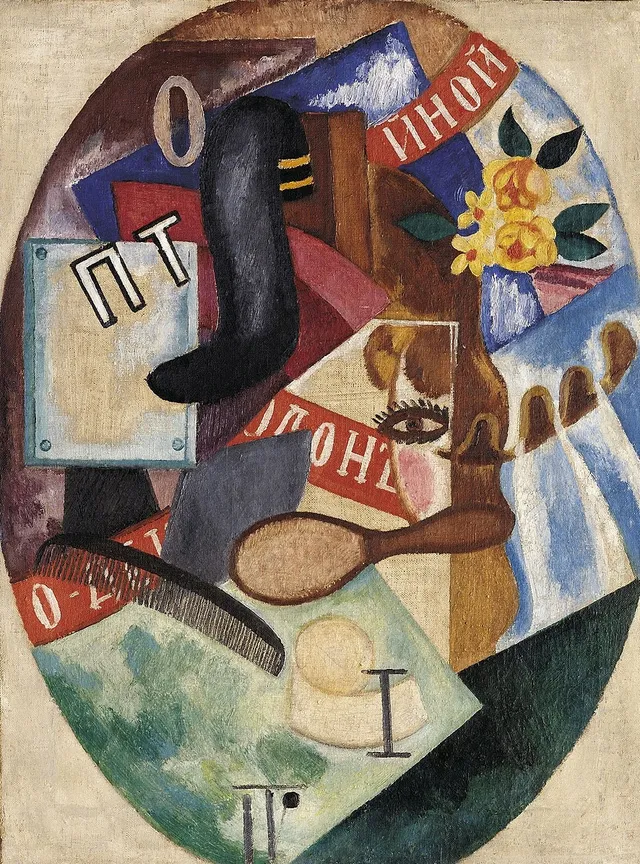
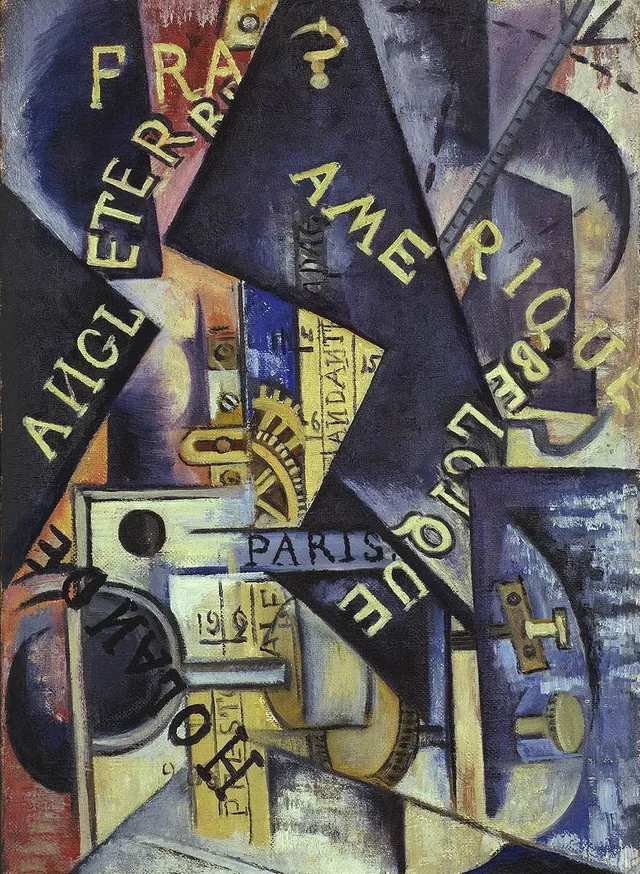
Cubo-Futurism is an art movement dating from 1913. The gallery holds 6 works in this movement, including works by Olga Rozanova. Browse Cubo-Futurism paintings, portraits, pictures and artworks from the world's public-domain museum collections.
Cubo-Futurism was the principal painting style of the Russian avant-garde in the years before the First World War, a synthesis forged when Moscow and St. Petersburg artists encountered French Analytical Cubism and Italian Futurism almost simultaneously around 1912. The hybrid name—reportedly introduced into Russian usage by the painter Alexandra Exter, who had worked in Paris—captured the fusion exactly: it grafted Cubism's faceted, multi-viewpoint fragmentation of form onto Futurism's obsession with motion, speed, and the modern machine. Crucially, the movement grew from native soil as well, drawing on Russian Neo-Primitivism, peasant lubok prints, and icon painting. Its energy was as much literary as visual: the 1912 manifesto "A Slap in the Face of Public Taste," issued by the Hylaea group of poets including Velimir Khlebnikov, Alexei Kruchenykh, and Vladimir Mayakovsky, declared war on academic tradition and demanded that Pushkin be thrown "overboard from the steamship of modernity."
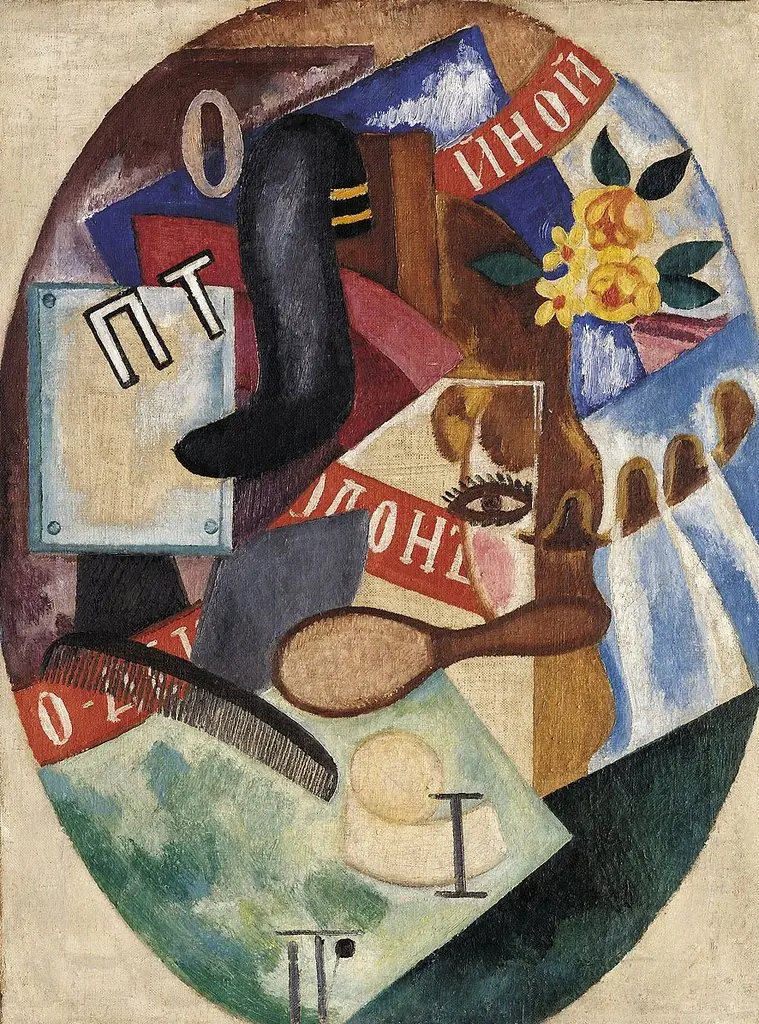
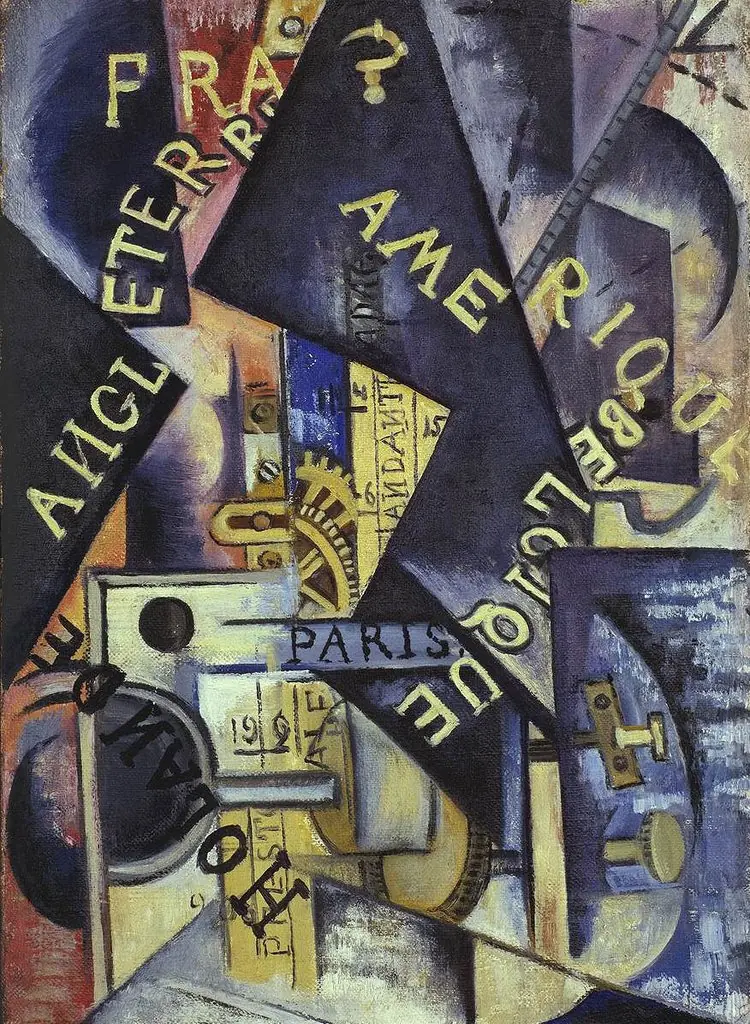
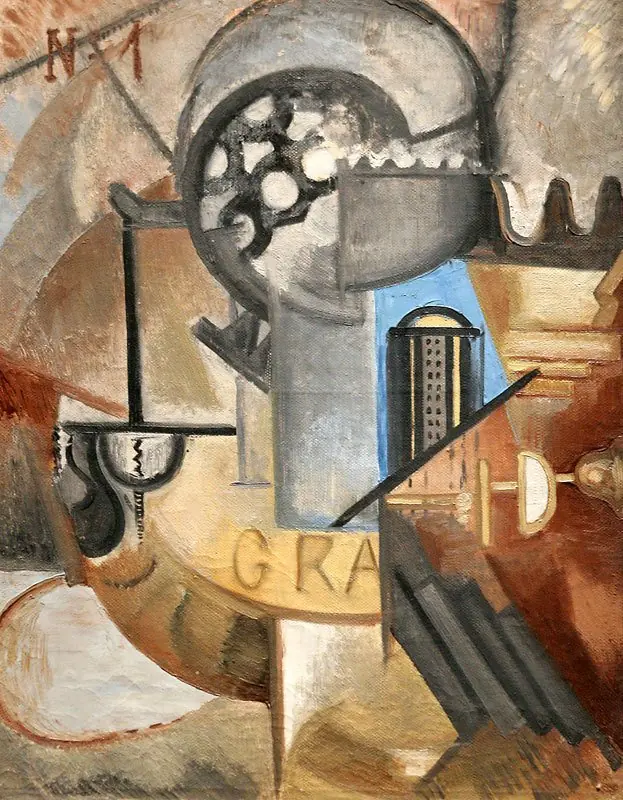
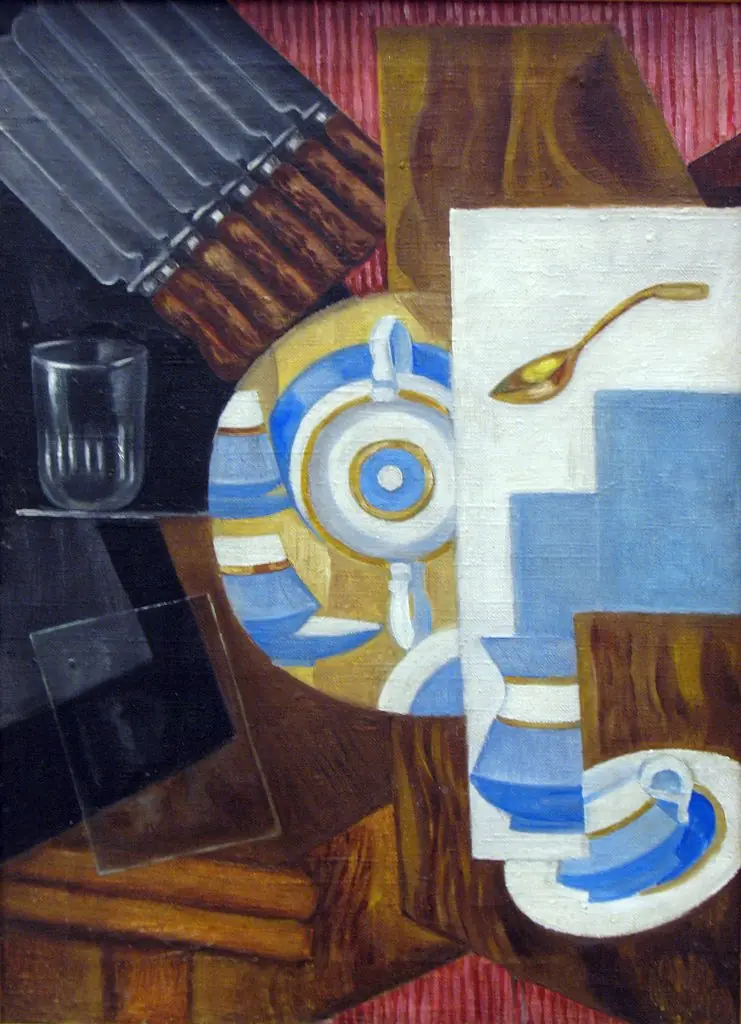
Visually, Cubo-Futurist canvases shatter objects into interlocking metallic planes, repeat contours to suggest movement, and deploy bold, non-naturalistic color. Letters, numbers, and whole words frequently invade the composition, echoing the poets' invented "zaum" (transrational) language. The defining example is Kazimir Malevich's The Knifegrinder (1912–13), in which a sharpener's pumping hands and foot dissolve into a glittering cascade of repeated forms.
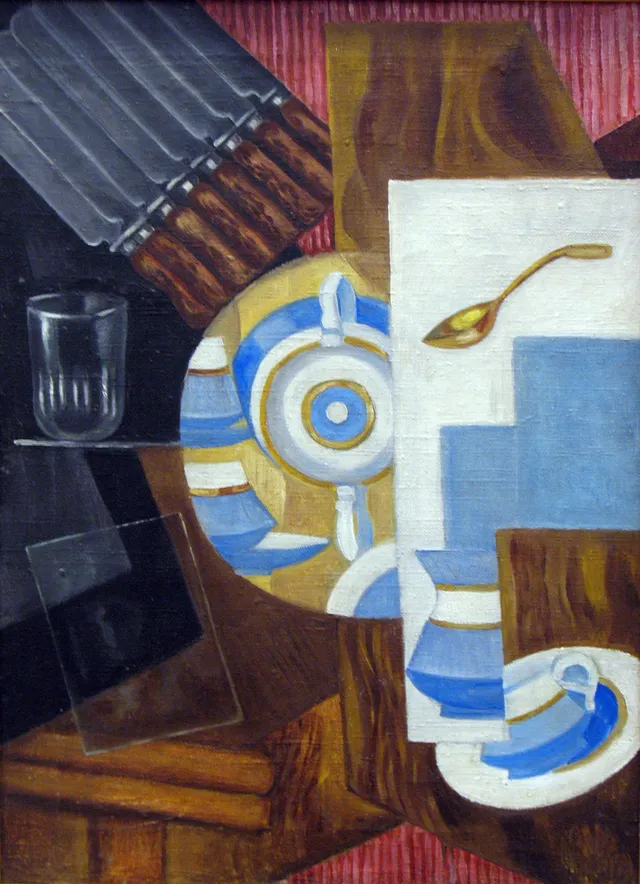
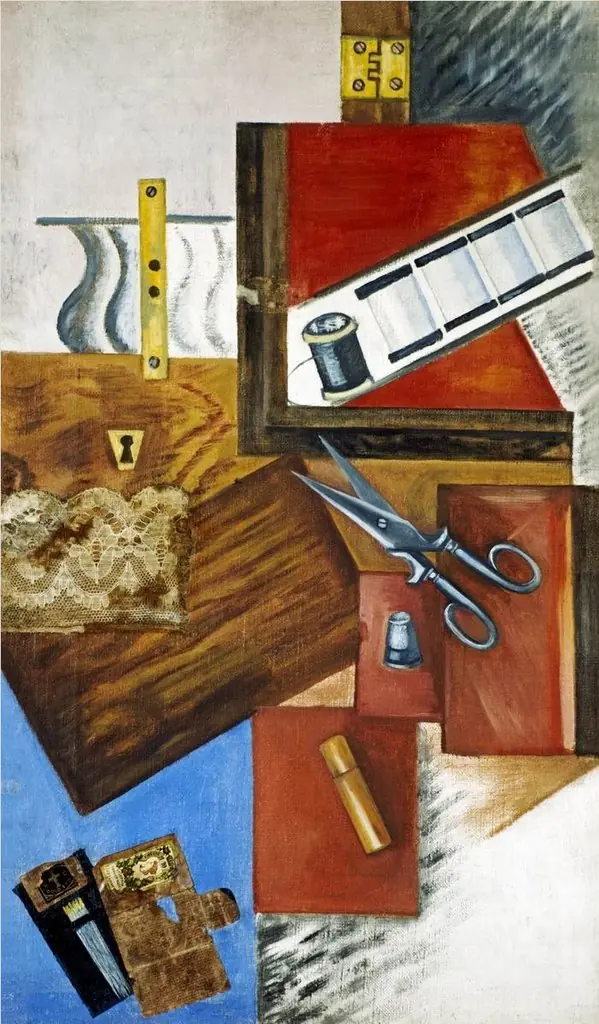
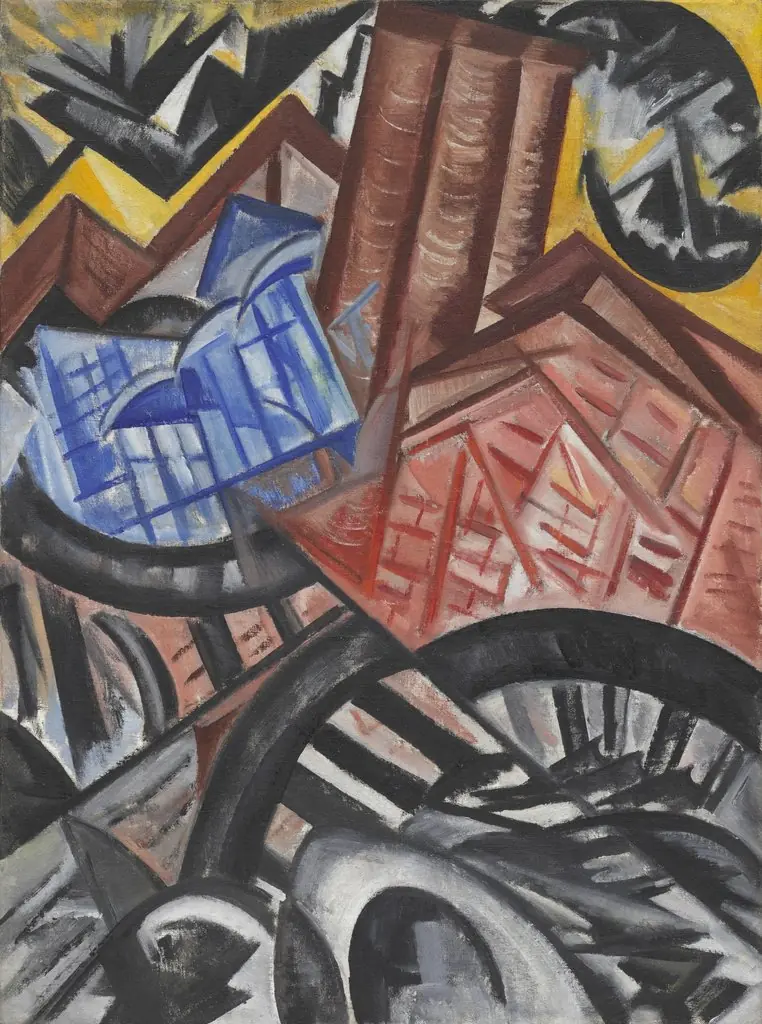
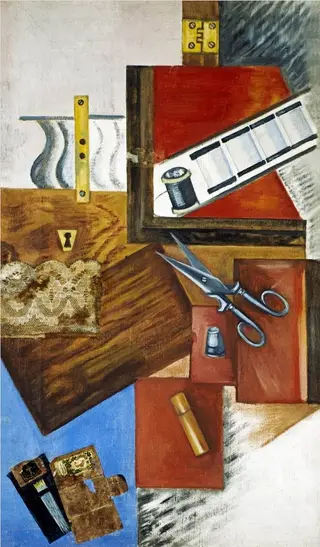
The movement attracted a remarkable roster: David Burliuk, often called the father of Russian Futurism and its tireless organizer; Malevich, Natalia Goncharova (The Cyclist, 1913), Mikhail Larionov, Lyubov Popova (The Pianist, 1914), and Vladimir Tatlin. Among them was Olga Rozanova (1886–1918), whose work hewed closest to Italian Futurist ideals; when Marinetti visited Russia in 1914, her painting impressed him, and she exhibited in Rome that year. Works in this collection—Hairdressing Salon, Metronome, Kerosene, Factory and the Bridge, Sideboard with Dishes, and the relief Working Casket—show her fracturing of everyday urban subjects.
Cubo-Futurism proved a swift, transitional crucible rather than a settled school. Its experiments in pure geometric form led directly to Malevich's Suprematism, announced in 1915, and fed Tatlin's Constructivism. Rozanova herself moved toward her abstract "tsvetopis" before her early death from diphtheria in 1918. Short-lived but pivotal, the movement was the bridge across which Russian art passed from representation into full abstraction.
Key artists
Works
Groups & collectives
Frequently asked questions
What is Cubo-Futurism?
Cubo-Futurism is an art movement. A Russian hybrid of French Cubism and Italian Futurism that emerged around 1912–1915.
Who are the key Cubo-Futurism artists?
Key Cubo-Futurism artists in the collection include Olga Rozanova.
When did Cubo-Futurism take place?
Cubo-Futurism dates from around 1913.
Where can I see Cubo-Futurism works?
Cubo-Futurism works in the collection are held by Tretyakov Gallery and Museum of Modern Art.