Mughal Painting movement — works
1,045–1,080 of 2,004 works · most celebrated first
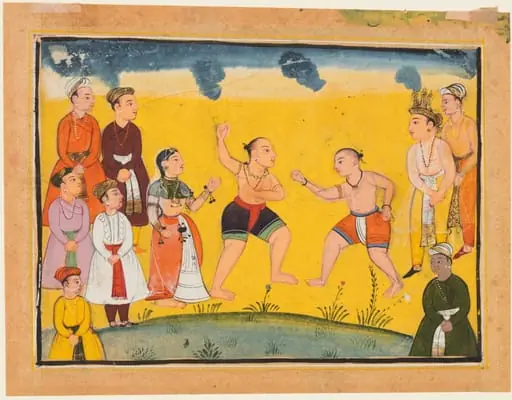 Draupadi Rescued from Abduction, from a Mahabharata
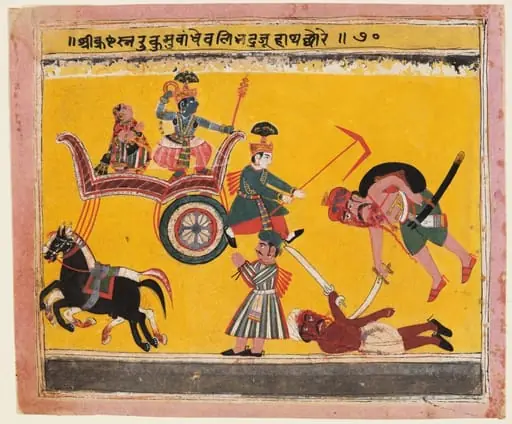 Abduction of Rukmini: Krishna Tied the Hands of Rukma, from a Bhagavata Purana
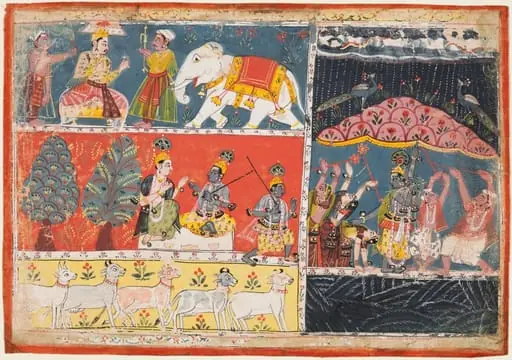 Krishna Lifts Mount Govardhan, from a Bhagavata Purana
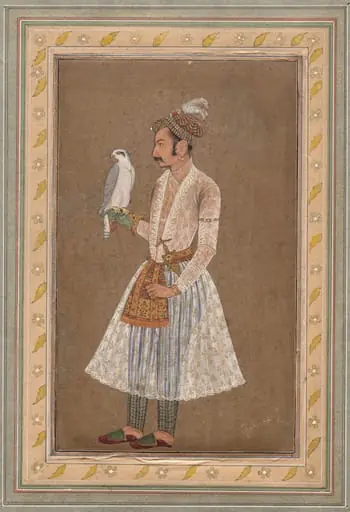 Portrait of Raja Jagat Singh of Nurpur (reigned 1618–46)
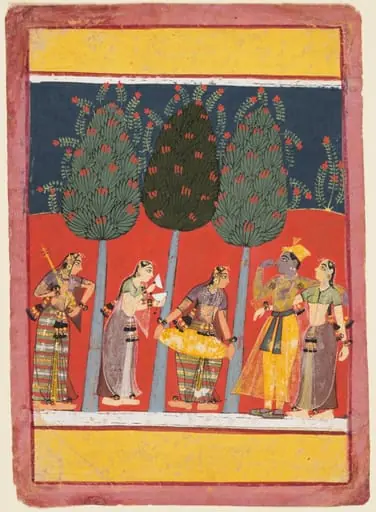 Women Play Music for Radha and Krishna: Chitrini Nayika, from a Rasikapriya
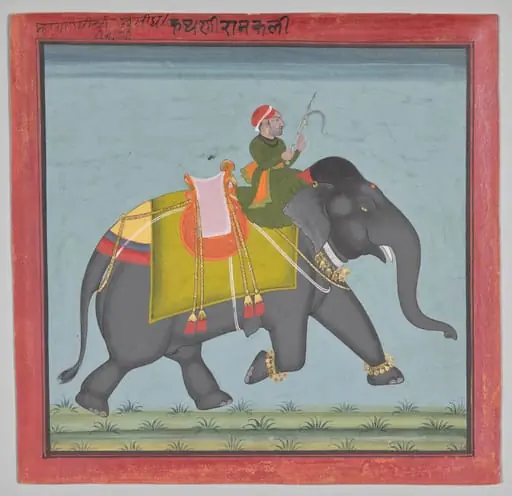 Royal Elephant Ramkali with a Mahout
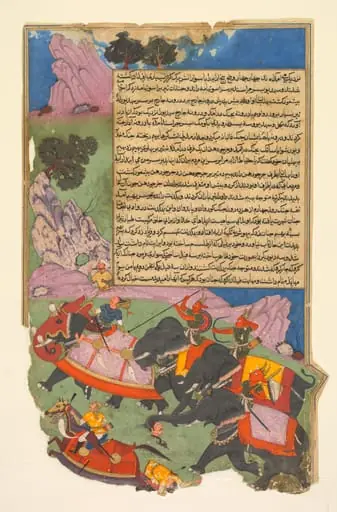 Ghatotkacha and three demons in his company chase Bhagadatta, from Bhishma-parva (volume six) of a Razm-nama (Book of Wars) adapted from the Sanskrit Mahabharata and translated into Persian by Mir Ghiyath al-Din Ali Qazvini, known as Naqib Khan (Persian, d. 1614)
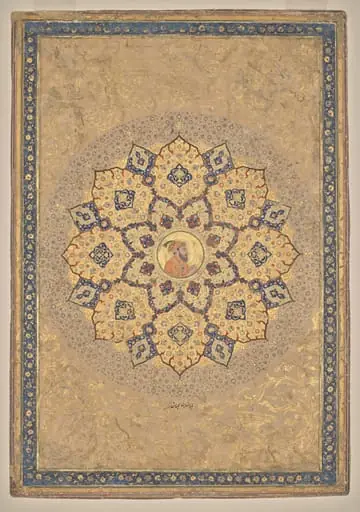 Shamsa (sunburst) with portrait of Aurangzeb (1618–1707), from the Emperor's Album (the Kevorkian Album)
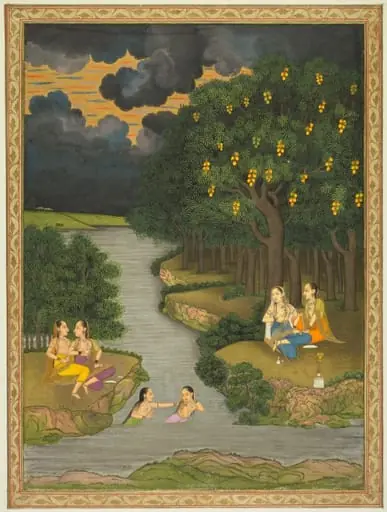 Women Enjoying the River at the Forest’s Edge (recto)
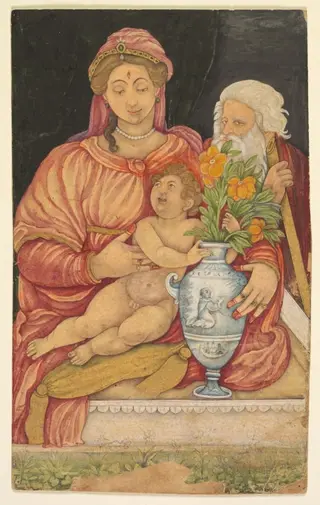 The Holy Family
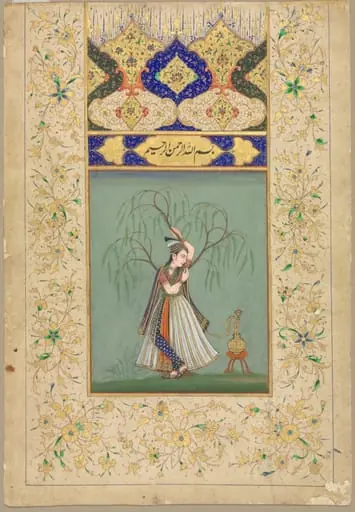 Princess Smoking a Hookah (as Salabhanjika)
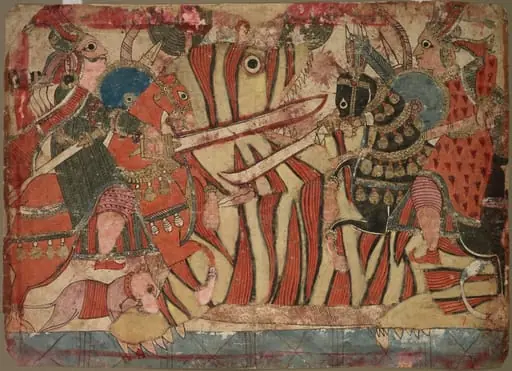 Illustration of the Mahabharata
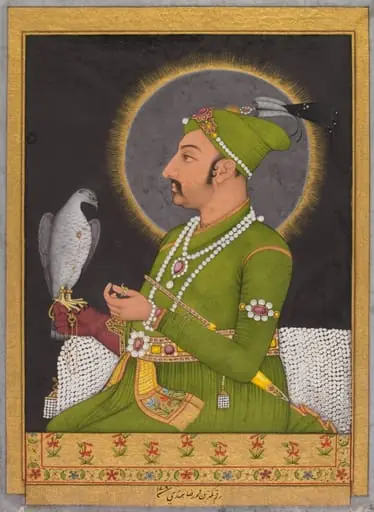 Posthumous portrait of the Mughal emperor Muhammad Shah (reigned 1719–1748) holding a falcon (recto)
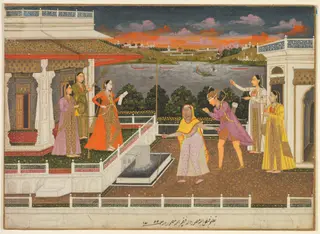 A blindfolded suitor is brought before a princess; verso: scrolling floral vines
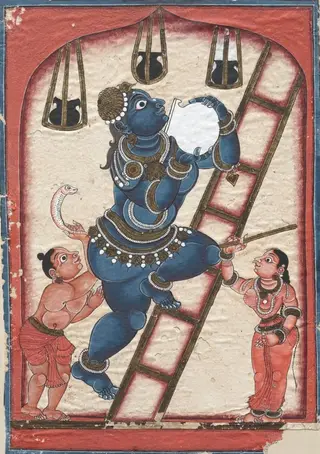 Krishna Stealing Curds
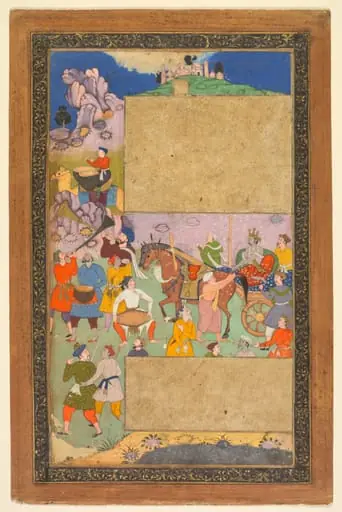 A charioteer riding through a rocky landscape with an entourage of footmen and musicians, page from a Razm-nama (Book of Wars) adapted from the Sanskrit Mahabharata and translated into Persian by Mir Ghiyath al-Din Ali Qazvini, known as Naqib Khan (Persian, d. 1614)
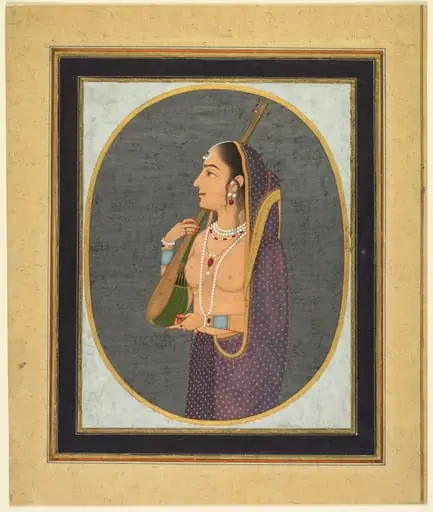 Court lady singing and playing the vina (recto)
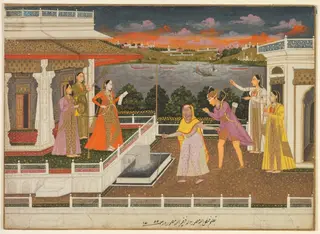 A blindfolded suitor is brought before a princess (recto)
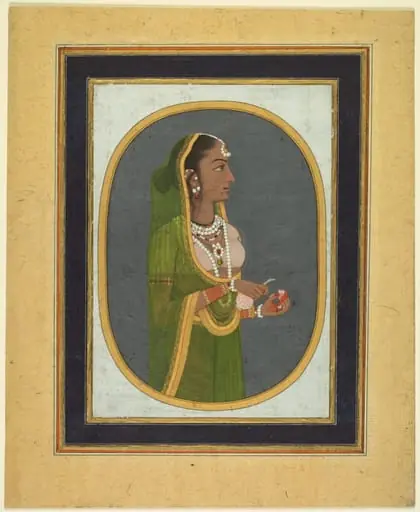 Court Lady Pouring Wine (recto); Calligraphy of Lyrical Quatrains (verso)
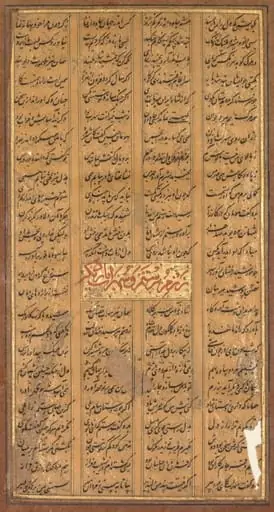 Text of Rustam and Suhrab, from the Shah-nama of Firdausi (Persian, c. 934–1020) (verso)
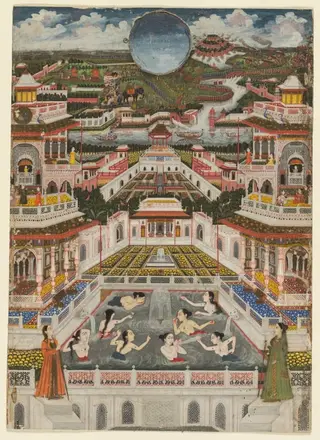 Women bathing before an architectural panorama
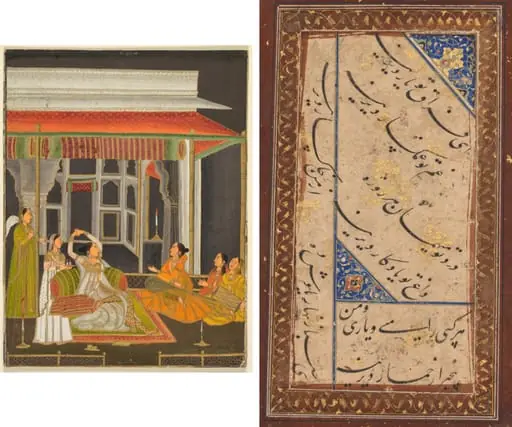 A princess on a terrace with attendants at night (recto); Calligraphy (verso)
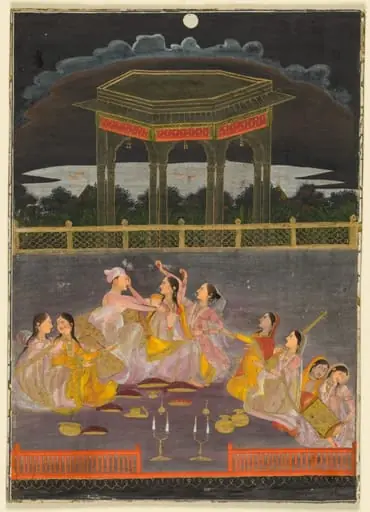 A prince celebrating Holi with palace women on a terrace at night (recto); calligraphy of a quatrain (verso)
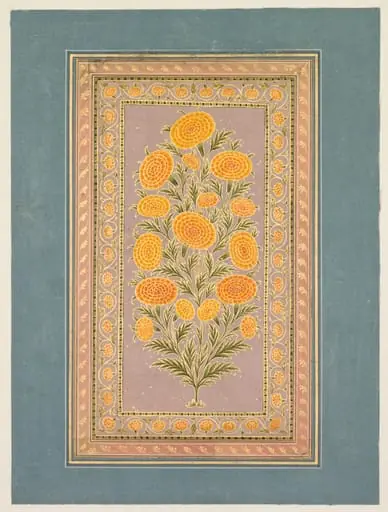 Flowering Marigold (verso)
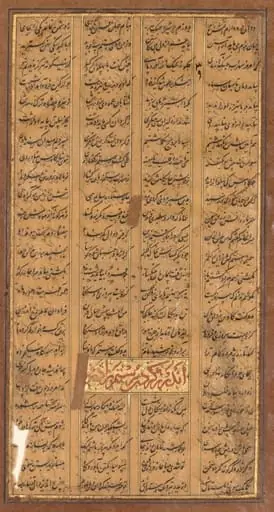 Text of Rustam and Suhrab, from the Shah-nama of Firdausi (Persian, c. 934–1020) (recto)
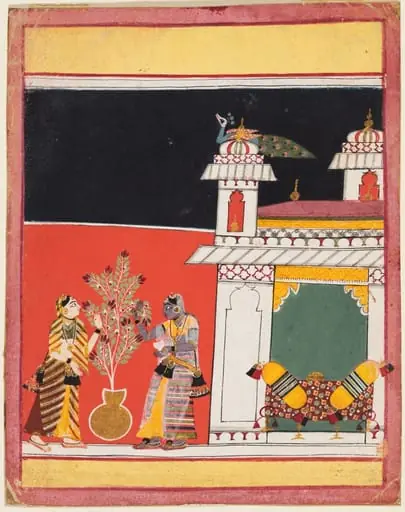 Two Women Pluck Flowers on a Terrace: Gunakali Ragini, from a Ragamala
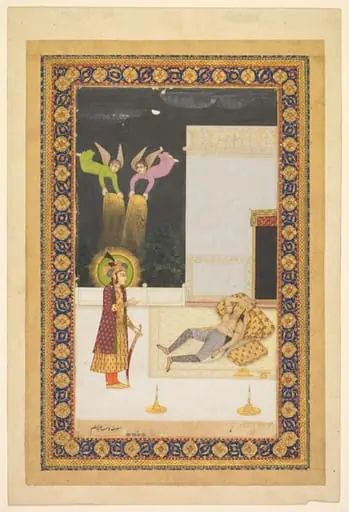 The Dream of Zuleykha
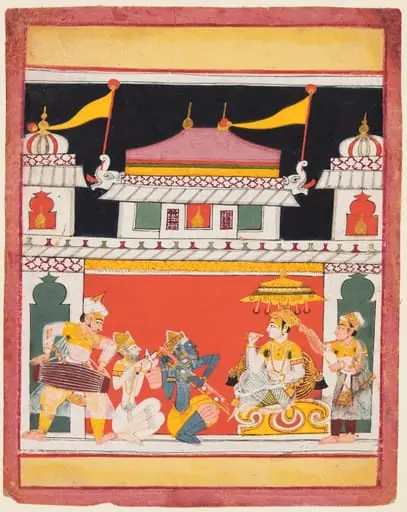 Three Musicians Perform Before a King: Shri Raga, from a Ragamala
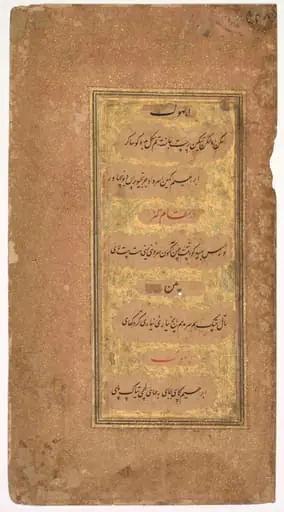 From Dohras (Songs) 40 and 42 from the Kitab-i Nauras (Book of Nine Essences) of Sultan Ibrahim Adil Shah II of Bijapur (r. 1580–1627) (recto)
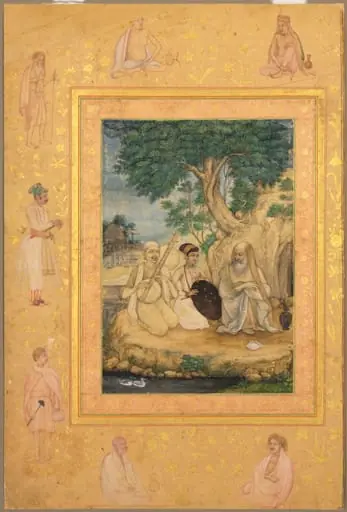 Prince and ascetics, from the Late Shah Jahan Album
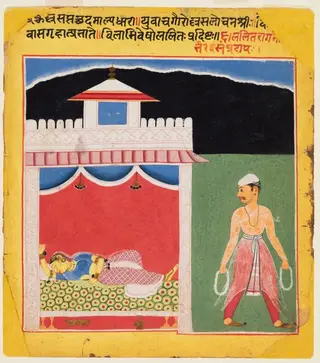 The Lover Leaves Wistfully in the Morning after a Passionate Tryst: Lalit Ragini, from a Ragamala
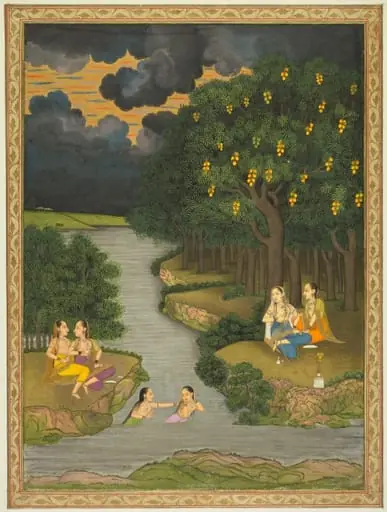 Women enjoying the river at the forest’s edge (recto) and flowering marigold (verso)
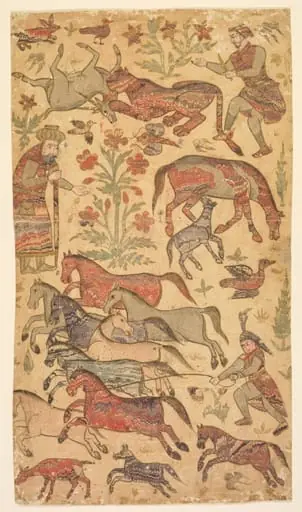 A marbled picture of Rustam catching Rakhsh
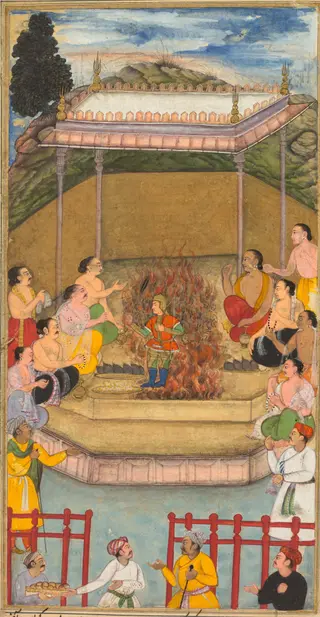 Yaja and Upayaja perform a sacrifice for the emergence of Dhrishtadyumna from the fire, from Adi-parva (volume one) of the Razm-nama (Book of Wars) adapted and translated into Persian by Mir Ghiyath al-Din Ali Qazvini, known as Naqib Khan (Persian, d. 1614) from the Sanskrit Mahabharata
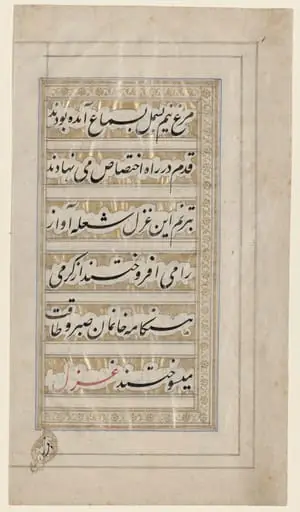 Page from the Poem of Beauty and Love
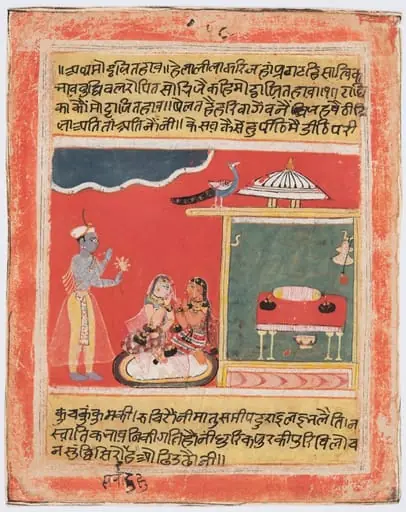 Krishna and Radha Avoid Embarrassment: Mottaita Bhava, from a Rasikapriya