Artwork
Krishna Stealing Curds
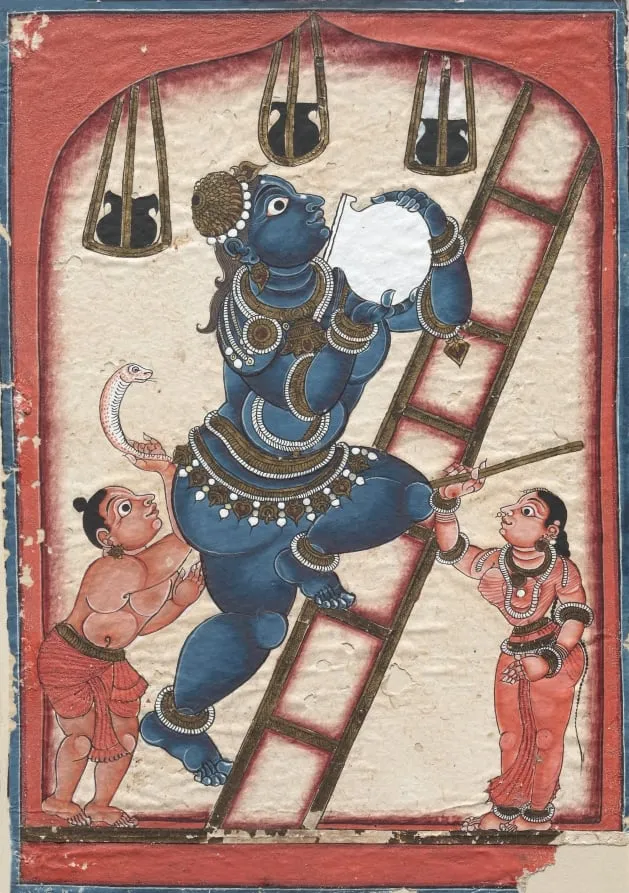
Krishna Stealing Curds is an unspecified painting by the Mughal Painting artist Unknown. It dates from 1704 and is held in the collection of the Cleveland Museum of Art.
- Accession no.
- 1966.28
- Credit line
- John L. Severance Fund
About this work
Overview
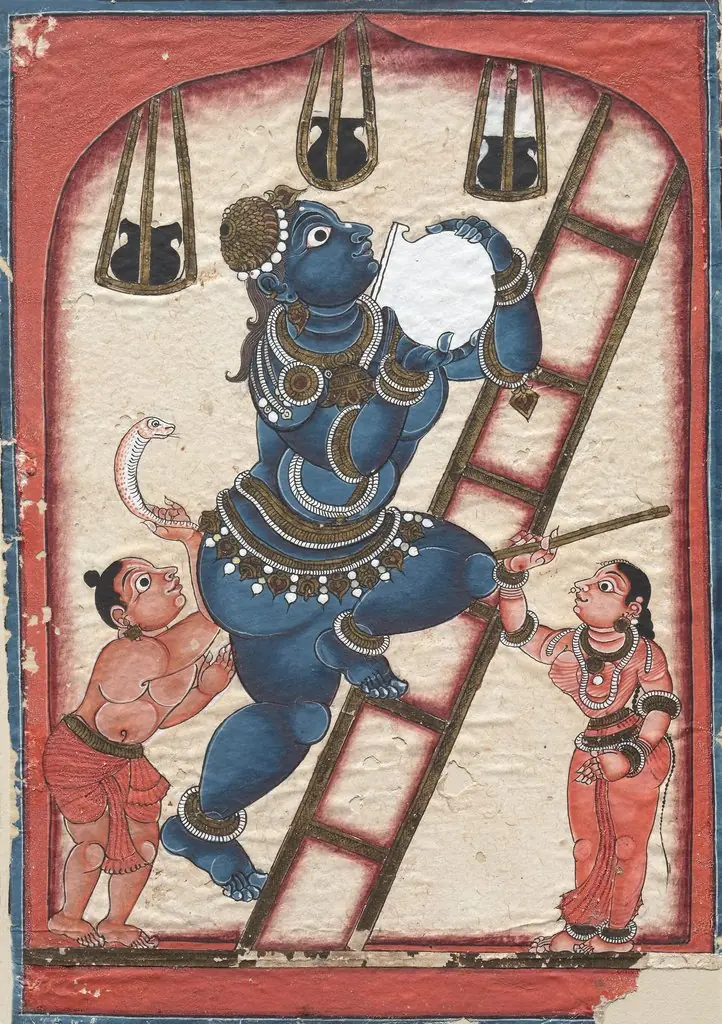
This painting depicts a scene from Hindu mythology, showing the infant Krishna attempting to steal curds, highlighting his playful and mischievous nature as a toddler in a rural setting.
Subject & Meaning
The artwork illustrates a well-known anecdote from Krishna's childhood, where he climbs a ladder to reach a clay pot of curds despite his foster mother's attempts to discipline him, conveying the universal theme of childish mischief.
Technique & Style
Characterized by bold outlines, rounded contours, and vibrant colors (notably Krishna's blue skin and the yellow cloth), the painting employs a flat, shadow-less technique to maintain clarity and a lively atmosphere, typical of southern Indian artistic traditions.
History & Provenance
The artist remains unknown; however, the style suggests origins in Southern India, potentially Andhra Pradesh or Tirupati, indicating a regional influence on the depiction of the mythological theme.
Context
This work reflects the cultural significance of Krishna's stories in Hinduism, where his childhood antics symbolize both his divine playfulness and relatability to human experience, making such scenes popular in regional art.
Legacy
While the painting itself is not attributed to a known artist, it represents a style influential in southern Indian art, encouraging viewers to explore similar works from the region for more examples of this distinctive aesthetic.
Artist & collection









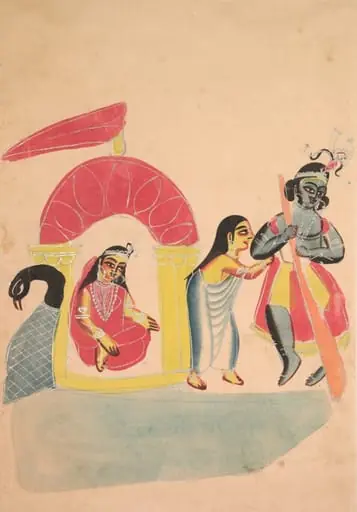 Krishna Ferrying Radha Across the Yamuna River
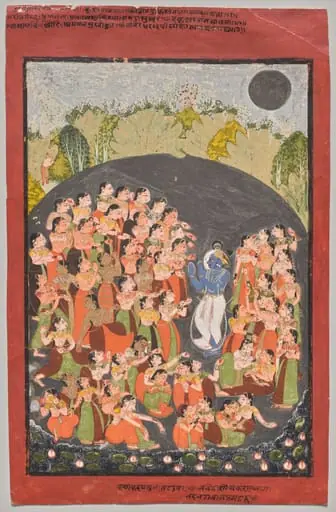 Krishna and the Gopis Gather for Rasamandala
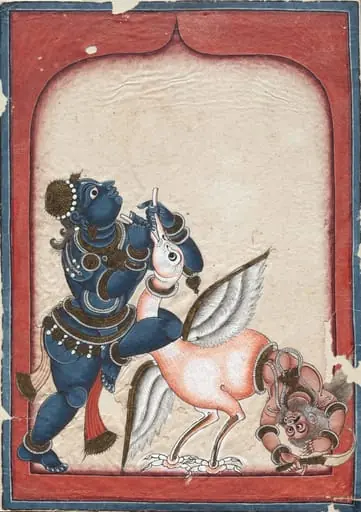 Krishna Vanquishing the Crane-Demon Bakasura
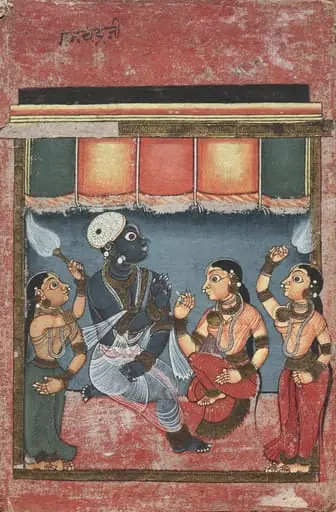 Krishna with Radha and Two Attendants (recto)
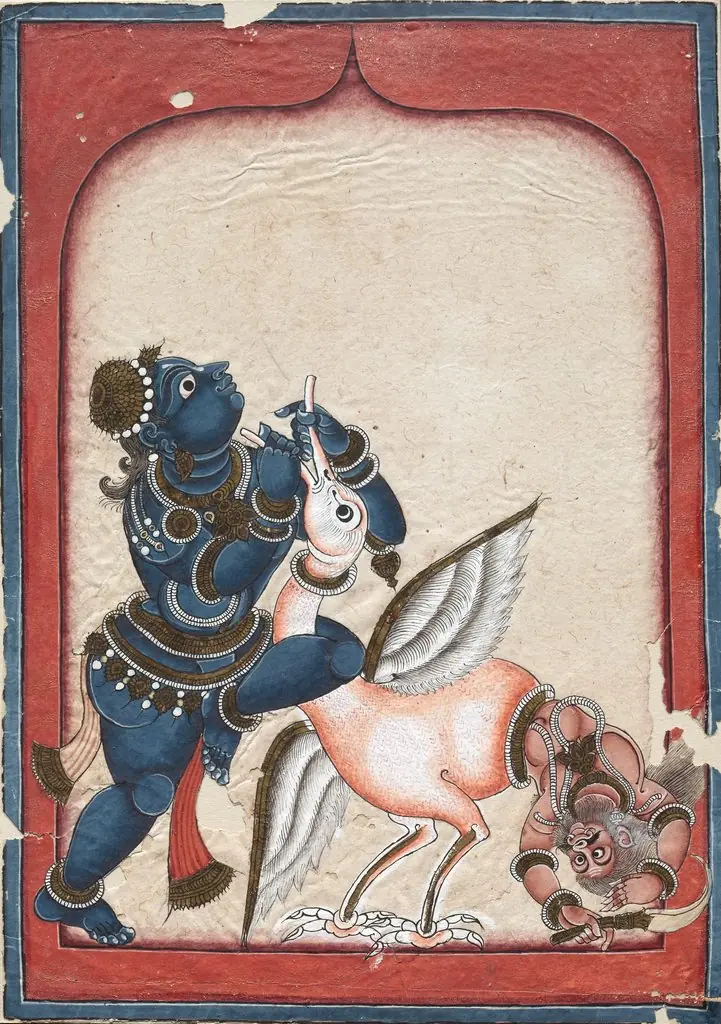 Krishna Vanquishing the Crane-Demon Bakasura
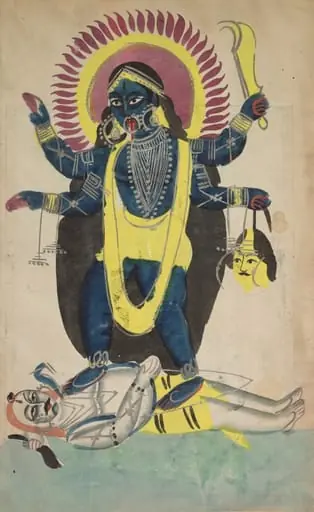 Kali Dancing on Shiva (recto), from a Kalighat album
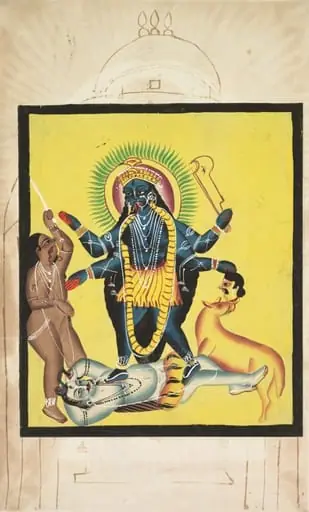 Kali Standing on Shiva (verso), from a Kalighat album
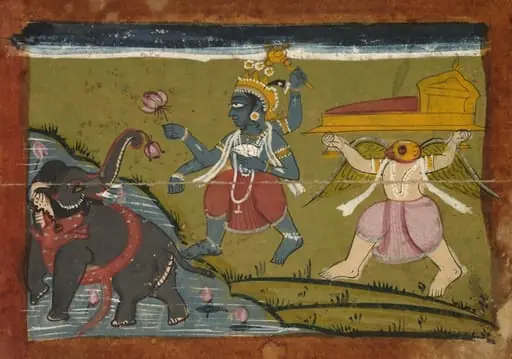 Gajendra Moksha: The Salvation of the King of the Elephants
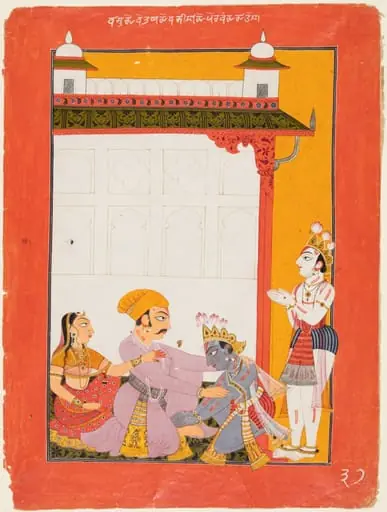 Krishna and Balarama touching the feet of Vasudeva and Devaki, from the “Vertical” Bhagavata Purana