Movement
Purism
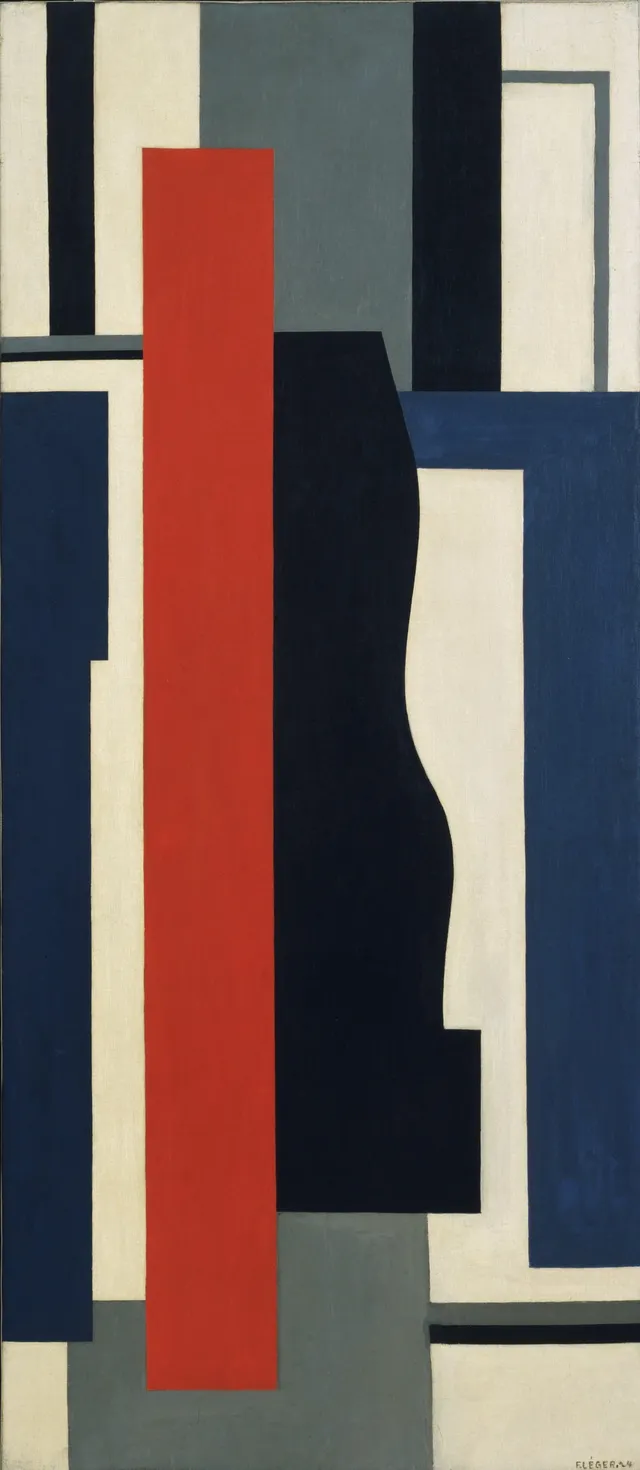
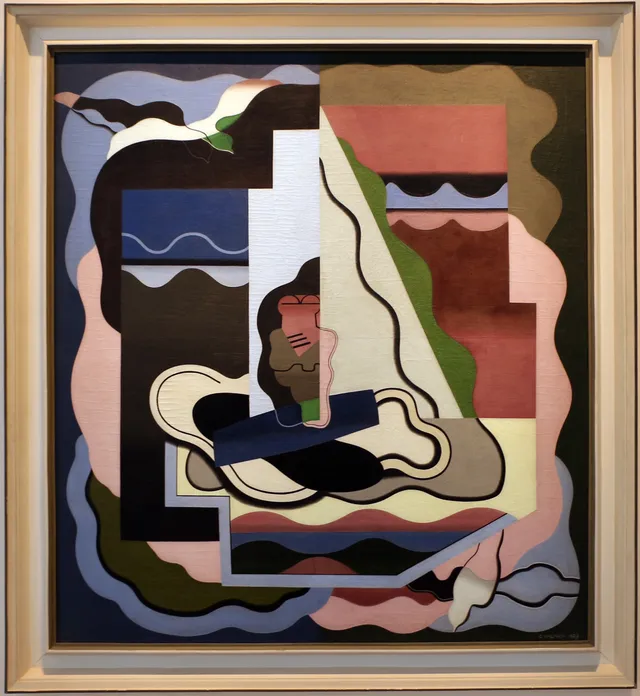
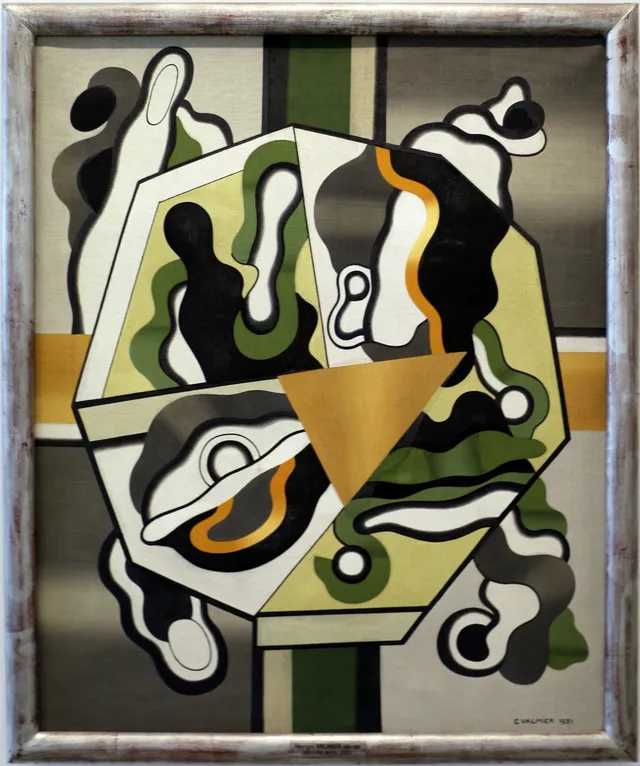
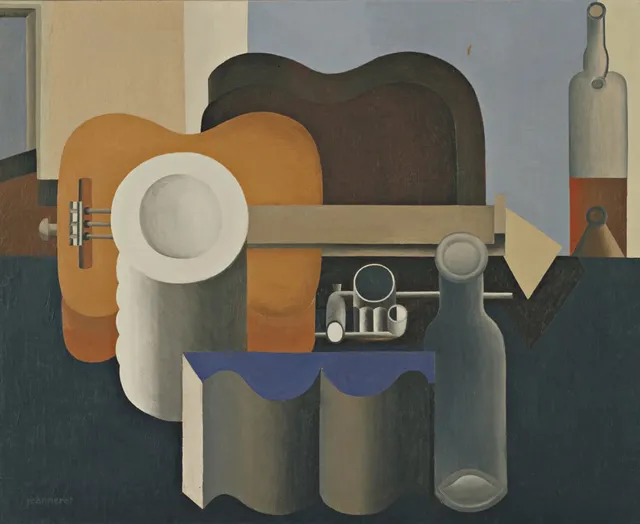
Purism is an art movement of the 1918–1925 period. The gallery holds 4 works in this movement, including works by Georges Valmier, Le Corbusier and Amédée Ozenfant. Browse Purism paintings, portraits, pictures and artworks from the world's public-domain museum collections.
Purism was a French movement in painting and design that flourished from 1918 to 1925, conceived as a corrective to what its founders saw as the drift of late Cubism into decorative, arbitrary fragmentation. It was launched by the painter Amédée Ozenfant and the painter-architect Charles-Édouard Jeanneret—better known by his later pseudonym, Le Corbusier—who met in Paris in 1917. Their manifesto *Après le Cubisme* ("After Cubism") appeared in 1918 to accompany their first joint exhibition at the Galerie Thomas, which paired twenty canvases by Ozenfant with ten by Jeanneret. Emerging from the trauma of the First World War, Purism belonged to the broader European "return to order," answering the chaos of the trenches with an art of clarity, discipline, and rational construction.
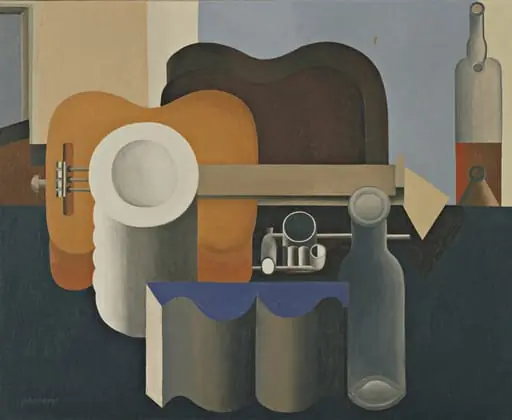
The Purists prized precise, legible geometry over Cubist ambiguity. Rather than shattering objects across the picture plane, they distilled everyday things—bottles, carafes, glasses, pipes, guitars, plates, and laboratory test tubes—into clean, frontal silhouettes they called *objets-types*: standardized forms refined by use and mass production, mirroring the functional elegance of the machine. Compositions are flat, calmly balanced, and built from interlocking profiles in muted, harmonious color. In an essay titled "Purism" (1920), Ozenfant and Le Corbusier defined painting as "an association of purified, related, and architectured elements," a credo embodied in still lifes such as Le Corbusier's *Still Life* (1920).
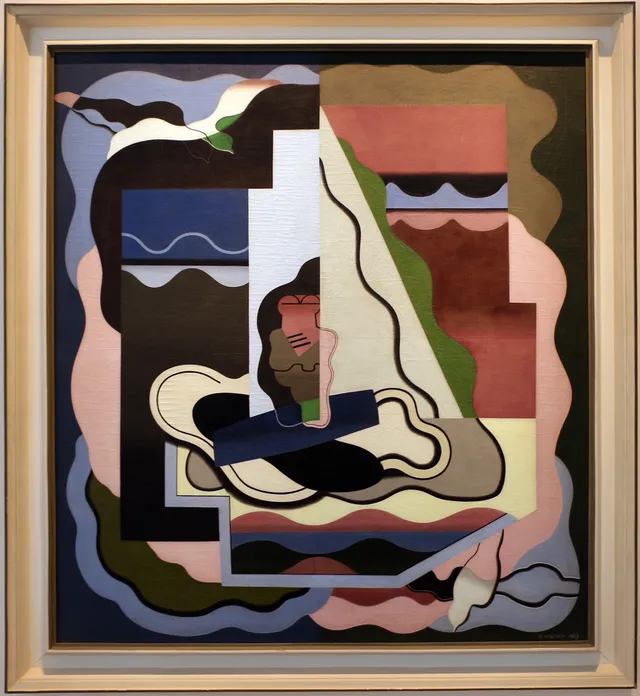
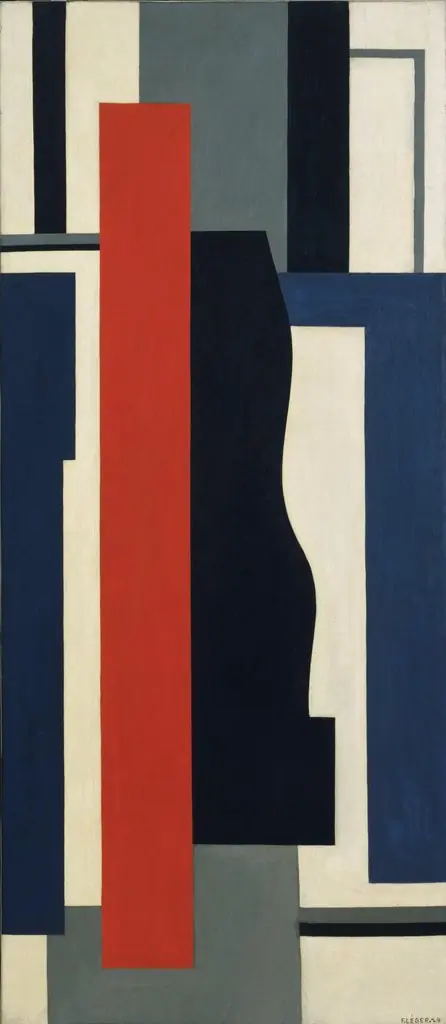
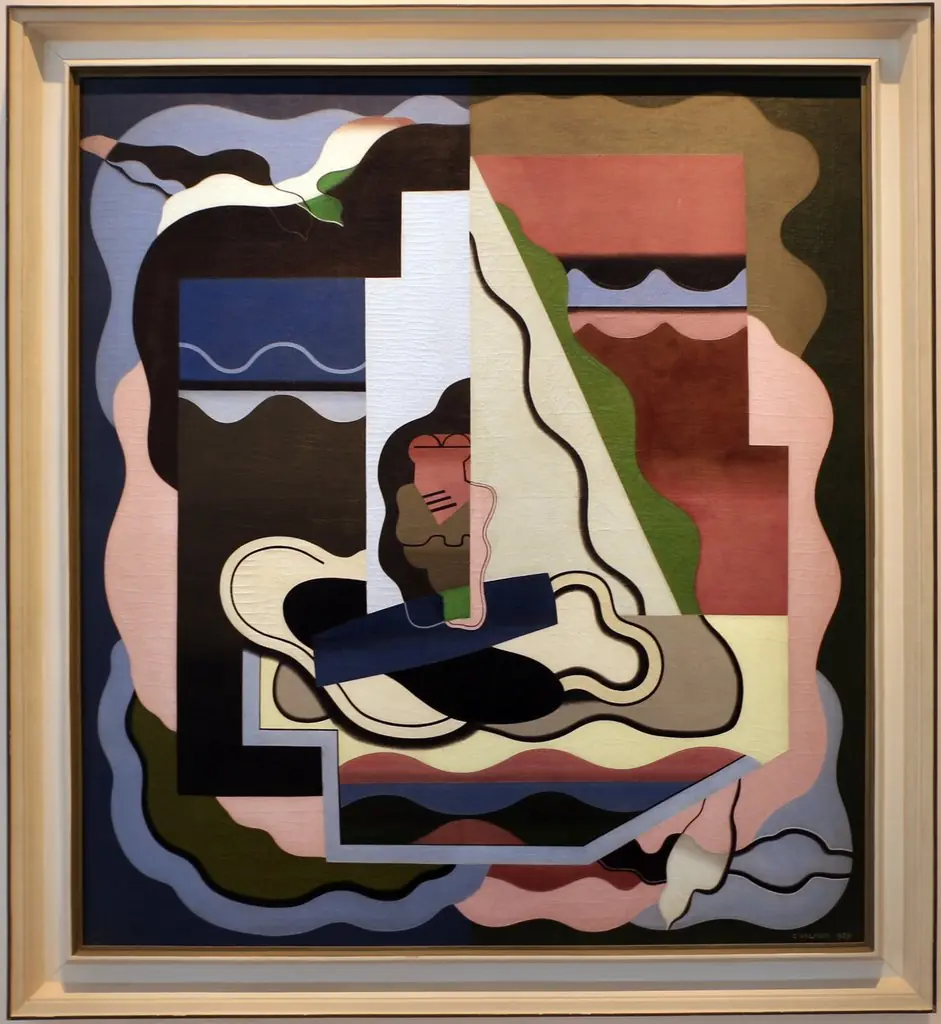
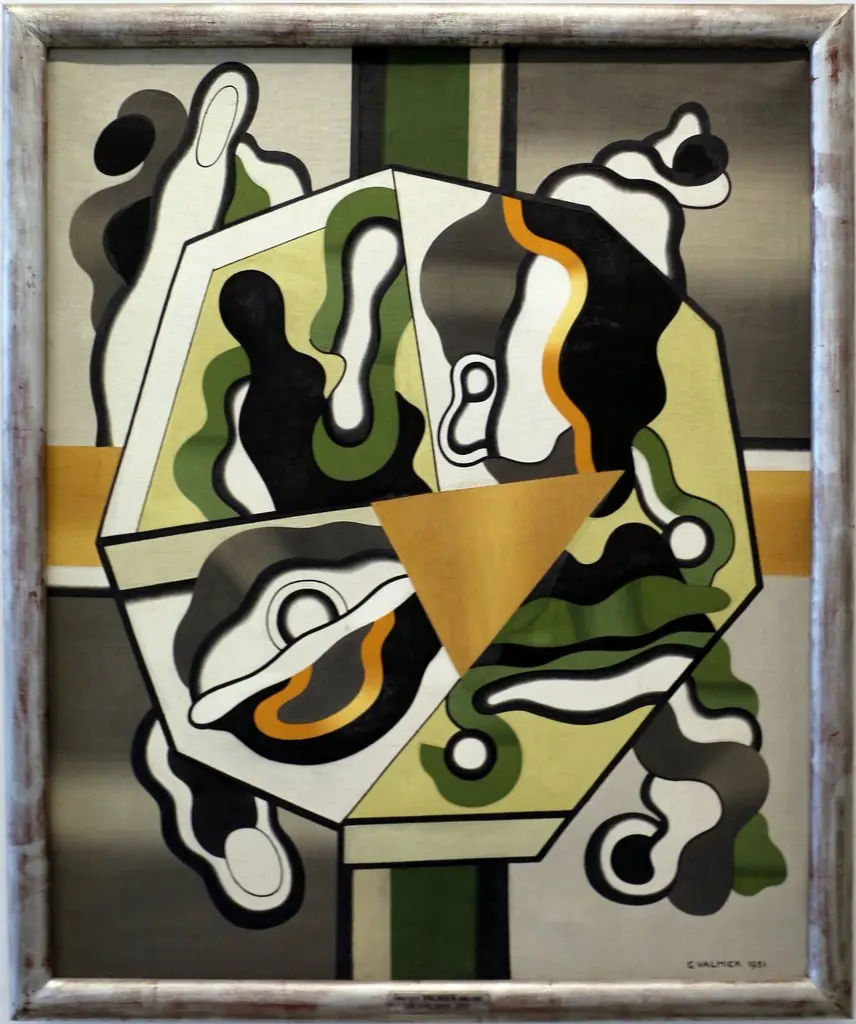
The movement's principal figures were Ozenfant and Le Corbusier themselves, who spread their ideas through the influential review *L'Esprit Nouveau*, published from 1920 to 1925. Fernand Léger became a close associate from about 1920, his tubular, machine-inspired forms aligning with Purist order; the collection's *Mural Painting* reflects that sensibility. Georges Valmier, an early Cubist represented here by *Le marin* and *Les cinq sens*, worked in the same Parisian orbit, his stable, brightly keyed compositions echoing Purist balance. An *Untitled* work by Le Corbusier sits at the movement's theoretical heart.
Purism effectively dissolved after 1925, when Ozenfant and Le Corbusier showed alongside Léger at the Pavillon de l'Esprit Nouveau before ending their partnership. Its true legacy ran less through painting than through architecture and design: the doctrine of standardized, purified form fed directly into Le Corbusier's buildings and the international Modernism that followed, making Purism a crucial bridge between Cubism and the machine-age aesthetic of the twentieth century.
Key artists

Works
Frequently asked questions
What is Purism?
Purism is an art movement. A French movement founded by Amédée Ozenfant and Le Corbusier in 1918, arguing that Cubism had become decorative and needed to be purified into clear, stable object forms.
Who are the key Purism artists?
Key Purism artists in the collection include Georges Valmier, Le Corbusier and Amédée Ozenfant.
When did Purism take place?
Purism dates from 1918–1925.
Where can I see Purism works?
Purism works in the collection are held by Musée d'art moderne de Paris and Museum of Modern Art.