Artist
Subject
Pocket is a subject in art. The gallery holds 69 works in this subject in art, including works by Madeleine & Madeleine, Marie-Louise Carven and Carven.
A pocket is a small bag- or envelope-shaped compartment sewn into or attached to clothing for carrying small items; pockets are also found on luggage, backpacks, and similar containers. As an object of material culture it has a surprisingly divided history, split sharply along lines of gender. From at least the Renaissance, European men's garments carried numerous sewn-in pockets. The earliest were lodged in the padded trunk hose of the sixteenth century, and over the seventeenth century interior pockets migrated into knee breeches and, as the three-piece suit of coat, waistcoat, and breeches took shape, into coats and waistcoats as well. The shift was partly defensive: as cutpurses preyed on the pouches and girdles once worn openly at the waist, tailors began sewing concealed bags into seams for safekeeping.
Women's dress followed a different path. Around the 1650s the detachable "tie-on" pocket emerged — a flat pouch, often more than fifteen inches long, bound to a tape and knotted around the waist beneath the skirts, reached through discreet slits in gown and petticoat. Because it was modular, it could be moved between outfits, made at home, and lavishly personalised. Surviving examples are worked in crewel wool, silk, and linen, embroidered with flowers, birds, and initials; functionally they were the handbag of their day, and the lost pocket of the nursery rhyme "Lucy Locket" testifies to how intimately they were tied to a woman's small valuables.
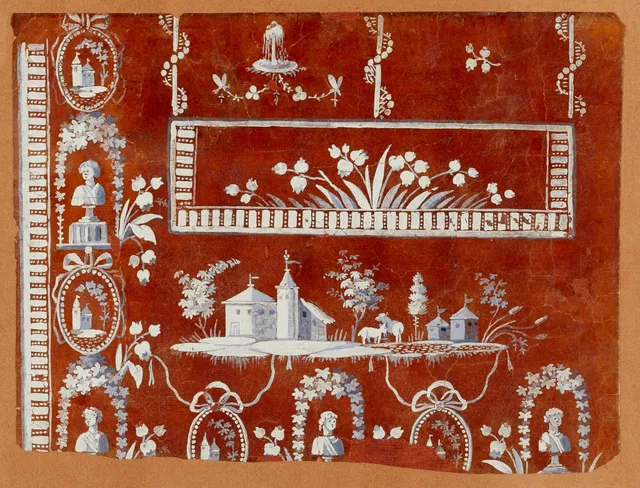
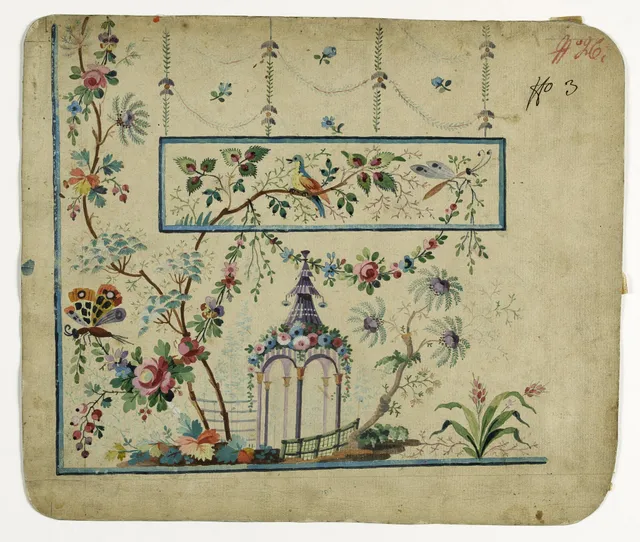
The pocket was also a prime site for ornament in fashionable menswear, and the eighteenth-century French waistcoat (gilet) designs held here belong to that tradition: working drawings for embroidered waistcoats whose welted pocket flaps were among the most heavily decorated zones of the garment. Schemes such as the Gilet décor à grotesques, the Gilet décor architectures rurales, the Gilet décor pagode, and the Gilet à la dentelle noire show the rococo vocabulary — grotesques, chinoiserie pagodas, pastoral architecture, painted lace — that animated these surfaces, much as the folded fan (Eventail plié) carried decoration into another accessory of polite dress.
The tie-on pocket faded after about 1790, when the slim neoclassical silhouette banished bulk and the small external reticule, or "indispensable," took its place. Modern scholarship — notably the V&A-linked Pockets of History project and the work of Barbara Burman, Ariane Fennetaux, and Seth Denbo — has reframed the pocket as a window onto women's privacy, labour, and economic life.
Key artists
Overview
A pocket is a small bag- or envelope-shaped compartment sewn into or attached to clothing, designed for carrying small items. The motif recurs in art primarily through its role in costume and decorative design, particularly in studies of historical dress, textile arts, and garment construction. While rarely the sole subject of a major artwork, the pocket appears persistently across collections of fashion plates, embroidery patterns, and costume studies, offering insight into the material culture of everyday life, social hierarchy, and gendered practices of personal storage across centuries.
Iconography & meaning
The pocket carries layered symbolic significance in visual culture. In European art, its evolution from external pouch to integrated garment feature tracks broader shifts in bodily propriety, social discretion, and gendered space. The French term poche derives from Old French and ultimately from a Frankish root meaning small sack, while German dialect variants such as Seckel or Säckel preserve this etymological connection to the bag as an independent object. The pocket's capacity to conceal or reveal, to hold valuables close to the body, made it a locus of practical and metaphorical meaning. German idioms collected in costume literature illustrate this: die eigenen Taschen füllen (to fill one's own pockets) signifies illicit enrichment, while tief in die Tasche greifen müssen (to reach deep into one's pocket) denotes proverbial expense. In art, the pocket's visibility or invisibility, its ornamentation or plain utility, and its placement on masculine or feminine garments all signal social status, occupational identity, and changing norms of public and private space.
Across movements & periods
The treatment of the pocket in art and design shifted markedly across periods. In medieval Europe, pocket-like openings called fitchets appeared in the thirteenth century as vertical slits in outer tunics, giving access to purses or keys beneath. Pockets became more visible in the late fifteenth century and spread widely in the sixteenth. By the seventeenth century, sewn-in pockets distinguished men's clothing, while women continued to use separate tie-on pouches hidden beneath skirts, a divergence that persisted into the nineteenth century and shaped how artists depicted male and female dress. The eighteenth-century French embroidery designs in this collection represent a high point of pocket ornamentation, when waistcoat pockets became showcases for technical virtuosity in silk and metal thread. The nineteenth century saw the rise of the handbag as women's pockets were increasingly reduced or eliminated from garments, a pattern that continued into modern fashion with the phenomenon of smaller or purely decorative pockets in women's clothing. Archaeological and ethnographic evidence from Mesopotamia, the Levant, and East Asia confirms that pocket-like containers preceded and paralleled European developments, whether as belt pouches, adapted garment folds such as the Roman sinus, or independent accessories in Chinese, Korean, and Japanese dress before Western influence.
Notable depictions
The most substantial body of pocket-related visual material in this collection consists of the eighteenth-century French waistcoat embroidery designs, attributed to anonymous artisans working in the tradition of professional pattern drawing for the luxury textile trade. These are not autonomous artworks but functional designs intended for execution in needlework, preserving a record of how pockets were conceived as compositional elements within a garment's overall decorative scheme. Beyond this collection, the Victoria and Albert Museum holds significant examples of historical pockets, including eighteenth-century women's tie-on pockets and associated documentation. The Pocket Museum in Basel, founded as a specialized institution, collects pocket-related objects from delicate eighteenth-century watch pockets to modern security designs, preserving the material culture of this everyday form. The Smithsonian Institution's broader collections include pockets and pocket-related items within its costume and textile holdings, though these are dispersed among larger categories of dress and personal accessories.
Legacy
The pocket's afterlife in visual culture extends from its functional role in dress to its afterlives in design, language, and institutional collecting. The specialized vocabulary of pocket types, watch pockets, besom pockets, camp or cargo pockets, and the ephemeral beer pocket of the American Midwest, attests to the form's adaptability to changing technologies of personal carriage and social practice. The gendered history of pockets, documented in costume studies and popularized by contemporary data journalism, has generated renewed critical attention to how design encodes inequality. The Pocket Museum in Basel and publications such as Hannah Carlson's Pockets: An Intimate History of How We Keep Things Close (2023) represent contemporary efforts to recover and narrate this history. In art historical terms, the pocket remains a telling detail within larger representations of dress and social identity, its presence or absence, its elaboration or suppression, offering evidence of the material conditions and cultural values embedded in everyday objects.
Works
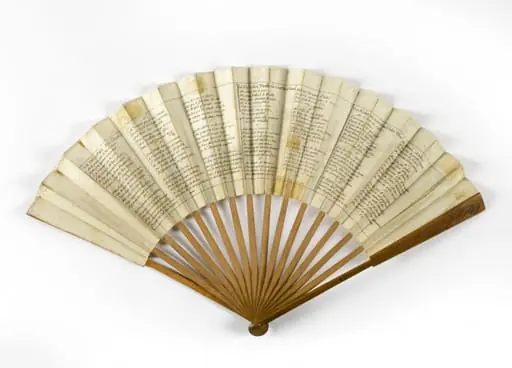 Eventail plié
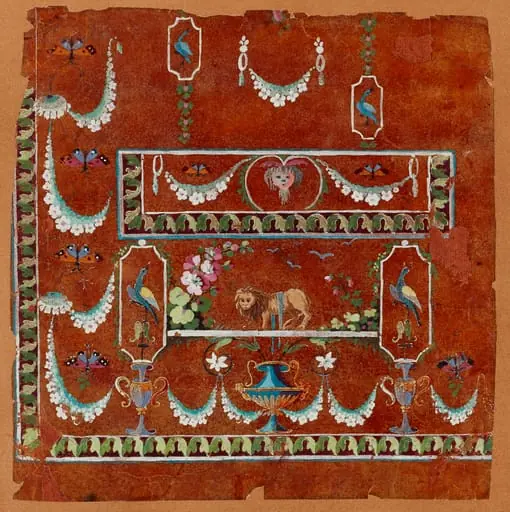 Gilet décor à grotesques, projets de broderies de gilet, XVIIIeme siècle
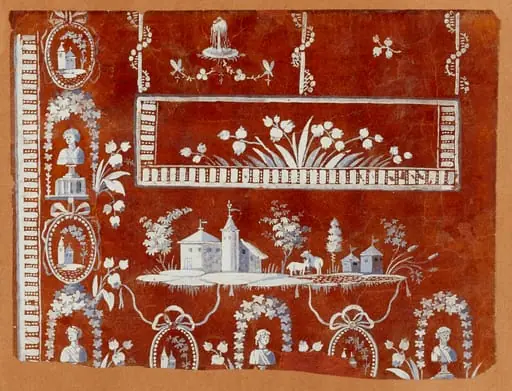 Gilet décor architectures rurales, projets de broderies de gilet, XVIIIème siècle
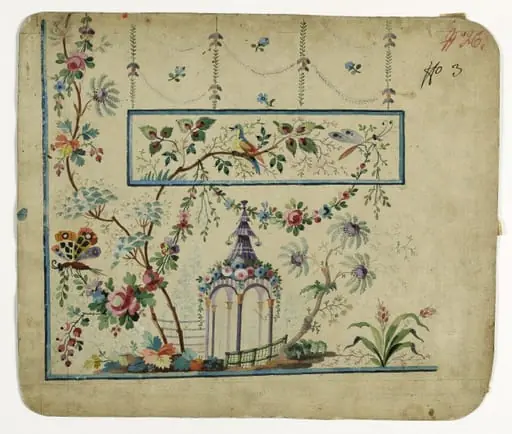 Gilet décor pagode, projets de broderies de gilet, XVIIIème siècle
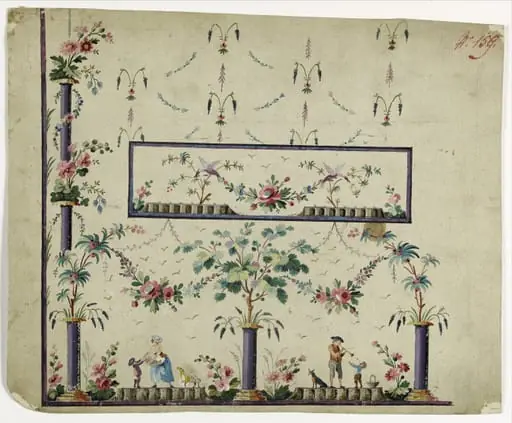 Gilet décor couple avec enfants, projets de broderies de gilet, XVIIIème siècle
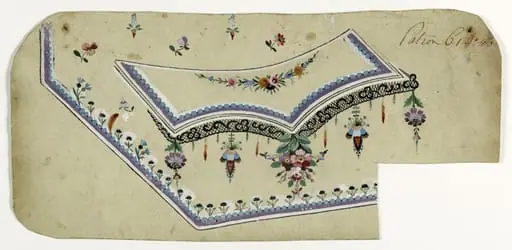 Gilet à la dentelle noire, projets de broderies de gilet, XVIIIème siècle
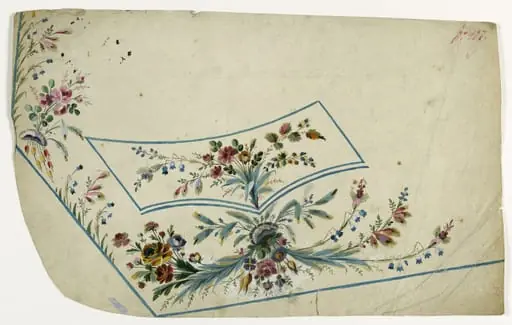 Gilet aux feuilles bleu-gris, projets de broderies de gilet, XVIIIème siècle
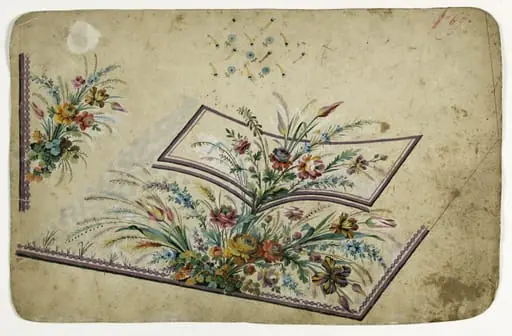 Gilet au bouquet de fleurs multicolores, projets de broderies de gilet, XVIIIème siècle
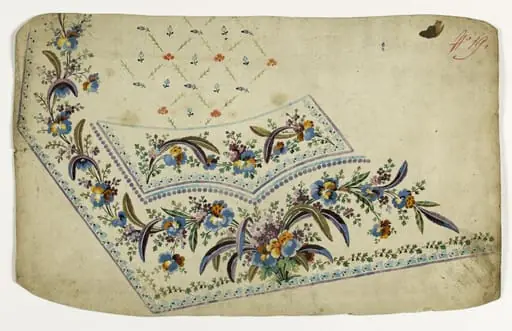 Gilet fleurs bleues et orange, projets de broderies de gilet, XVIIIème siècle
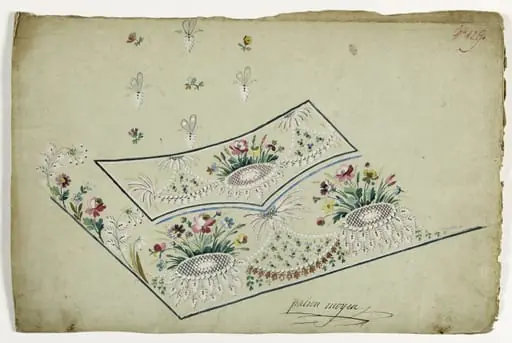 Gilet aux parterres de fleurs, projets de broderies de gilet, XVIIIème siècle
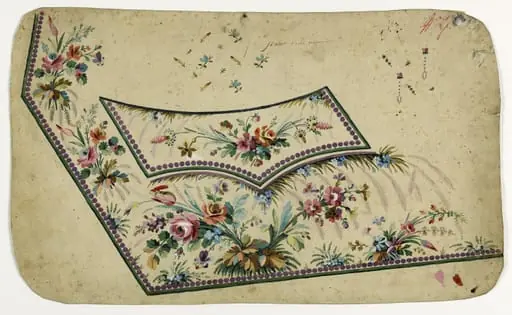 Gilet fleurs et perles mauves, projets de broderies de gilet, XVIIIème siècle
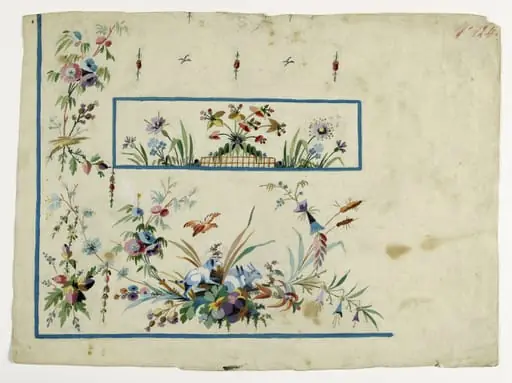 Gilet décor fleurs et fruits avec chien et lapins, projets de broderies de gilet, XVIIIème siècle
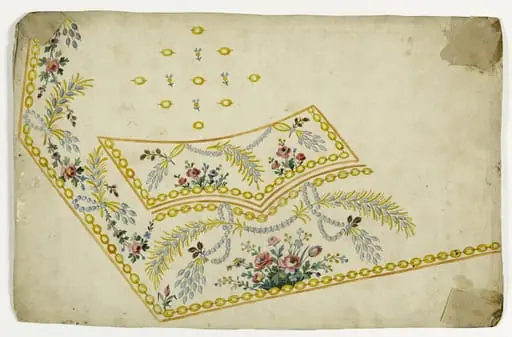 Gilet perles et fleurs, projets de broderies de gilet, XVIIIème siècle
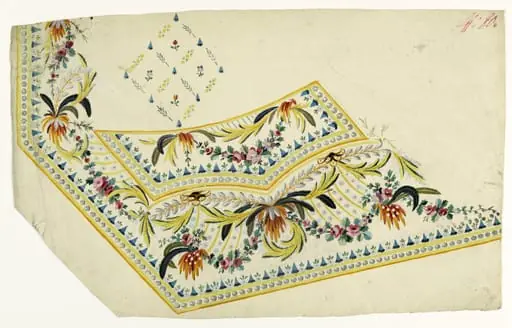 Gilet décor de perles, plumes et paillettes, projets de broderies de gilet, XVIIIème siècle
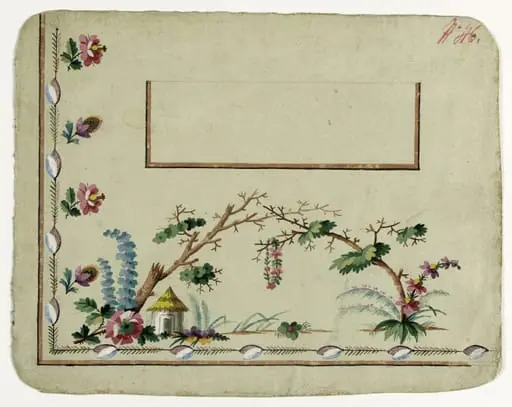 Gilet décor petite chaumière, projets de broderies de gilet, XVIIIème siècle
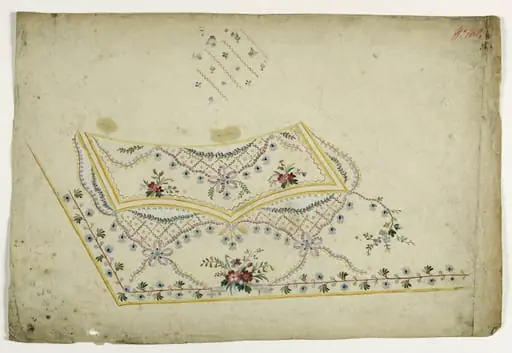 Gilet bouquets et noeuds, projets de broderies de gilet, XVIIIème siècle
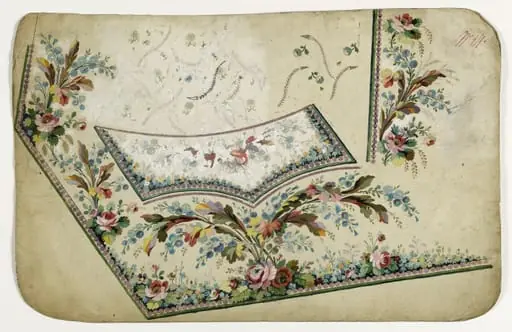 Gilet fleurs et feuilles multicolores, projets de broderies de gilet, XVIIIème siècle
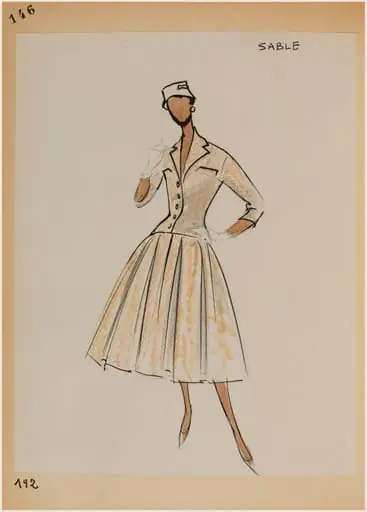 Sable
Sable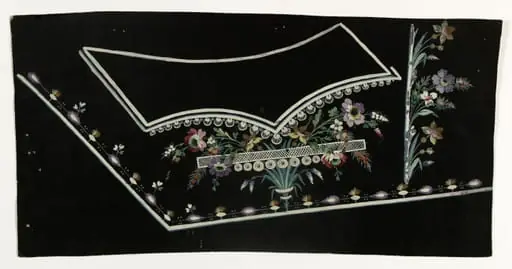 Gilet bouquet de fleurs sur fond noir, projets de broderies de gilet, XVIIIème siècle
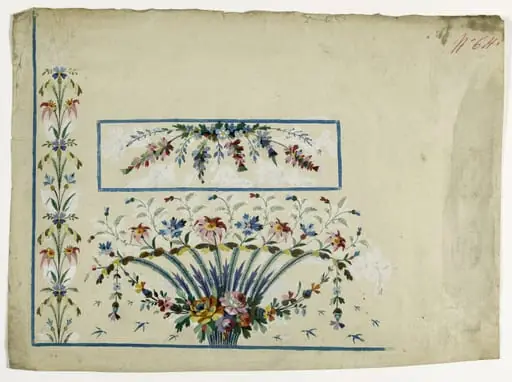 Gilet décor bouquet oeillets et églantines, projets de broderies de gilet, XVIIIème siècle
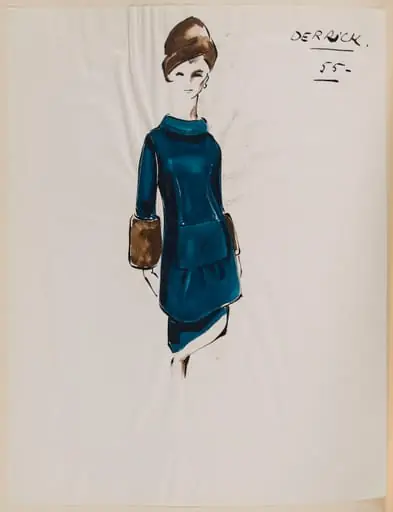 Derrick
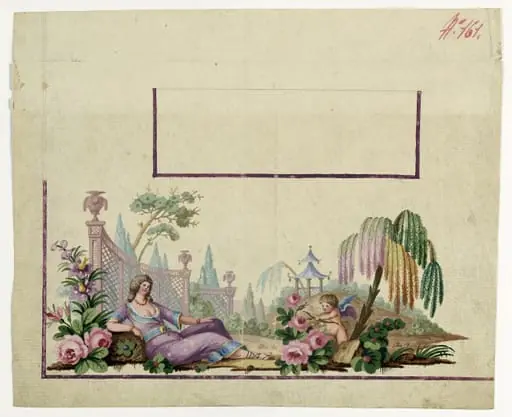 Gilet décor la déesse Flore dans un paysage de treillage, projets de broderies de gilet, XVIIIème siècle
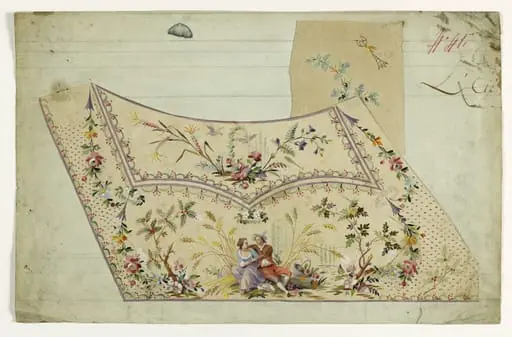 Gilet décor jeune couple assis dans les blés, projets de broderies de gilet, XVIIIème siècle
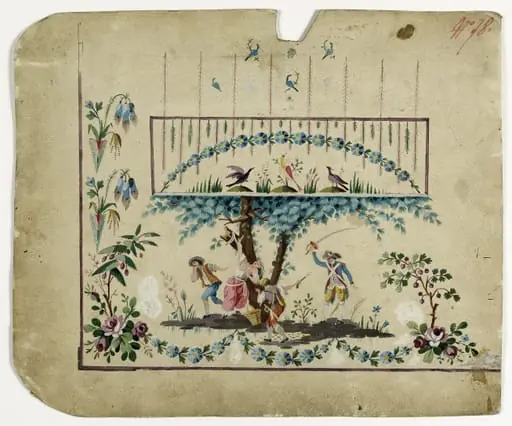 Gilet décor Louis Gillet délivrant une paysanne, projets de broderies de gilet, XVIIIème siècle
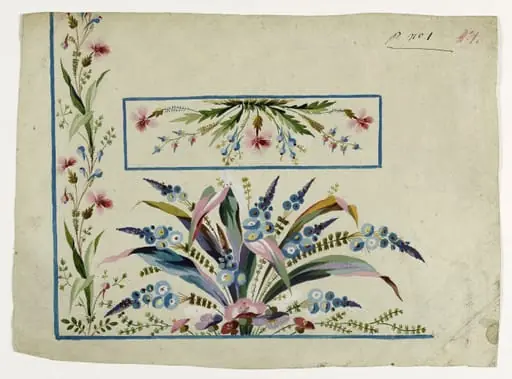 Gilet décor bouquet de bleuets et d'oeillets, projets de broderies de gilet, XVIIIème siècle
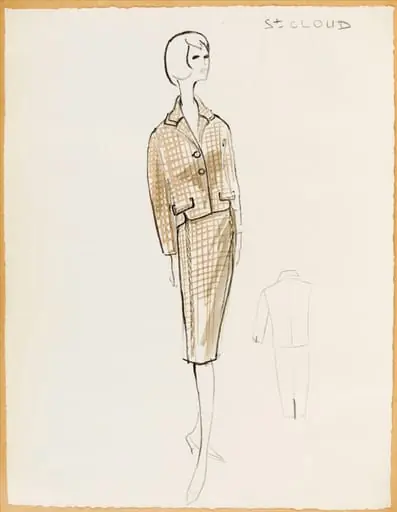 Saint-Cloud
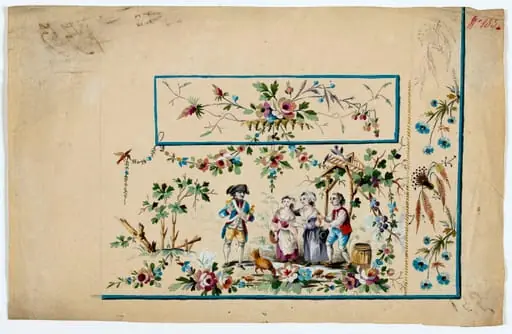 Gilet décor Louis Gillet parlant avec 2 paysans et leur fille, projets de broderies de gilet, XVIIIème siècle
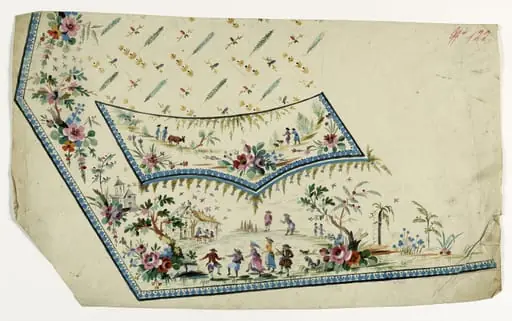 Gilet décor fête paysanne, projets de broderies de gilet, XVIIIème siècle
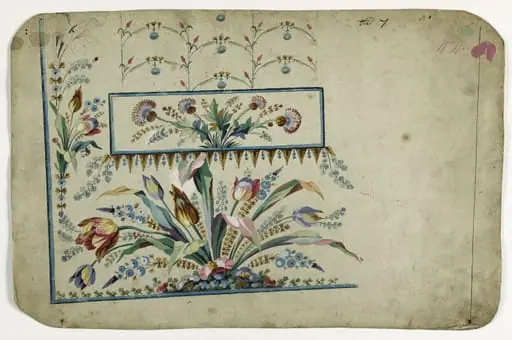 Gilet décor bouquet de tulipes, projets de broderies de gilet, XVIIIème siècle
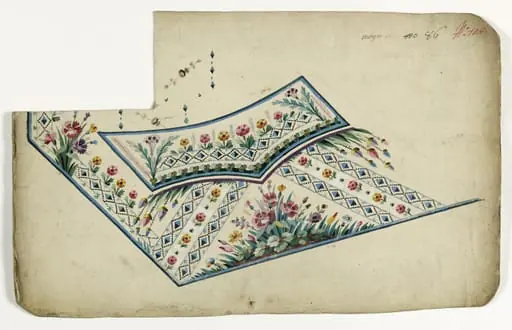 Gilet fleurs et losanges, projets de broderies de gilet, XVIIIème siècle
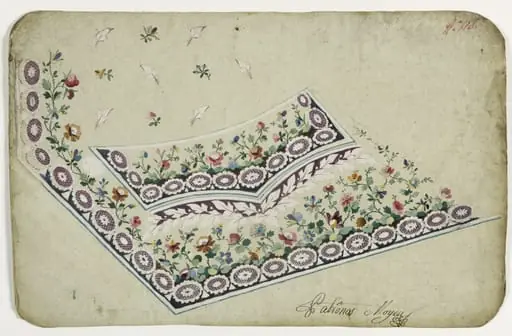 Gilet aux fleurs mauves, projets de broderies de gilet, XVIIIème siècle
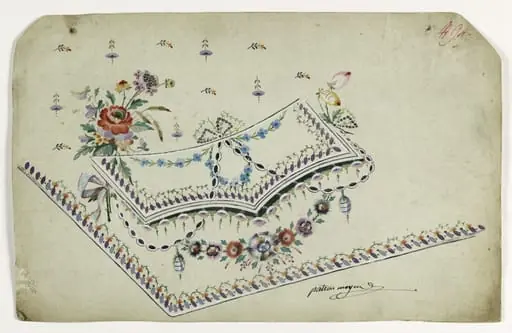 Gilet à la fleur rouge, projets de broderies de gilet, XVIIIème siècle
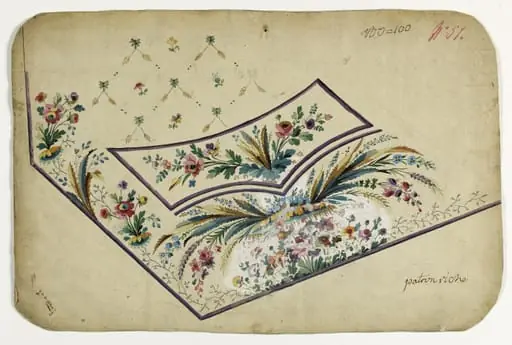 Gilet vasque de feuilles marron et vertes, projets de broderies de gilet, XVIIIème siècle
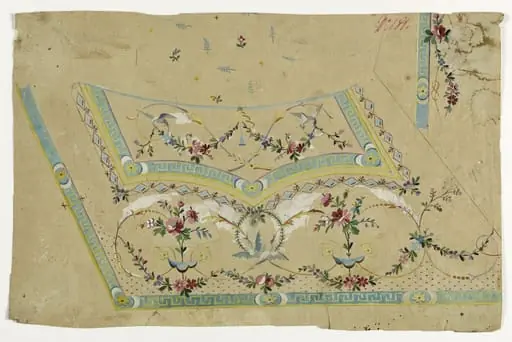 Gilet à la bordure de svastika, projets de broderies de gilet, XVIIIème siècle
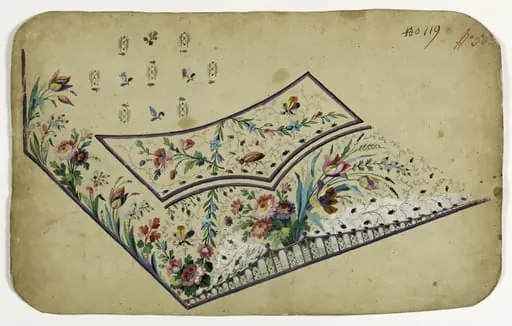 Gilet fleurs, papillons et scarabée, projets de broderies de gilet, XVIIIème siècle
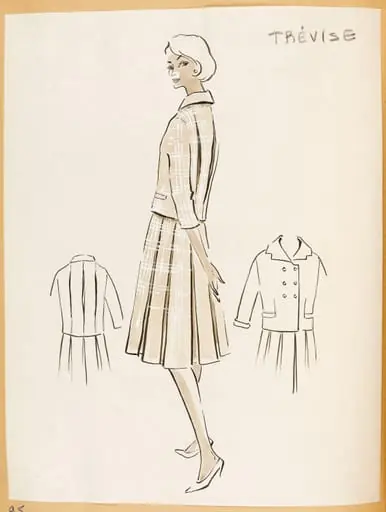 Trévise
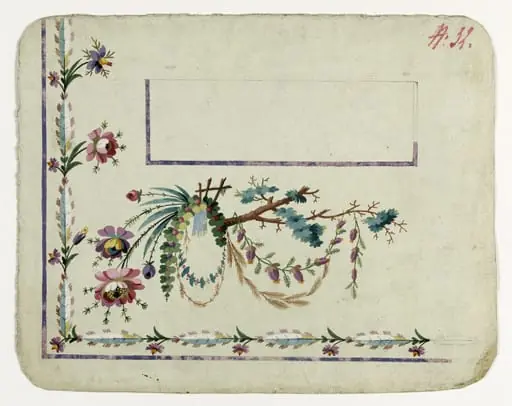 Gilet décor guirlande de branchage et de fleurs, projets de broderies de gilet, XVIIIème siècle
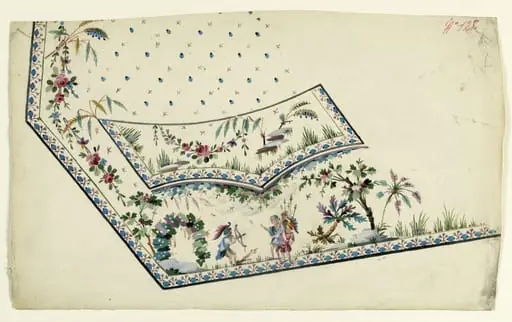 Gilet décor de paysage avec guerriers, projets de broderies de gilet, XVIIIème siècle
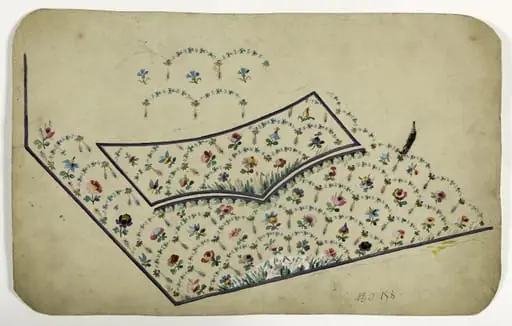 Gilet fleurs dans un réseau, projets de broderies de gilet, XVIIIème siècle
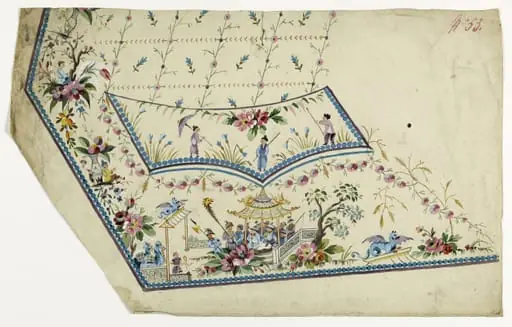 Gilet décor chinois sous une pagode, projets de broderies de gilet, XVIIIème siècle
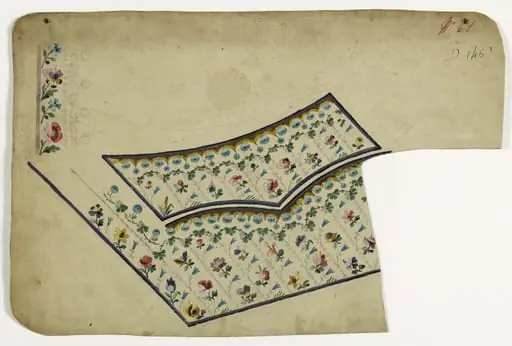 Gilet aux pâquerettes bleues, projets de broderies de gilet, XVIIIème siècle
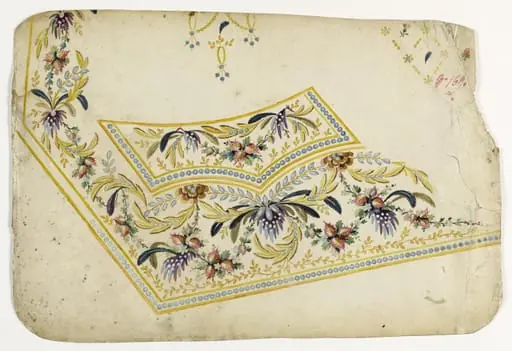 Gilet décor de plumes, fraises et perles, projets de broderies de gilet, XVIIIème siècle
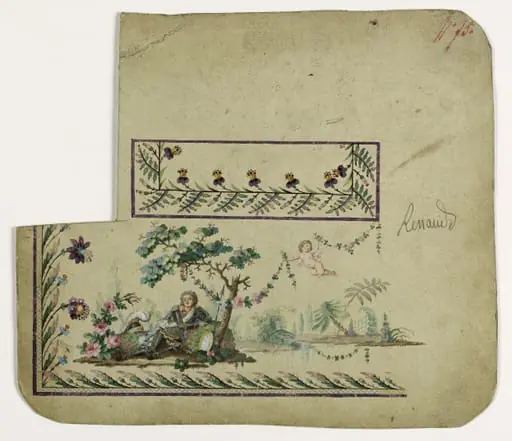 Gilet décor Renaud enchanté par Armide, projets de broderies de gilet, XVIIIème siècle
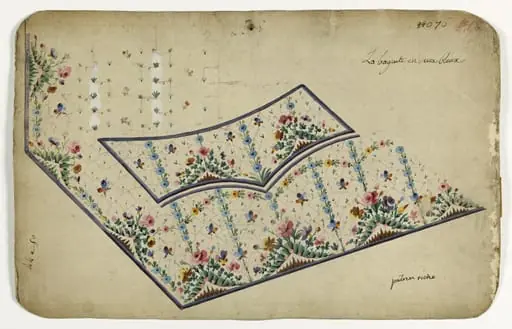 Gilet aux insectes, projets de broderies de gilet, XVIIIème siècle
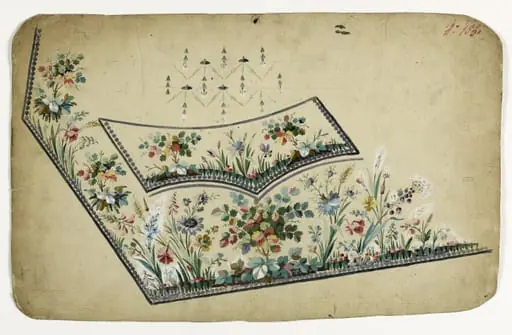 Gilet au buisson de feuilles colorées, projets de broderies de gilet, XVIIIème siècle
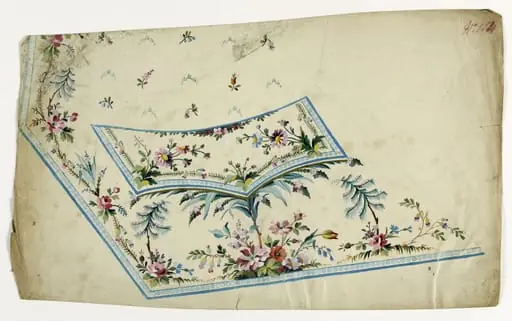 Gilet aux perles bleues, projets de broderies de gilet, XVIIIème siècle
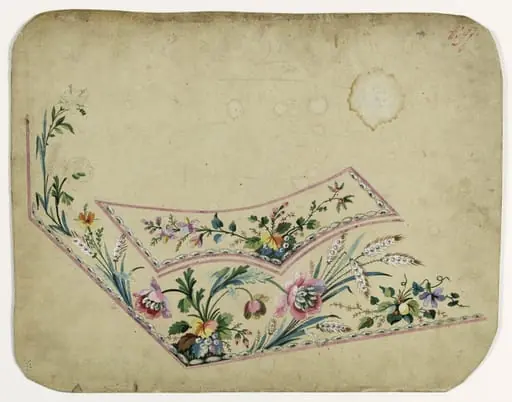 Gilet à la bordure rose, projets de broderies de gilet, XVIIIème siècle
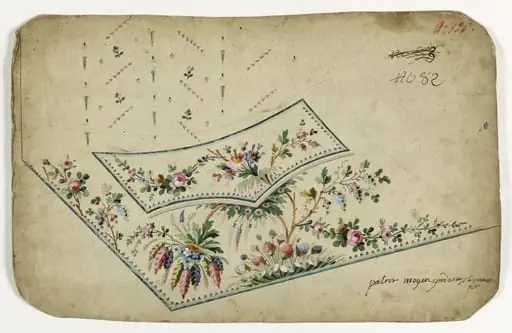 Gilet aux fleurs roses, projets de broderies de gilet, XVIIIème siècle
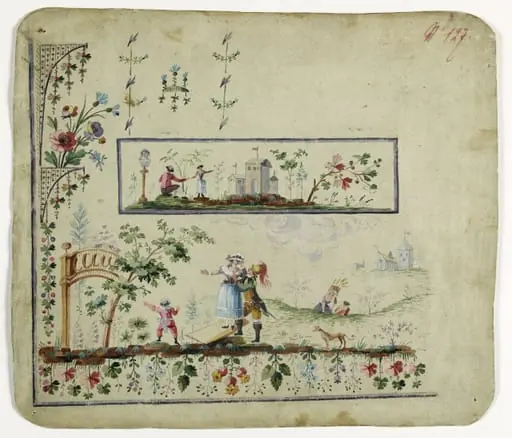 Gilet décor séduction entre un officier et une paysanne, projets de broderies de gilet, XVIIIème siècle
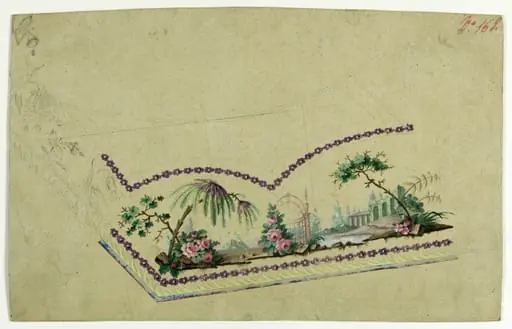 Décor paysage à bordure de violettes, projets de broderies de gilet, XVIIIème siècle
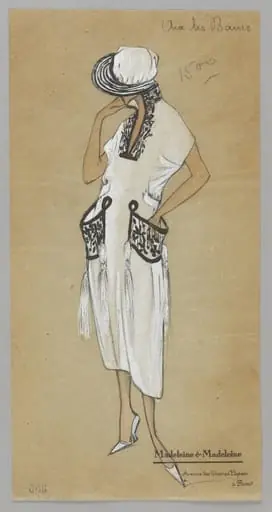 Aox les Bains
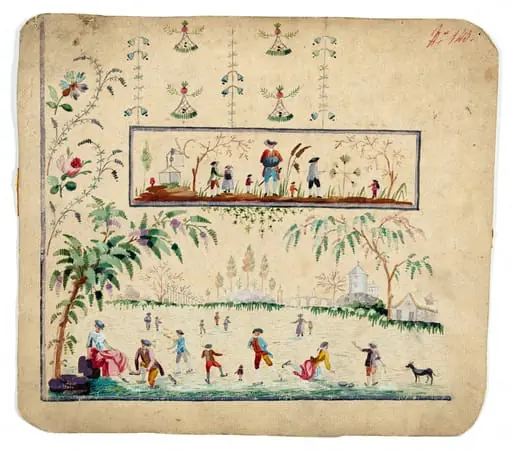 Gilet à patineurs, projets de broderies de gilet, XVIIIème siècle
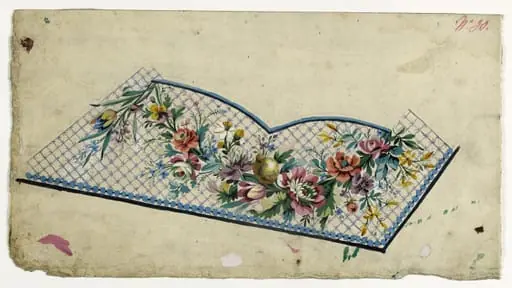 Gilet au treillage, projets de broderies de gilet, XVIIIème siècle
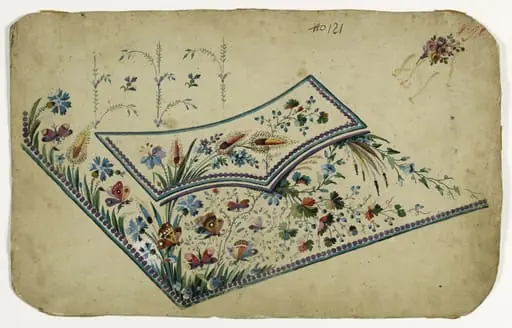 Gilet aux papillons multicolores, projets de broderies de gilet, XVIIIème siècle
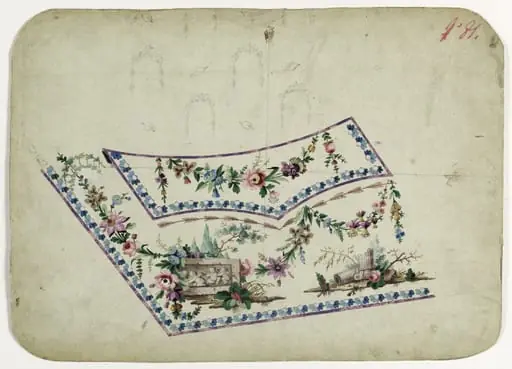 Paysage à bas relief, projets de broderies de gilet, XVIIIème siècle
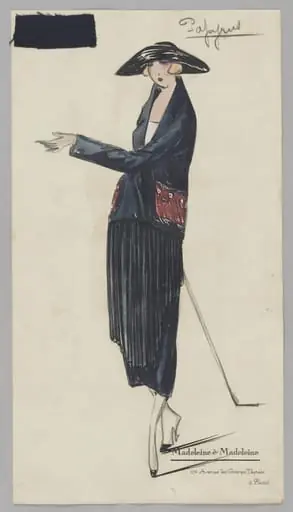 Papyrus
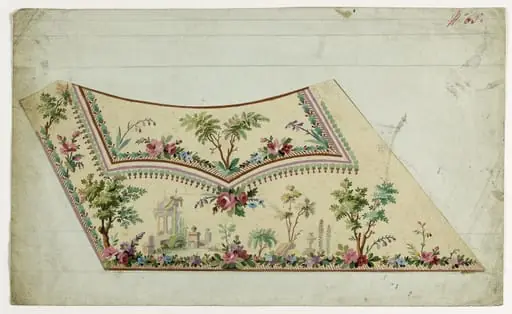 Gilet décor paysage architecture antique, projets de broderies de gilet, XVIIIème siècle
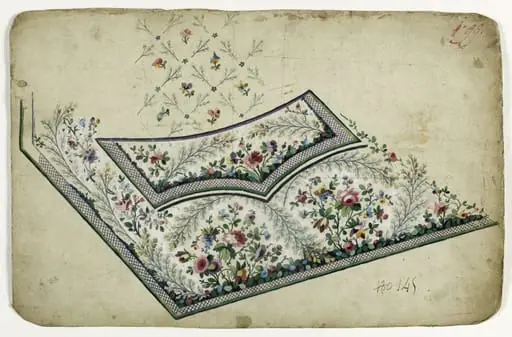 Gilet bordures de grillage, projets de broderies de gilet, XVIIIème siècle
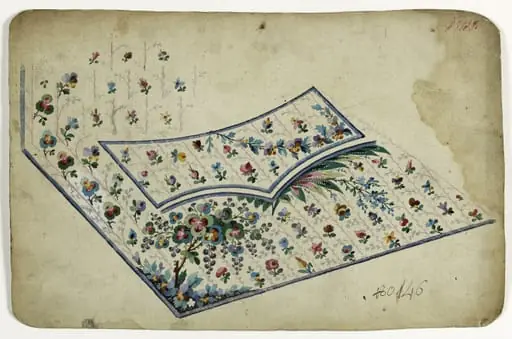 Gilet à l'arbre fleuri, projets de broderies de gilet, XVIIIème siècle
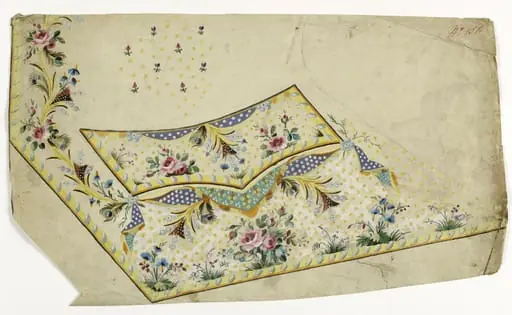 Gilet aux plumes de paon, projets de broderies de gilet, XVIIIème siècle
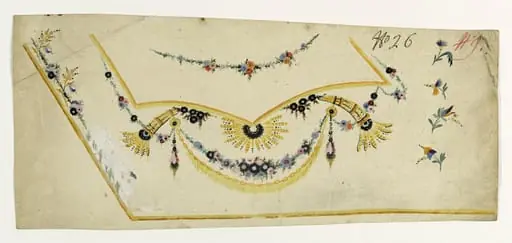 Gilet aux fleurs noires, projets de broderies de gilet, XVIIIème siècle
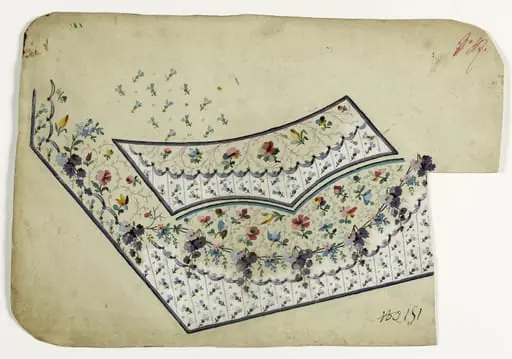 Gilet au décor tapissant, projets de broderies de gilet, XVIIIème siècle
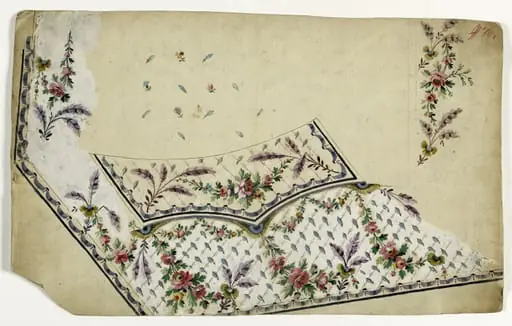 Gilet aux plumes mauves, au verso inversé gilet aux fleurs en forme de flèches, projets de broderies de gilet, XVIIIème siècle
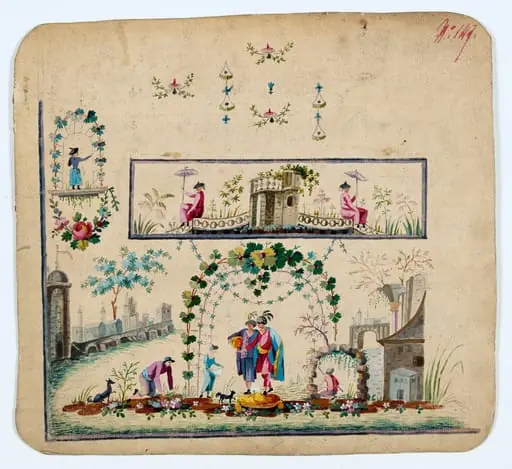 Gilet avec personnages traversant la rivière, projets de broderies de gilet, XVIIIème siècle
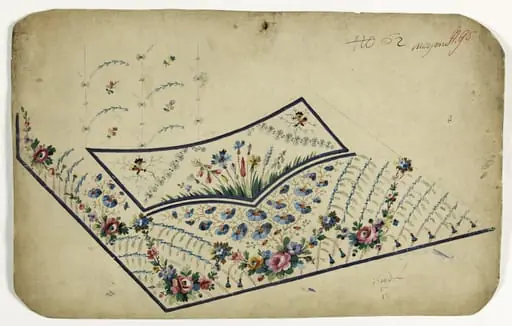 Gilet aux fleurs bleues et orange, projets de broderies de gilet, XVIIIème siècle
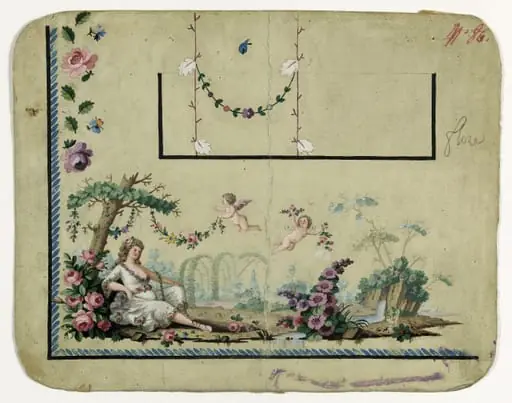 Gilet décor la déesse Flore dans un paysage, projets de broderies de gilet, XVIIIème siècle
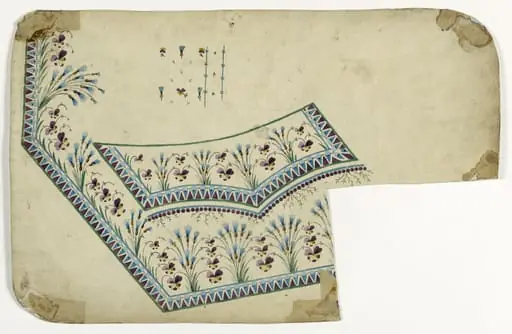 Gilet aux fleurs bleues et mauves, projets de broderies de gilet, XVIIIème siècle
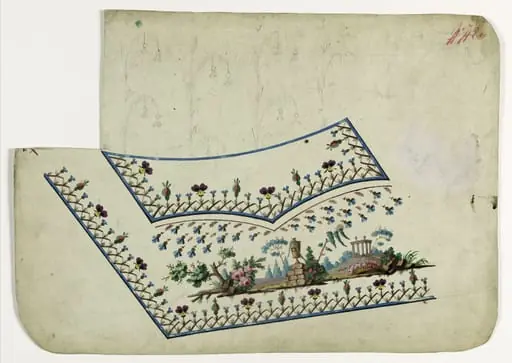 Paysage avec urne et ruine antique, projets de broderies de gilet, XVIIIème siècle
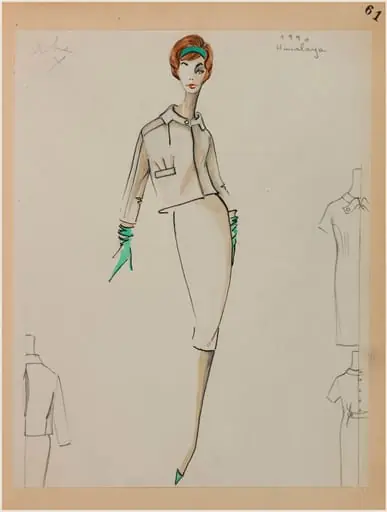 Himalaya
Frequently asked questions
What is Pocket?
Pocket is a subject in art. A pocket is a small bag- or envelope-shaped compartment that is either sewn into or attached to clothing, designed for carrying small items.
How many Pocket works does Artifact World Gallery have?
Artifact World Gallery holds 69 public-domain Pocket works, all free to view and download.
Who are the key Pocket artists?
Key Pocket artists in the collection include Madeleine & Madeleine, Marie-Louise Carven and Carven.
Where can I see Pocket works?
Pocket works in the collection are held by Palais Galliera - Musée de la Mode de la Ville de Paris.