Subject
Festoon
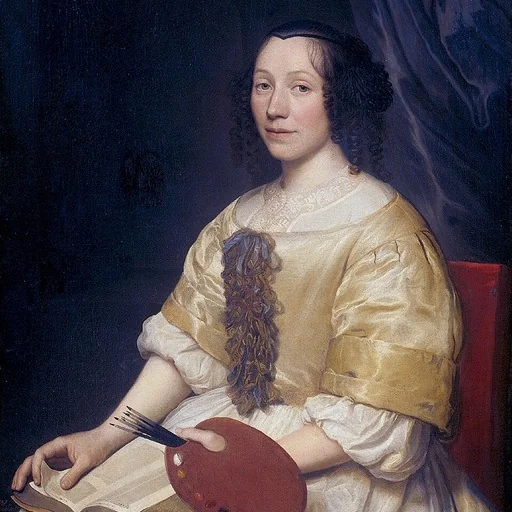
Festoon is a subject in art. The gallery holds 43 works in this subject in art, including works by Jan Davidsz. de Heem, Daniel Seghers and Louis Le Coeur.
A festoon is one of the most enduring decorative motifs in Western art: a garland of flowers, fruit, foliage and ribbons looped between two suspension points so that it hangs in a gentle catenary curve. Its origins are not ornamental but ritual. In ancient Greece and Rome, real garlands of laurel, oak, fruit and blossoms were hung over doorways, draped around altars and carried in processions during feasts, triumphs and funerary rites — the source of the word itself, from the Latin *festum*, a feast. When these perishable decorations were translated into stone, plaster and bronze, they became permanent architectural ornament, forming the principal decoration of altars, friezes, urns and panels.
Roman carvers gave the motif its canonical vocabulary. On the Ara Pacis (13–9 BC) and on the marble garland sarcophagi produced between the first century BC and the third century AD, heavy swags of fruit and flowers were slung between supports and frequently flanked by cupids, masks, or the ox-skulls known as *bucrania*. The botanical choices carried augural meaning: laurel signified victory over death and eternity, oak conveyed strength and fertility, and the abundance of ripening fruit promised prosperity and the renewal of nature. Where the loop depicts cloth or linen rather than foliage it is termed a swag; a related vertical pendant of flowers is called a margent.
The motif was reborn with the Renaissance recovery of antiquity. Andrea Mantegna drew on Roman funerary altars for the festoons of fruit and flowers looped across his San Zeno Altarpiece (1456–59), while the della Robbia workshop in Florence enriched the form with greater botanical realism, exploiting glazed polychrome terracotta to heighten the illusion.
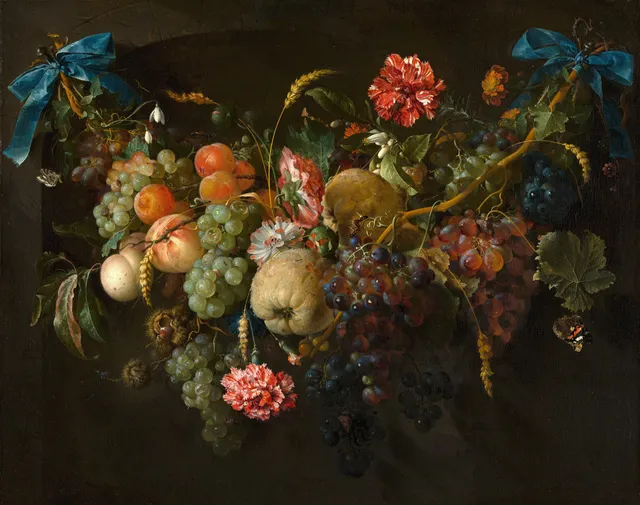
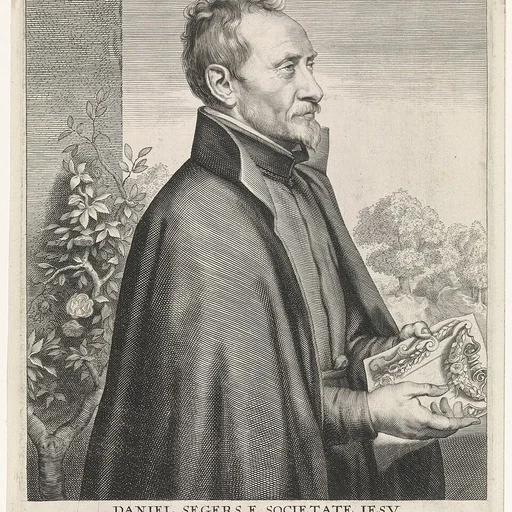
In the seventeenth-century Netherlands the festoon became an independent pictorial subject. The garland painting was invented in Antwerp around 1607–08 by Jan Brueghel the Elder, working with the figure painter Hendrick van Balen for Cardinal Federico Borromeo, who encircled a devotional image with trompe-l'œil flowers. The genre was refined by the Jesuit specialist Daniel Seghers — whose *Flower garland* this collection holds — and by Jan Davidsz. de Heem, represented here by his *Garland of Fruit and Flowers*; such works were typically collaborations between a flower painter and a figure painter. The motif reached a final flowering in Neoclassical design, where Robert Adam's interiors, Louis XVI furniture, Wedgwood ceramics and countless mantelpieces revived the antique swag as a signature of refined classical taste.
Key artists

Overview
A festoon is a decorative motif consisting of a wreath or garland suspended from two points, typically depicting an arrangement of flowers, foliage, or fruit bound together and hung by ribbons. The term derives from the French feston and Italian festone, tracing back to the Late Latin festo and the Latin festum, meaning feast, which points to its origin as a festal garland. When the draped element depicts fabric or linen rather than botanical elements, it is sometimes referred to as a swag. In modern usage, the verb form has expanded loosely to describe any elaborate decoration or covering, but its historical and artistic significance remains tied to its specific architectural and ornamental forms.
Iconography & meaning
The festoon originated as a stone representation of natural flower garlands hung over entrance doorways on holidays or suspended around altars as offerings. This practice gave the motif an enduring association with celebration, reverence, and sacrifice. The specific botanical elements carry their own symbolism. In Neoclassicism, festoons frequently consist of laurel leaves, alluding to the crowning of ancient heroes. The ends of the supporting ribbons are sometimes formed into bows or twisted curves, and when a group of foliage or flowers is suspended from the bottom of the garland, it is called a drop or margent. The motif can also incorporate shells and other objects, though flowers, leaves, vines, and fruits remain the most common themes.
Across movements & periods
Festoons first appeared in the fourth century BCE in Hellenistic architecture as an attempt to give permanent form to perishable fruit garlands offered as sacrifices. The design was widely employed by the Ancient Greeks and Romans, forming the principal decoration of altars, friezes, and panels, as seen on the Ara Pacis of Augustus where fruit garlands hang between bucrania. The motif was heavily prevalent in Roman villa architecture as mosaics, stucco, and wall paintings. After antiquity, festoons reappeared during the Renaissance and Baroque periods, carved in wood or stone to decorate capitals, window frames, and church claw pieces. They became a standard ornamental repertoire in 18th and 19th century interior design, particularly in Neoclassicism and the Gründerzeit, appearing on house facades, furniture, and silverwork.
Notable depictions
In classical architecture, the Temple of Vesta at Tivoli provides a canonical example, where ribbons are suspended across the tops of bucrania. In the decorative arts, the motif was widely adapted in ceramics and by silversmiths. In garden design, an exceptional living depiction is the 270 meter long Festoonallee at Schloss Bothmer near Klütz, composed of nearly 70 Dutch linden trees trained and bound into a garland form. In painting, the garland picture became a distinct genre in the 17th century, likely introduced by Daniel Seghers, which featured circular images encircled by festoons, though this encircling form is more accurately termed a ring garland. The motif also appears structurally in canvas preparation, where the small arcs formed in the weave during stretching are known as span garlands.
Legacy
Beyond its foundational role in classical and historicist architecture, the festoon has maintained a presence in both applied and decorative arts. In textiles, the term describes an arcade shaped border used to finish the edges of tablecloths, bed linens, and garments, executed through various techniques like lace making, crochet, and the festoon stitch. The motif also persists in seasonal traditions, particularly in the use of evergreen garlands for Christmas decorations over doors, staircases, and mantelpieces. Additionally, the term has been adopted into the language of seamanship and needlework to describe specific scalloped edges and stitch types, demonstrating how a monumental architectural ornament evolved into a ubiquitous element of domestic and material culture.
Works
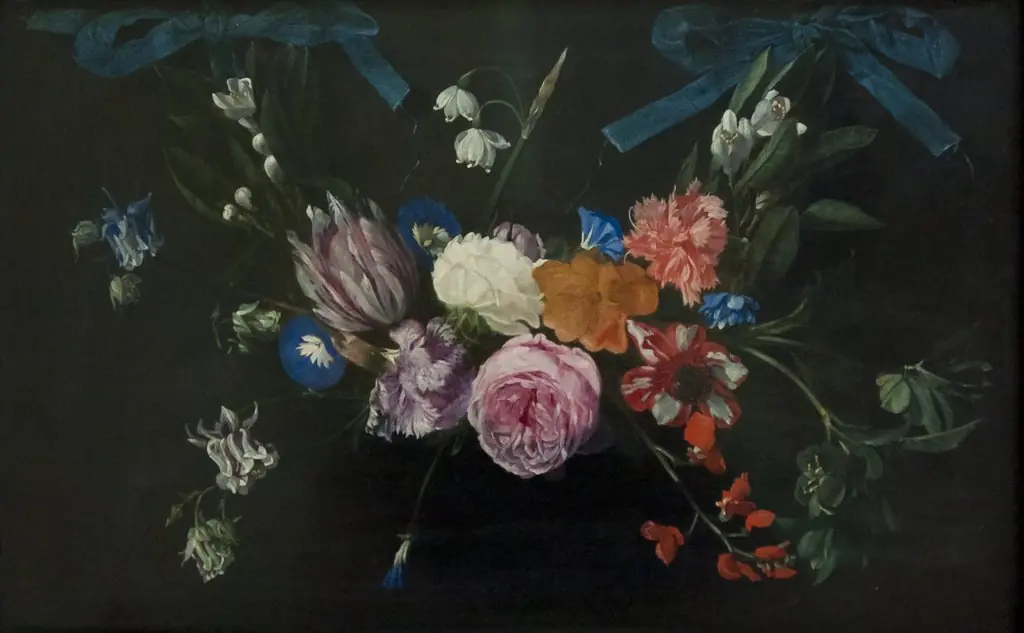 Flower garland
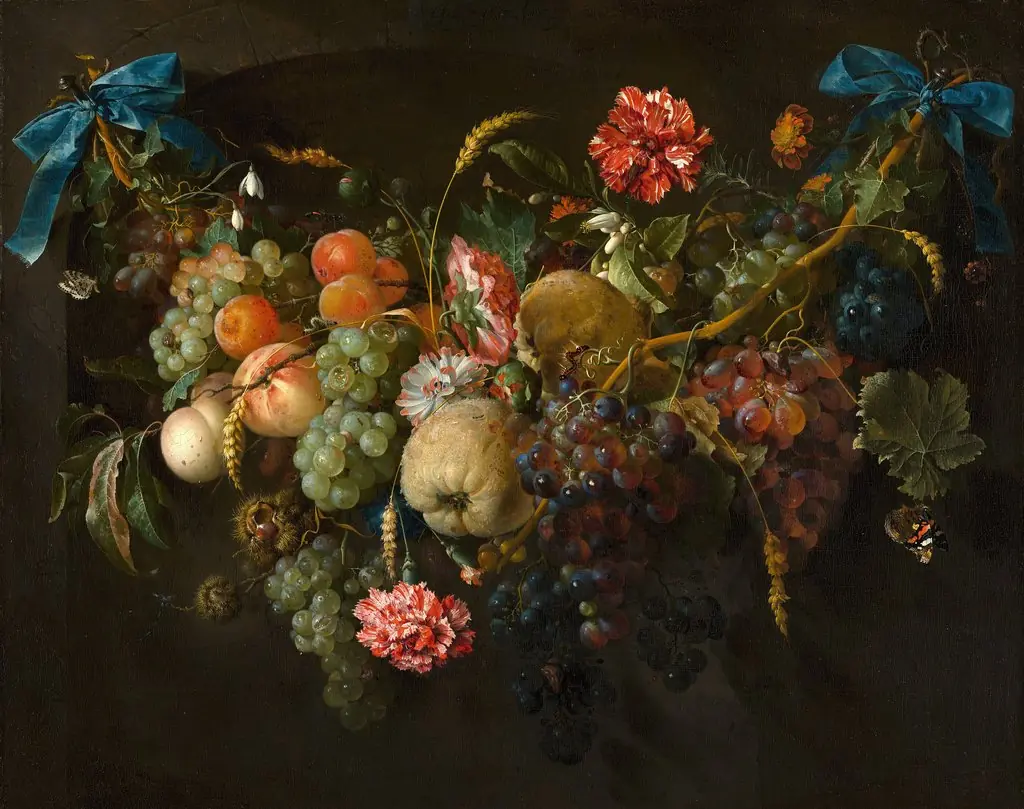 Garland of Fruit and Flowers
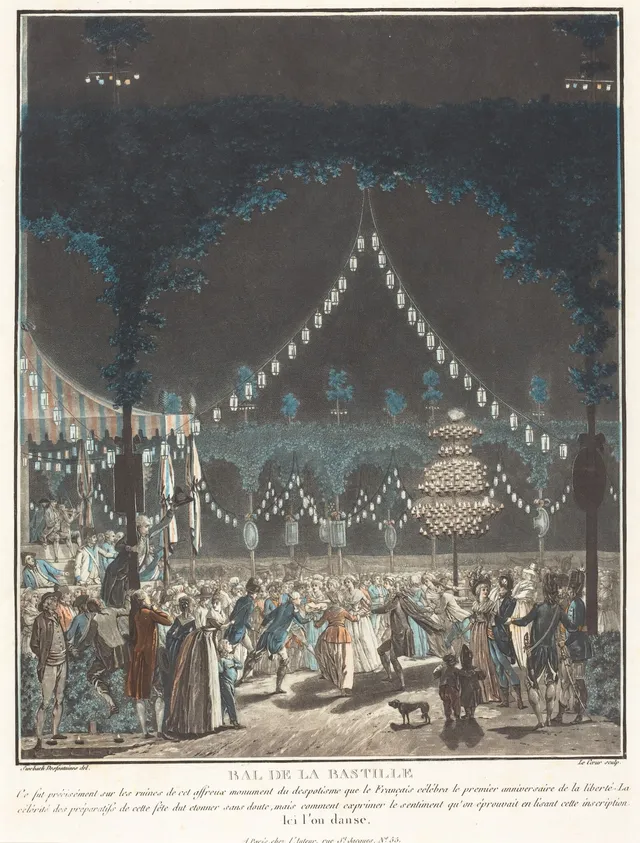
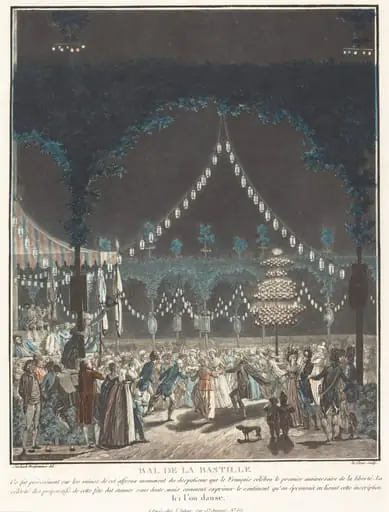 Bal de la Bastille
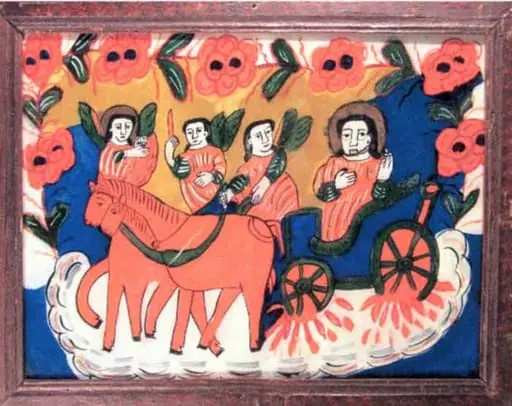 Sfântul Ilie
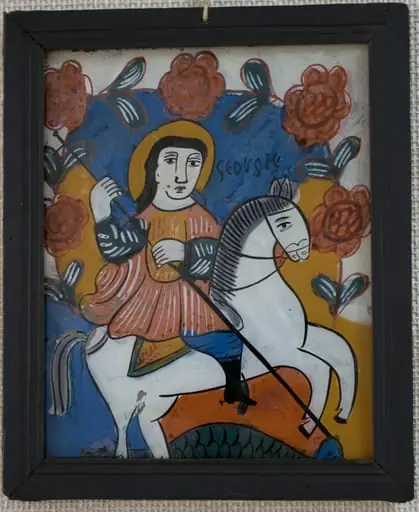 Icoana este pictată "în oglindă", pe un suport de sticlă de formă dreptunghiulară în ax vertical. Tema iconografică: Sfântul Gheorghe omorând balaurul. Sfântul, călare pe cal alb, este plasat în centrul icoanei. Veșminte ostășești, cizme înalte, tunică scurtă, roșie, cu mâneci verzi, pantaloni albaștri, bufanți.Capul descoperit, părul lung, negru, revărsat pe umeri. Aureola trasată cu mâna liberă. În mână ține o suliță lungă pe care o înfige în gura balaurului reptilian, verde, simbolizând zonele inferioare, ale păcatului. În jumătaea superioară o ghirlandă de trandafiri dispusă în arcadă deasupra sfântului. Icoana are caracteristici specifice picturii niculene: stângăcia, simplitatea și primitivismul desenului; compoziția sumară,este mai încărcată totuși decât la icoanele niculene din prima perioadă. Paleta cromatică sobră, culorile intense:alb, orange, roșu, verde, albastru, negru. Rama profilată, de culoare neagră, dosul din scândură subțire de brad.
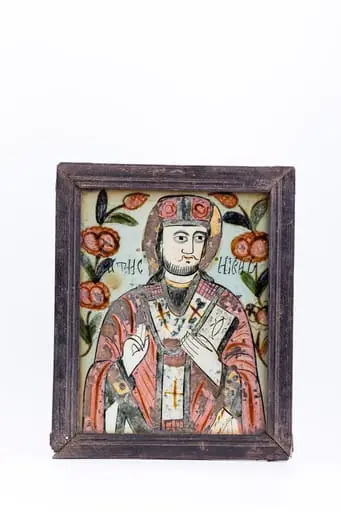 Sfântul Mare Ierarh Nicolae Făcătorul de minuni ține în mâna stângă Sfânta Evanghelie închisă și binecuvântează cu mâna dreaptă. Veșmintele arhierești liturgice ale sfântului ierarh sunt într-o alternanță cromatică de roșu vermillon, verde, ocru și gri-cenușiu antracit, cu broderie galbenă pe margini. Epitrahilul-patrafirul este gri-alburiu cu marginile verzi și trei cruci galben-aurii. Fondul icoanei este albastru bleu-ciel foarte senin. Întreaga compoziție este încadrată în spațiul cerului senin de o ghirlandă de ruje - elemente decorative fitomorfe, 6 trandafiri roșii, cu bobocei și frunze verzi. Icoana este de Nicula, Nordul Transilvaniei. Cromatica este armonioasă, specifică centrului de la Nicula: roșu vermillon, albastru bleu-ciel, galben-ocru-muștar, verde de China, alb, brun, negru, gri. Inscripția din româno-chirilică se traduce Sfântul Nicolae.
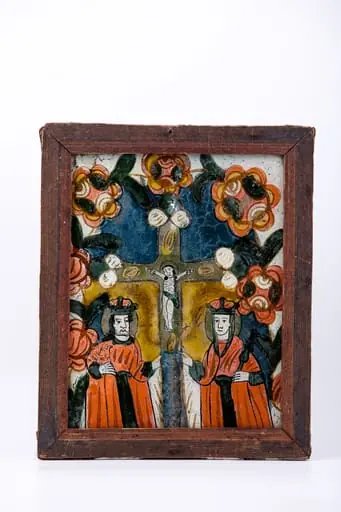 În centrul icoanei este Crucea albastră-galbenă, pe care este Răstignit Mântuitorul Iisus Hristos, iar în dreapta crucii este Sfântul Împărat Constantin și în stânga este Împărăteasa Elena, mama sa. În spatele Crucii este un spațiu galben izvorâtor de lumină. Crucea găsită este susținută cu bucurie de cei doi sfinți. Veșmintele Sfinților Constantin și Elena sunt într-o combinație de roșu vermillon și gri antracit. Spațiul galben de lumină duce gândul la Crucea de lumină apărută pe cer In hoc signo vinces - prin acest semn vei învinge. Icoana este bogat ornamentată de culoare, lumină și detalii semnificative, elemente decorative geometrizante - ovaluri galbene de lumină și brațele crucii au terminații trilobale albe. Fondul icoanei este cerul albastru ceruleum. Întreaga compoziție este încadrată armonios de un chenar fitomorf, format din rujele de Nicula, 7 trandafiri mari roșii cu striații galbene. Cromatica este armonioasă și senină: roșu vermillon, galben-chihlimbar, albastru cerulauml, gri antracit, alb, negru. Icoana este de Nicula. De menționat este că în icoană apare Mântuitorul Iisus Hristos Răstignit pe Crucea, susținută de Sfinții Constantin și Elena.
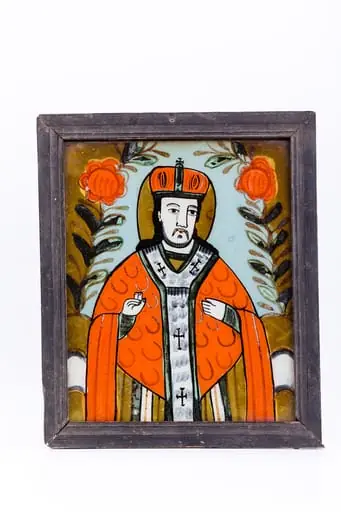 Sfântul Mare Ierarh Nicolae Făcătorul de minuni binecuvântează cu mâna dreaptă. Veșmintele arhierești liturgice ale sfântului ierarh sunt într-o alternanță cromatică de roșu vermillon, verde, ocru și gri-alburiu, cu elemente decorative geometrizante rotunde și ovoidale, fin sugerate și schițate. Epitrahilul-patrafirul este gri-alburiu cu marginile verzi și patru cruci negre. Fondul icoanei este albastru bleu-ciel foarte senin, în registrul superior și un câmp ocru-galben, alternativ dispus, în registrul inferior. Întreaga compoziție este încadrată în spațiul cerului senin de o ghirlandă de ruje - elemente decorative fitomorfe, doi trandafiri roșii, cu frunze verzi. Icoana este de Nicula, Nordul Transilvaniei. Cromatica este armonioasă, tomnatică, specifică centrului de la Nicula: roșu vermillon, albastru bleu-ciel, galben-ocru-muștar, verde de China, alb, brun, negru, gri.
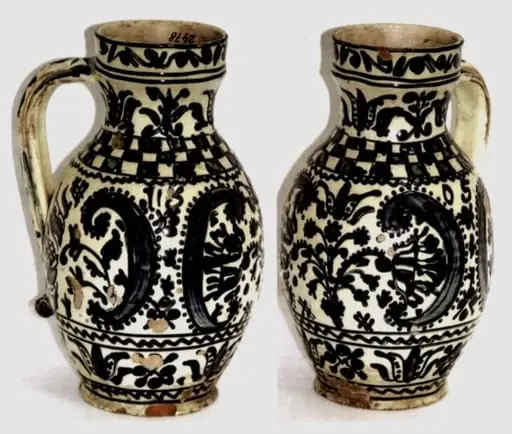 cană de vin
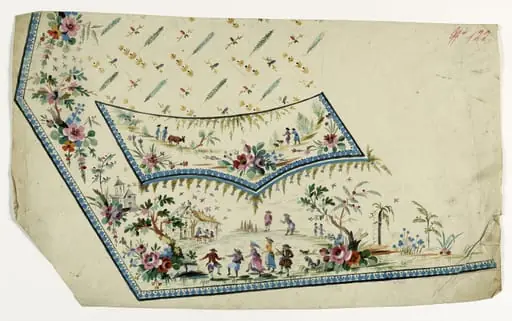 Gilet décor fête paysanne, projets de broderies de gilet, XVIIIème siècle
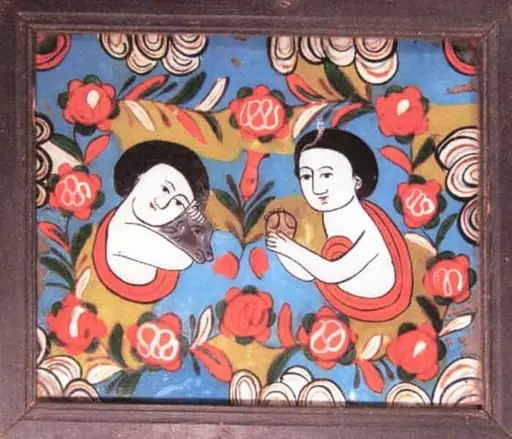 Iisus și Ioan, copii (Ioan cu mielul)
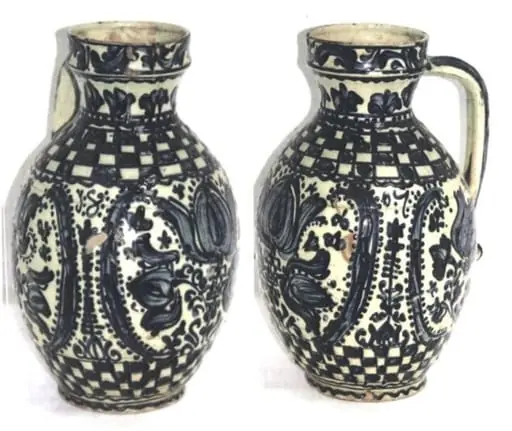 cană de vin
 În centrul icoanei este Crucea galbenă, cu terminațiile brațelor trilobate pictate cu roșu-alb-gri, iar în dreapta crucii este Sfântul Împărat Constantin, și în stânga este Împărăteasa Elena, mama sa. În spatele Crucii, este cerul albastru regal, încadrat de o ghirlandă de 4 ruje. Crucea găsită este susținută cu bucurie de cei doi sfinți. Veșmintele Sfinților Constantin și Elena sunt într-o combinație de roșu vermillon, gri antracit. Fondul icoanei este cerul albastru-cobalt, în registrul superior, iar în registrul inferior, este un câmp de galben luminos. În registrul superior, este o boltă-cupolă-arcadă albă luminoasă. Cromatica este armonioasă: roșu vermillon, galben-ocru, albastru regal, gri antracit, alb, negru. Icoana este de Nicula. Inscripția din româno-chirilică se traduce Constantin cu Elena. Postamentul Crucii este realizat printr-un caroiaj alb-negru.
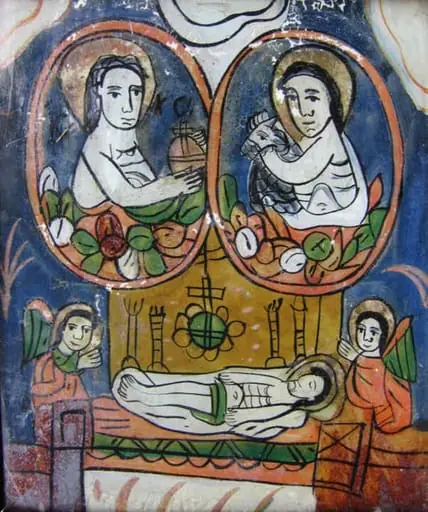 Ioan Botezătorul cu mielul și Iisus; Îngroparea lui Iisus
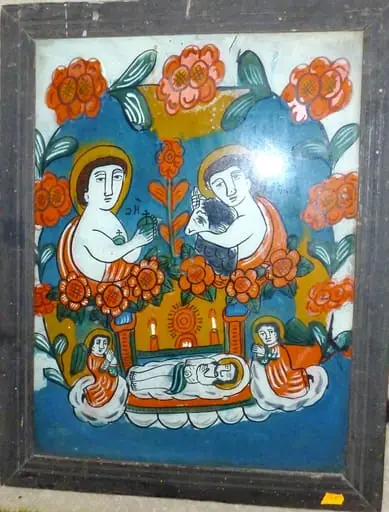 Iisus și Ioan copii; Punerea în mormânt
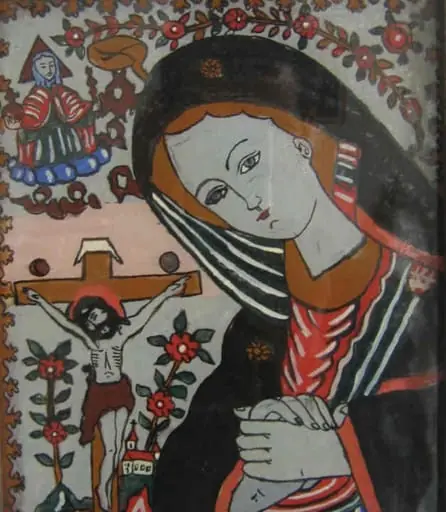 Maica Domnului Îndurerată
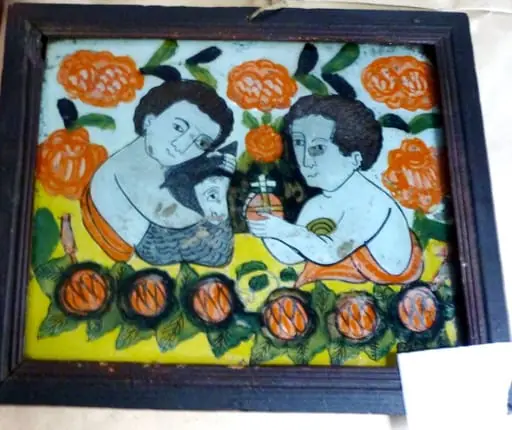 Iisus Hristos si Sf. Ioan copii
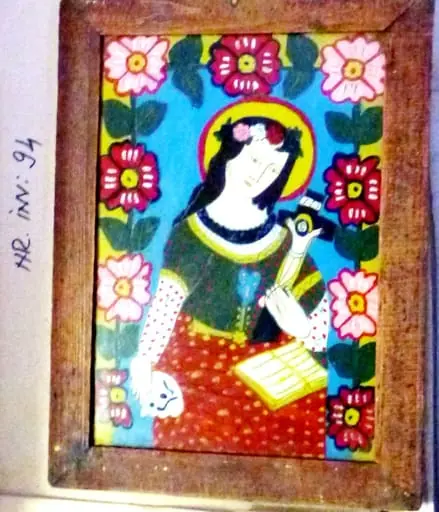 Sfânta Rita
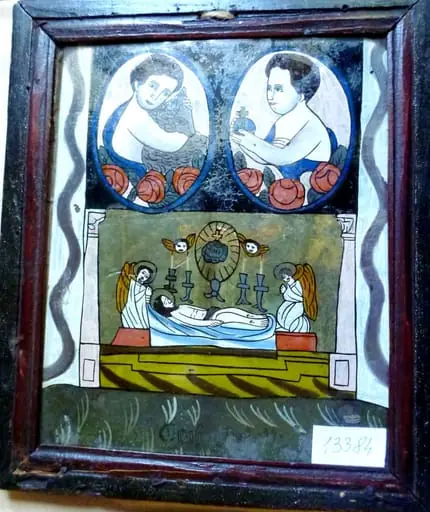 Prohodul Domnului/Iisus și Sfantul Ioan copii
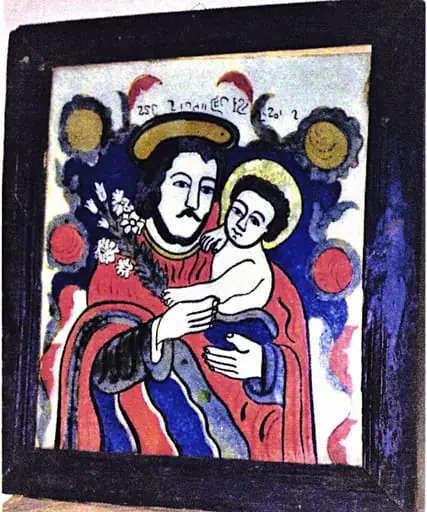 Sfântul Iosif
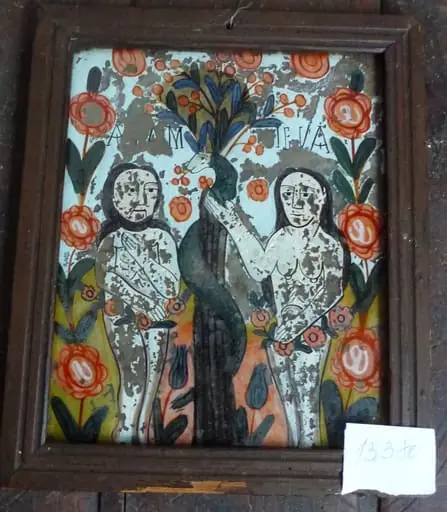 Adam si Eva
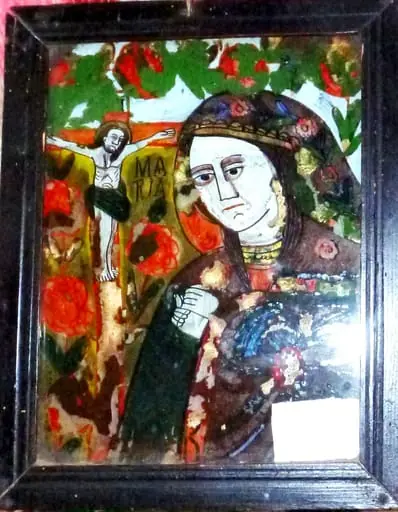 Maica Domnului indurerata
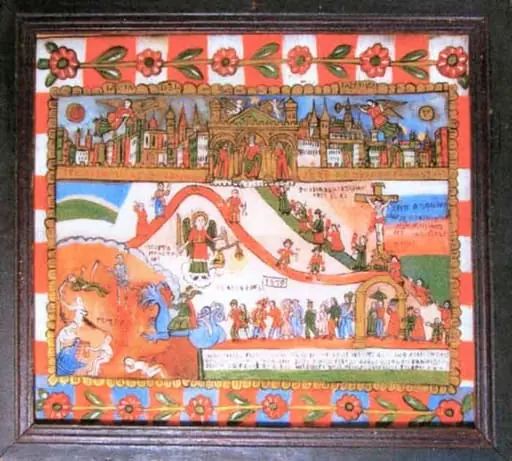 Judecata de Apoi
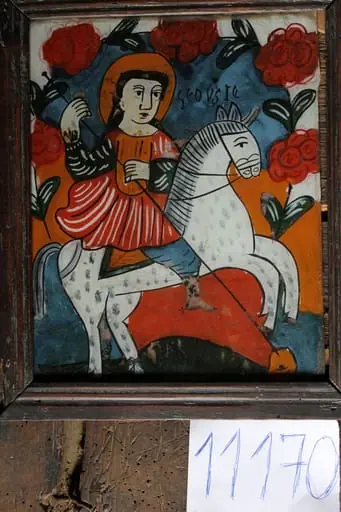 Sfantul Gheorghe
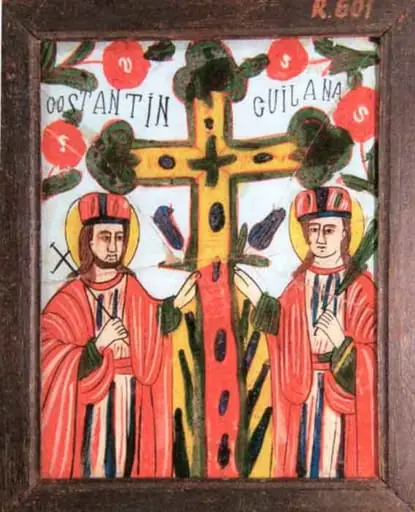 Sfinții Împărați Constantin și Elena
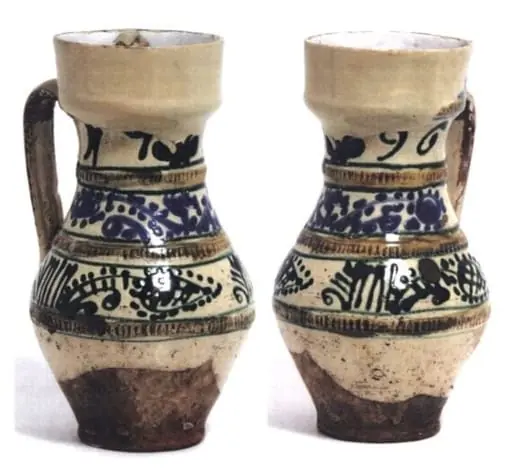 canceu
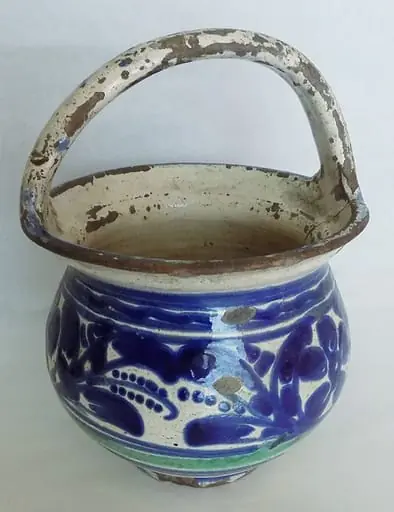 oală pentru lapte
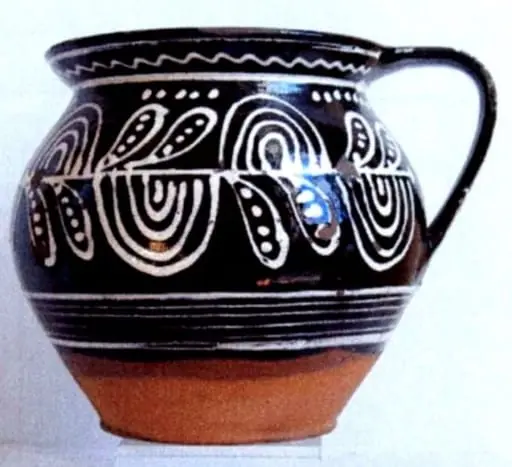 oală cu toartă
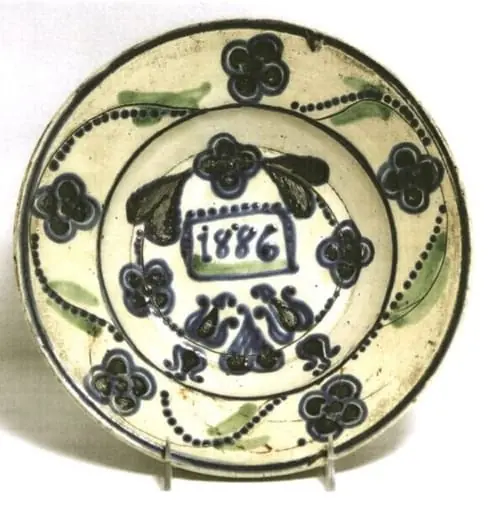 farfurie
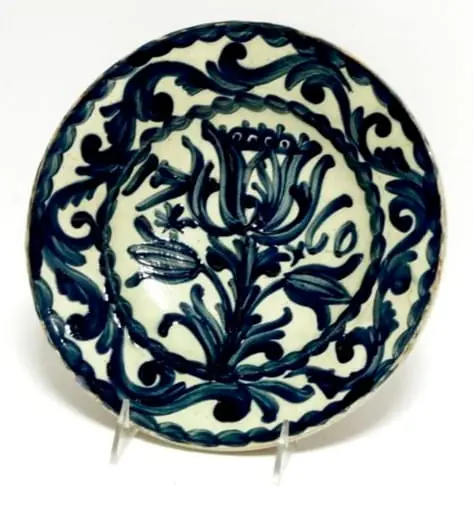 blid
blid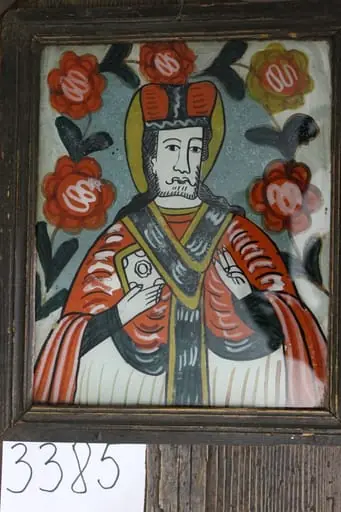 Sfantul Nicolae
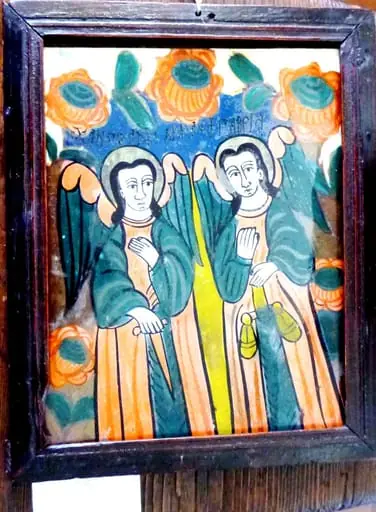 Sfinții Arhangheli
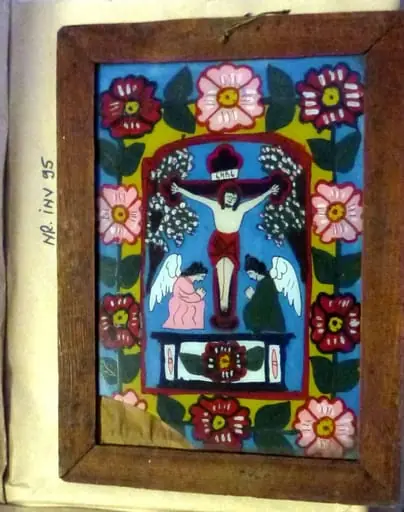 Răstignirea
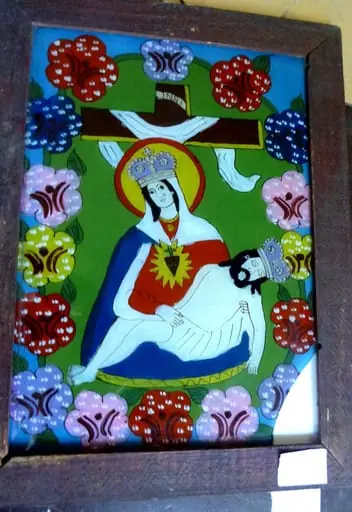 Maria Îndurerată; Pieta
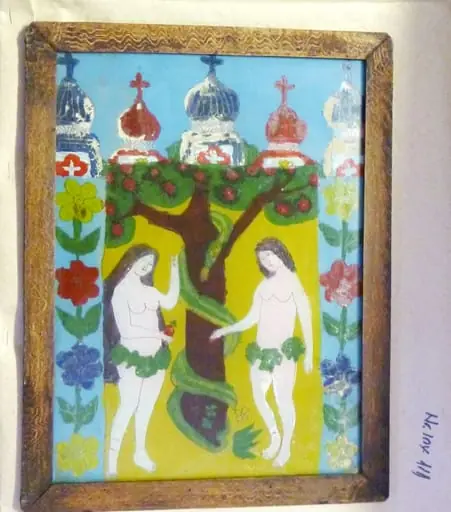 icoană pe sticlă
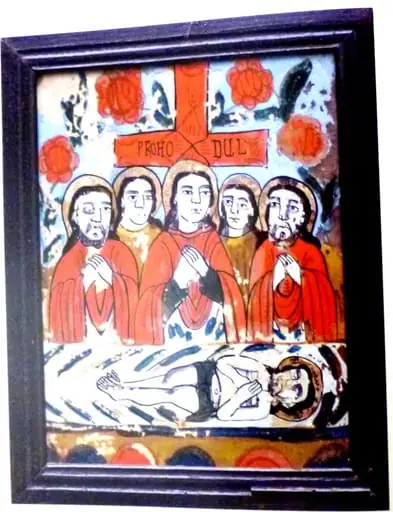 Prohodul
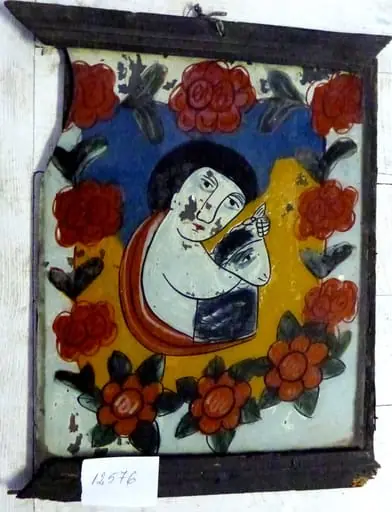 Ioan copil cu mielul
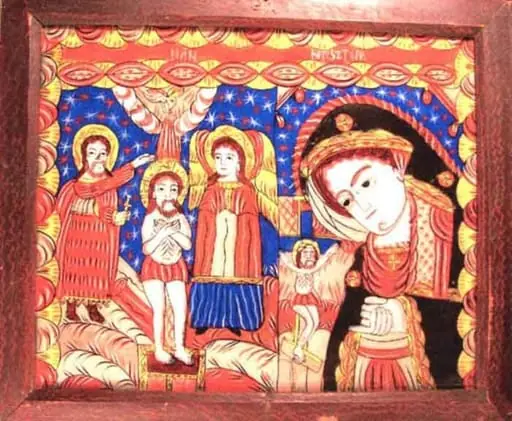 Maica Domnului Îndurerată (Botezul Domnului)
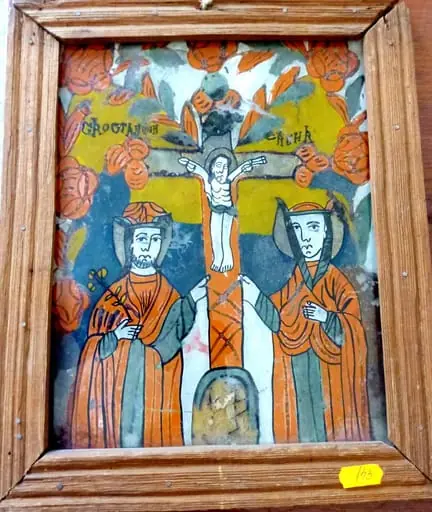 Constantin și Elena
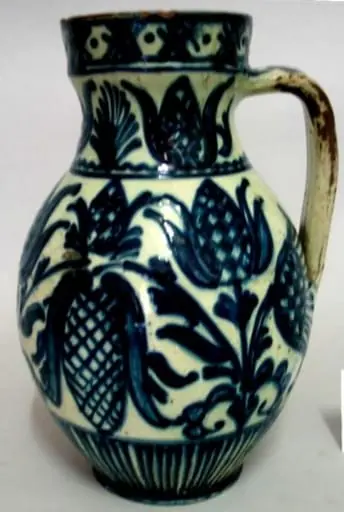 cană de vin
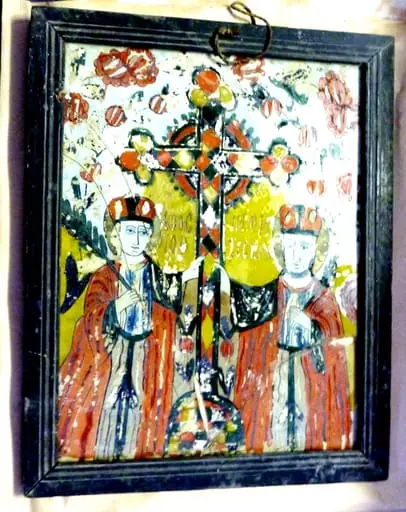 Constantin si Elena
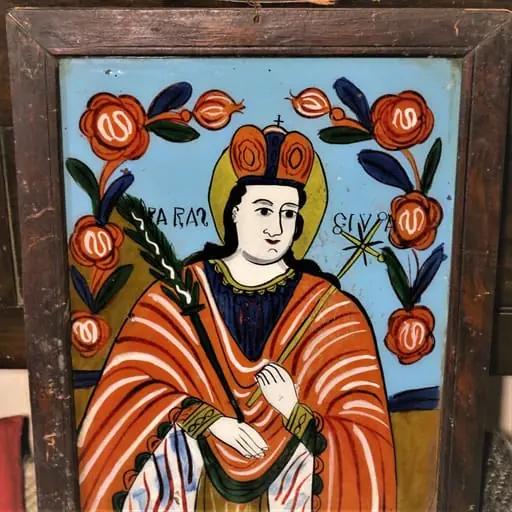 Cuviosa Paraschiva
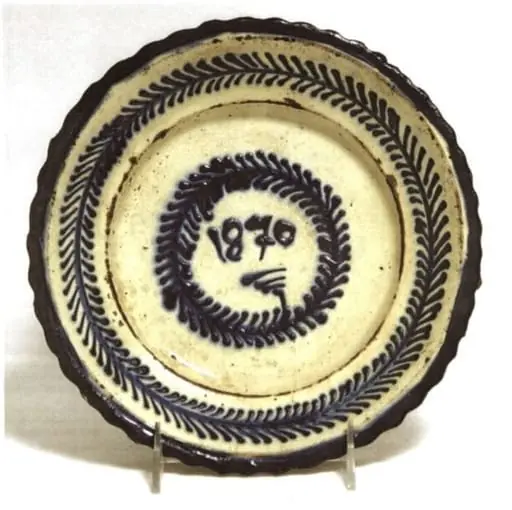 farfurie
Frequently asked questions
What is Festoon?
Festoon is a subject in art. A festoon (from French feston, Italian festone, from a Late Latin festo, originally a festal garland, Latin festum, feast) is a wreath or garland hanging from two points, and in architecture typically a carved ornament depicting conventional arrangement of flowers, foliage or fr…
How many Festoon works does Artifact World Gallery have?
Artifact World Gallery holds 43 public-domain Festoon works, all free to view and download.
Who are the key Festoon artists?
Key Festoon artists in the collection include Jan Davidsz. de Heem, Daniel Seghers and Louis Le Coeur.
Where can I see Festoon works?
Festoon works in the collection are held by Bistrita-Năsăud Museum Complex, Romanian Peasant Museum and ASTRA National Museum Complex.