Subject
Tea Hous
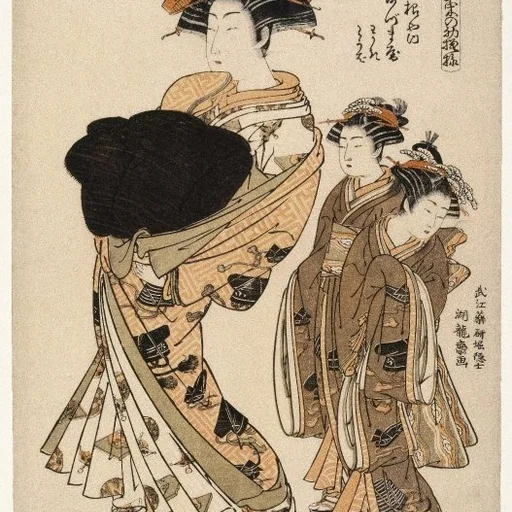
Tea Hous is a subject in art. The gallery holds 27 works in this subject in art, including works by Isoda Koryūsai, Katsushika Hokusai and Utagawa Hiroshige.
A teahouse or tearoom (also tea room) is an establishment which primarily serves tea and other light refreshments. A tea room may be a room set aside in a hotel, especially for serving afternoon tea, or may be an establishment that only serves cream tea.
Key artists

Overview
A teahouse or tearoom is an establishment that primarily serves tea and other light refreshments. While the specific functions and architectural forms of these venues vary widely depending on national tea cultures, they consistently serve as vital centers of social interaction, much like coffeehouses or pubs in other traditions. The concept encompasses a broad range of spaces, from a dedicated room set aside in a hotel for afternoon tea to independent establishments serving cream tea, and from the medicinal gathering places of ancient East Asia to specialized venues for entertainment and intellectual discourse.
Iconography & meaning
In visual culture, the teahouse carries layered symbolism tied to its social and ritualistic functions. Historically, tea was consumed by Buddhist monks between 200 and 850 C.E. as a medicinal herb to aid meditation by providing the stimulant energy needed to stay awake. This early association with spiritual practice and intellectual fulfillment imbued the teahouse with meanings of aesthetic and philosophical refinement. As tea became a commonplace beverage, the teahouse evolved into a symbol of public social life, representing community conversation, courtship, and commercial exchange. During the Edo period in Japan, the term took on an additional meaning of exclusivity and pleasure, referring to establishments where geisha entertained wealthy clients, a usage that shifted the iconography from meditative purity to sophisticated leisure.
Across movements & periods
The treatment of the teahouse subject shifted dramatically across movements and periods. In China, teahouses emerged during the Tang dynasty before 740 C.E. as unprecedented social hubs that replaced milk and water beverages, providing a new public life. In Japan, the classical chashitsu was designed strictly for the aesthetic and intellectual fulfillment of the tea ceremony. However, during the Edo period, the term chaya expanded to denote places of private entertainment and geisha performance, a meaning preserved today in Kyoto's Gion district. In Europe, the Victorian era saw the teahouse become a refuge for women, with the first public tearoom opened in London in 1864 by the Aerated Bread Company, offering a sedate atmosphere and cream tea. By the early 20th century, French and Italian salons de the served as literary and intellectual rendezvous points, often doubling as patisseries.
Legacy
The cultural afterlife of the teahouse extends beyond its historical origins into modern adaptations and artistic reflections. While the traditional Japanese ochaya serving geisha clientele remains active in specific Kyoto districts, the modern Japanese tearoom has largely transitioned into the kissaten, which serves both tea and coffee. In China, the teahouse inspired Lao She's famous theatrical work Casa da tè, which uses a Beijing teahouse as the setting to trace societal changes across the imperial era in 1898, the 1910s, and the aftermath of the Second World War. Globally, the teahouse concept has adapted to contemporary needs, from the intellectual cafes of Pakistan and Central Asia to the tourist oriented patisseries of Europe, preserving its fundamental identity as a space for social and cultural exchange.
Works
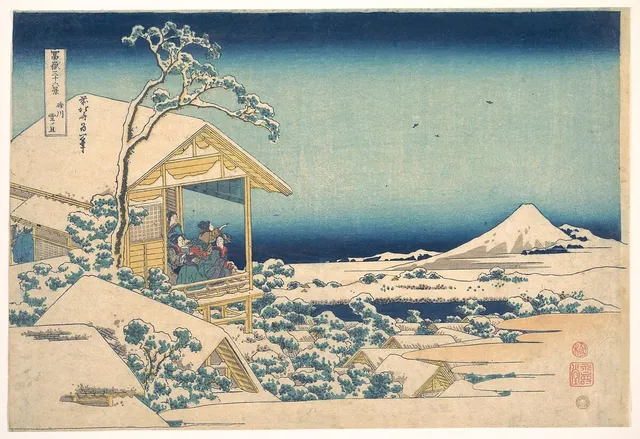
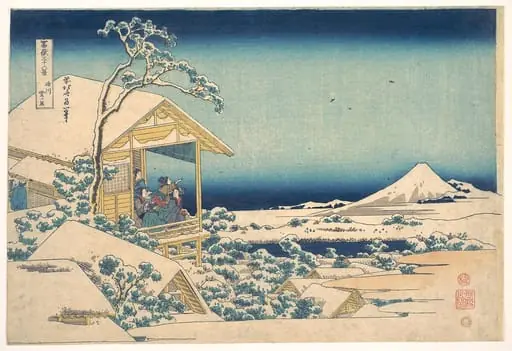 冨嶽三十六景 礫川雪の旦|Morning after the Snow at Koishikawa in Edo (Koishikawa yuki no ashita), from the series Thirty-six Views of Mount Fuji (Fugaku sanjūrokkei)
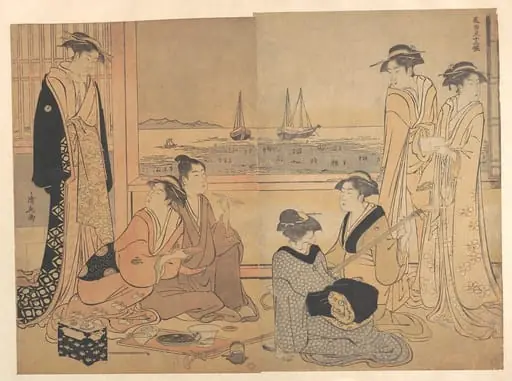 Untitled
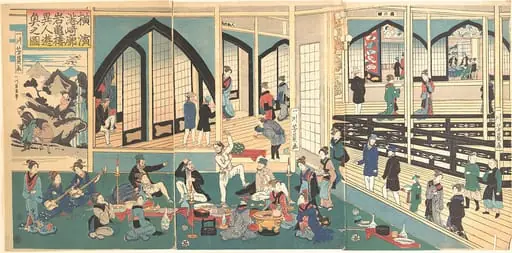 Yokohama Miyozaki-kaku Gankirō ijin yūkyō no zu|Foreigners Enjoying a Party at the Gankirō Tea House
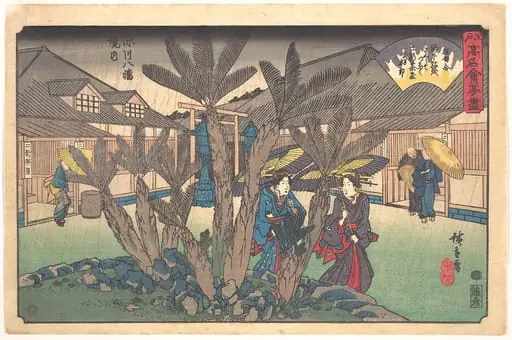 Fukagawa Hachiman Keidai (Niken Jyaya)|江戸高名会亭尽 深川八幡境内 二軒茶屋|Tea-house inside Hachiman Shrine
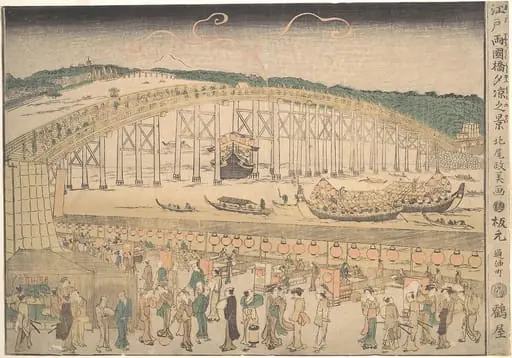 Untitled
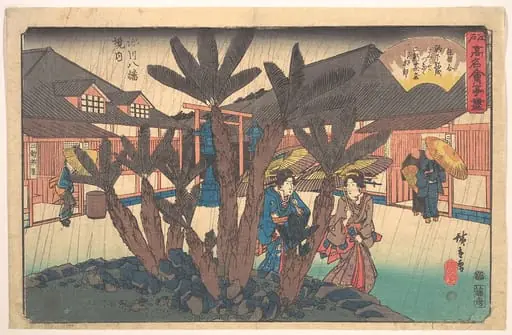 江戸高名会亭尽 深川八幡境内 二軒茶屋|Fukagawa Hachiman Keidai (Niken Jya-ya)
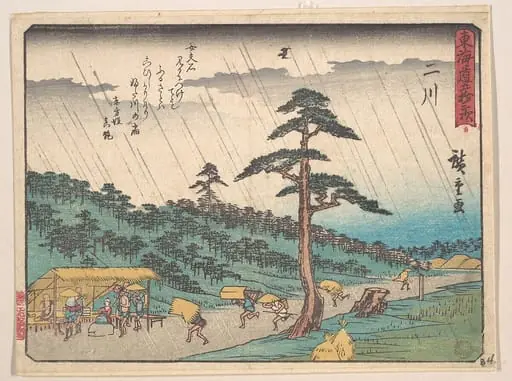 東海道五十三次 二川|Futagawa
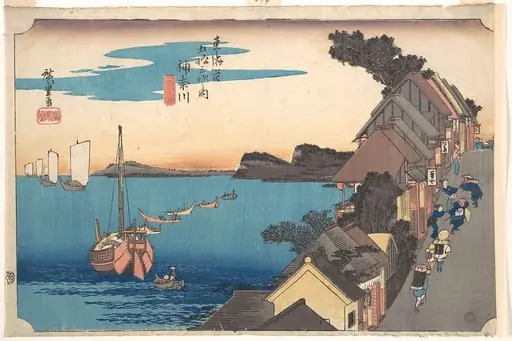 東海道五十三次之内 神奈川 宿台之景|View of the Kanagawa station at sunset
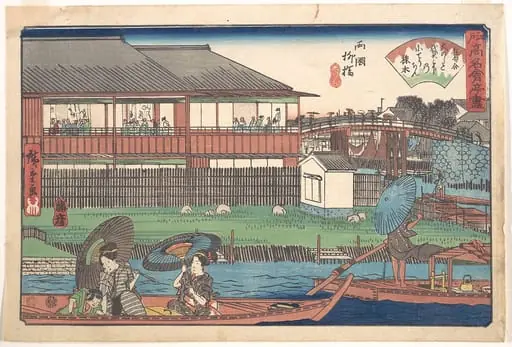 江戸高名会亭尽 両国柳橋 大のし|The Ono at Ryogoku Yanagibashi
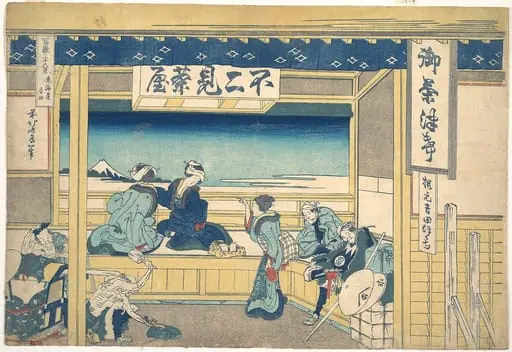 冨嶽三十六景 東海道吉田|Yoshida on the Tōkaidō (Tōkaidō Yoshida), from the series Thirty-six Views of Mount Fuji (Fugaku sanjūrokkei)
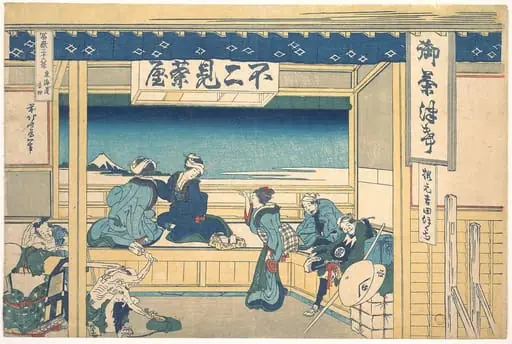 冨嶽三十六景 東海道吉田|Yoshida on the Tōkaidō (Tōkaidō Yoshida), from the series Thirty-six Views of Mount Fuji (Fugaku sanjūrokkei)
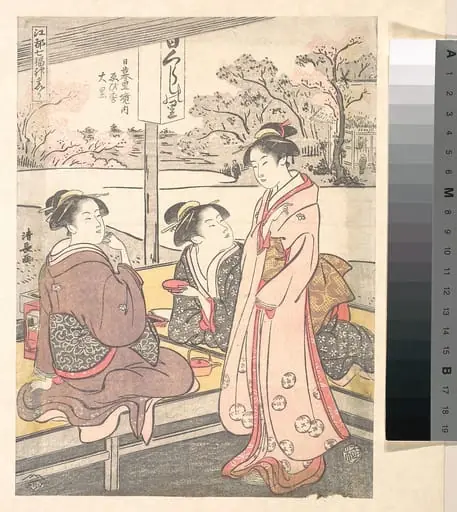 Untitled
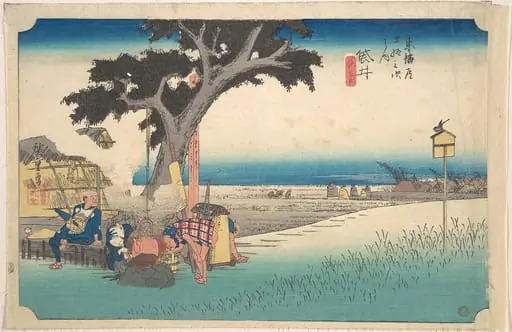 東海道五十三次之内 袋井 出茶屋の図|Fukuroi; De Chaya
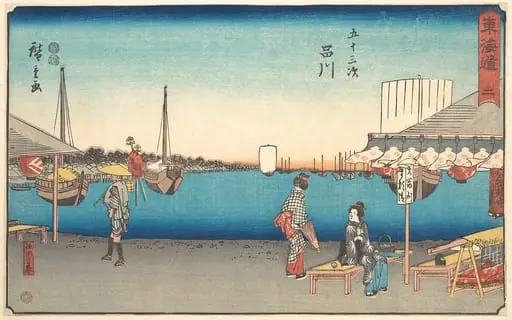 東海道五十三次 品川 鮫州の茶や|Shinagawa
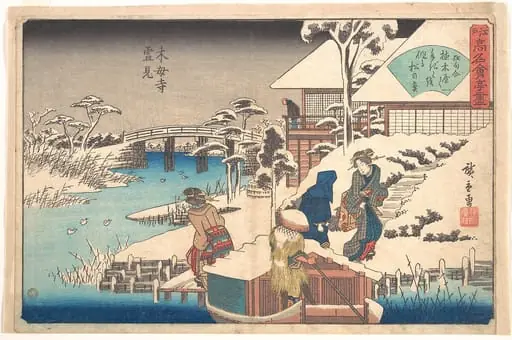 Mokuboji Yukimi (Uekiya)|江戸高名会亭尽 木母寺雪見 植木屋|Uekiya Restaurant at Mokuboji
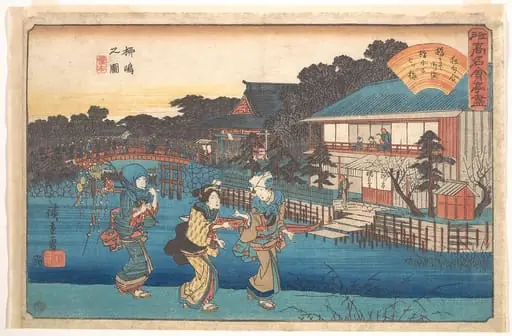 江戸高名会亭尽 柳島の図 橋本|Yanagishima no Zu
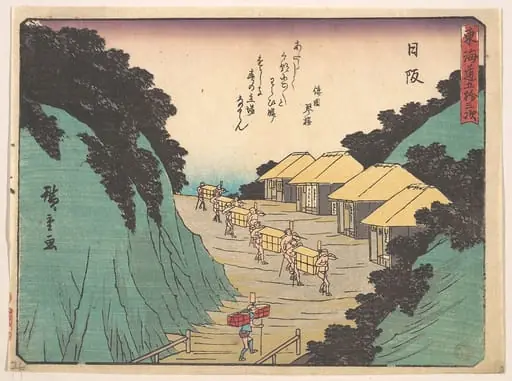 東海道五十三次 日阪 倭園琴桜|Nissaka; Sayo no Naka Yama, pass in the Bayo Mountains
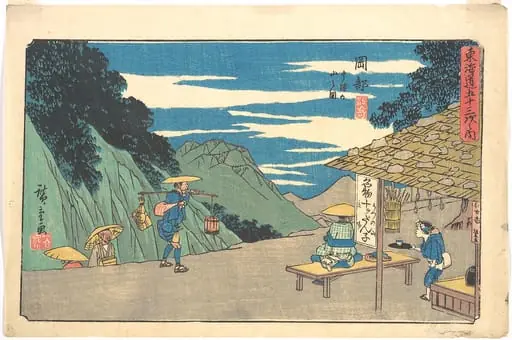 東海道五十三次之内 岡部 宇津の山之図|Okabe
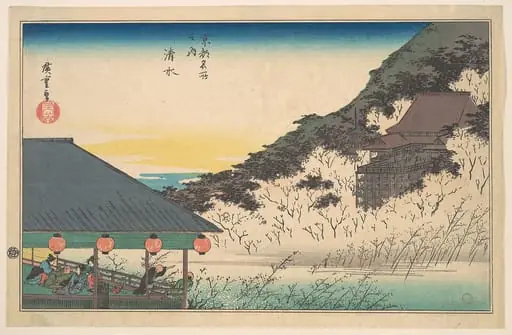 歌川広重画 「京都名所之内 清水」|Kiyomizu Temple (Kiyomizu), from the series Famous Views of Kyoto (Kyōto meisho no uchi)
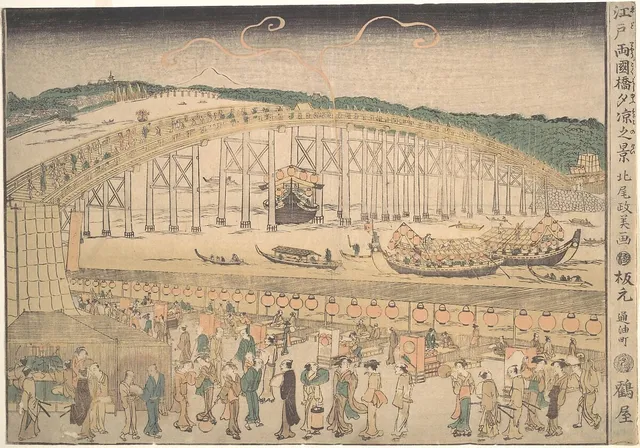
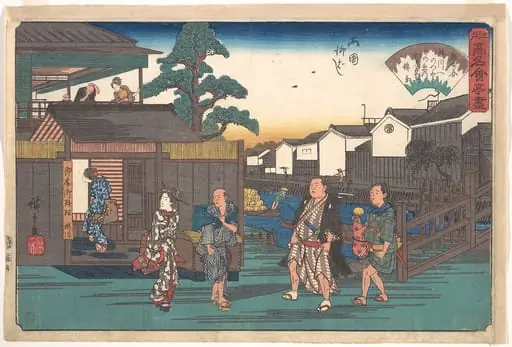 Ryogoku Yanagibashi (Umegawa)|江戸高名会亭尽 柳ばし|The Umegawa at Ryogoku Yanagibashi
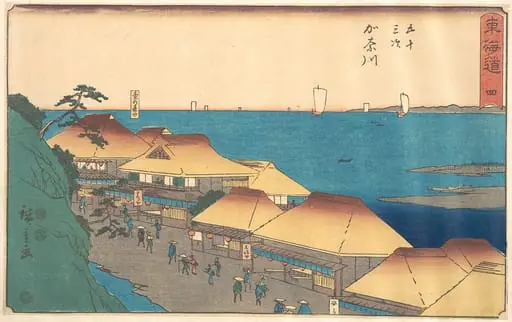 東海道五十三次 神奈川 台の茶や|Kanagawa
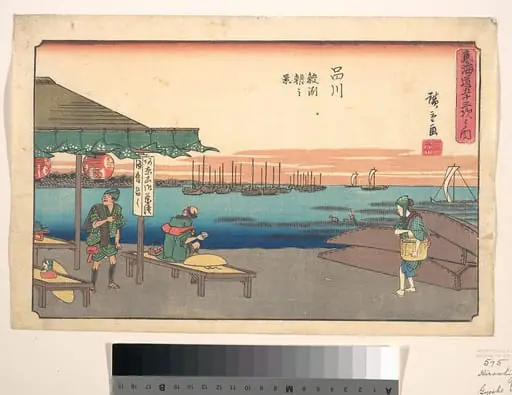 東海道五十三次之内 品川 鮫洲朝之景|Shinagawa Samesu Asa no Kei
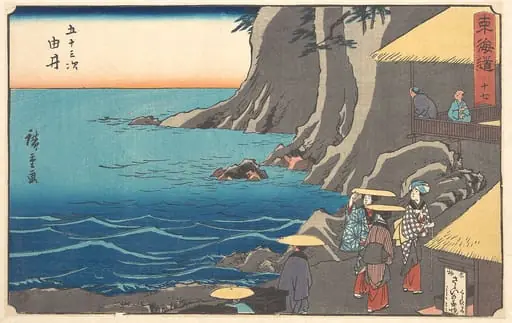 東海道五十三次 由井|Yui
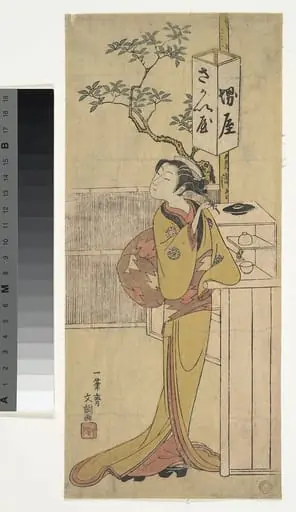 Untitled
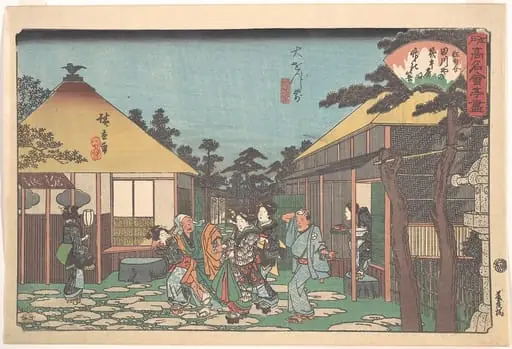 江戸高名会亭尽 大をんし前 田川屋|Daisenji Mae (Tagawaya)
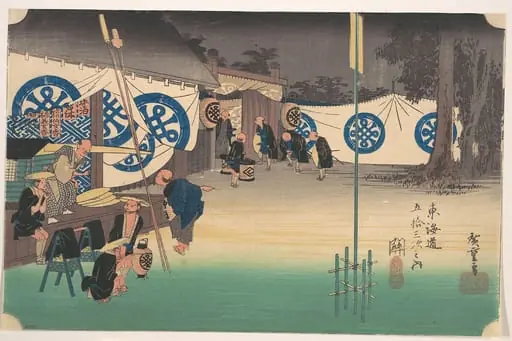 東海道五十三次 関 本陣早立|Seki, Stations No. 48
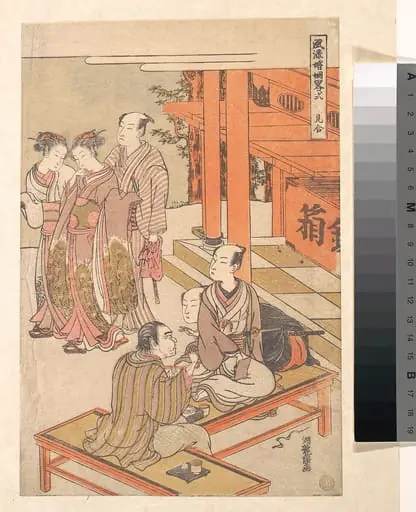 Untitled
Frequently asked questions
What is Tea Hous?
Tea Hous is a subject in art. A teahouse or tearoom (also tea room) is an establishment which primarily serves tea and other light refreshments.
How many Tea Hous works does Artifact World Gallery have?
Artifact World Gallery holds 27 public-domain Tea Hous works, all free to view and download.
Who are the key Tea Hous artists?
Key Tea Hous artists in the collection include Isoda Koryūsai, Katsushika Hokusai and Utagawa Hiroshige.
Where can I see Tea Hous works?
Tea Hous works in the collection are held by Metropolitan Museum of Art.