Artwork
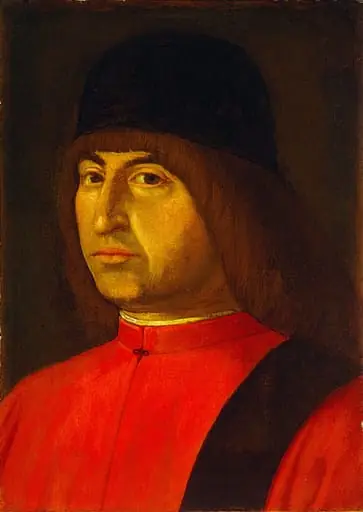
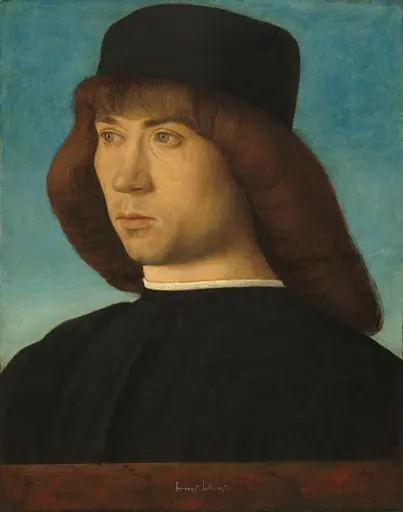
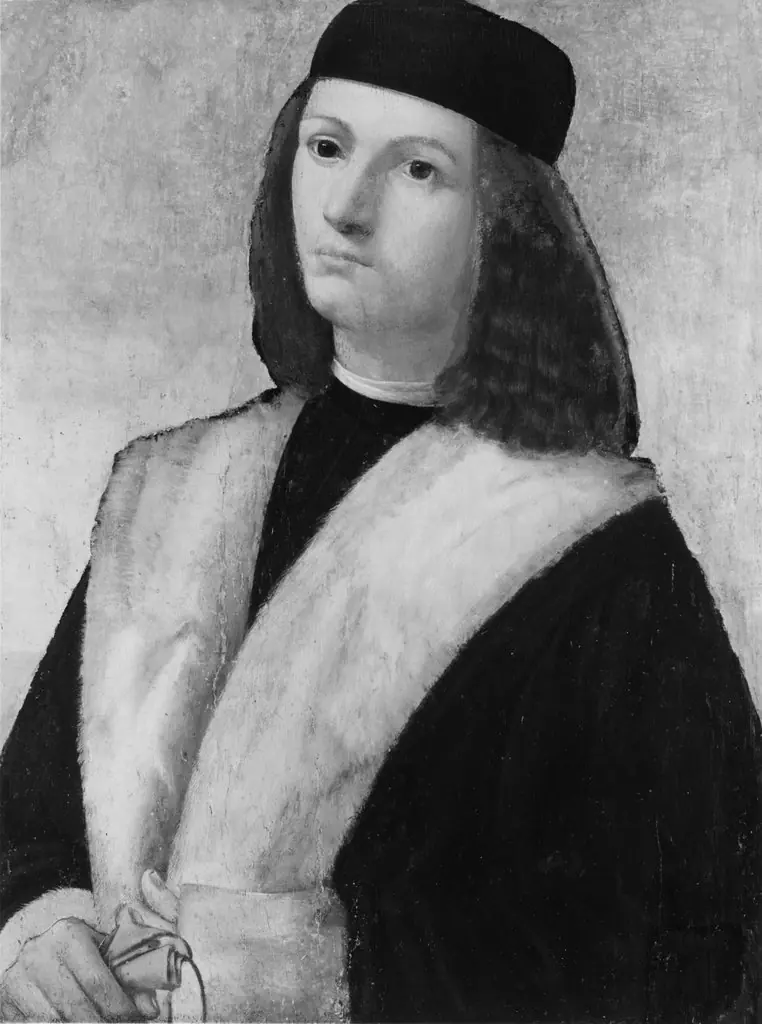
Portrait of a Man
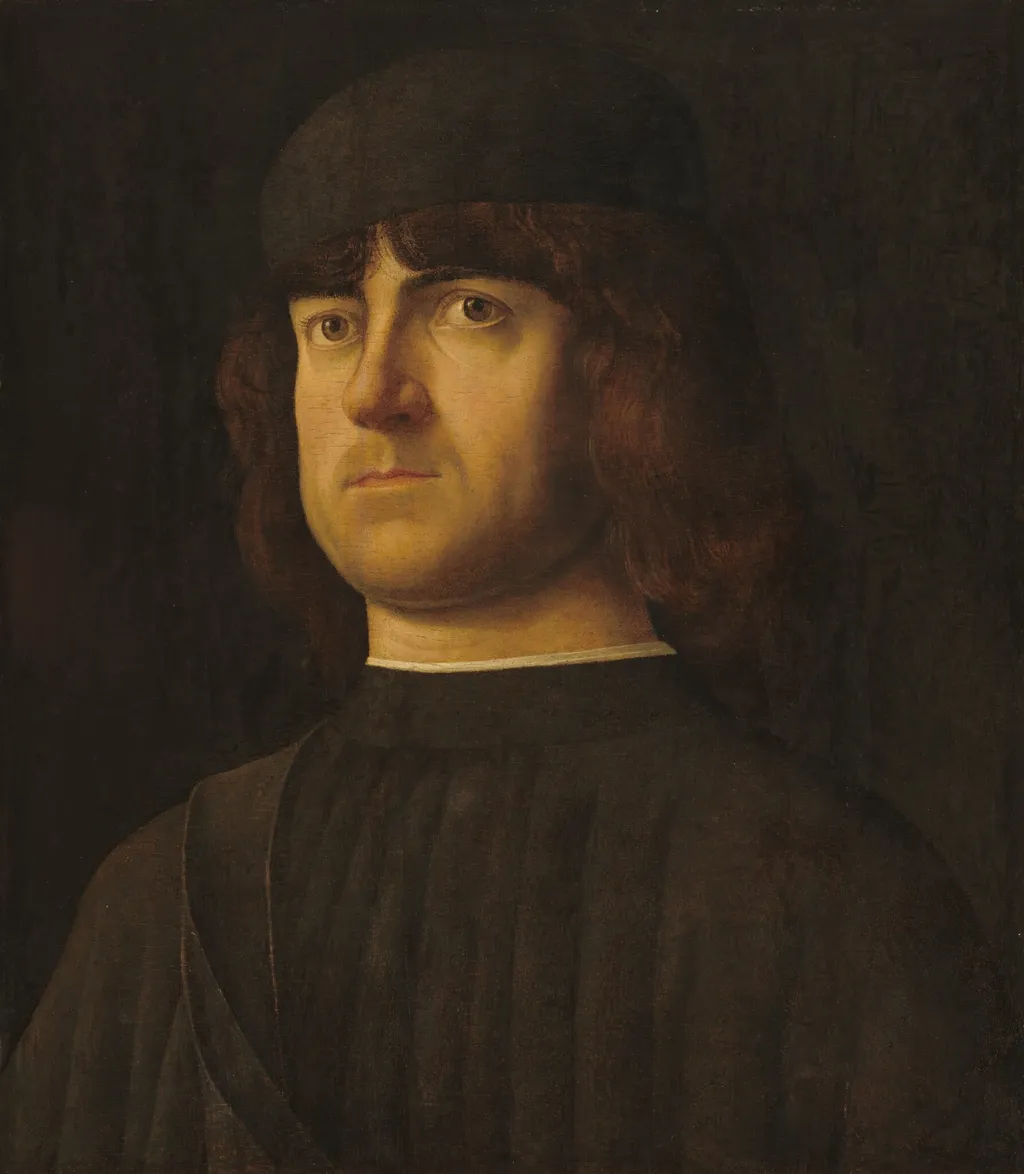
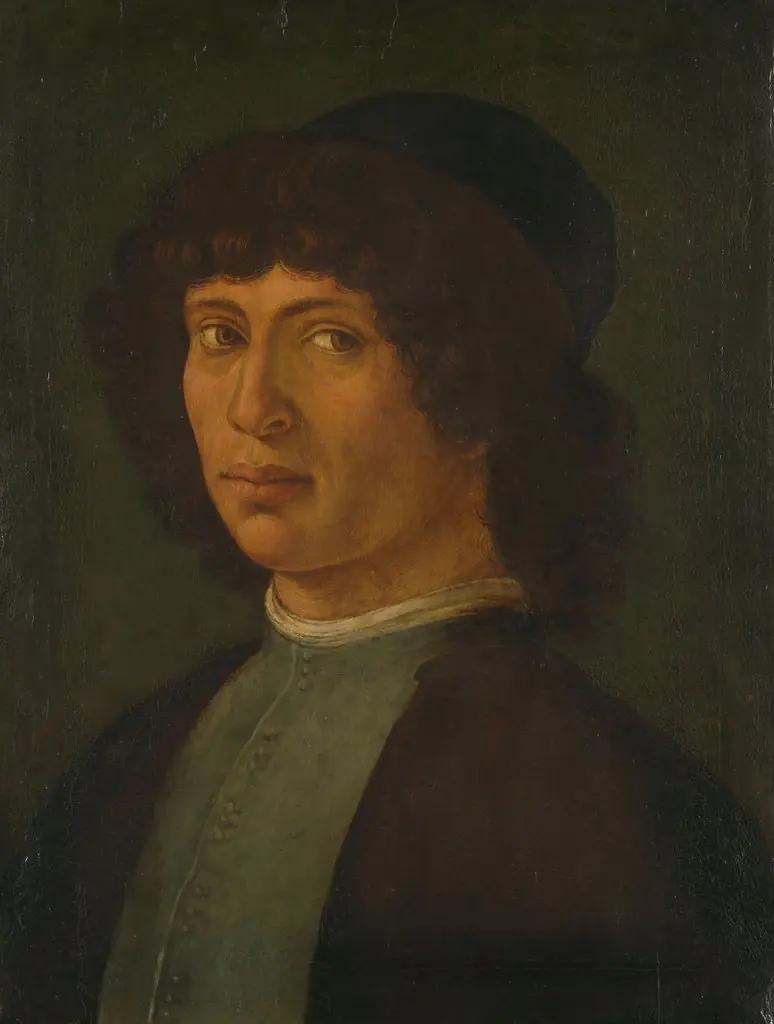
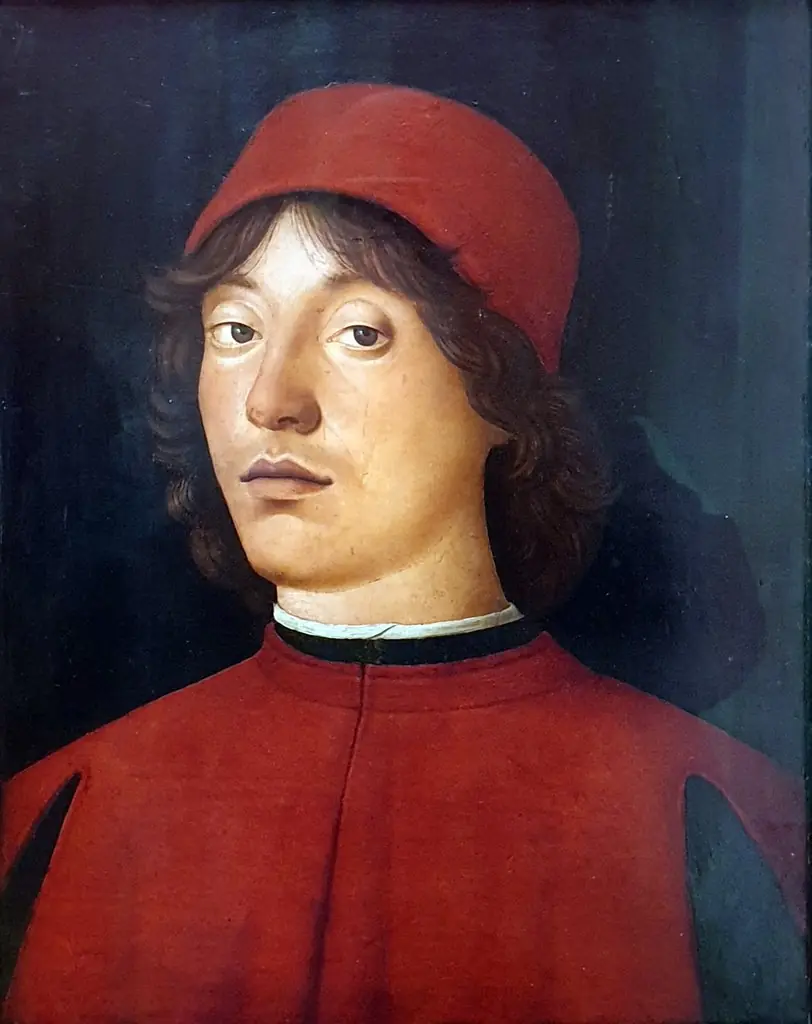
Portrait of a Man is an oil painting by the Early Renaissance artist Alvise Vivarini. It dates from 1495 and is held in the collection of the National Gallery of Art.
About this work
Subject & Meaning
The sources do not attribute specific allegorical meanings, hidden emblems, or representational layers beyond the straightforward presentation of the sitter.
The work depicts a single male figure, identified simply as a man, serving as the main subject of this 1495 portrait by Alvise Vivarini. As a standard genre piece from the late 15th century, the painting focuses on the individual likeness rather than complex narrative iconography or overt symbolic elements. The sources do not attribute specific allegorical meanings, hidden emblems, or representational layers beyond the straightforward presentation of the sitter.
The composition functions primarily as a record of the man's appearance, consistent with the portrait genre of the period. No additional context regarding the sitter's identity or specific symbolic attributes is provided in the available documentation.
History & Provenance
Dated to 1495, the portrait was first recorded in the collection of Sir John Charles Robinson in London. It passed to Sir Frederick Cook at Doughty House, Richmond, and was repurchased by Robinson before being sold in 1892 to the comtesse de Béarn in Paris for £1,600. Acquired by Duveen Brothers in December 1917, it was subsequently sold in March 1937 to the Samuel H. Kress Foundation and gifted to the National Gallery of Art, Washington, in 1939.
The painting is currently held in the Samuel H. Kress Collection at the National Gallery of Art in Washington, D.C., having been gifted to the institution by the foundation in 1939. Prior to this acquisition, the work passed through several notable private hands. It was likely owned by Sir John Charles Robinson in London, who may have briefly sold it to Sir Frederick Cook before repurchasing it.
In 1892, Robinson sold the panel to Martine-Marie-Pol de Behague, comtesse de Béarn, in Paris. The comtesse retained ownership until December 1917, when the piece was sold to Duveen Brothers, Inc. Finally, Duveen sold the work to the Samuel H. Kress Foundation in March 1937.
While specific public exhibition records are not detailed in the available texts, its provenance traces a clear path from private European collections to major American dealers before entering the national collection.
Overview
Alvise Vivarini, a prominent Venetian painter from a distinguished artistic lineage, created this Portrait of a Man around 1495. Executed in oil on panel, the work exemplifies the early Renaissance approach to portraiture. It depicts an unidentified male figure, rendered with a composed demeanor, characteristic of the period's formal representations of individuals.
Technique & Style
Vivarini employed oil on panel for this work, a traditional medium that allowed for rich color and subtle tonal transitions. The painting reflects the early Renaissance style, characterized by a focus on naturalistic representation and a clear, defined rendering of form. This method facilitated the depiction of the sitter's calm and serious expression, typical of portraits from this era.
Context
Alvise Vivarini, active in Venice during the latter half of the 15th century, emerged from a significant family of painters. Born between 1442 and 1453, he was the son of Antonio Vivarini and received his artistic training within this familial workshop, which included his uncle Bartolomeo Vivarini. This lineage established him as a leading figure in the Venetian art scene of his time.
Own this work as a print
Artist & collection
Artist
Alvise or Luigi Vivarini (1442/1453–1503/1505) was an Italian painter, the leading Venetian artist before Giovanni Bellini.