Artwork
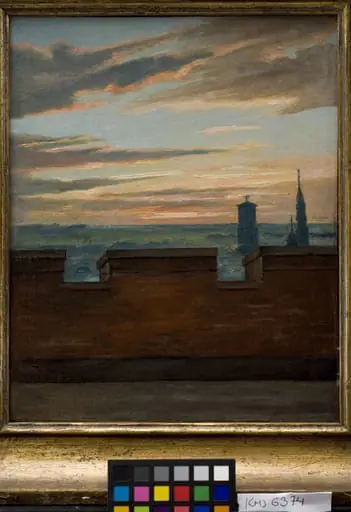
Roof Ridge of Frederiksborg Castle with View of Lake, Town and Forrest
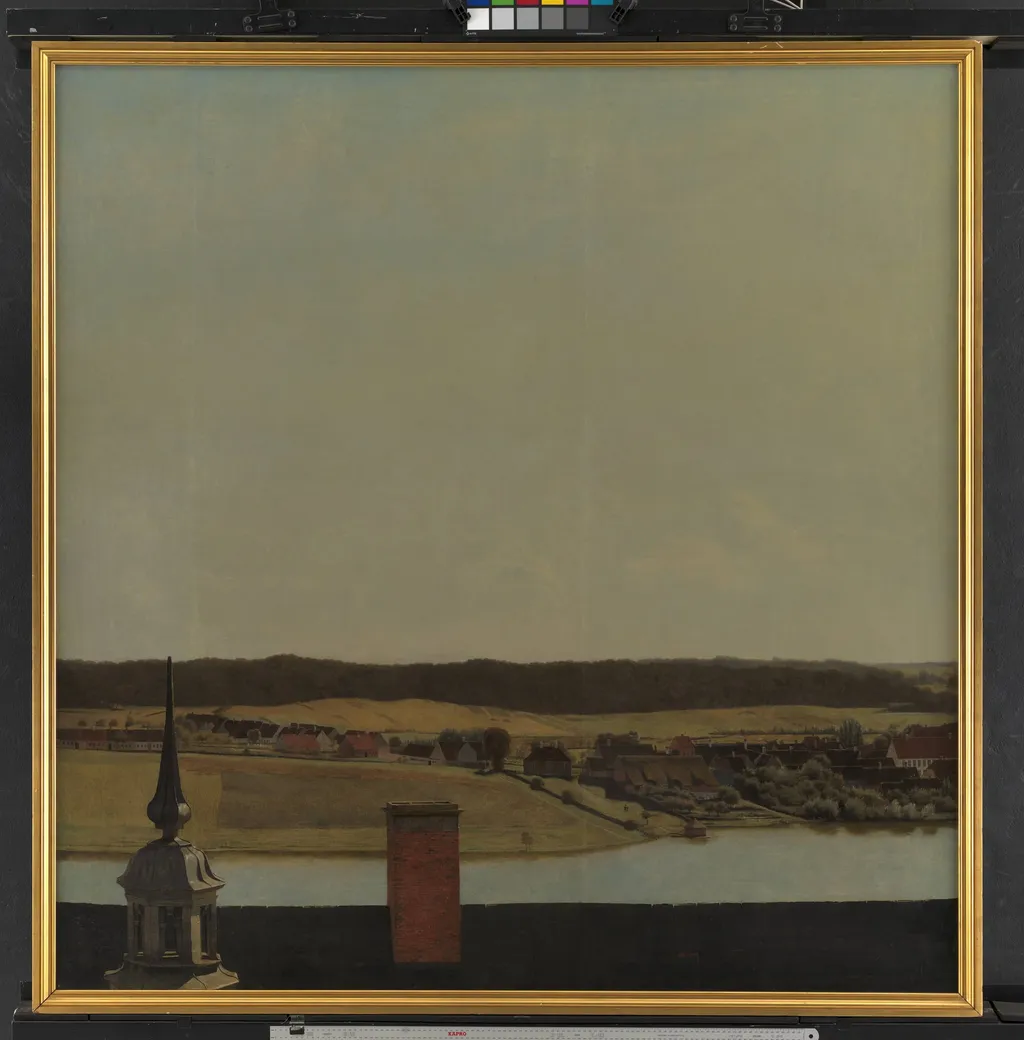
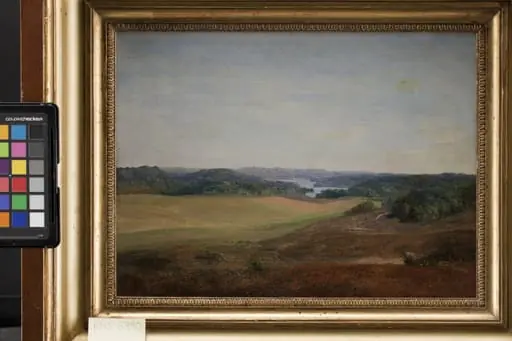
Roof Ridge of Frederiksborg Castle with View of Lake, Town and Forrest is a photography by Unknown. It dates from 1850 and is held in the collection of the Statens Museum for Kunst. This image captures a distant view of the landscape surrounding Frederiksborg Castle, viewed as if from its rooftop ridge.
About this work
Overview
This image captures a distant view of the landscape surrounding Frederiksborg Castle, viewed as if from its rooftop ridge.
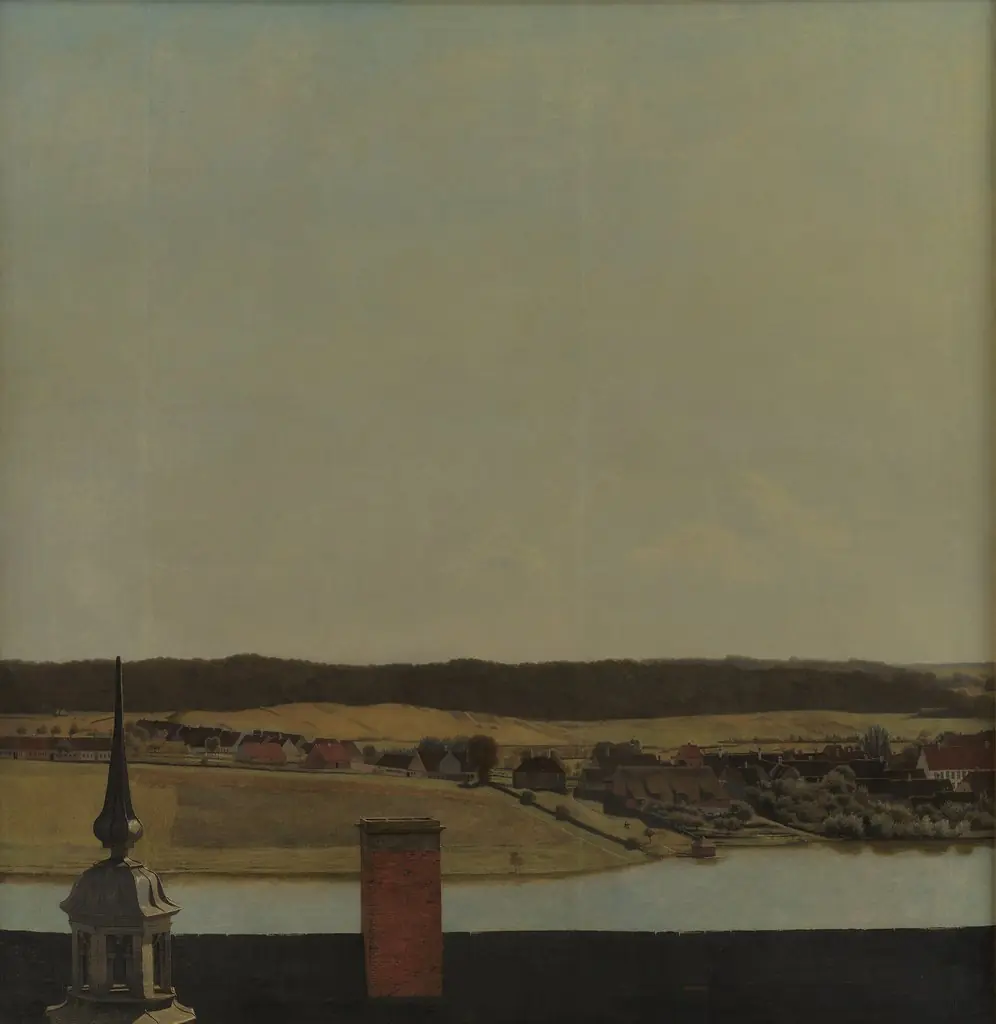
This image captures a distant view of the landscape surrounding Frederiksborg Castle, viewed as if from its rooftop ridge. Though the castle itself is absent from the frame, the composition emphasizes the surrounding terrain: a tranquil lake, a modest town with clustered red and brown roofs, and a line of trees receding into soft hills. The scene conveys stillness, as if paused at the edge of daylight, with no human figures or movement to disrupt the quiet.
Subject & Meaning
The image presents a topographical record of the castle’s immediate environs rather than its architecture. The church steeple and lone brick tower anchor the town’s identity, while the pavilion in the foreground suggests a vantage point or resting place. The absence of the castle may reflect an intentional focus on the relationship between built environment and natural setting, emphasizing harmony over monumentality.
Technique & Style
Rendered with restrained detail and muted tones, the image favors atmospheric perspective over precision. Soft horizons, gradual transitions between land and sky, and minimal contrast create a meditative mood. The lack of sharp definition in distant forms suggests a deliberate avoidance of dramatic effect, favoring instead a quiet, observational realism common in mid-19th-century topographical studies.
History & Provenance
Created around 1850, the work was likely made as part of a broader documentation effort tied to Frederiksborg Castle’s surroundings. It entered the collection of the Museum of Ethnography, where it is preserved not as fine art but as a cultural record. Its classification there implies an interest in landscape as a reflection of human habitation rather than aesthetic achievement.
Context
In mid-19th-century Denmark, systematic visual surveys of estates and towns were undertaken for administrative and scholarly purposes. This image aligns with that trend, reflecting a growing interest in mapping the relationship between architecture, land use, and regional identity. The absence of the castle in the frame may indicate a shift in focus from royal symbolism to everyday geography.
Legacy
The image endures as a quiet testament to a specific moment in Denmark’s landscape documentation. It contributes to a body of work that values observation over grandeur, offering insight into how ordinary spaces were perceived and recorded during a period of increasing national self-awareness. Its preservation in an ethnographic context underscores its role as cultural evidence rather than artistic expression.
Artist & collection