Artwork
Village in the Hills
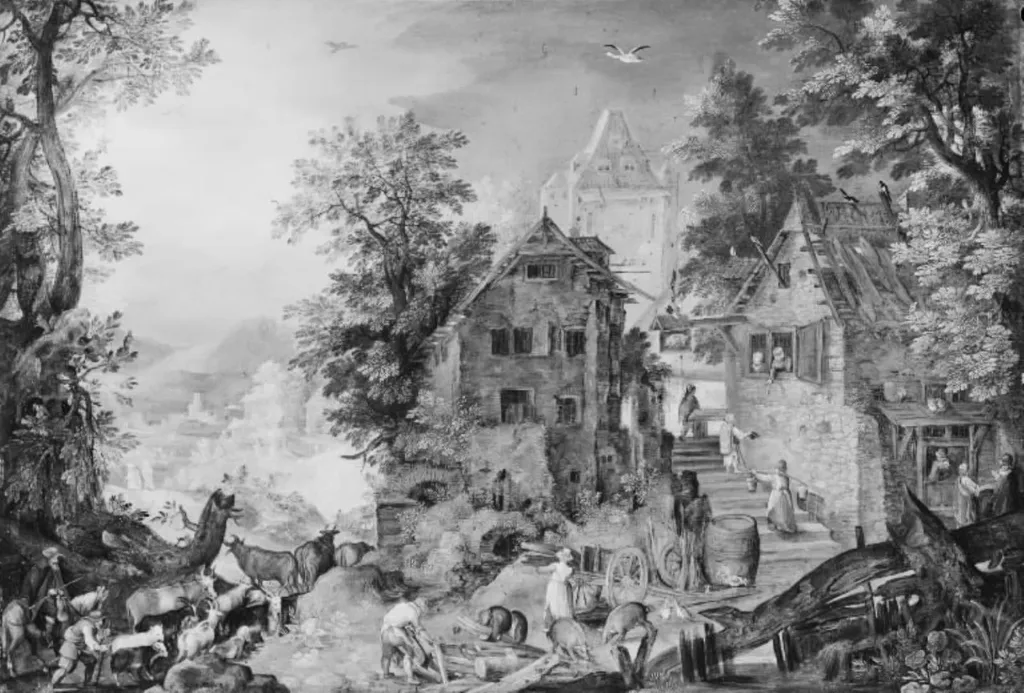
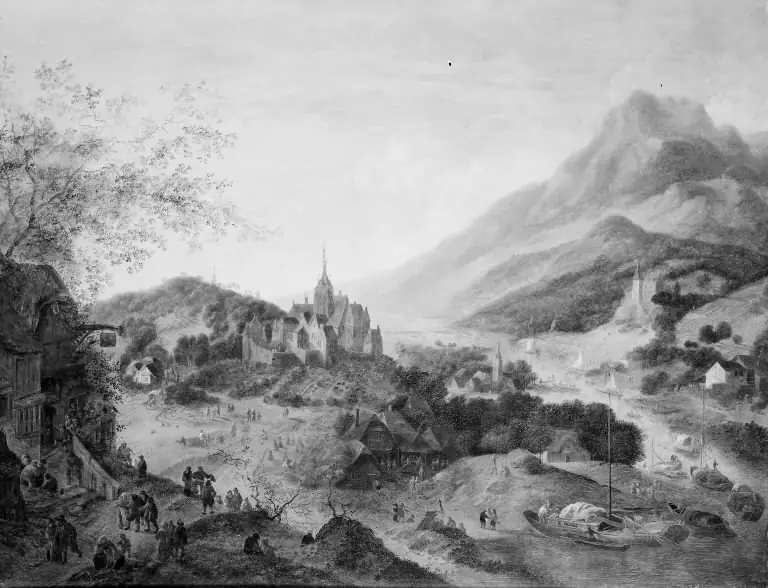
Village in the Hills is a photography by the Renaissance artist Unknown. It dates from 1597 and is held in the collection of the Statens Museum for Kunst.
About this work
Overview
Figures populate the scene, attending to livestock, strolling, or standing on steps, while winding paths and a modest bridge structure the landscape.
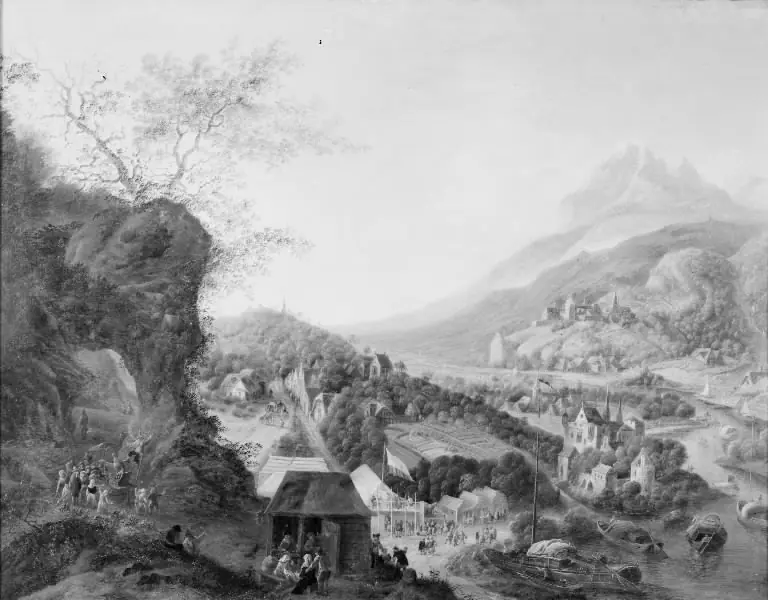
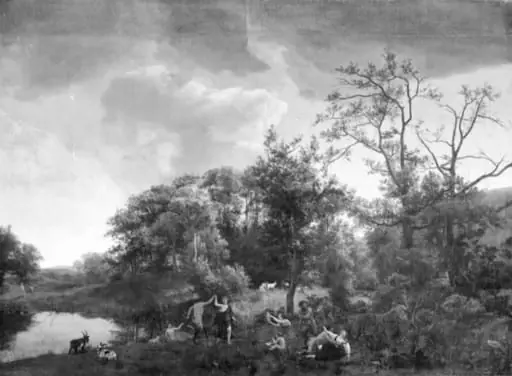
Created in 1597, “Village in the Hills” is a monochrome image that depicts a tranquil settlement set among rolling terrain. The composition centers on a prominent house with a steeply pitched roof, flanked by smaller dwellings, trees, and a distant church spire. Figures populate the scene, attending to livestock, strolling, or standing on steps, while winding paths and a modest bridge structure the landscape.
Subject & Meaning
The work presents everyday rural life, emphasizing the relationship between human activity and the surrounding environment. The central house serves as a focal point for communal interaction, while the surrounding figures suggest a self‑sufficient community engaged in routine tasks. The inclusion of the church spire hints at the spiritual dimension that frames daily existence in a pastoral setting.
Technique & Style
Rendered in black and white, the image employs a careful modulation of light and shadow to model forms and convey depth, a practice reminiscent of chiaroscuro techniques popularized during the Renaissance. The contrast between illuminated planes and darker recesses defines the hills, architecture, and figures, creating a sense of three‑dimensional space within the flat medium.
History & Provenance
Attributed to the artist known as 1929_person, the piece has been part of the Museum of Ethnography’s collection since its acquisition, though the exact date of transfer is not recorded in the available data. Its preservation in a museum dedicated to cultural artifacts underscores its value as a visual document of historical village life.
Context
The image reflects a period when detailed visual records of rural settlements were increasingly sought for ethnographic and artistic purposes. By combining observational accuracy with compositional techniques derived from high art, the work bridges documentary intent and aesthetic ambition, situating it within broader trends of late‑16th‑century visual culture.
Artist & collection









- Mountain Landscape with Picturesque Buildings
 May Festival in the Mountains
 May Festival in the Mountains
 Mountain Scenery with River
 Große Landschaft
 Landscape with Mercury and Argus
 Landscape with Mercury and Argus
 Mountain Scenery with River
 Mountain Scenery with River
 Village Scene on a River
 Public House by the Rhine
 Landscape with Fauns and Nymphs