Artwork
A Prince Performs Austerities (recto), from a Romance of Chandrabhanu and Lavanyavati of Upendra Bhanja (1670–1740)

A Prince Performs Austerities (recto), from a Romance of Chandrabhanu and Lavanyavati of Upendra Bhanja (1670–1740) is an unspecified painting by the Baroque artist Unknown. It dates from 1704 and is held in the collection of the Cleveland Museum of Art.
- Accession no.
- 2018.175.a
- Credit line
- Purchase and partial gift from the Catherine and Ralph Benkaim Collection; Severance and Greta Millikin Purchase Fund
About this work
Overview
This 18th-century Indian painting depicts a prince engaged in intense spiritual practices in a forest setting, as part of a narrative from the romance of Chandrabhanu and Lavanyavati by Upendra Bhanja.
Subject & Meaning
The prince undertakes severe austerities, yoga amidst flames during the hot season and exposure to monsoon rains, to gain a divine woman, illustrating devotion and perseverance in pursuit of a spiritual or romantic goal.
Technique & Style
The artwork contrasts the harsh, dual environment of fire and rain with the prince's serene, focused expression, highlighting the artist's ability to convey juxtaposed emotional and physical states within a single scene.
History & Provenance
Originating from Eastern India (likely Odisha, formerly Orissa), this painting is part of a larger illustrated narrative from Upendra Bhanja's 18th-century romance, with the recto and verso together telling a story of spiritual endeavor and divine reward.
Context
Created in the 1700s, this work reflects the cultural and literary themes of its time, blending religious devotion with the quest for love, characteristic of Indian romances from the period.
Legacy
As part of a traditional Indian love story's illustration, it contributes to the visual heritage of Eastern Indian art, particularly from Odisha, offering insights into the region's artistic and literary traditions.

Artist & collection









 The Monkeys and Bears Fight Ravana and His Demons (verso), from a Romance of Chandrabhanu and Lavanyavati of Upendra Bhanja (Indian, died 1740)
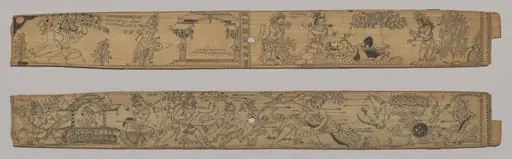 Leaf from a Romance of Chandrabhanu and Lavanyavati of Upendra Bhanja (Indian, died 1740)
 Folio 73 from a Gandavyuha-sutra (Scripture of the Supreme Array): Sudhana and an antelope (recto); text (verso)
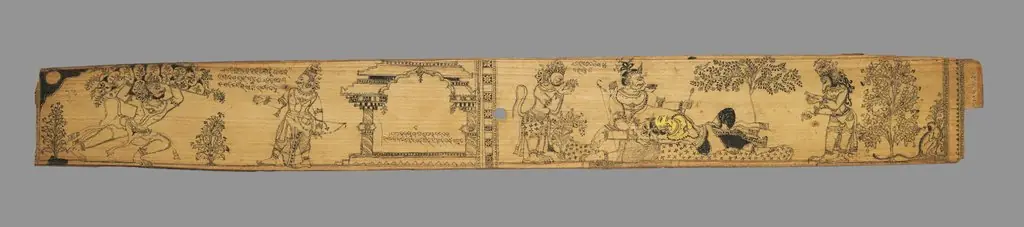 The Monkeys and Bears Fight Ravana and His Demons (verso), from a Romance of Chandrabhanu and Lavanyavati of Upendra Bhanja (Indian, died 1740)
 Folio 1 (recto), from a Manuscript of the Perfection of Wisdom in Eight Thousand Lines (Ashtasahasrika Prajnaparamita-sutra)
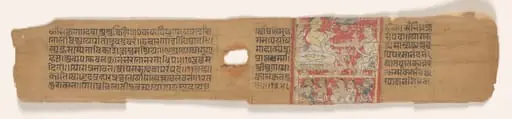 Jain monk with disciple and two laymen, two nuns, and a laywoman, folio 22 (recto) from a Yoga-shastra of Hemachandra
 Bodhisattva Samantabhadra purifies the path to enlightenment, with Manjushri, folio 348 (verso) from a Gandavyuha-sutra (Scripture of the Supreme Array)