Artwork
Jain monk with disciple and two laymen, two nuns, and a laywoman, folio 22 (recto) from a Yoga-shastra of Hemachandra
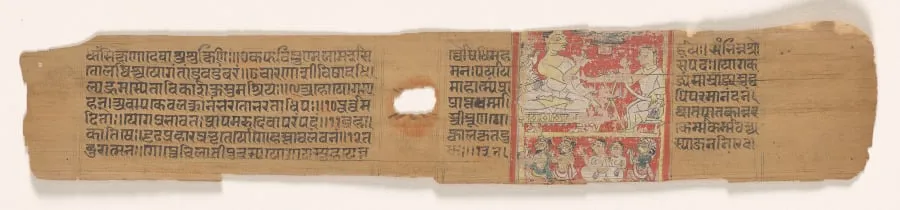
Jain monk with disciple and two laymen, two nuns, and a laywoman, folio 22 (recto) from a Yoga-shastra of Hemachandra is an unspecified painting by the Indian Miniature artist Unknown. It dates from 1275 and is held in the collection of the Cleveland Museum of Art. This 12th-century Indian manuscript page features a painted scene on the recto (front side) accompanied by Sanskrit text on both sides.
- Accession no.
- 1971.129.a
- Credit line
- Purchase from the J. H. Wade Fund
About this work
Overview
This 12th-century Indian manuscript page features a painted scene on the recto (front side) accompanied by Sanskrit text on both sides. The artwork is a folio from a Yoga-shastra, a religious text attributed to Hemachandra, illustrating a serene interaction between a Jain monk, his disciple, and accompanying figures.
Subject & Meaning
The scene depicts a Jain monk in red robes seated cross-legged, facing his disciple. Behind them, two nuns and two lay individuals (one woman) stand near a tree adorned with vibrant red flowers, conveying a moment of spiritual guidance or contemplation within a natural, symbolic setting.
Technique & Style
Executed with muted colors on a rectangular page, the painting showcases simple, neat composition. The worn and torn edges, along with the faded hues, reflect the manuscript's age. The contrasting bright red flowers and robes of the monk add subtle emphasis to the otherwise subdued palette.
History & Provenance
Originating from 12th-century India, this folio is part of a larger Yoga-shastra manuscript by Hemachandra. Specific provenance details are not provided, though similar works are housed in institutions like The Cleveland Museum of Art, indicating its value within collections of ancient religious manuscripts.
Context
Created within the Jain tradition, this artwork combines religious text with illustrative painting, typical of manuscript illumination in medieval India. The blend of spiritual figures, natural elements, and religious scripture contextualizes its use in devotional or educational settings.
Artist & collection









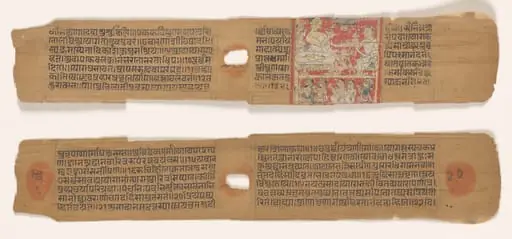
- Folio 22 from a Yoga-shastra of Hemachandra: Jain Monk with disciple and two laymen, two Nuns, and a laywoman (recto); Text (verso)
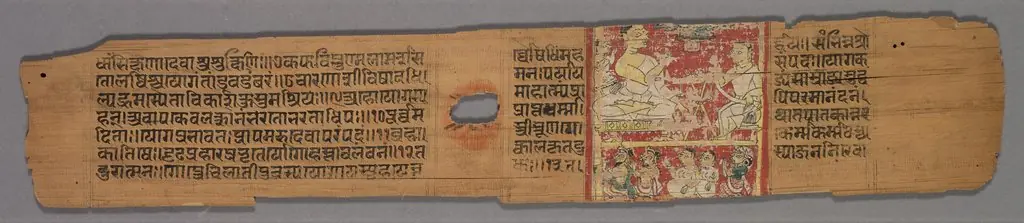 Leaf from a Jain Manuscript: Yoga-shastra: Jain monk with Disciple and Two Laymen, Two Nuns and a Laywoman below (verso)
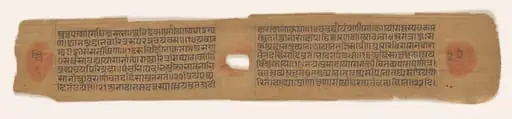 Text, folio 22 (verso) from a Yoga-shastra of Hemachandra
 Two nuns teaching lay women, colophon page of folio 167 (recto) from a Kalpa-sutra and Story of Kalakacharya
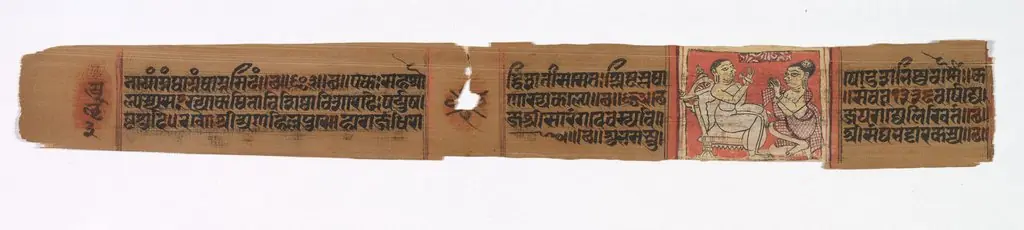 Leaf from a Jain Manuscript: Colophon page, Kalpa-sutra and The Story of Kalakacharya of Devachandra: Monk Teaching Lay Disciple
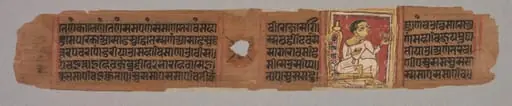 Monk Holding a Flower: Folio 2 (recto), from a Kalpa-sutra and Story of Kalakacharya
 Leaf from a Jain Manuscript: Kalpa-sutra: The Monk Gautama, Enthroned (recto)
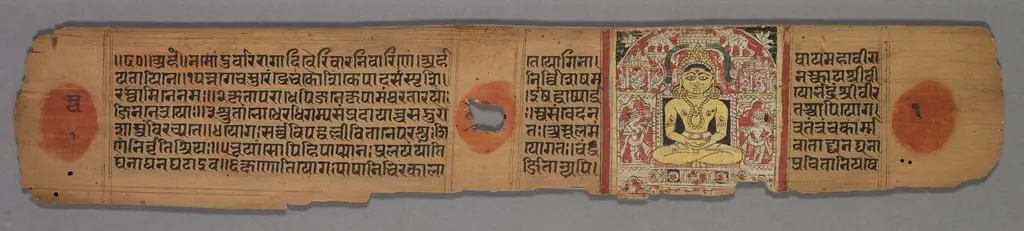 Seated Rishabha Enthroned, Folio 1 verso of a Yoga-shastra of Hemachandra
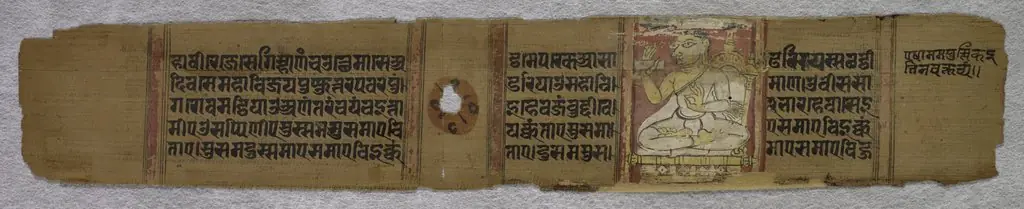 A Monk Preaching: Folio 2 (recto), from a Kalpa-sutra
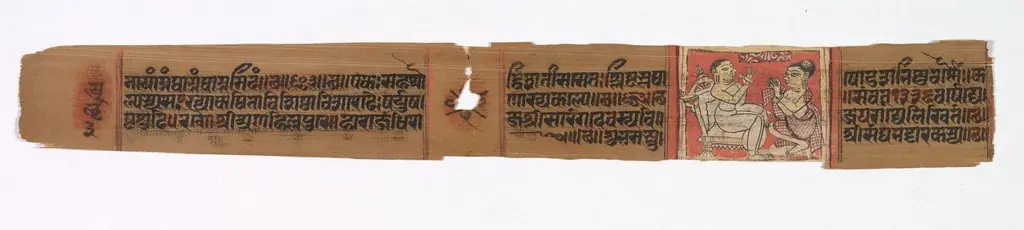 Leaf from a Jain Manuscript: Colophon page, Kalpa-sutra and The Story of Kalakacharya of Devachandra: Monk Teaching Lay Disciple (recto)
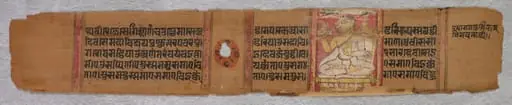 A Monk Preaching: Folio 2 (recto), from a Kalpa-sutra
 Leaf from a Jain Manuscript: Kalpa-sutra: Enthroned Monk (recto); Leaf from a Jain Manuscript: Kalpa-sutra: Text (verso)