Artwork
The arrival of the Russian embassy in Amsterdam, 29 August 1697
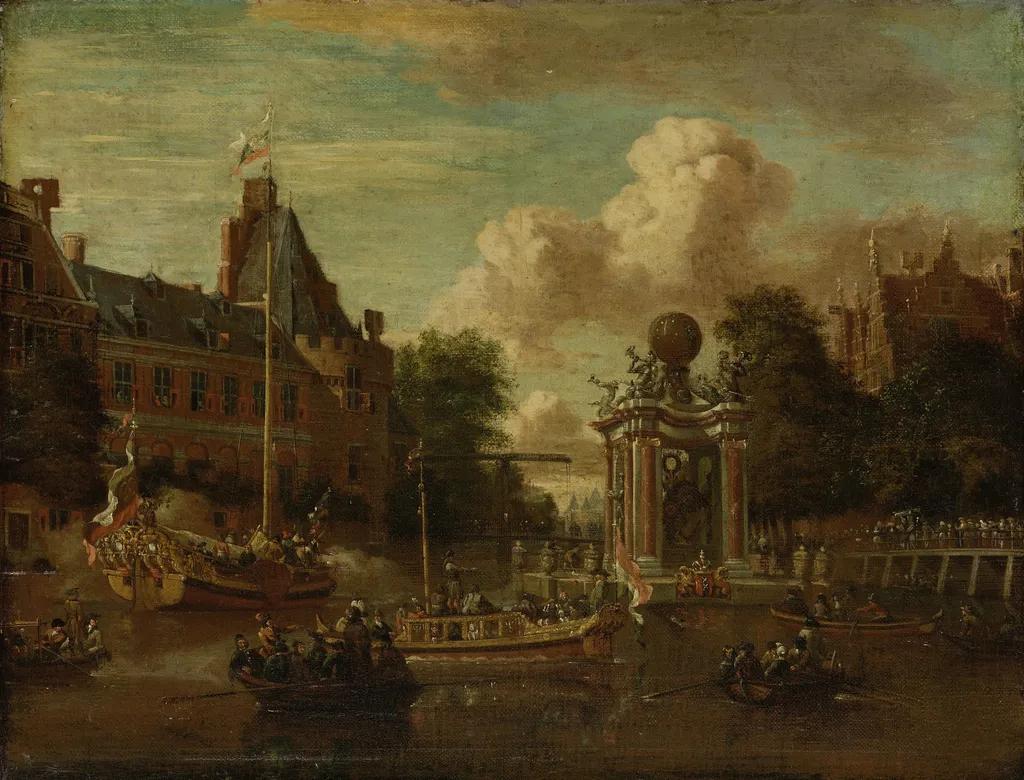
The arrival of the Russian embassy in Amsterdam, 29 August 1697 is an oil painting by the Dutch Golden Age artist Abraham Storck. It dates from 1702 and is held in the collection of the Rijksmuseum.
About this work
Subject & Meaning
The painting shows the Russian embassy's arrival on the Amstel canal in Amsterdam on 29 August 1697, a diplomatic event marked by the presence of the Russian delegation before the Kloveniersdoelen militia building. Storck's composition uses the waterway and surrounding architecture to emphasize the ceremonial nature of the visit, while the detailed rendering of flags and uniforms underscores the political significance of the occasion. The work functions as a visual record of early modern statecraft, reflecting both the prestige of the Russian tsar and the prosperity of Amsterdam's mercantile elite.
Technique & Style
Storck employed a finely controlled handling, rendering the architectural and nautical details with precision while preserving a fluid atmosphere.
The painting is executed in oil on canvas, a standard support for Dutch maritime and ceremonial scenes of the period. Storck employed a finely controlled handling, rendering the architectural and nautical details with precision while preserving a fluid atmosphere. The composition balances the static verticals of ships' masts and the Kloveniersdoelen building against the dynamic diagonals of the Russian embassy's barge and surrounding vessels, creating a measured yet lively tableau.
The palette favors cool, luminous tones, blues and whites for the sky and water, earthy browns and ochres for the built environment, with highlights on flags and giltwork to draw the viewer's eye. Brushwork remains largely smooth, with only modest impasto in areas of reflected light, consistent with the restrained grandeur typical of late seventeenth-century Dutch history paintings.
History & Provenance
Abraham Storck executed this history painting in 1702, depicting the arrival of the Russian embassy in Amsterdam on 29 August 1697. Created five years after the actual event, the work was produced using oil paint on canvas and measures 33.5 cm in height and 42.8 cm in width. It is currently held in the collection of the Rijksmuseum in Amsterdam.
No further details regarding the original commission or intermediate ownership history prior to its museum acquisition are recorded.
Overview
Abraham Storck’s oil painting, completed in 1702, records the arrival of the Russian diplomatic mission on 29 August 1697. Set on Amsterdam’s Amstel River, the canvas captures a bustling waterfront scene framed by the historic Kloveniersdoelen building and a stone bridge. A fleet of vessels bearing flags moves toward the city, while onlookers line the banks, creating a vivid snapshot of a ceremonial occasion in the Dutch Golden Age.
Context
The Kloveniersdoelen, a civic guard headquarters, served as a prominent landmark along the Amstel and often featured in city celebrations. The painting thus records not only a diplomatic moment but also the urban landscape of late seventeenth‑century Amsterdam, illustrating how waterways functioned as stages for public spectacle and international exchange.
Own this work as a print
Artist & collection
Artist
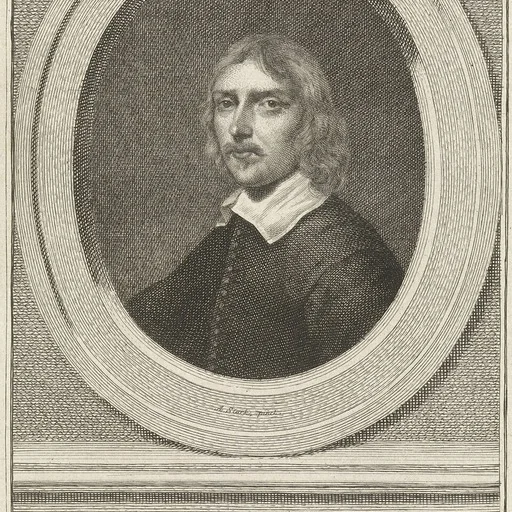
Abraham Storck (or Sturckenburch; bapt. 17 April 1644 in Amsterdam – buried 8 April 1708) was a Dutch painter and draughtsman, who was known for his marine paintings, topographical views, Italianate harbour scenes and…

- Village on the Bank of a River
 Schloß Temsch an der Schelde
 Prospekt af Paris ved Seinen med mange figurer
 The Palace of Coudenberg
 View of the City of Arnhem
 Garden Festival
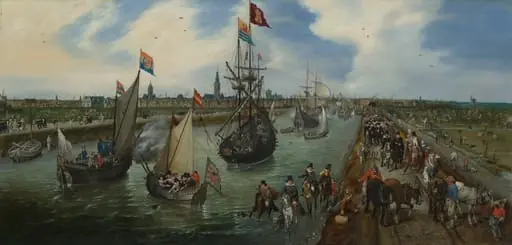 The Departure of a Dignitary from Middelburg
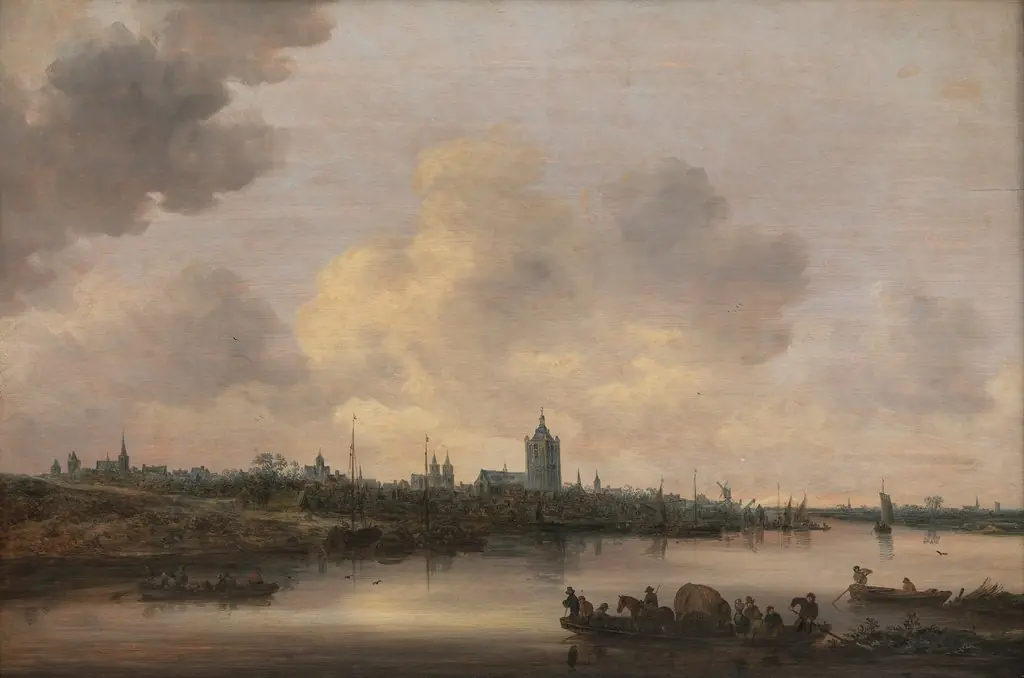 View of the City of Arnhem
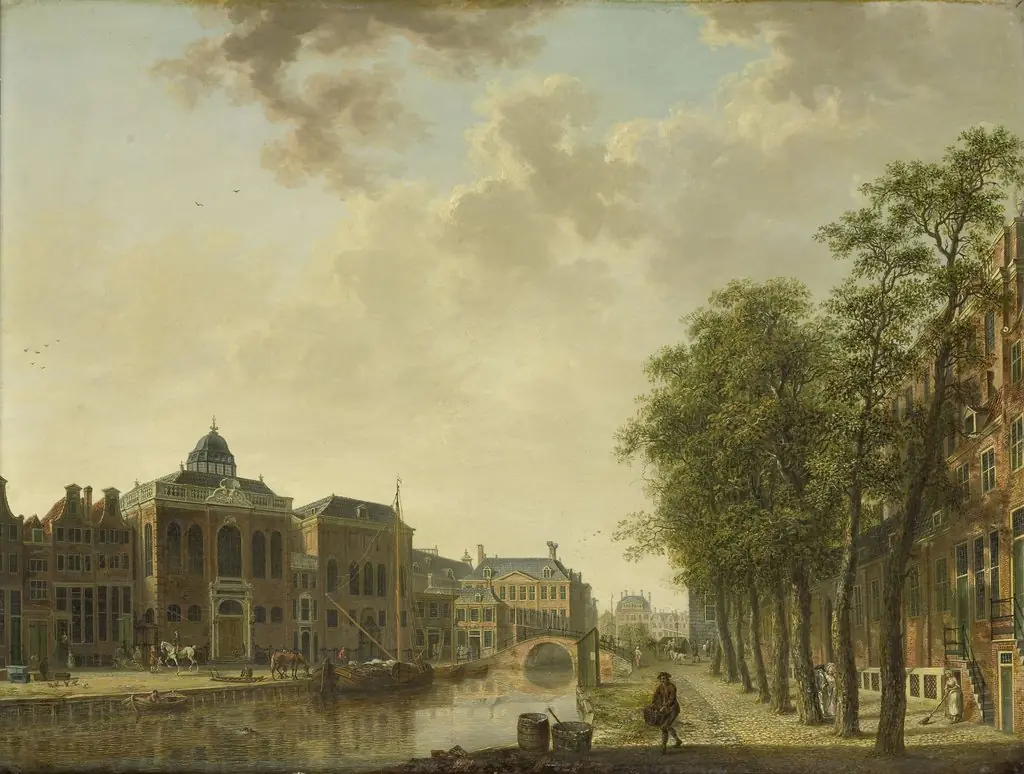 View of the Houtmarkt in Amsterdam
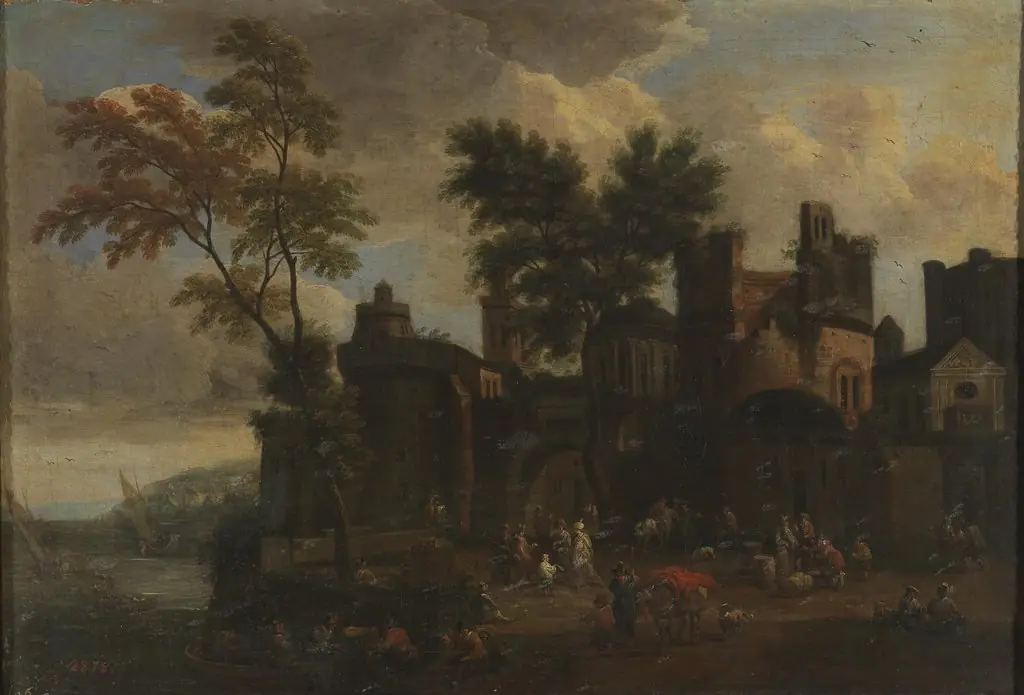 Un puerto
 Schloss Loenersloot in Holland
 The Arrival of the Kattendijk at Texel, 22 July 1702