Artwork
Les Maitres de l'Affiche, Pl. 91: Paul Hankar, Architecte rue defacqz 63
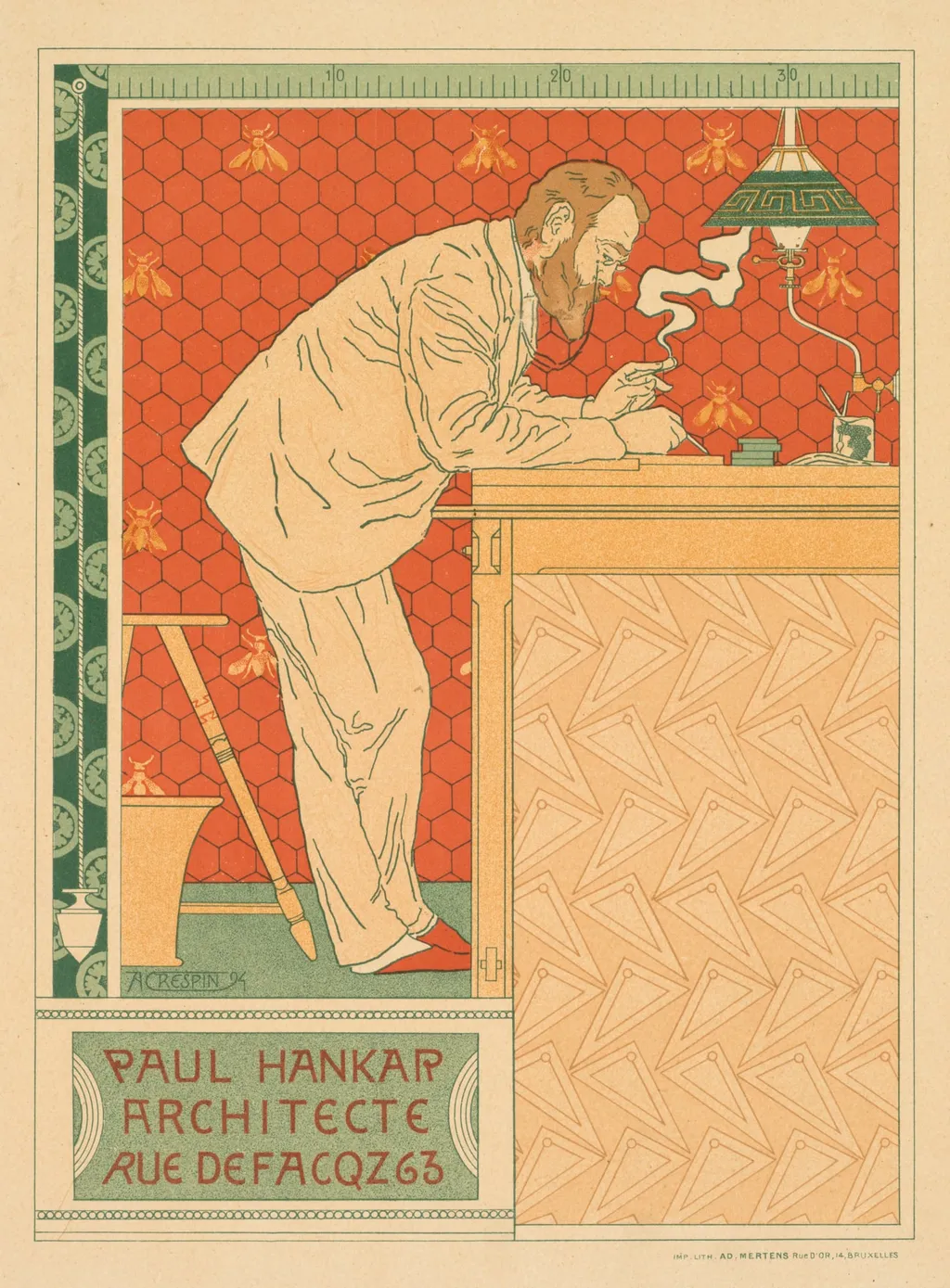
Les Maitres de l'Affiche, Pl. 91: Paul Hankar, Architecte rue defacqz 63 is a print by the Impressionist artist Adolphe Crespin. It dates from 1894 and is held in the collection of the Cleveland Museum of Art.
- Accession no.
- 2014.326
- Credit line
- Bequest of John Bonebrake
About this work
Overview
It functions as a commercial advertisement for the Belgian architect Paul Hankar, whose office was located at Rue Defacqz 63 in Brussels.
This poster, created around 1894 by Adolphe Crespin, is Plate 91 from the series Les Maîtres de l'Affiche. It functions as a commercial advertisement for the Belgian architect Paul Hankar, whose office was located at Rue Defacqz 63 in Brussels. The design blends decorative elements with functional messaging, typical of late 19th-century poster art. It was produced as part of a broader initiative to showcase leading poster designers of the era.
Subject & Meaning
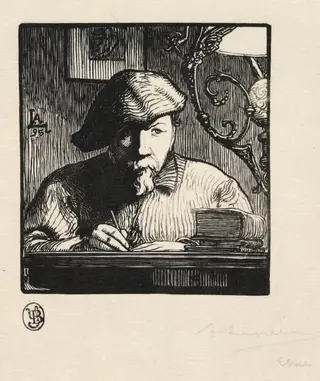
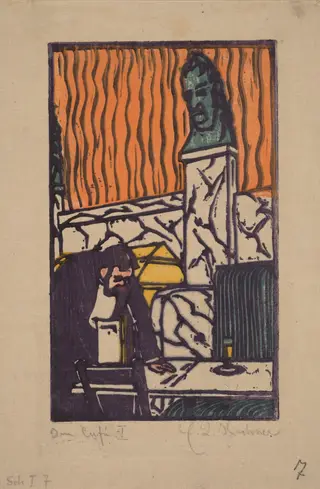
The image depicts a man in a red shirt and green trousers, intently sketching at a desk, suggesting the act of architectural design. A small figurine in the corner may symbolize a client or muse. The composition implies professionalism and creativity, aligning Hankar’s identity with the thoughtful craft of architecture. The minimal text reinforces the message without ornamentation, focusing attention on the figure and his environment.
Technique & Style
Crespin employed flat areas of bold color, crimson, green, and black, against a restrained background, reflecting Art Nouveau’s emphasis on stylized form over realism. The honeycomb-patterned wall and dotted floor introduce rhythmic texture without detail, while the lamp’s green shade echoes the subject’s trousers. Lines are clean and deliberate, prioritizing graphic clarity over shading, characteristic of commercial lithography from the period.
History & Provenance
The poster was published in 1894 as part of the Les Maîtres de l'Affiche series, a monthly collection curated by Jules Chéret to promote leading poster artists. Crespin’s contribution was one of 256 plates issued between 1895 and 1900. The Cleveland Museum of Art acquired the print as part of its broader collection of late 19th-century graphic design, preserving it as an example of Belgian commercial art.
Context
In the 1890s, posters emerged as a dominant medium for public advertising, especially in urban centers like Brussels and Paris. Architects like Hankar, associated with the emerging Art Nouveau movement, used such imagery to signal modernity and artistic integrity. Crespin’s design reflects this trend, merging professional identity with decorative aesthetics to appeal to a culturally aware public.
Legacy
Though not widely known outside design circles, Crespin’s poster remains a documented example of how architecture was marketed through visual culture in the fin de siècle. It contributes to the understanding of how Art Nouveau extended beyond buildings into everyday media. The work is studied for its synthesis of function, form, and regional identity in late 19th-century graphic design.
Own this work as a print
Artist & collection