Artwork
Sarah presenting Hagar to Abraham
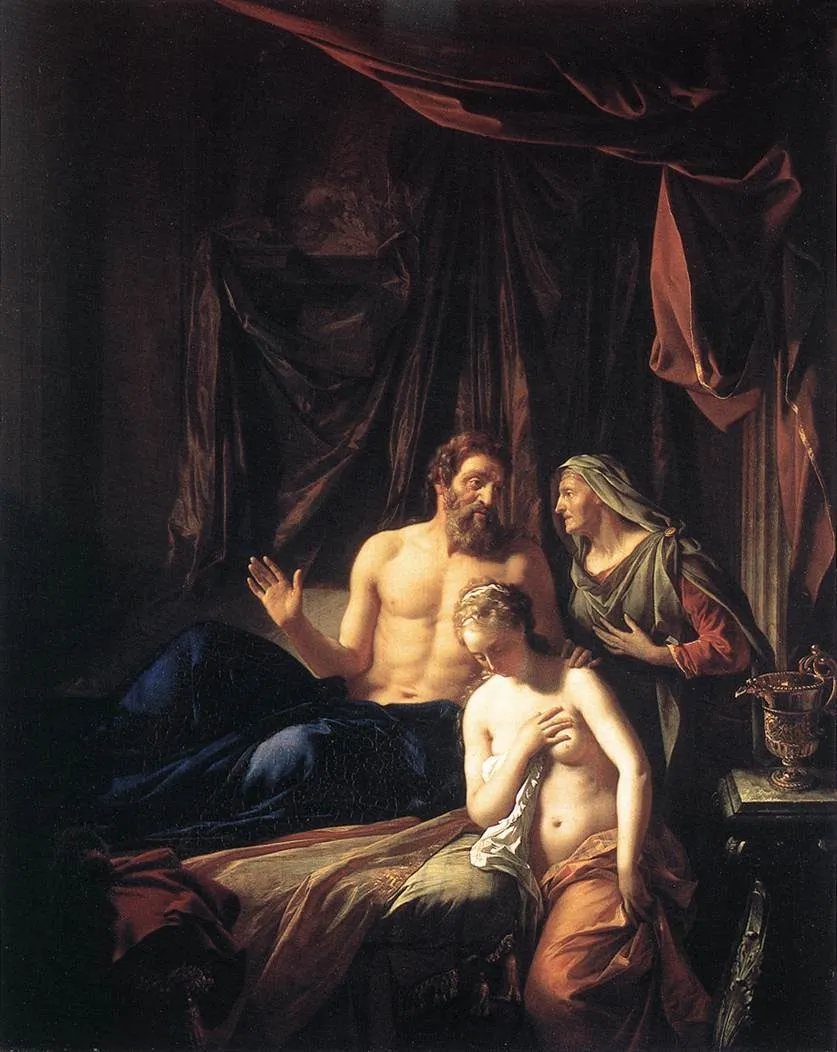
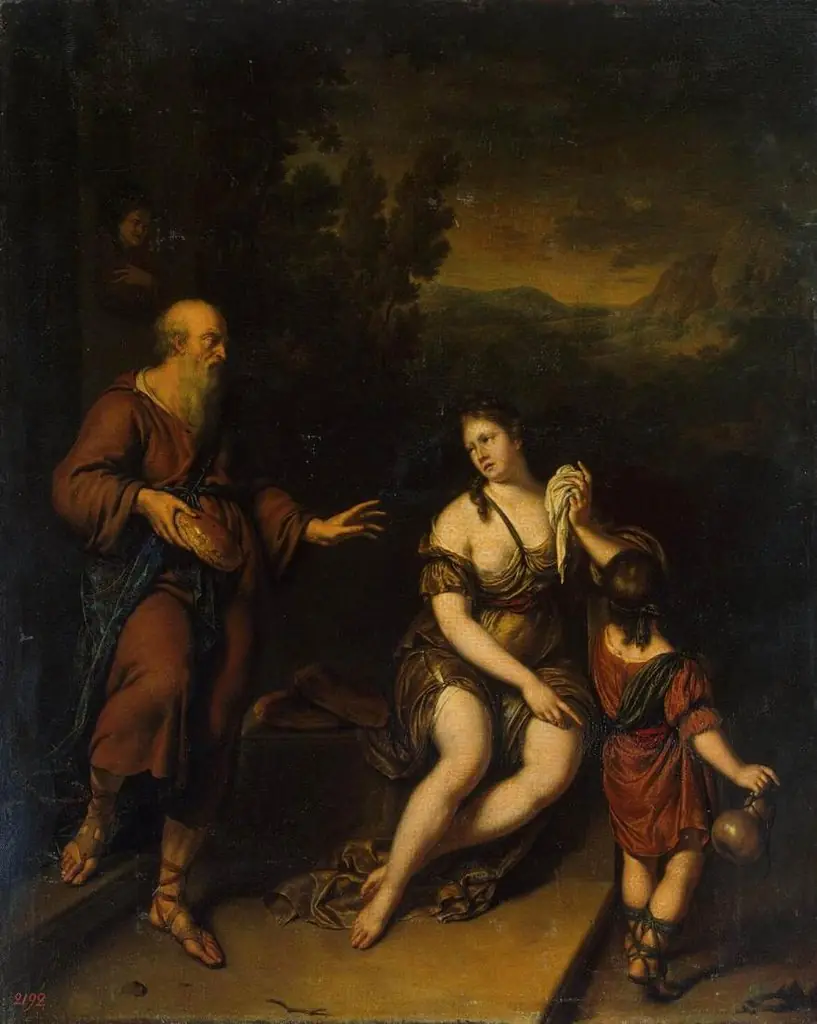
Sarah presenting Hagar to Abraham is an oil painting by the Dutch Golden Age artist Adriaen van der Werff. It dates from 1700 and is held in the collection of the Bavarian State Painting Collections.
About this work
Subject & Meaning
The painting depicts the biblical moment in which Abraham's wife Sarah presents her Egyptian servant Hagar to Abraham, a scene drawn from Genesis.
The painting depicts the biblical moment in which Abraham's wife Sarah presents her Egyptian servant Hagar to Abraham, a scene drawn from Genesis. It emphasizes themes of infertility, divine promise, and the complex dynamics of family succession. In the composition Abraham, aged and bearded, sits in an opulent bedroom with his barren wife Sarah, while the youthful Hagar, illuminated and partially unclothed, stands as a focal point of sensuality and vulnerability.
The interaction among the three figures conveys the tension surrounding the promise of offspring and the choice to use a servant to bear a child. The work reflects baroque artistic conventions through its use of drapery, classical proportions, and dramatic lighting, while also serving as a symbolic narrative about legitimacy, inheritance, and the fulfillment of divine prophecy.
Technique & Style
The painting is executed in oil on canvas, a medium typical of late Baroque Dutch history painting. The support is a rectangular canvas measuring 76.5 cm in height by 61.2 cm in width, prepared for hanging in a princely interior such as a cabinet. The composition displays a smooth, refined style characteristic of Adriaen van der Werff’s mature period, with elegant drapery, a fluted column, and an ebony table holding a ceremonial vessel that frame the scene.
The figures are rendered with classical proportions: Abraham is depicted with a graying beard and exposed torso, his musculature suggesting the idealized anatomy of antiquity, while Sara is shown with angular facial features and wrinkled skin to emphasize her aged state. Hagar, positioned in the foreground, is illuminated by a bright light that highlights her flawless ivory complexion and voluptuous nude form, adhering to the Baroque aesthetic of sensuality and chiaroscuro. Her modest pose, covering herself with drapery, contrasts with the explicit exposure of her body, drawing the viewer’s attention.
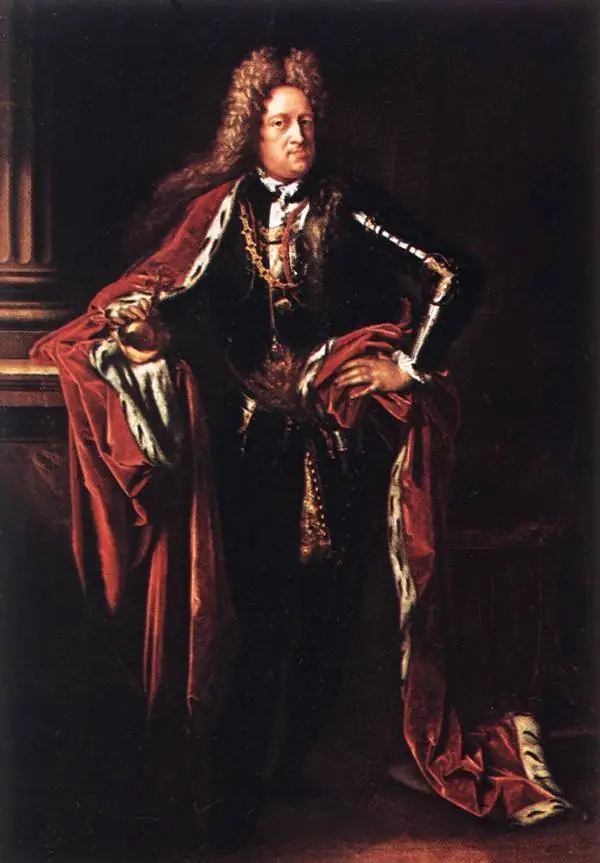
The narrative moment captures Abraham’s hesitant hand resting on Hagar’s shoulder and Sara’s hand pressed to her heart, signaling a discussion about infertility and the proposed conception of a child through the maidservant. This interaction reflects both the biblical story of Sara presenting Hagar to Abraham and the personal hopes of Elector Johann Wilhelm, who, after two childless marriages, sought divine blessing for offspring.
History & Provenance
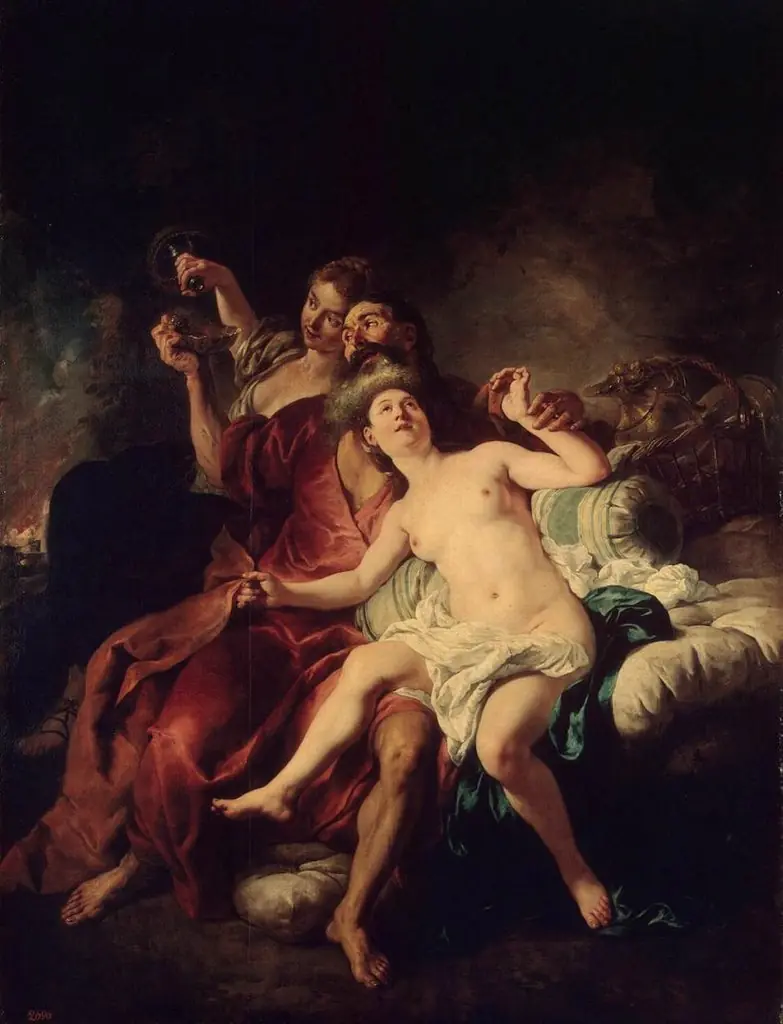
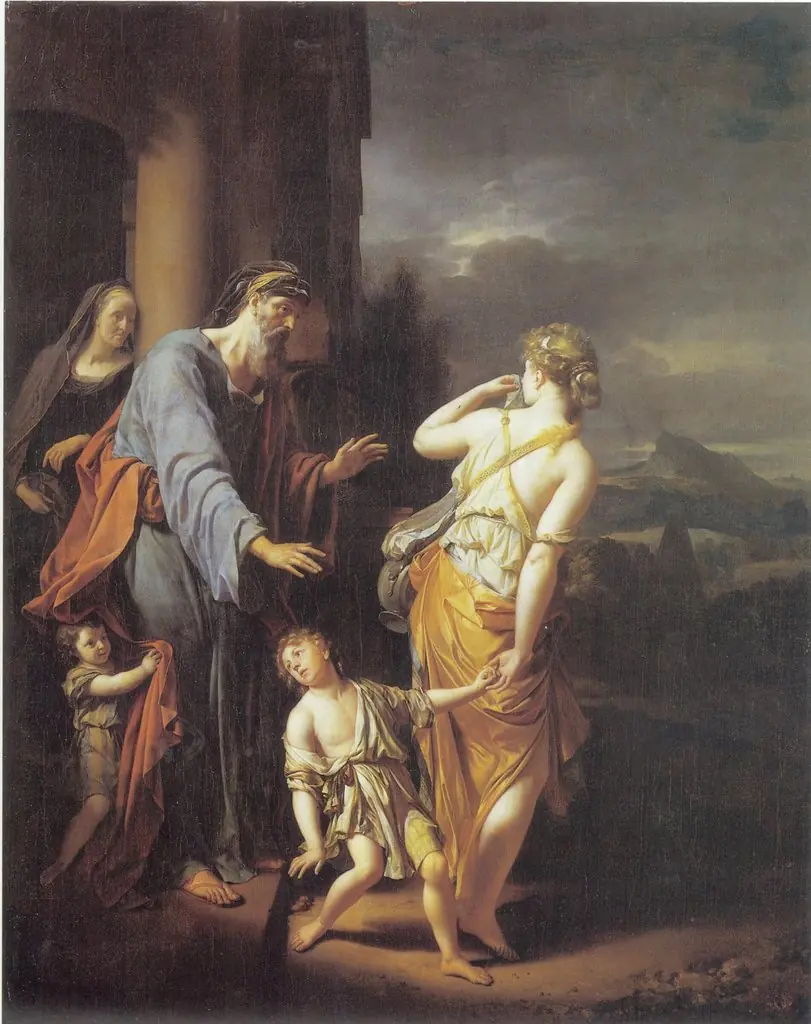
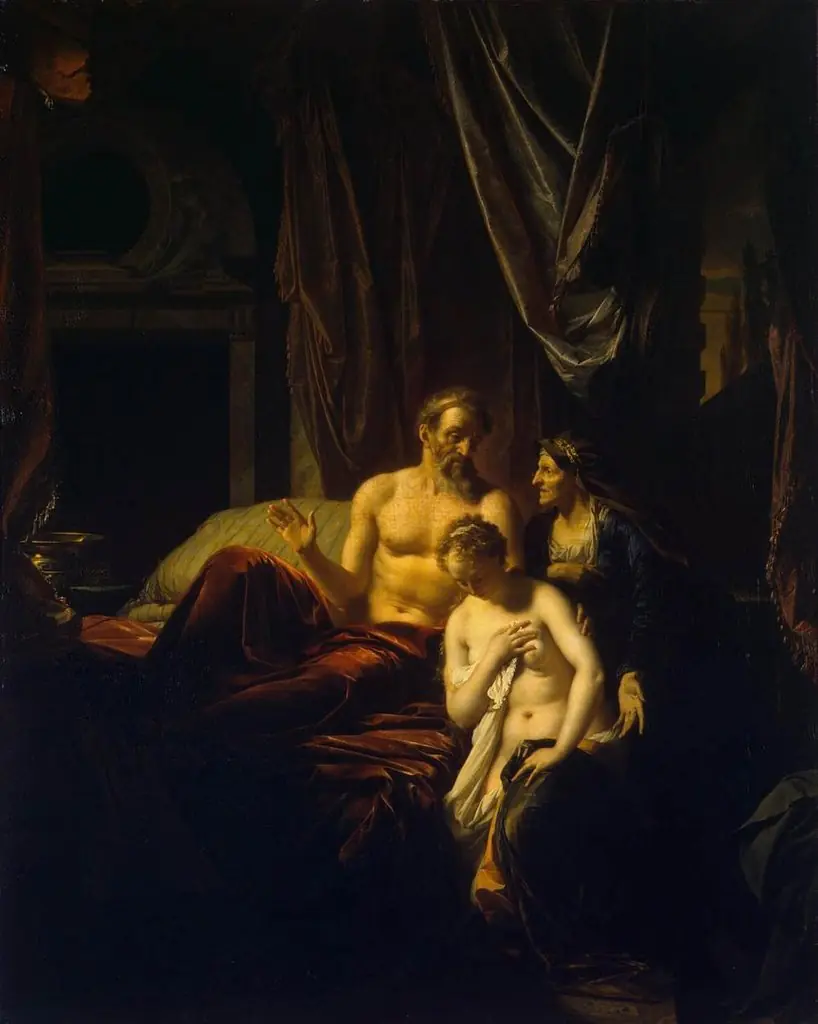
The painting was created in 1699 at the court of Elector Johann Wilhelm von der Pfalz in Düsseldorf, where Adriaen van der Werff had served as court painter from 1697. It was commissioned by Johann Wilhelm as a second version of an earlier pair of paintings on the same subject that van der Werff had produced around 1696 in Rotterdam for the regent Adriaen Paets; the predecessor of the present composition, depicting Sarah presenting Hagar to Abraham, is now in the Hermitage in Saint Petersburg, while its companion piece, the Dismissal of Hagar, is in the Gemäldegalerie Alte Meister in Dresden. The Düsseldorf version simplified the composition and refined the smooth style, and was intended for display in a princely cabinet rather than a church.
Together with its pendant, the Dismissal of Hagar, completed in 1701, the painting was installed in the Electoral Gallery in Düsseldorf from around 1709. In 1805 Elector Maximilian IV evacuated the collection to Schloss Kirchheimbolanden during the War of the Third Coalition, after which he unlawfully incorporated it into the Munich collections as King of Bavaria, bringing the work into the Bavarian State Painting Collections and the Alte Pinakothek.
The painting Sarah presenting Hagar to Abraham by Adriaen van der Werff is held by the Bavarian State Painting Collections within the Alte Pinakothek in Munich. It forms part of the Johann Wilhelm von der Pfalz collection and the former Electoral Gallery of Düsseldorf. The work was originally commissioned by Elector Johann Wilhelm around 1699 for display in a princely cabinet rather than a church.
Following its creation, it was installed in the Düsseldorf gallery by 1709, where it contributed to the institution's reputation. During the Third Coalition War, the collection was evacuated to Schloss Kirchheimbolanden in 1805 before being incorporated into the Bavarian state holdings in Munich.
Context
Created in 1699 for the court of Elector Johann Wilhelm in Düsseldorf, this late Baroque history painting is regarded as a significant achievement of Dutch Golden Age art. The work represents a refined second version of an earlier composition van der Werff executed in Rotterdam, distinguished by a simplified arrangement and an exceptionally smooth finish. Although depicting a biblical narrative, the sensual portrayal of Hagar rendered the piece unsuitable for church display, positioning it instead as a cabinet painting designed for aristocratic interiors.
Scholarship highlights the work's specific resonance with its patron, whose own childless marriage mirrored the scriptural drama of Abraham and Sarah. Originally displayed in the Düsseldorf Gallery to enhance the collection's prestige, the painting later entered the Bavarian State Painting Collections following geopolitical shifts in the early nineteenth century.
Legacy
The painting’s reputation grew in the eighteenth century as a centerpiece of the Düsseldorf gallery assembled by Johann Wilhelm von der Pfalz, where it contributed to the Elector’s cultural prestige.
After the collection’s relocation to Munich in 1805–06, the work became part of the Bavarian State Painting Collections and has remained in the Alte Pinakothek. Its inclusion in that institution reinforced its status as a canonical example of Dutch late-baroque history painting, cited alongside van der Werff’s other cabinet pictures in surveys of the genre.
Overview
Adriaen van der Werff’s oil painting Sarah presenting Hagar to Abraham (1700) portrays a biblical episode in a dimly lit interior. The composition centers on three figures: a bearded Abraham reclining on a bed, the young Hagar lying beside him, and Sarah, veiled, extending her hand toward the man. Heavy red drapery and a modest table with a golden cup complete the setting, while chiaroscuro emphasizes the faces and gestures.
Artist & collection
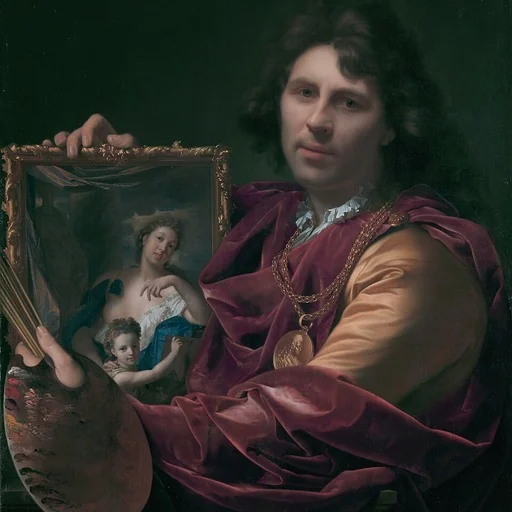
Artist
Adriaen van der Werff (21 January 1659 – 12 November 1722) was a Dutch painter of portraits and erotic, devotional and mythological scenes.

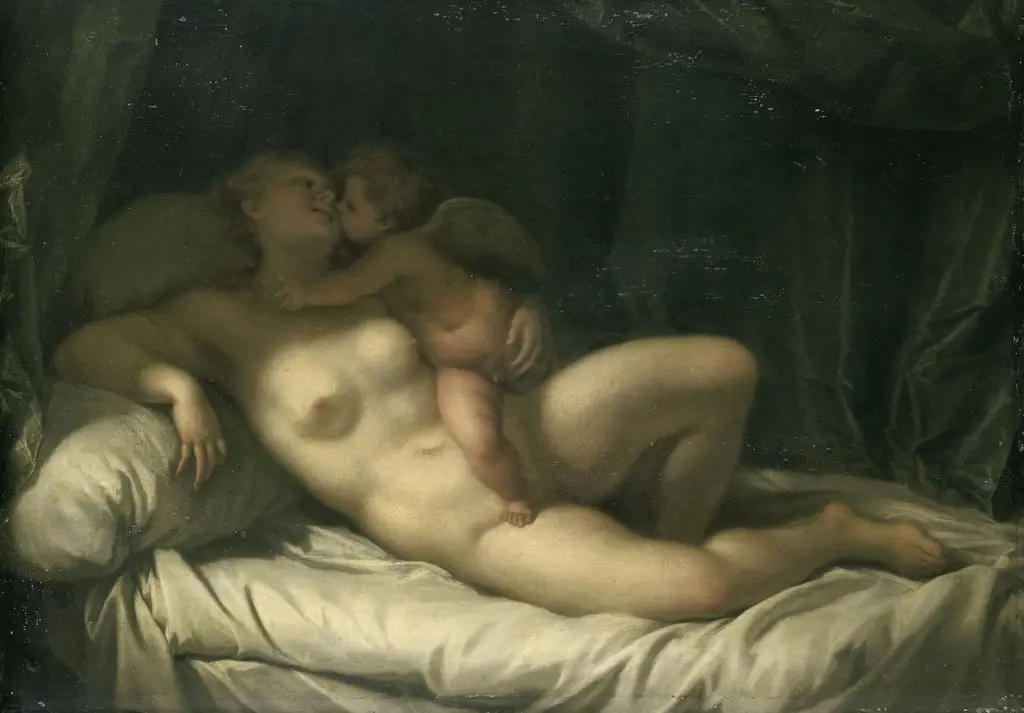 Cupid Kissing Venus (Venus Kissed by Amor)
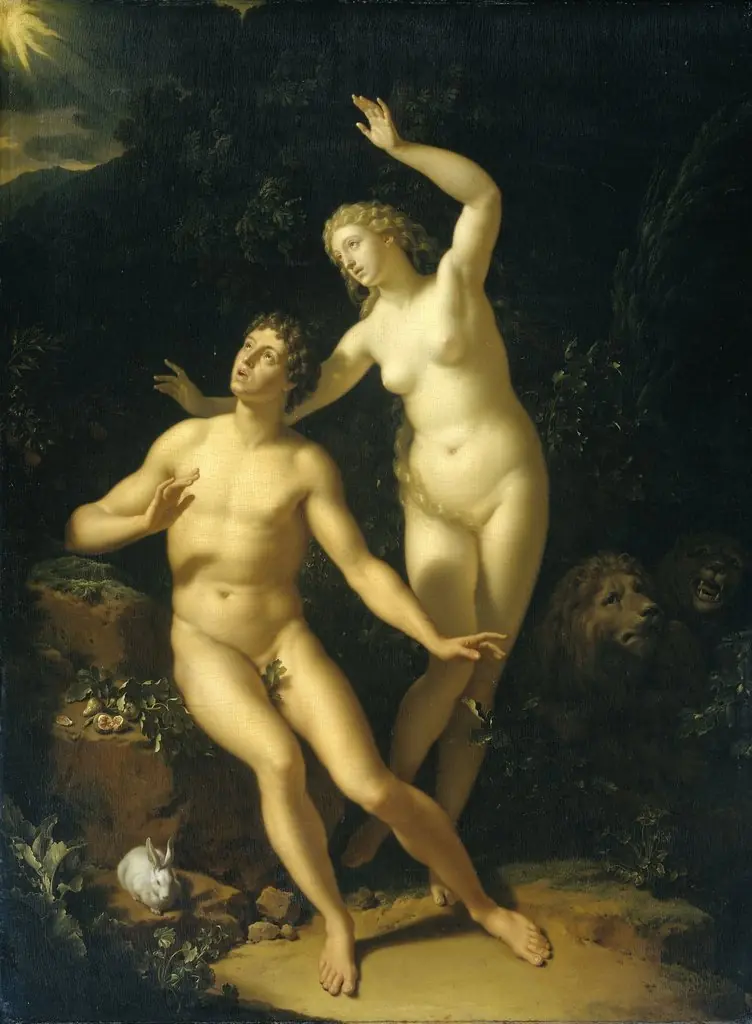 God Holds Adam and Eve Responsible
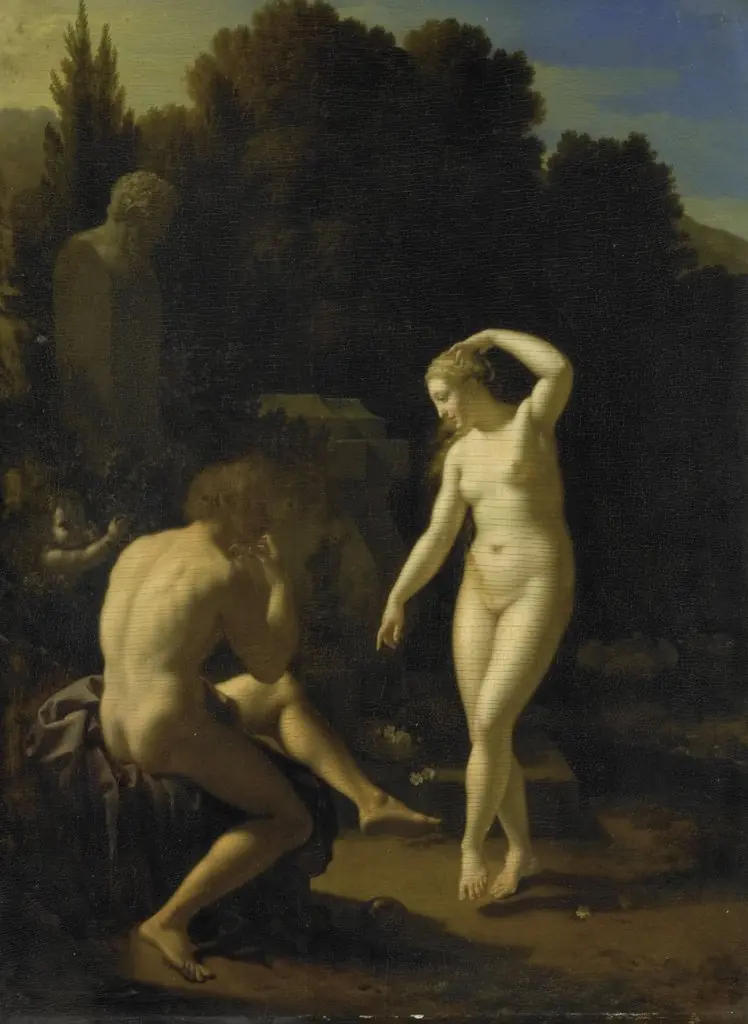 A Nymph Dancing to a Shepherd's Flute-Playing
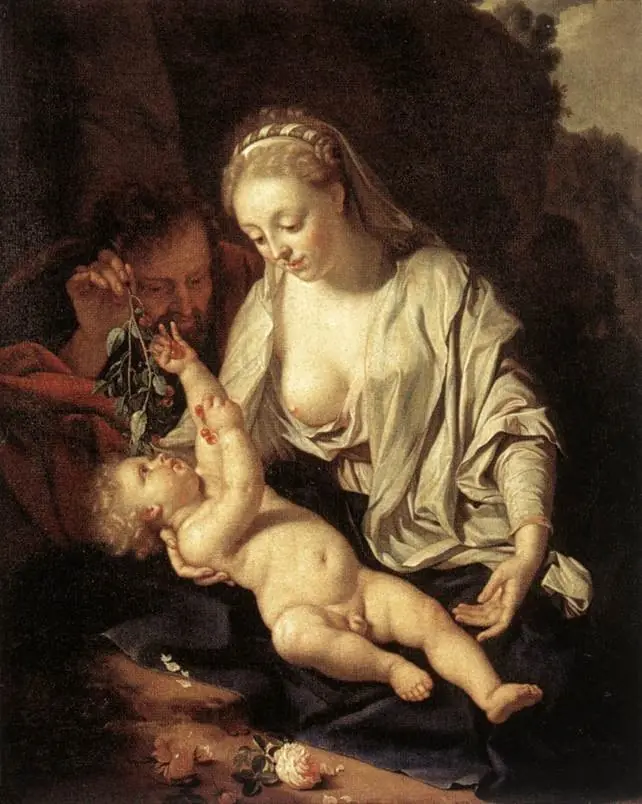 The Holy Family
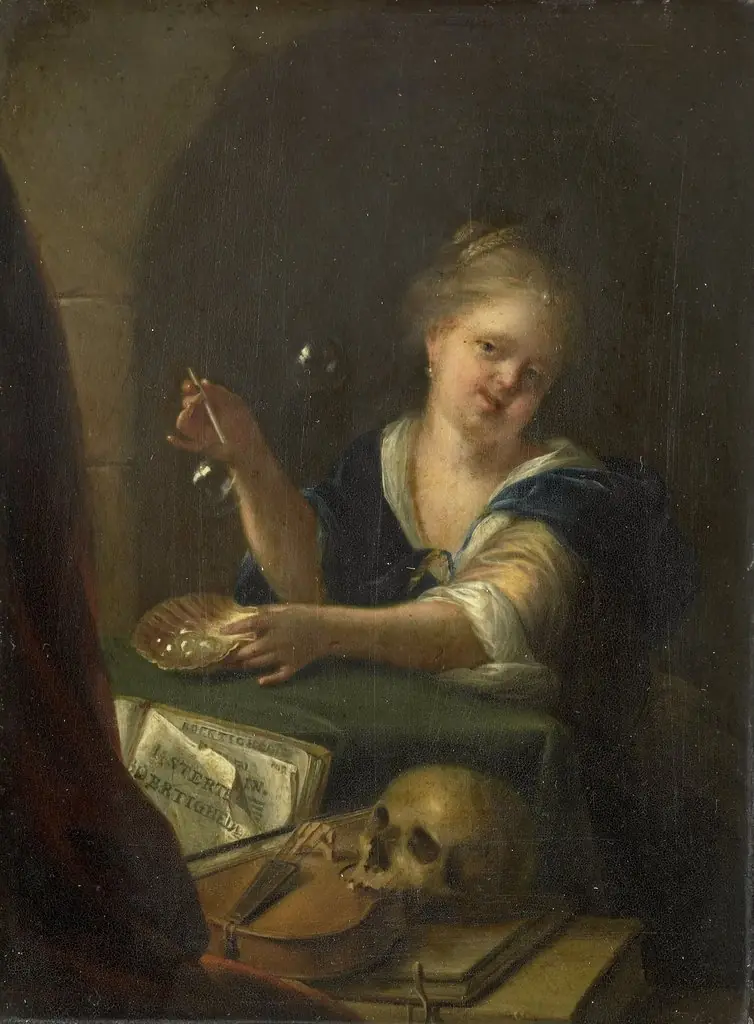 Bubble-blowing Girl with a Vanitas Still Life
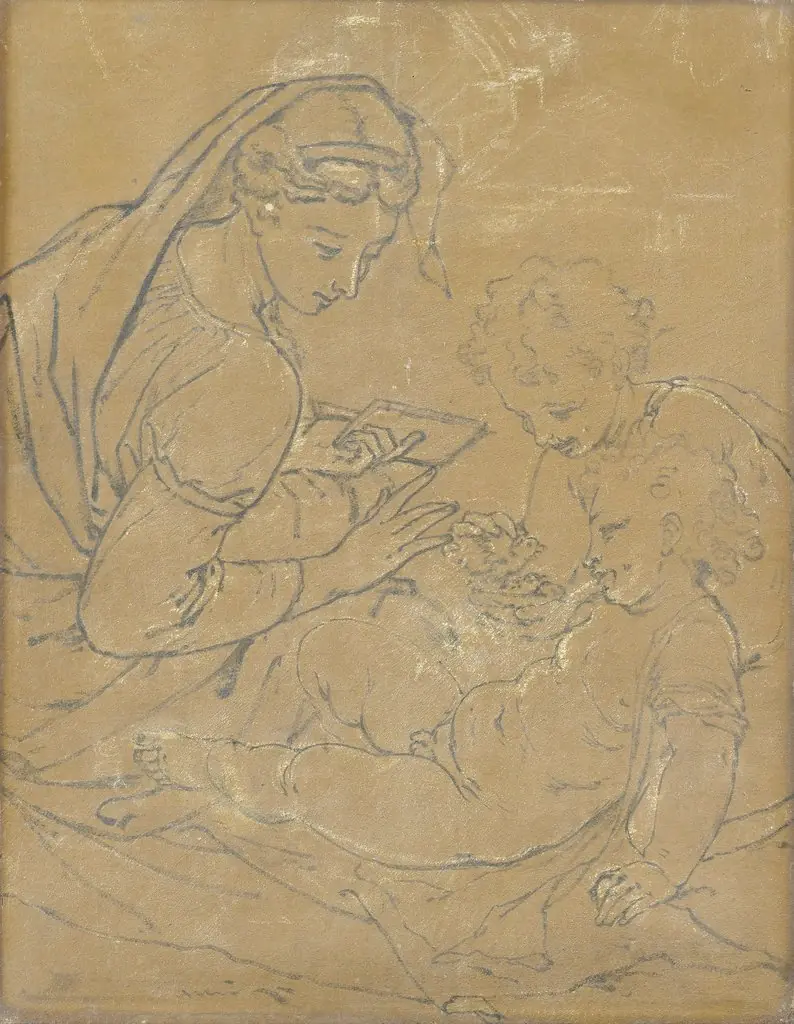 Virgin and Child with Saint John (chalk sketch)
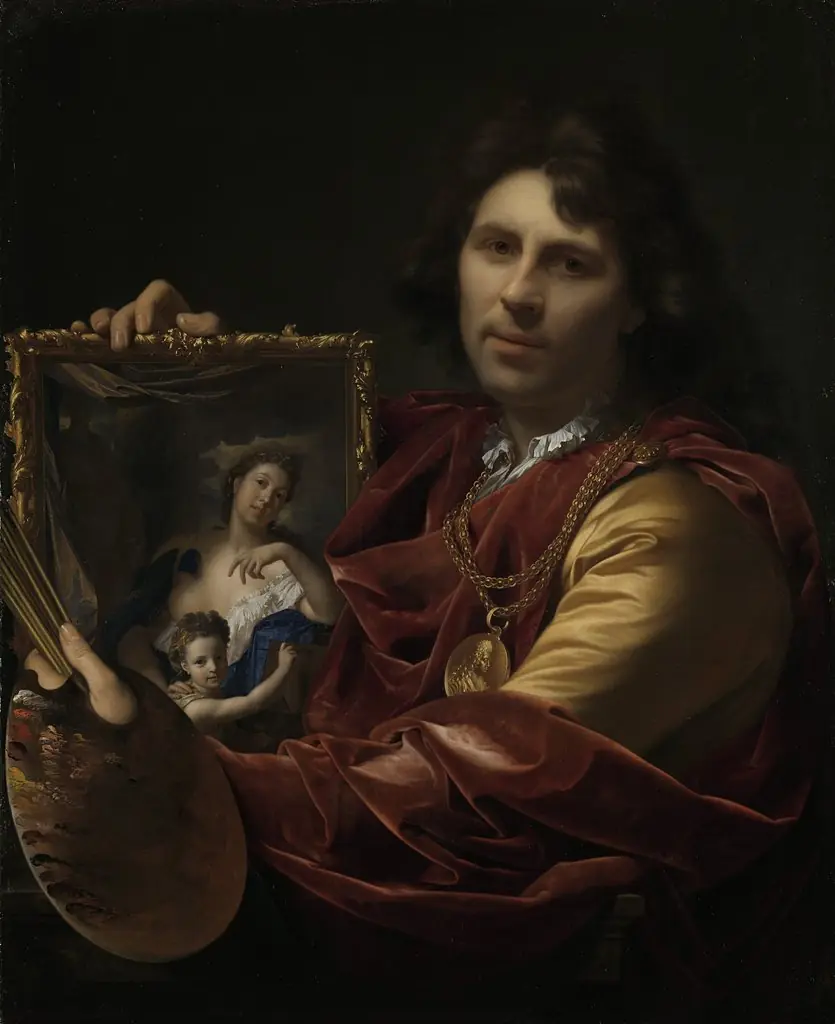 Self-portrait with the Portrait of his Wife, Margaretha van Rees, and their Daughter Maria
 Portrait of Johann Wilhelm Elector of Palatine (1658-1716)