Artwork
The Burial of Christ
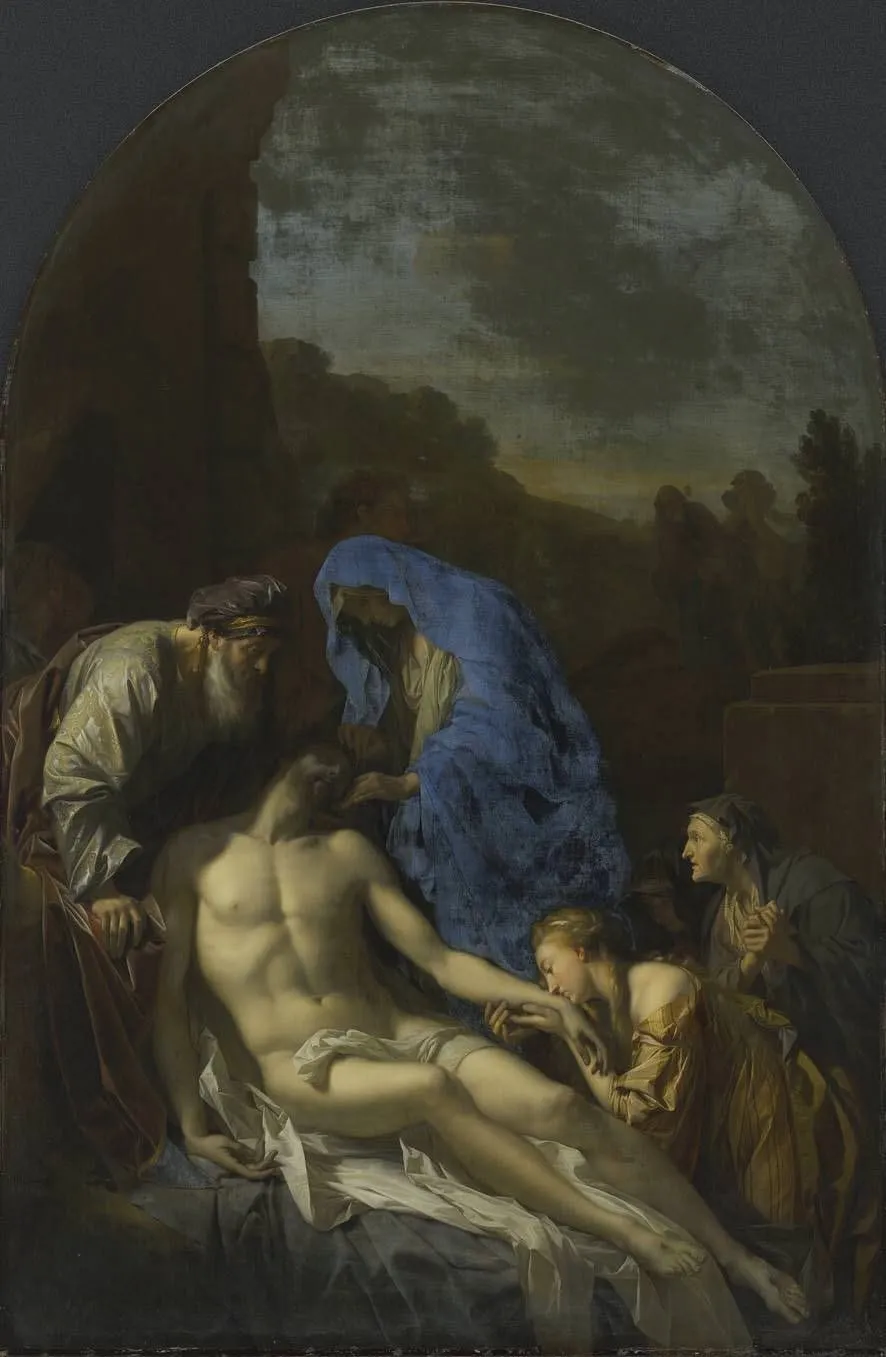
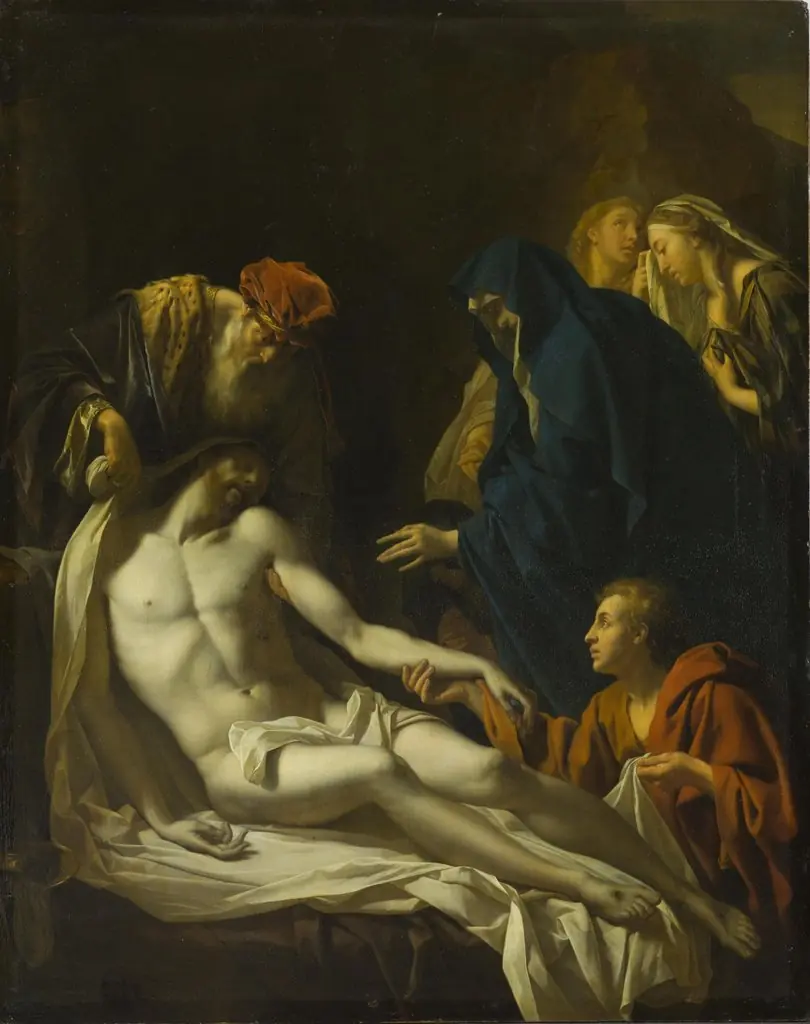
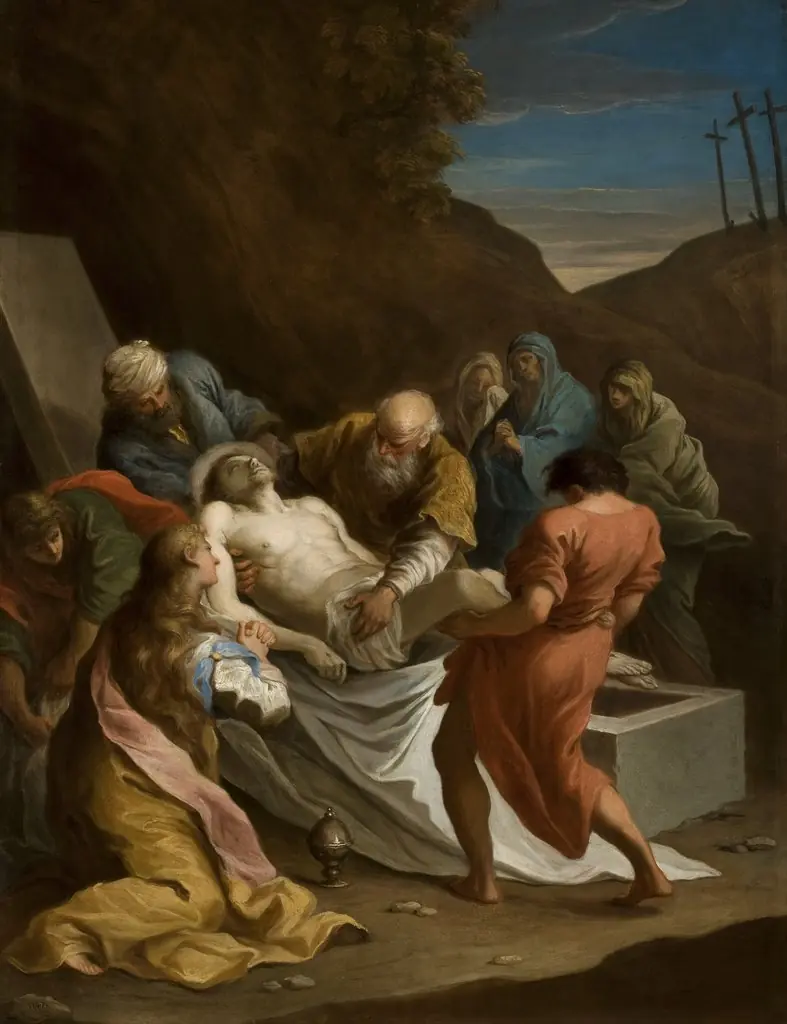
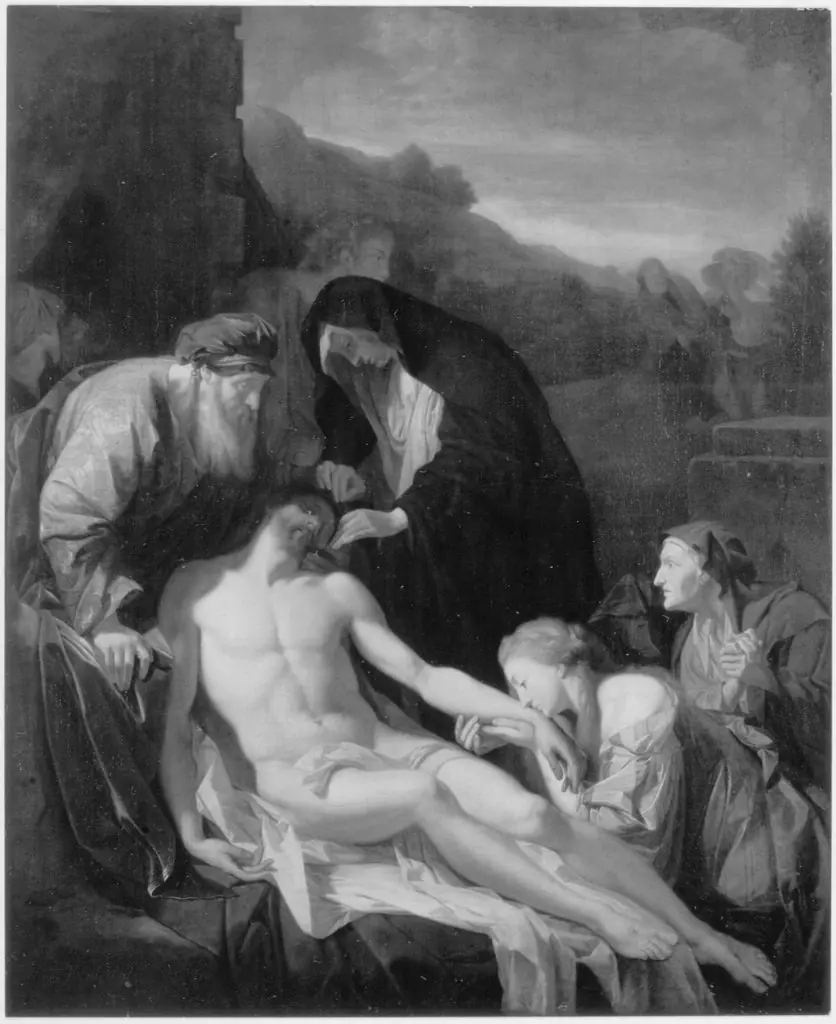
The Burial of Christ is an oil painting by the Rococo painting artist Adriaen van der Werff. It dates from 1703 and is held in the collection of the Bavarian State Painting Collections.
About this work
Subject & Meaning
The somber palette and restrained gestures emphasize reverence and sorrow, reflecting the Counter-Reformation emphasis on devotion and emotional contemplation.
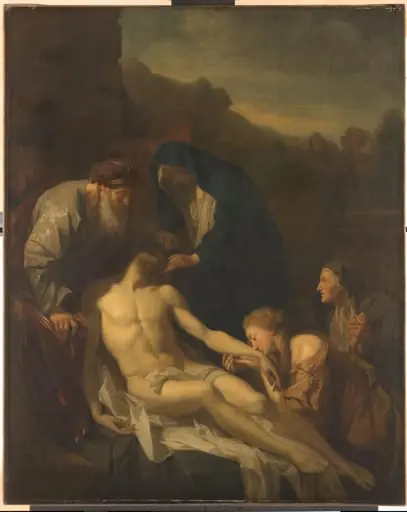
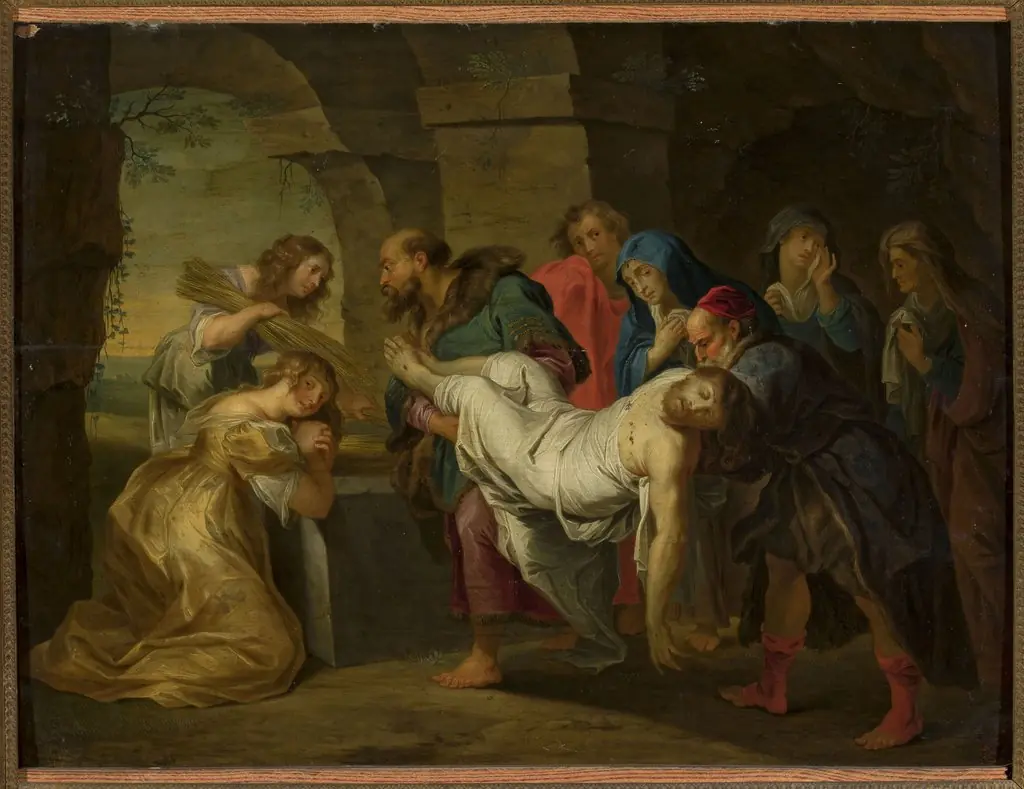
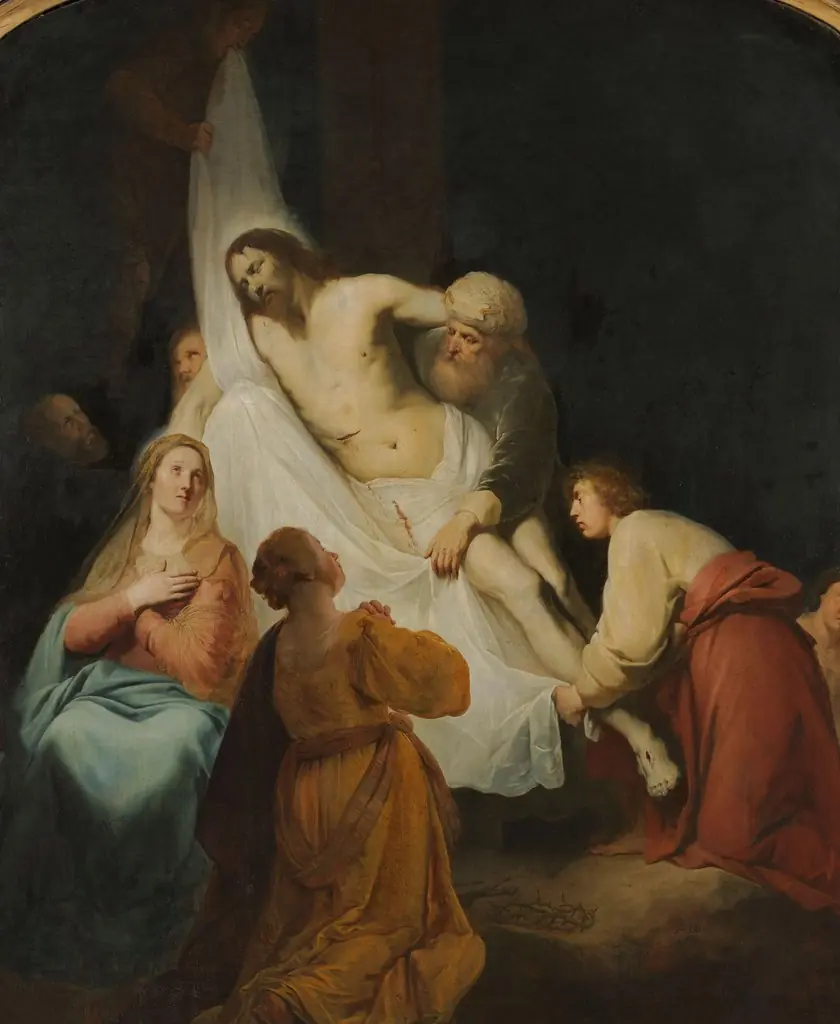
Adriaen van der Werff’s The Burial of Christ (1703) depicts the New Testament scene of Christ’s entombment, a moment of mourning and transition between crucifixion and resurrection. The composition centers on the lifeless body of Jesus, lowered into a stone sarcophagus by grieving figures, likely including Joseph of Arimathea and Nicodemus, as well as the Virgin Mary and Mary Magdalene. The somber palette and restrained gestures emphasize reverence and sorrow, reflecting the Counter-Reformation emphasis on devotion and emotional contemplation.
Symbolically, the work underscores themes of sacrifice, redemption, and the promise of resurrection. The stone tomb, a recurrent motif in Christian iconography, signifies both finality and hope, foreshadowing Christ’s victory over death. The inclusion of mourners aligns with Baroque conventions, inviting viewers to participate in the scene’s emotional gravity while reinforcing the theological significance of Christ’s burial as a pivotal event in Christian salvation history.
Technique & Style
Executed in 1703, this religious painting by Adriaen van der Werff utilizes oil paint applied to an oak panel support. The work measures 81.9 cm in height and 53.9 cm in width. Stylistically, the composition focuses on the entombment of Jesus Christ, adhering to the conventions of religious art prevalent during the artist's career.
The combination of oil medium and wooden panel was a standard practice for high-finish works of this period, allowing for the smooth surface texture characteristic of van der Werff's technique.
History & Provenance
The painting The Burial of Christ was created in 1703 by Adriaen van der Werff, as documented by its inception date. Executed in oil on an oak panel, the work measures 81.9 by 53.9 centimeters. It was commissioned or acquired by Johann Wilhelm, Elector Palatine, forming part of his distinguished collection, the Electoral Gallery Düsseldorf.
Subsequently, the work entered the holdings of the Bavarian State Painting Collections, where it remains housed in the Alte Pinakothek.
The Burial of Christ is an oil painting on oak panel measuring 81.9 cm by 53.9 cm, created in 1703 and depicting the entombment of Christ. It has been part of the Bavarian State Painting Collections since its inclusion in the Johann Wilhelm von der Pfalz collection for the Electoral Gallery in Düsseldorf. The work is currently housed in the Alte Pinakothek in Munich and has been exhibited within the context of religious art presentations in this institution.
Overview
Painted in 1703 by Dutch artist Adriaen van der Werff, this oil-on-canvas work portrays the moment after Christ’s crucifixion, as his body is prepared for burial. Rendered with meticulous detail and controlled emotion, the scene reflects van der Werff’s focus on religious subjects and his technical precision in handling light and texture. It resides today in the Alte Pinakothek in Munich.
Context
Created in the early 18th century, the painting emerged as Rococo aesthetics began to favor lightness and elegance, yet van der Werff retained the solemnity of earlier religious traditions. His approach bridged Dutch realism and Italianate composition, offering a quiet counterpoint to the theatricality of Counter-Reformation art. The scene aligns with devotional practices emphasizing personal contemplation over public spectacle.
Legacy
Though van der Werff’s reputation waned after his death, his technical control and emotional restraint influenced later Dutch religious painting. The Burial of Christ remains a testament to his ability to convey sacred narrative through subtlety rather than grandeur, preserving a contemplative mode of piety in an era increasingly drawn to spectacle.
Artist & collection
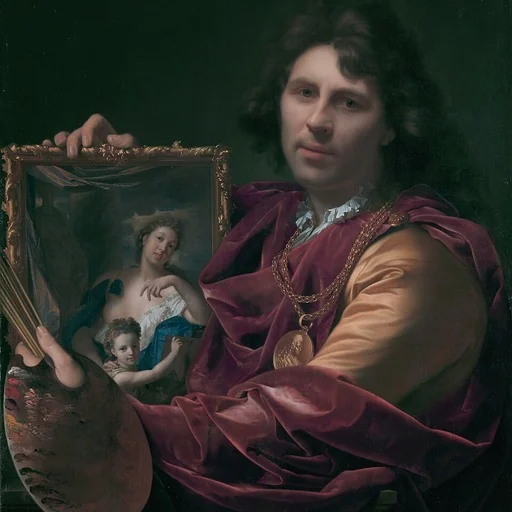
Artist
Adriaen van der Werff (21 January 1659 – 12 November 1722) was a Dutch painter of portraits and erotic, devotional and mythological scenes.

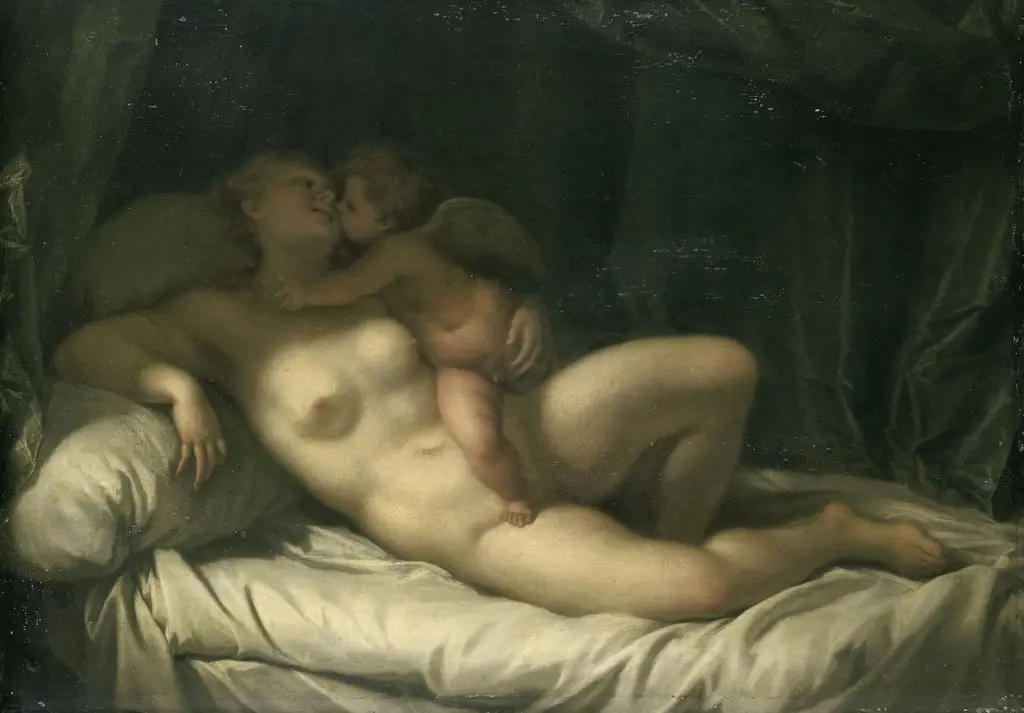 Cupid Kissing Venus (Venus Kissed by Amor)
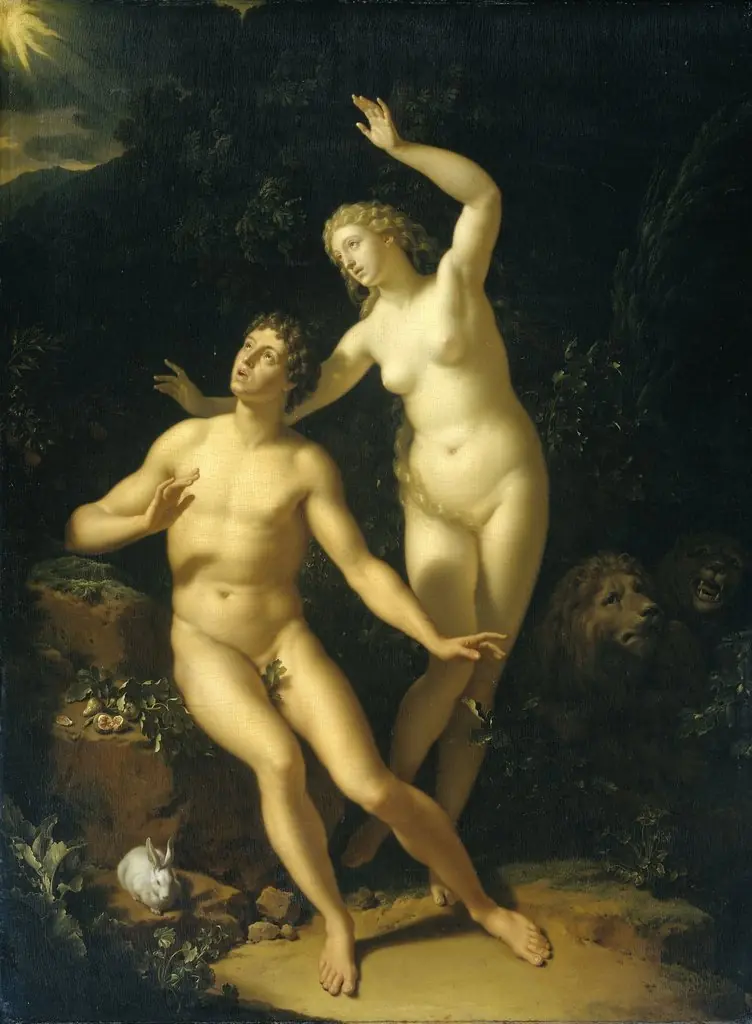 God Holds Adam and Eve Responsible
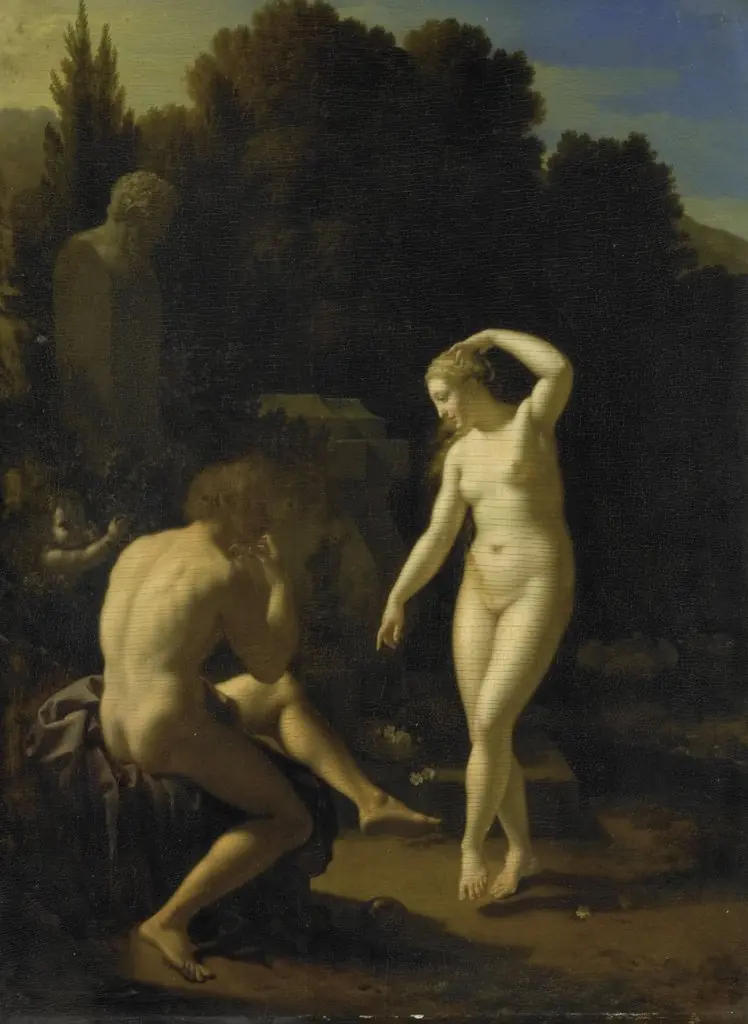 A Nymph Dancing to a Shepherd's Flute-Playing
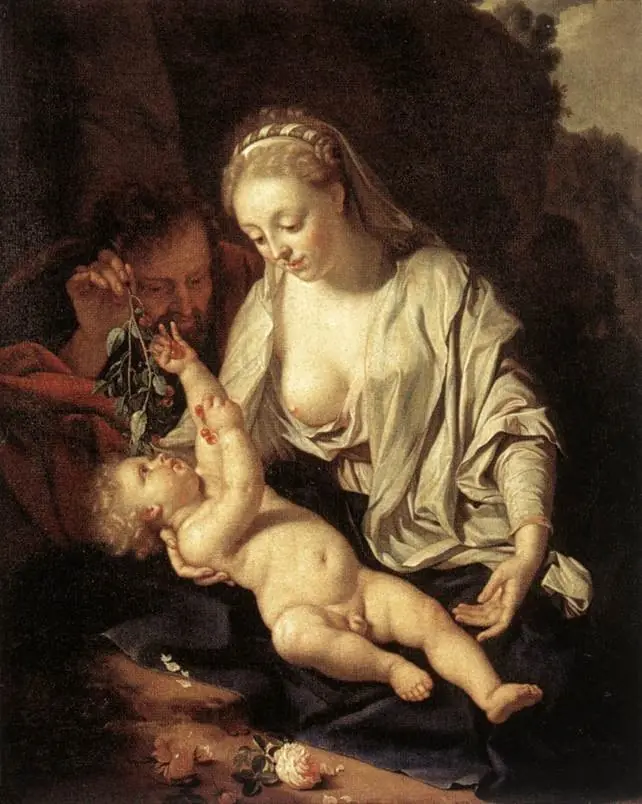 The Holy Family
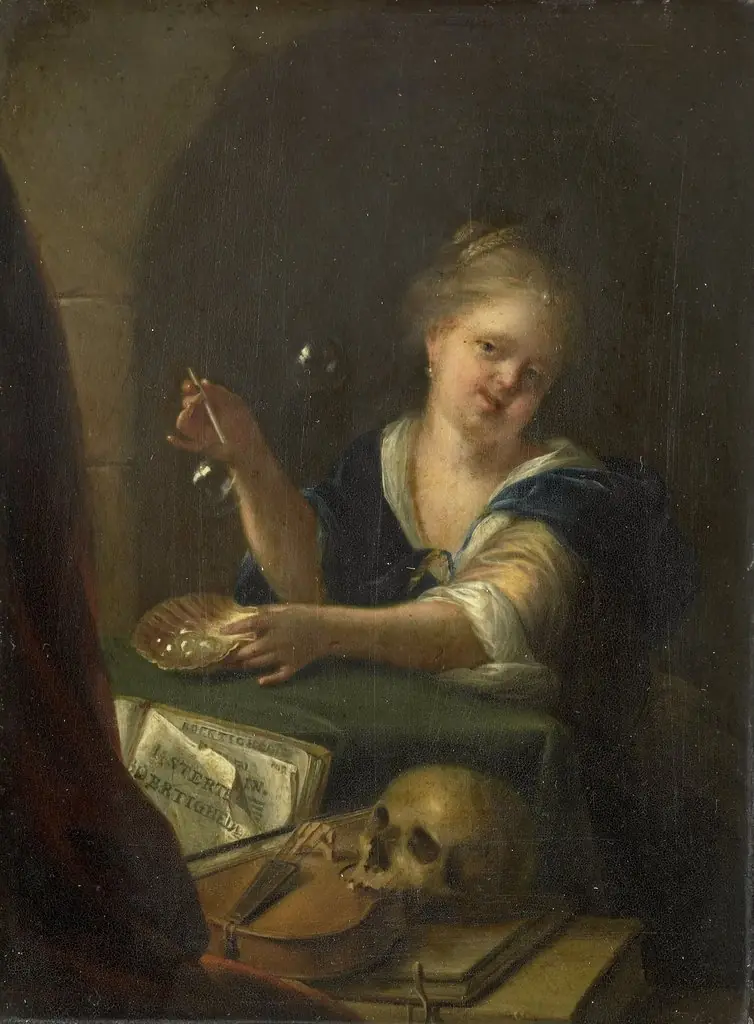 Bubble-blowing Girl with a Vanitas Still Life
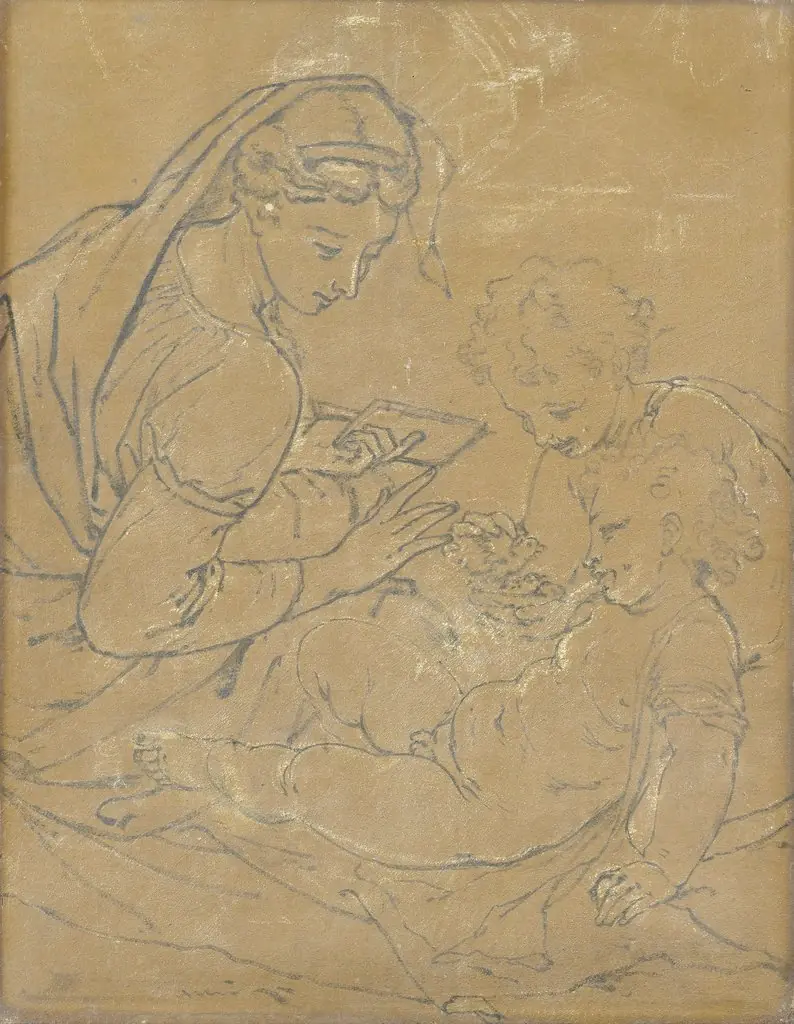 Virgin and Child with Saint John (chalk sketch)
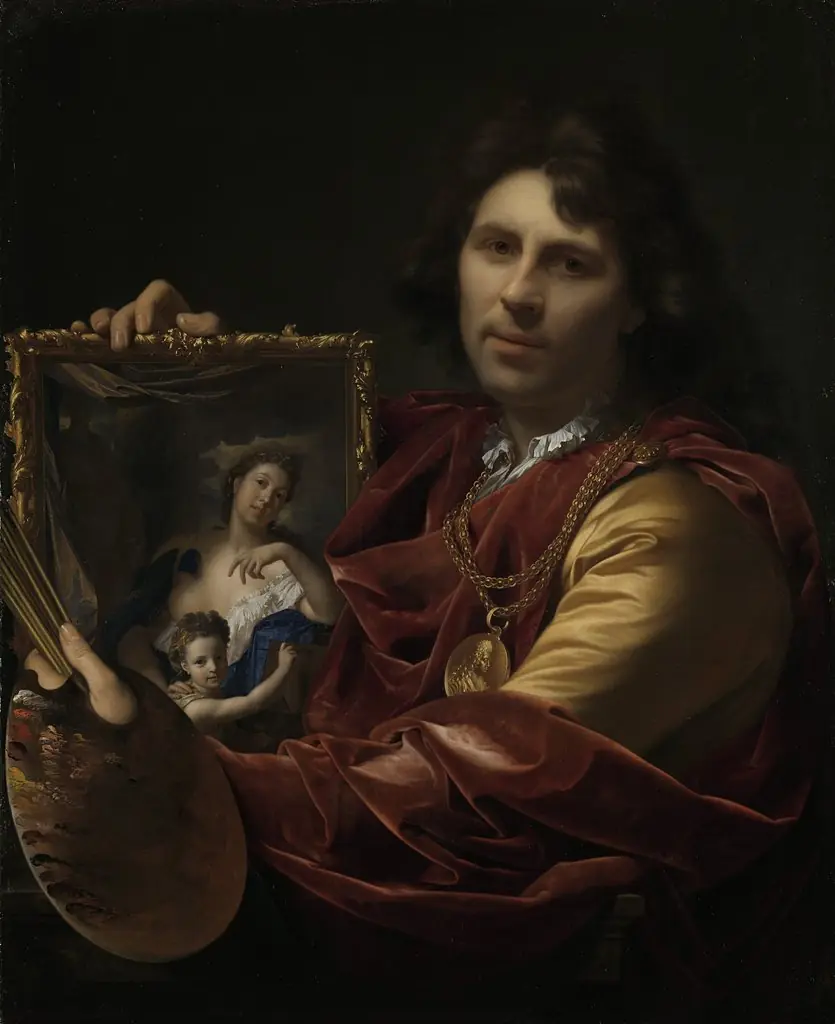 Self-portrait with the Portrait of his Wife, Margaretha van Rees, and their Daughter Maria
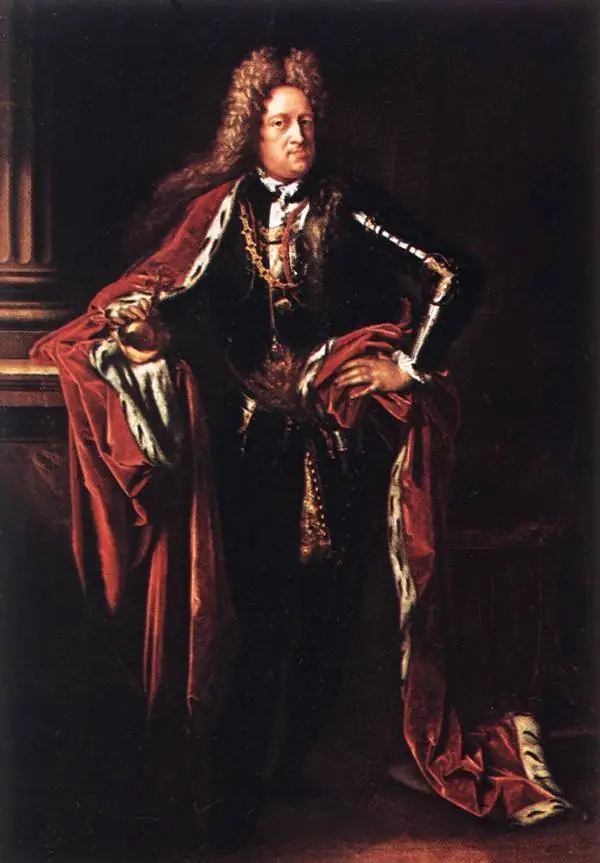 Portrait of Johann Wilhelm Elector of Palatine (1658-1716)