Artwork
Road through the dunes
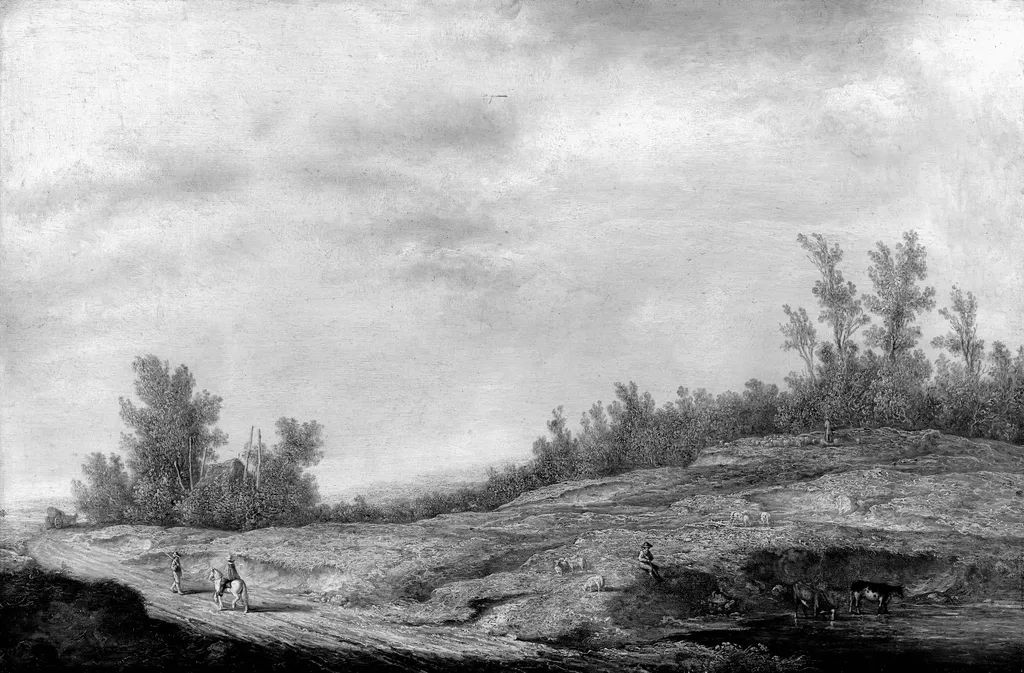
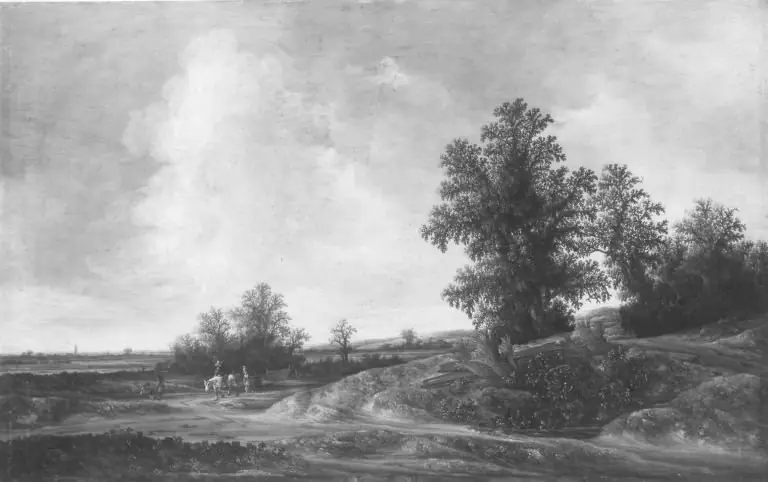
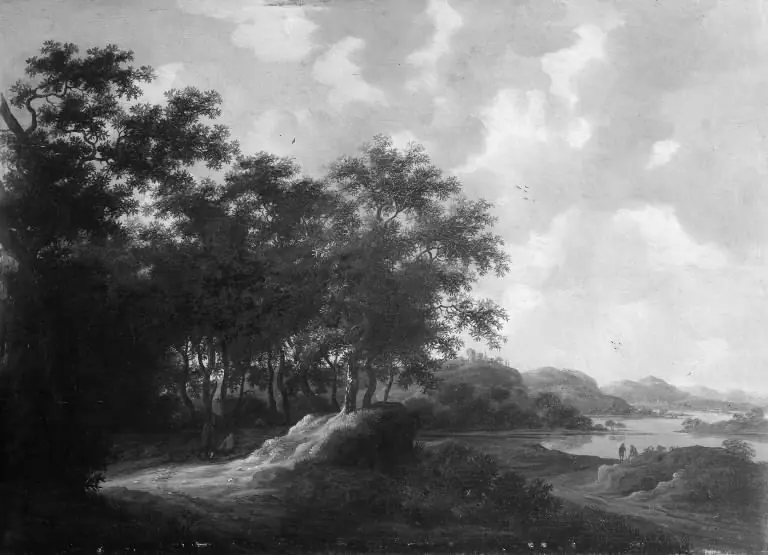
Road through the dunes is an oil painting by the Dutch Golden Age artist Aelbert Cuyp. It dates from 1641 and is held in the collection of the Gemäldegalerie Berlin.
About this work
Subject & Meaning
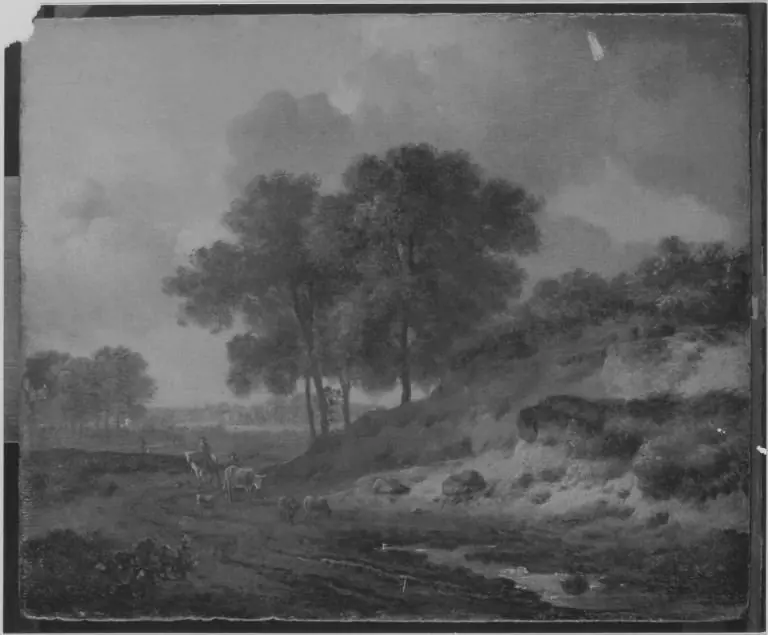
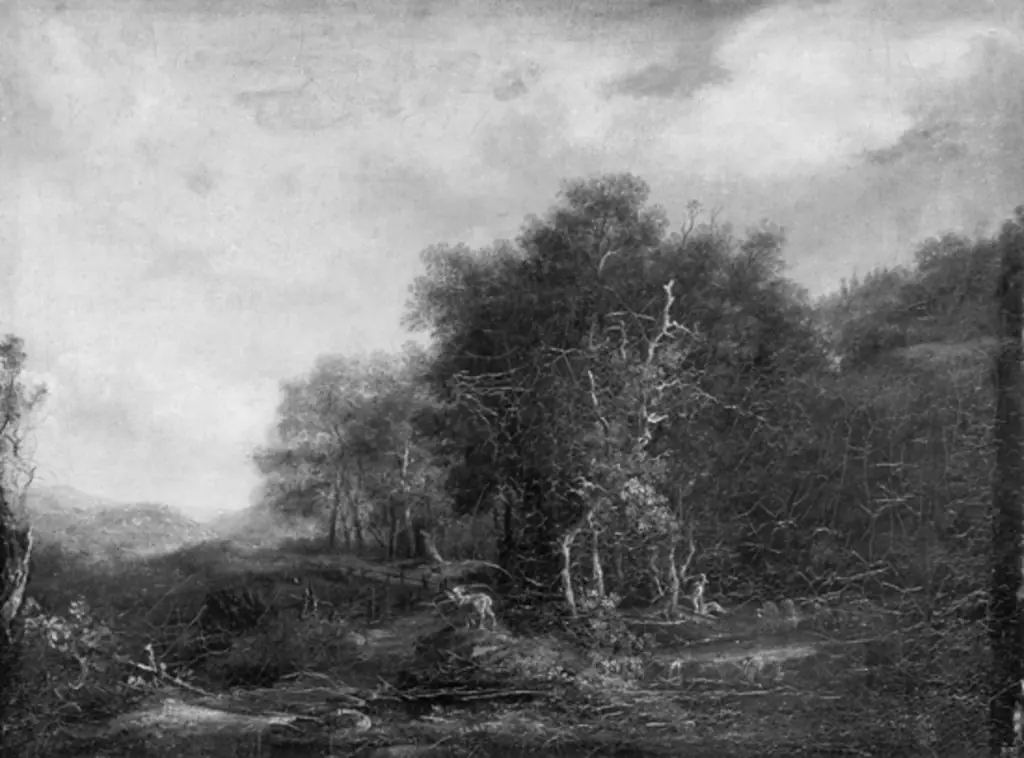
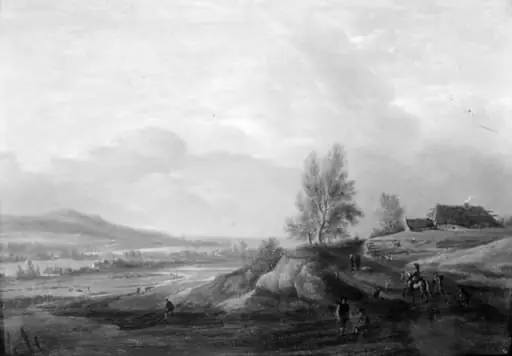
Road through the dunes is a landscape painting by Aelbert Cuyp that depicts a figure traveling on horseback along a path cutting through an expanse of sand dunes. The composition centers on the dune environment as its primary subject, with the rider and horse providing a sense of scale and movement against the open terrain. As a dune landscape, the work belongs to a tradition of Dutch landscape imagery that emphasized the natural topography of the coastal Netherlands, using the journey motif to evoke the experience of traversing that distinctive sandy environment.
The pairing of horse and rider on a road through the dunes also carries a long-standing iconographic resonance in seventeenth-century Dutch art, where travelers in landscapes often functioned as contemplative or narrative elements inviting the viewer to imaginatively enter the scene rather than to read a specific allegorical message.
Technique & Style
No further details regarding specific support type, dimensions, condition, handling, or stylistic qualities are documented in the available sources.
Road through the dunes is an oil painting on a support classified as a landscape, executed by Aelbert Cuyp in 1641. The work is held in the Gemäldegalerie Berlin collection at the Bode Museum. Its subject matter, as recorded, depicts a man, a horse, and dunes, consistent with Cuyp's landscape practice. The medium is oil paint.
No further details regarding specific support type, dimensions, condition, handling, or stylistic qualities are documented in the available sources.
History & Provenance
Road through the dunes is an oil painting dated to 1641 by the Dutch artist Aelbert Cuyp. The work is classified as a landscape and shows a man, a dune and a horse. According to the available records, the painting entered the Gemäldegalerie Berlin collection and is now displayed at the Bode Museum. No information about an original commission or earlier owners is provided in the sources to date publicly.
Aelbert Cuyp's Road through the dunes, created in 1641, is held in the collection of the Gemäldegalerie Berlin. The painting is currently located at the Bode Museum, which houses part of the gallery's holdings. While the work is a recognized landscape depicting a man, dunes, and a horse, the provided sources do not list specific inventory or accession numbers for the piece. Additionally, no exhibition history is recorded in the available documentation.
Context
The work demonstrates Cuyp's mastery of atmospheric landscape painting, blending naturalistic detail with poetic light to elevate Dutch 17th-century scenery beyond topographical record into evocative art. Contemporary scholarship situates it within his mature period, characterized by complex compositions that merge everyday life with mythic resonance, reflecting broader Dutch Golden Age interests in nature's spiritual dimensions. Its presence in the Gemäldegalerie Berlin collection underscores ongoing scholarly appreciation for Cuyp's influence on later Romantic landscape traditions, though critical reassessment continues regarding his relative standing among Dutch masters.
Overview
Road through the dunes is a 1641 oil painting by Aelbert Cuyp, a prominent Dutch Golden Age artist known for his landscapes.
Own this work as a print
Artist & collection

Artist
Aelbert Jacobszoon Cuyp or Cuijp (Dutch pronunciation: ; 20 October 1620 – 15 November 1691) was one of the leading Dutch Golden Age painters, producing mainly landscapes.

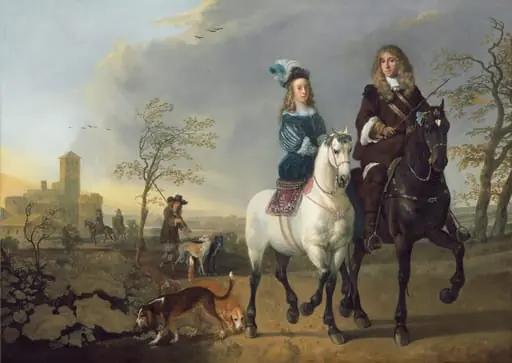 Lady and Gentleman on Horseback
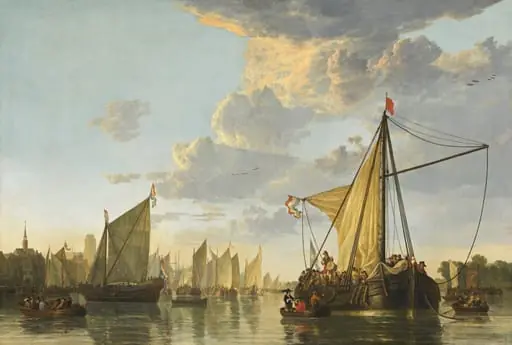 The Maas at Dordrecht
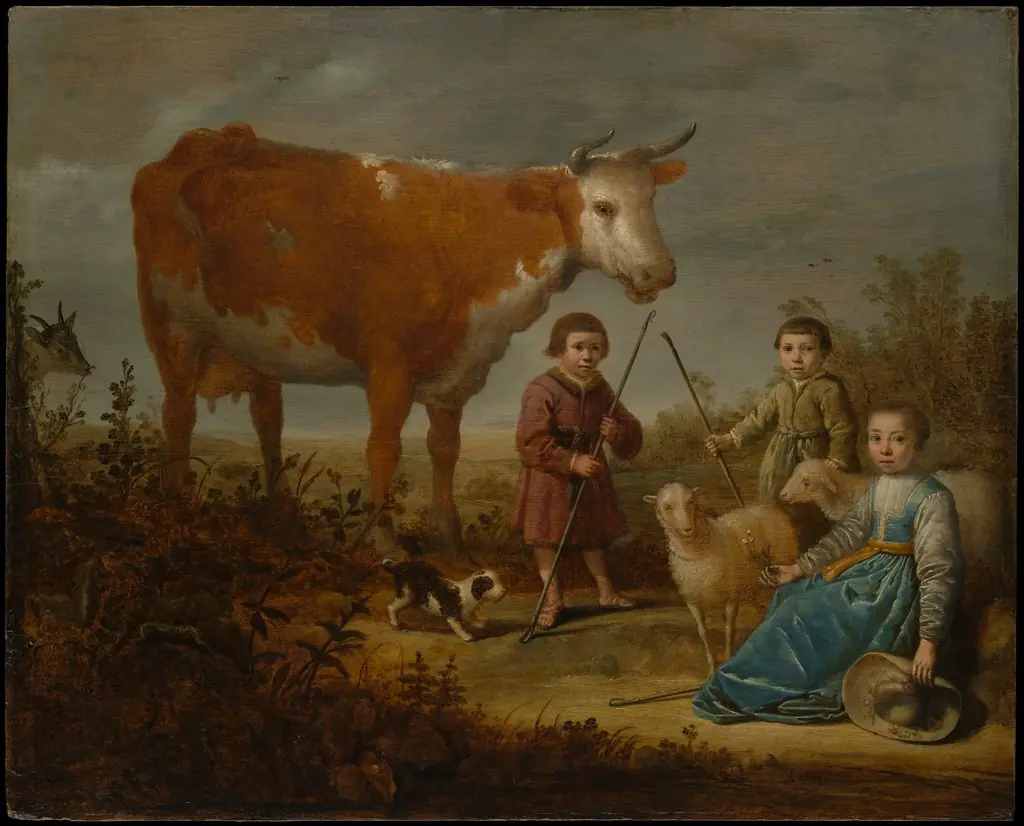 Children and a Cow
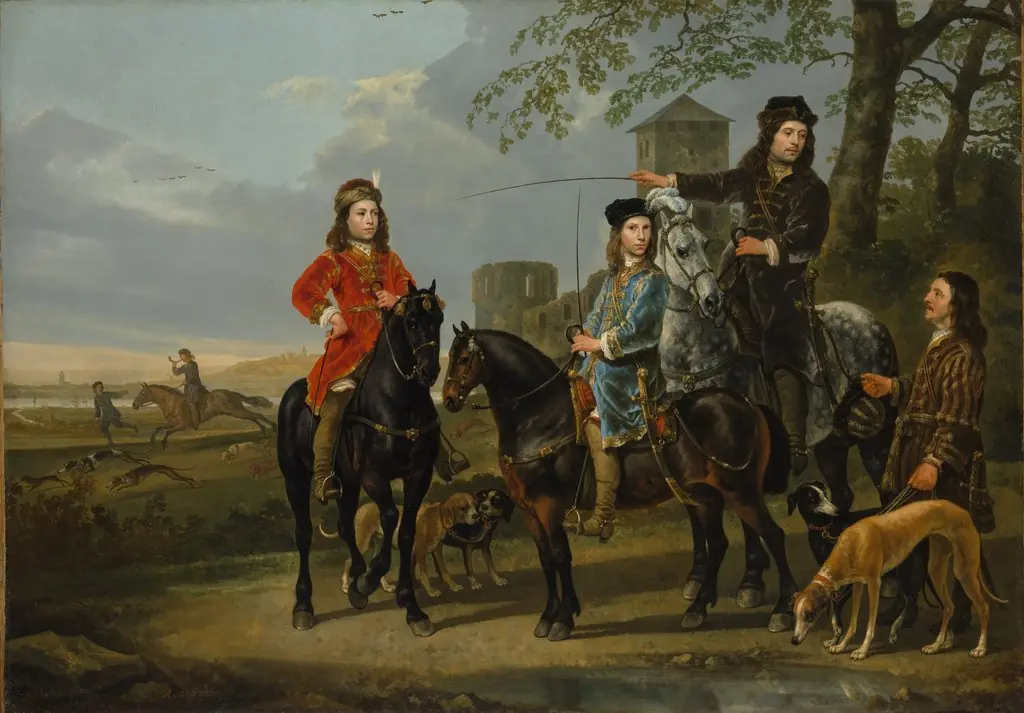 Equestrian Portrait of Cornelis (1639–1680) and Michiel Pompe van Meerdervoort (1638–1653) with Their Tutor and Coachman ("Starting for the Hunt")
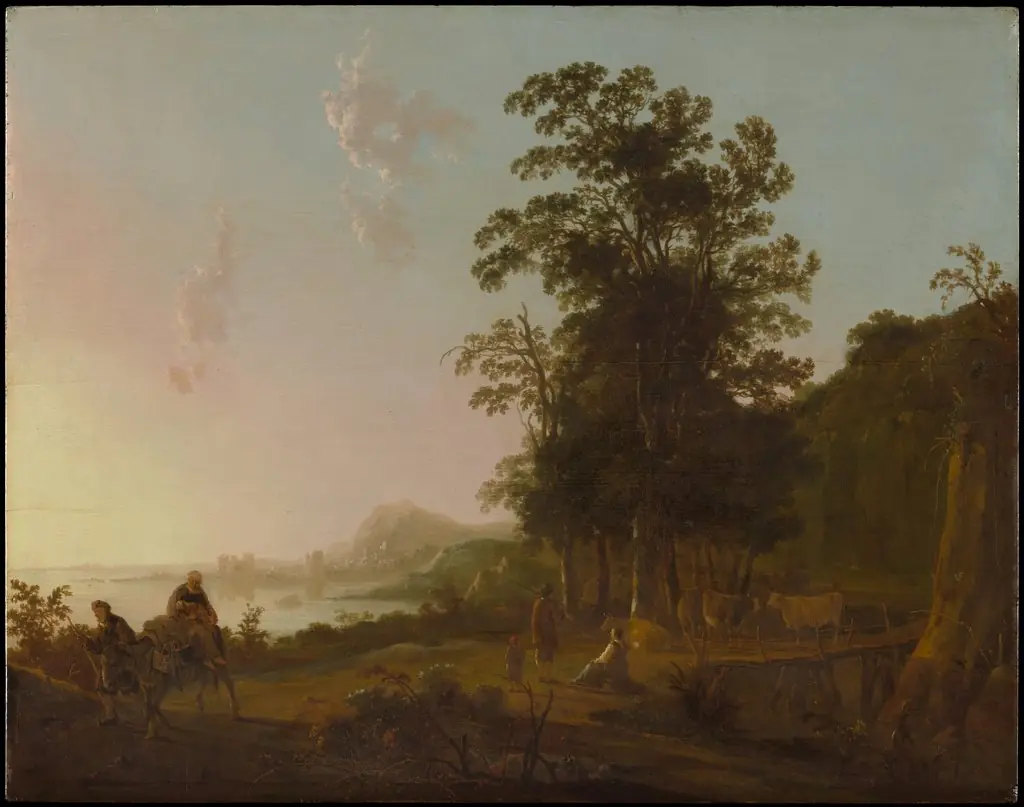 Landscape with the Flight into Egypt
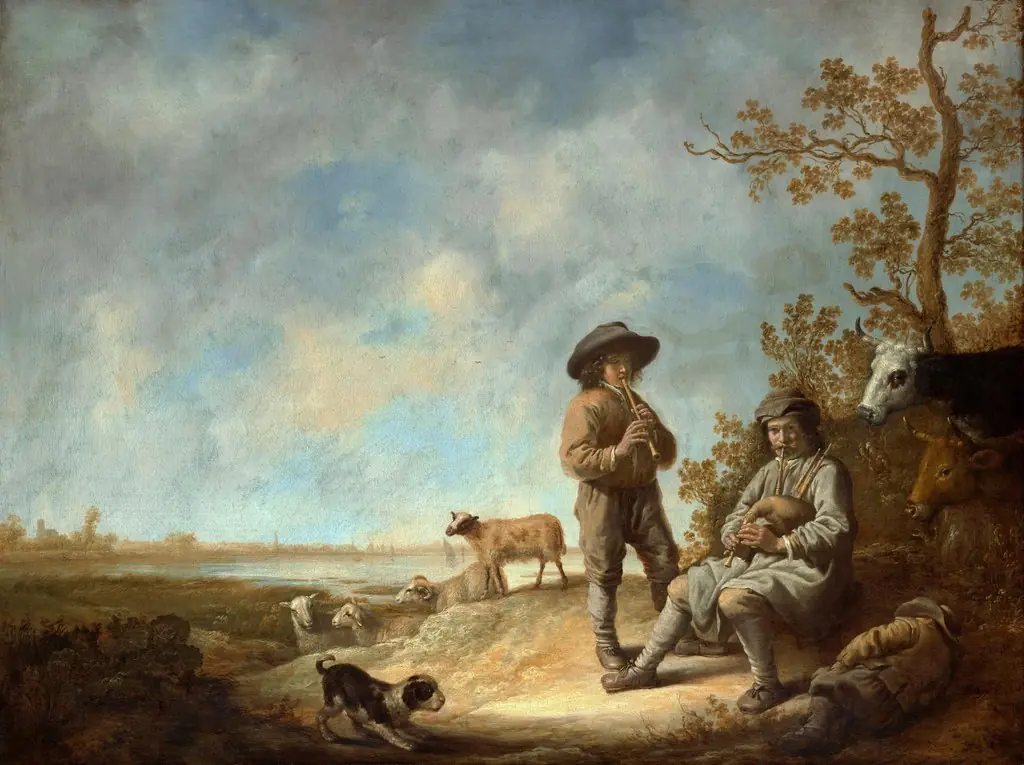 Piping Shepherds
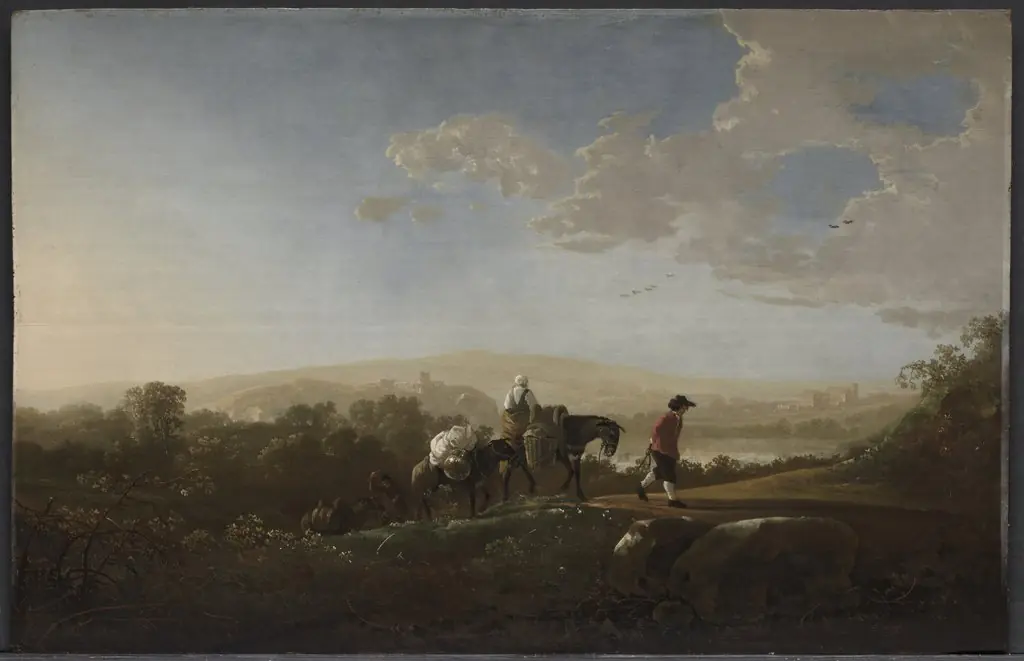 Travellers in Hilly Countryside
 A Chief Merchant of the VOC with his Wife and an Enslaved Servant