Artwork
The Moon Rising over a Village
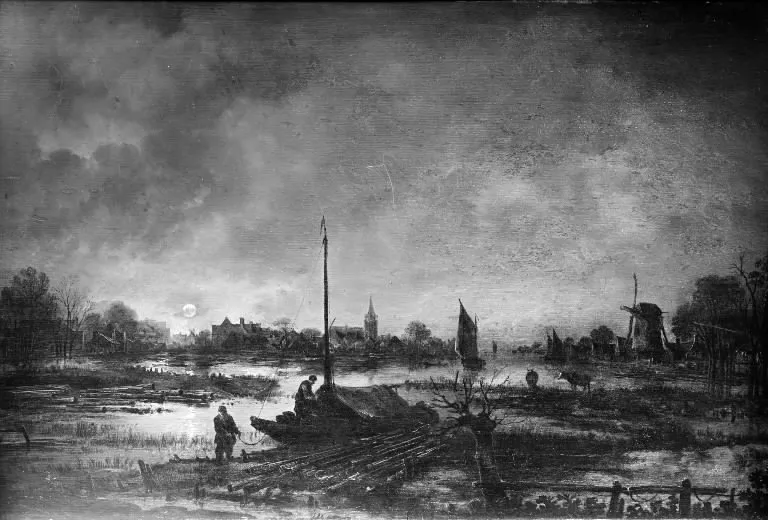
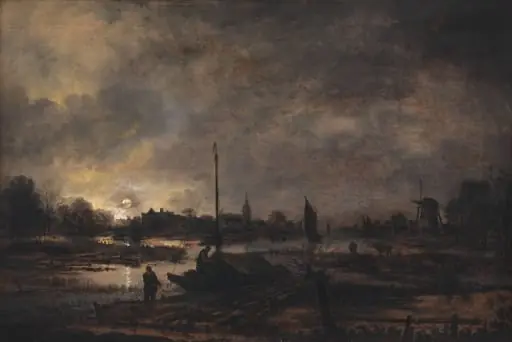
The Moon Rising over a Village is an unspecified painting by the Dutch Golden Age artist Aert van der Neer. It dates from 1647 and is held in the collection of the Statens Museum for Kunst.
About this work
Overview
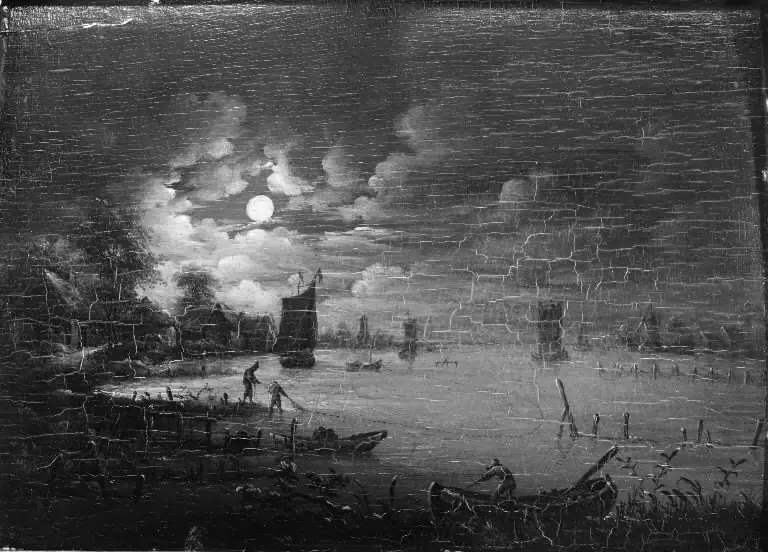
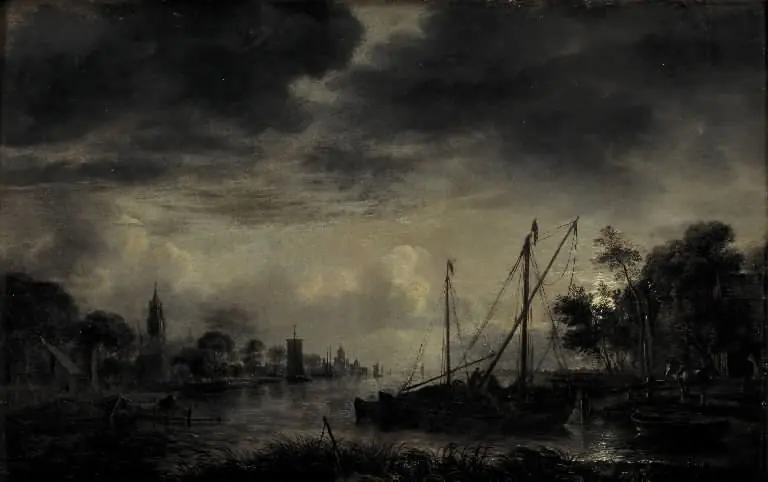
The Moon Rising over a Village is a nocturnal landscape painting by the Dutch Golden Age artist Aert van der Neer, dated to 1647.
The Moon Rising over a Village is a nocturnal landscape painting by the Dutch Golden Age artist Aert van der Neer, dated to 1647. Executed in oil on wood, the work measures 33.5 by 49.5 centimeters and is held in the collection of the Statens Museum for Kunst in Copenhagen. The painting exemplifies van der Neer's specialization in moonlit scenes, a genre in which he achieved unmatched mastery among his contemporaries during the mid-17th century. Its significance lies in its refined handling of lunar light, atmospheric subtlety, and its place within the broader tradition of Dutch tonal landscape painting.
Subject & Meaning
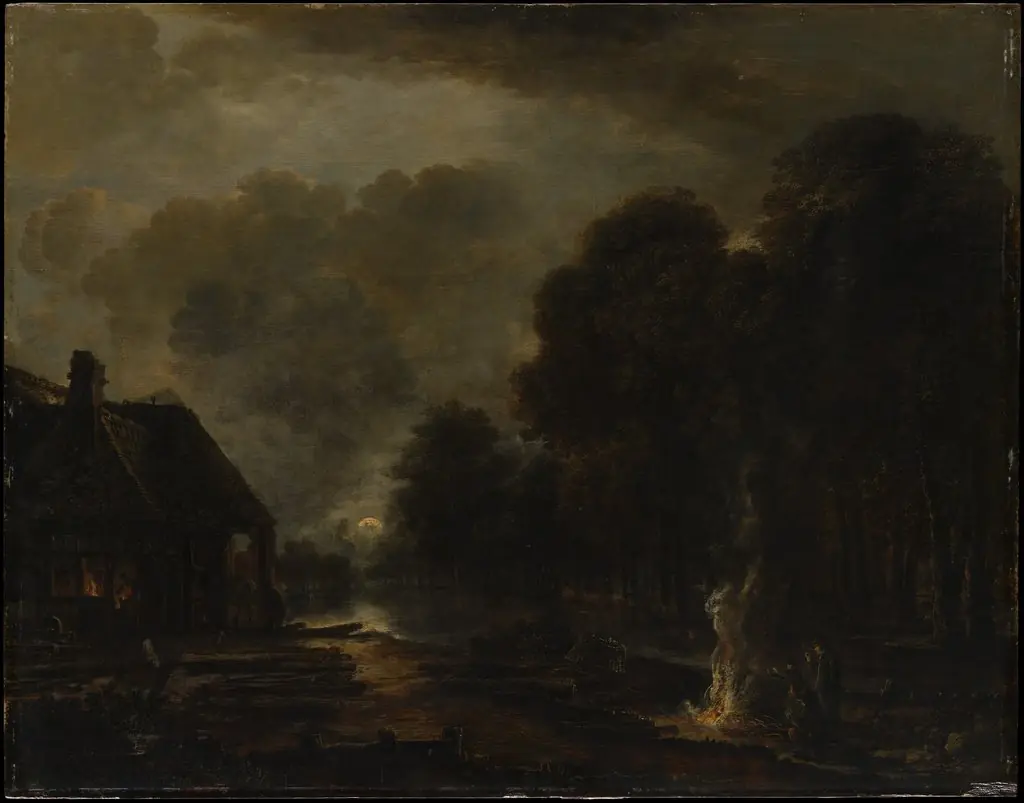
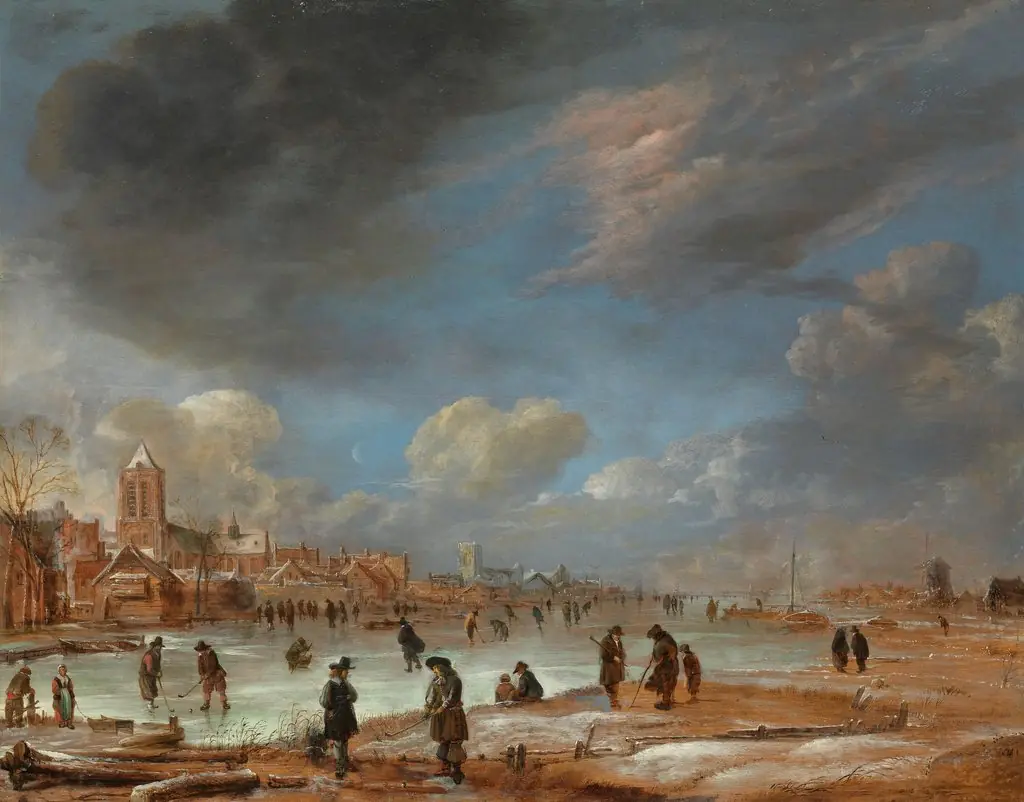
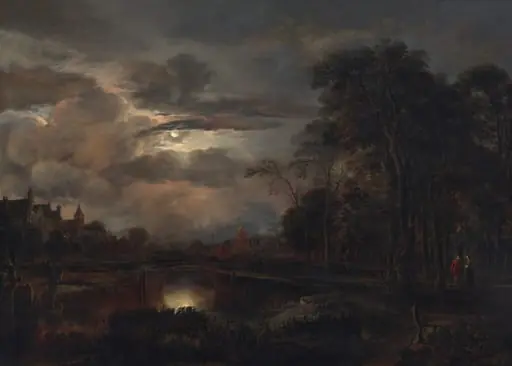
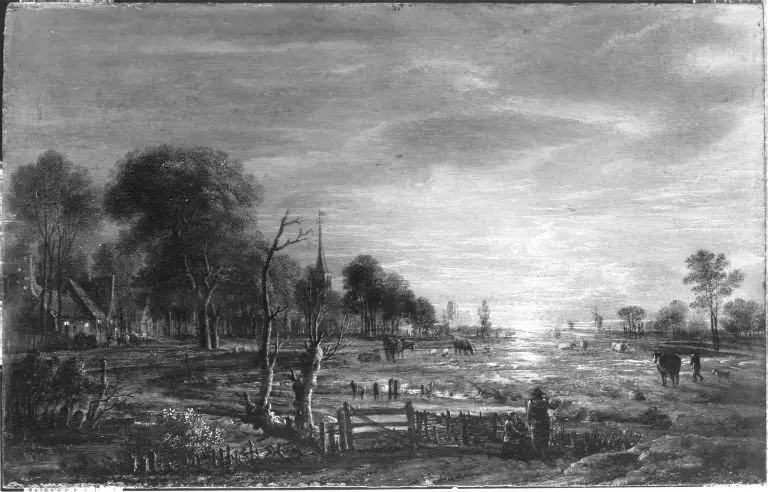
The painting presents a wide river landscape beneath a vast, clouded sky, with a pale moon rising near the horizon left of center. A river or canal stretches horizontally across the middle ground, its surface catching silvery reflections. In the foreground, a moored boat with a tall mast sits near wooden posts and planks, attended by two figures, one standing in the water, the other crouched on the vessel. To the right, a windmill with turning vanes stands beside sparse trees, while a sailboat with raised sail drifts on the water. A church spire and clustered buildings mark the distant village. The scene is composed rather than topographical, allowing van der Neer to orchestrate light effects and silhouettes. The moon, windmill, and ships have been interpreted as elements that structure a civic order tied to mercantile power and industry, though such readings remain speculative. The overall atmosphere is calm and nocturnal, with bare trees, reeds, and a simple fence lining the riverbank.
Technique & Style
The palette is tonal and monochrome, built from blacks, grays, and whites. Light breaks through clouds, casting silvery reflections on water and illuminating the moon. Brushwork is smooth in the sky, more textured in foliage and foreground details. This handling is consistent with van der Neer's known method of capturing subdued light and its reflections on water, a sensitivity that scholars regard as unequaled among his peers. The work reflects the influence of the Flemish Frankenthal school, particularly in its limited tonal palette and winding compositional paths that guide the viewer's eye. The oil-on-wood support and the relatively small scale, 33.5 by 49.5 centimeters, are typical of Dutch cabinet pictures of the period.
History & Provenance
The painting is dated 1647, placing it within the period when scholars agree van der Neer was at the height of his powers, from the mid-1640s to about 1660. The work is now in the Statens Museum for Kunst, having entered the collection through acquisition. Its provenance prior to museum ownership is not documented in the available sources. No exhibition history is recorded in the provided materials.
Context
Aert van der Neer was born in 1603 or 1604 in Gorinchem or Amsterdam and died in Amsterdam in 1677. He did not begin his painting career until his late twenties; his first known work dates to 1632, the year he likely moved to Amsterdam. According to his biographer Arnold Houbraken, he had earlier worked as a steward and may have studied with Rafel Govertszoon Camphuijsen, a brother-in-law. Despite his artistic achievements, van der Neer experienced little financial success. Around 1658 or 1659 he opened a wine tavern, De Graeff van Hollant, which ended in bankruptcy in 1662. He died in poverty. Within his limited range of nocturnal and twilight landscapes, van der Neer had no rival among contemporaries. His son Eglon van der Neer also became a painter. The Moon Rising over a Village belongs to the broader Dutch tradition of landscape painting that aestheticized civic and mercantile life, though modern readings caution against uncritical acceptance of such romanticized views.
Legacy
Van der Neer's moonlit landscapes established a benchmark for nocturnal scene painting in the Dutch Golden Age. His works influenced subsequent generations of landscape painters who sought to capture the ephemeral qualities of light on water. The cultural afterlife of The Moon Rising over a Village extends to its use in contemporary discourse about the power structures embedded in Dutch Golden Age imagery, with critical readings examining how such landscapes may reinforce narratives of Dutch exceptionalism. The painting remains a key example in the Statens Museum for Kunst's holdings of Dutch landscape painting, representing both the technical achievements and the complex social resonances of the period.
Artist & collection
Artist
Aert van der Neer, or Aernout or Artus (c. 1603 – 9 November 1677), was a landscape painter of the Dutch Golden Age, who specialized in small night scenes lit only by moonlight and fires, and snowy winter landscapes,…