Artwork
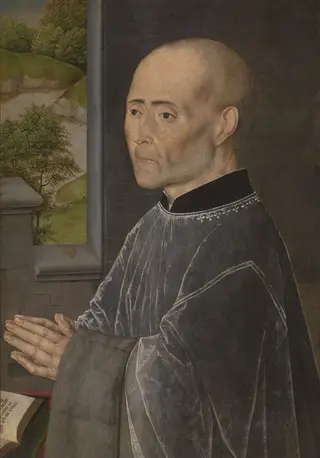
Head of a Donor
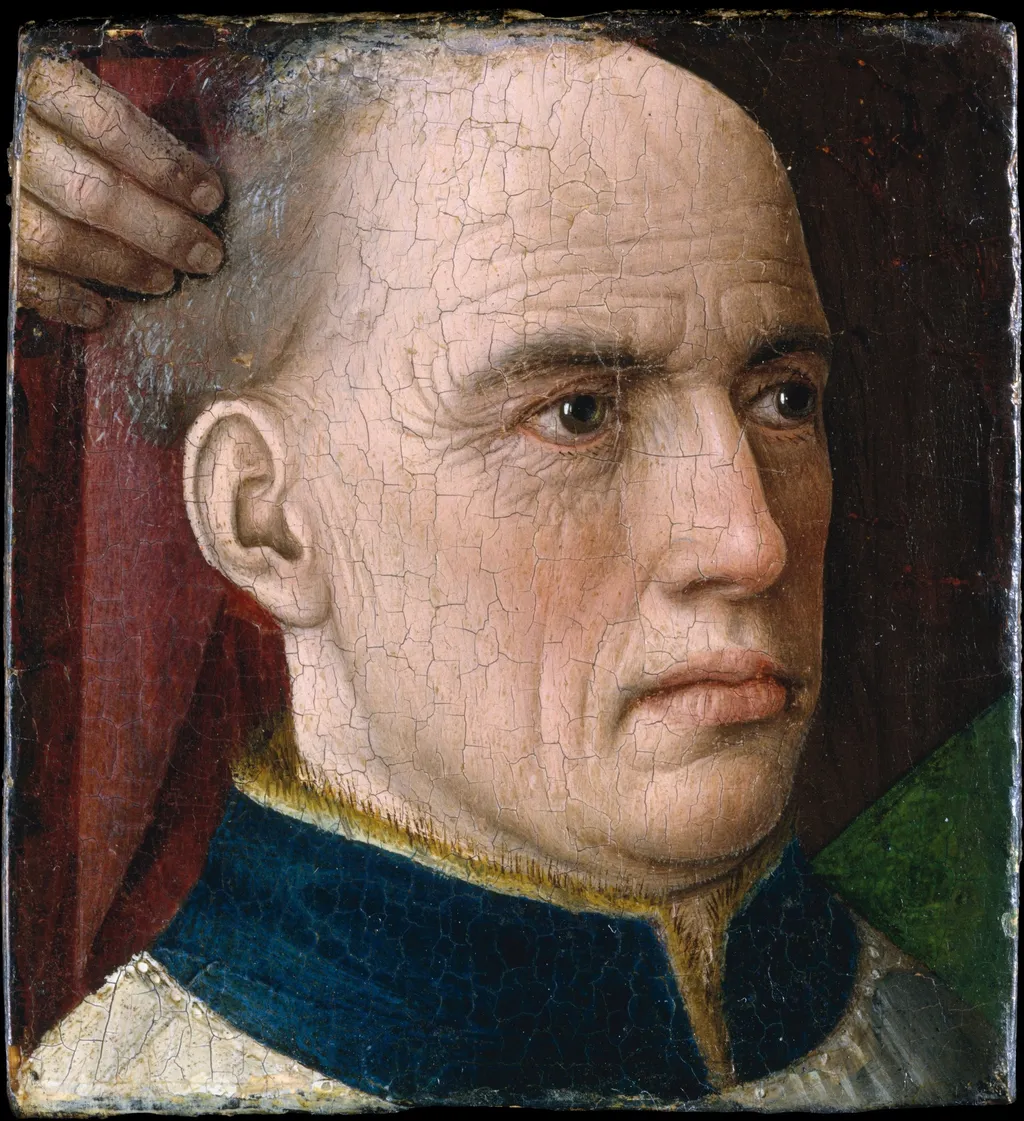
Head of a Donor is an oil painting by the Northern Renaissance artist Albert van Ouwater. It dates from 1460 and is held in the collection of the Metropolitan Museum of Art.
About this work
Technique & Style
The painting employs oil paint on a wooden panel support, a technique characteristic of Early Netherlandish practice in the mid-fifteenth century.
The painting employs oil paint on a wooden panel support, a technique characteristic of Early Netherlandish practice in the mid-fifteenth century. Handling is precise, with finely modulated flesh tones and carefully rendered facial features that suggest the use of a limited, controlled brush and subtle glazing to achieve lifelike modeling and texture. The small scale (9.8 cm × 8.9 cm) and intimate focus indicate it was likely conceived as a devotional panel rather than a large altarpiece fragment.
Stylistically, the work aligns with the Northern Renaissance emphasis on naturalism and individual portraiture, evident in the donor’s individualized features and the restrained, volumetric treatment of form.
History & Provenance
The work is dated by internal records to 1460, aligning with the early career of Albert van Ouwater.
The painting entered the collection via a sequence beginning with Thomas Howard, 21st Earl of Arundel, who owned it by 1636. It descended within the Howard family to Alethea Howard, Countess of Arundel, and then to Lord Henry Howard-Molyneux-Howard. By the late nineteenth century it was in the possession of Henry Howard, before passing to J. P. Morgan. The heirs of Morgan subsequently returned the panel to the market.
The painting Head of a Donor by Albert van Ouwater is held in the collection of the Metropolitan Museum of Art. The work was previously owned by Thomas Howard, 21st Earl of Arundel, and his wife Alethea Howard, Countess of Arundel. It later passed through the hands of Lord Henry Howard-Molyneux-Howard, Henry Howard, and J. P. Morgan before entering the museum's holdings. Specific inventory or accession numbers and a detailed exhibition history are not provided in the available sources.
Context
Albert van Ouwater's Head of a Donor, executed in 1460, stands as a significant example of mid-fifteenth-century Northern Renaissance portraiture. Created during the artist's active period in Haarlem, the work exemplifies the era's shift toward individualized, psychologically resonant depictions of patrons in oil on panel. The painting's survival and subsequent acquisition by the Metropolitan Museum of Art underscore its enduring scholarly value as a rare, securely attributed panel by van Ouwater.
Its precise dimensions and intimate scale reflect the devotional function of donor portraits within the broader context of Early Netherlandish painting traditions.
Overview
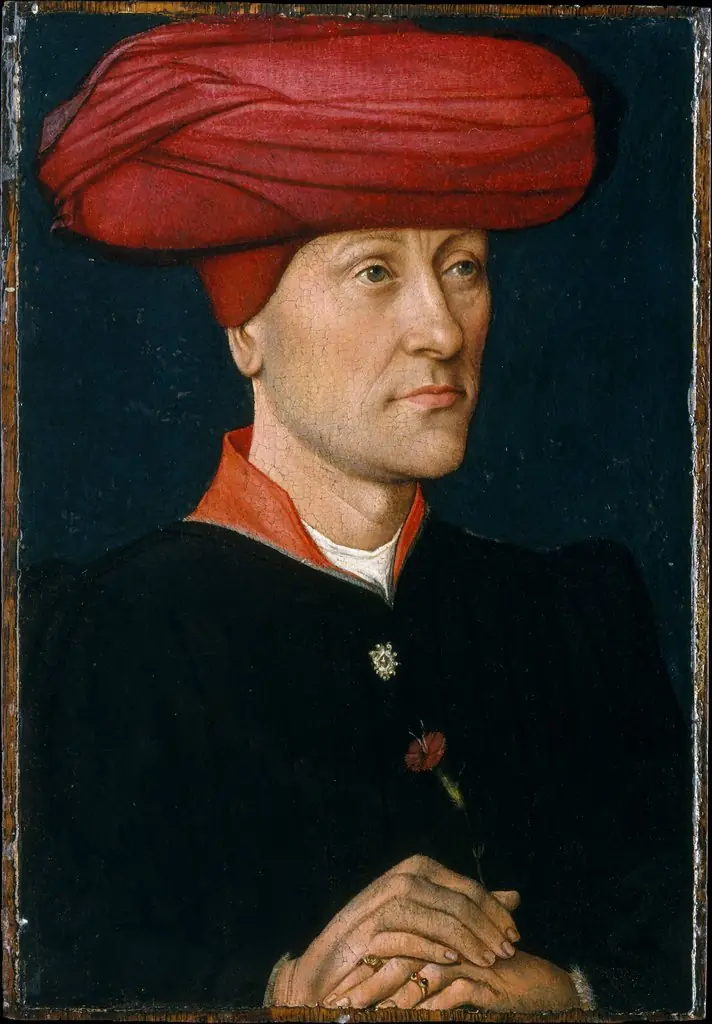
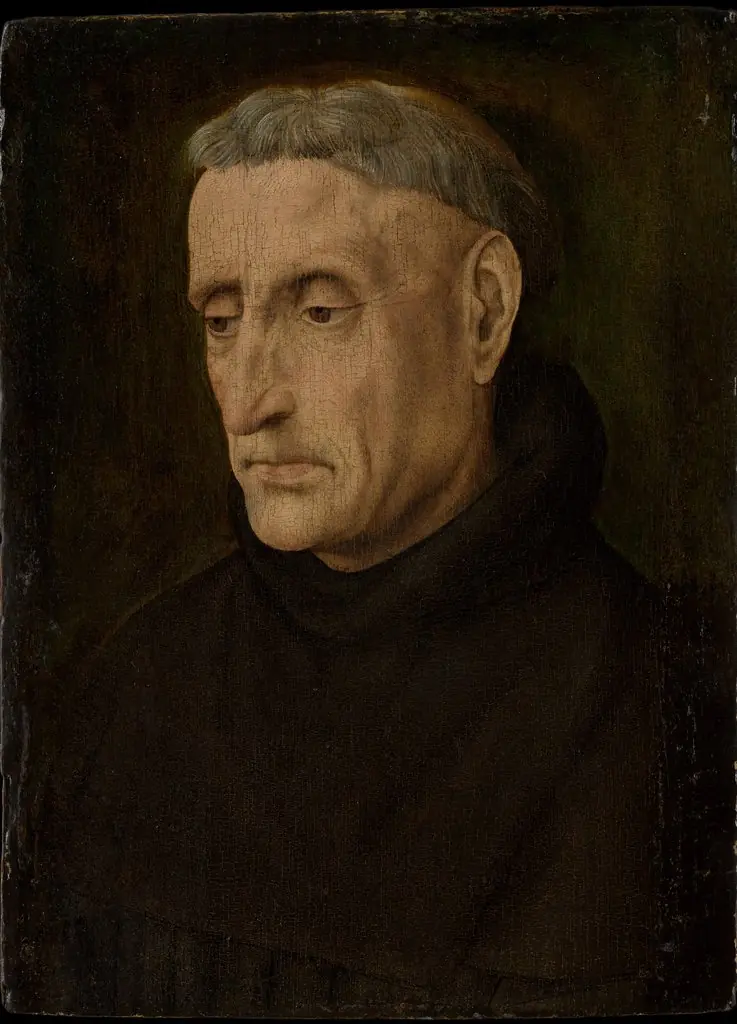
Created circa 1460, Head of a Donor is an oil painting by Albert van Ouwater, an early practitioner of the Northern Renaissance in the Netherlands. The work presents a tightly framed portrait of a male figure, rendered against a dark, unadorned background, and is presently held in the collection of The Metropolitan Museum of Art.
Subject & Meaning
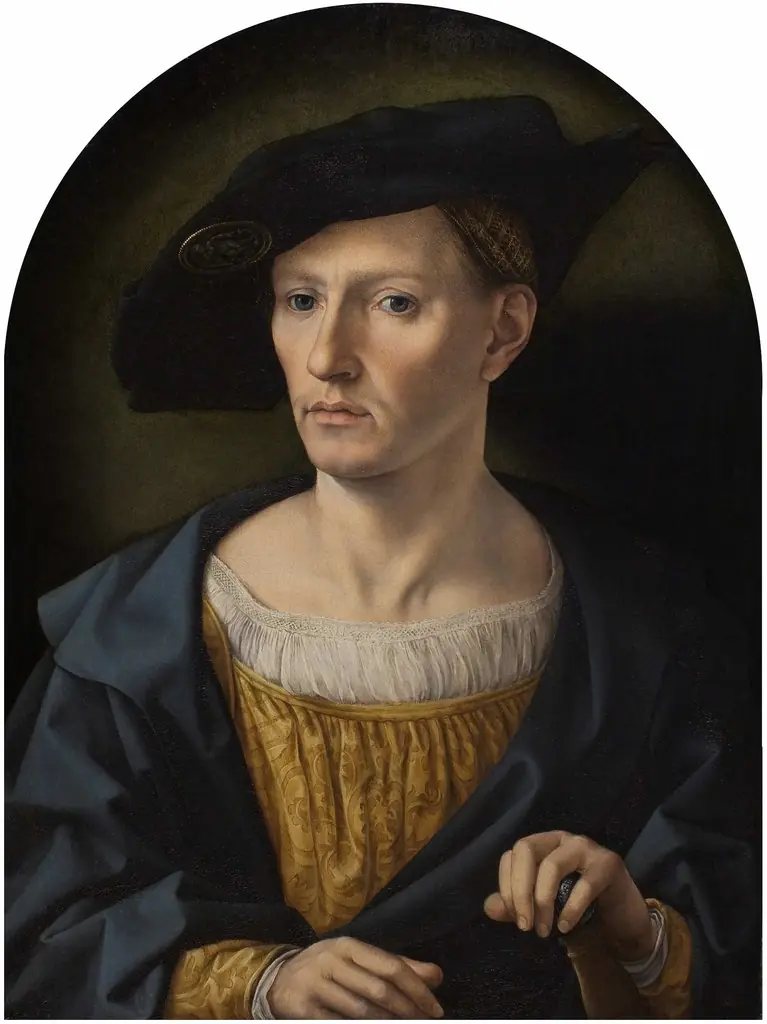
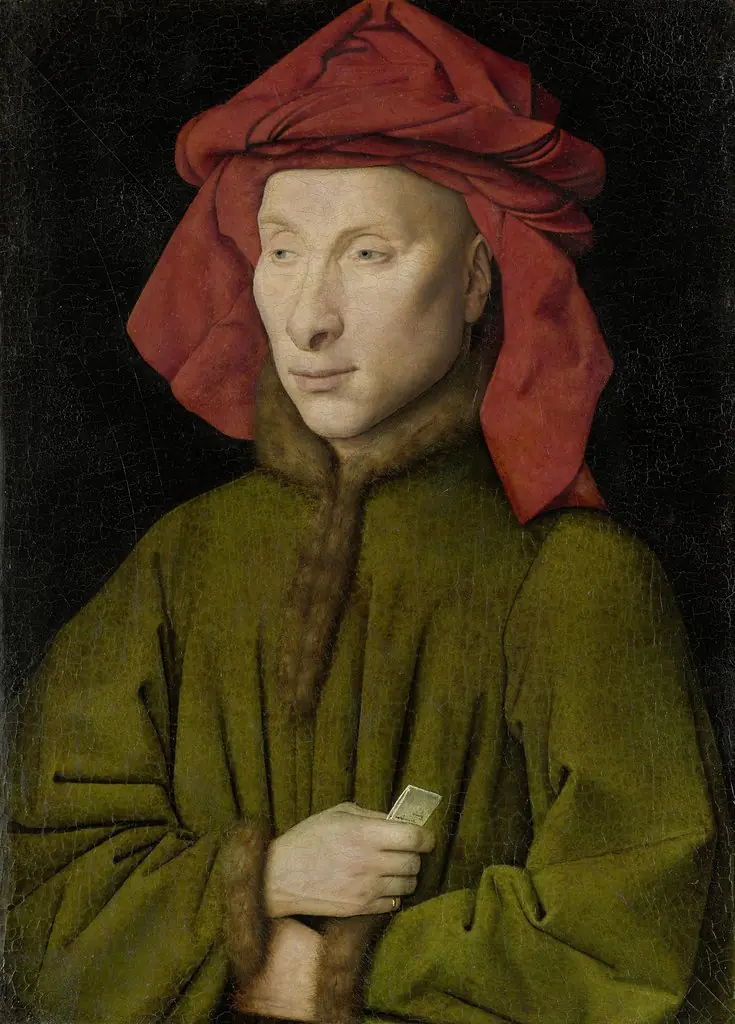
The composition focuses on the sitter’s face and upper torso, showing a slightly wrinkled complexion, a short beard, and a receding hairline. He is dressed in a dark blue garment with a white collar, and his right hand rests on a red cloth. The plain backdrop directs attention to the individual’s features, suggesting a straightforward commemorative purpose typical of donor portraits.

Own this work as a print
Artist & collection
Artist
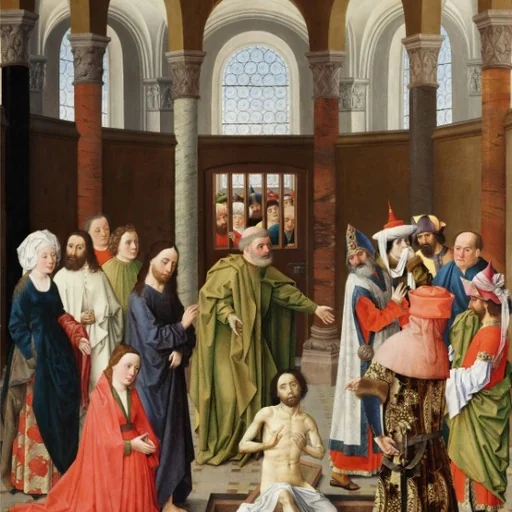
Albert van Ouwater (c. 1410/1415 – 1475) was one of the earliest artists of Early Netherlandish painting working in the Northern Netherlands, as opposed to Flanders in the South of the region.