Artwork
Portrait of a Donor
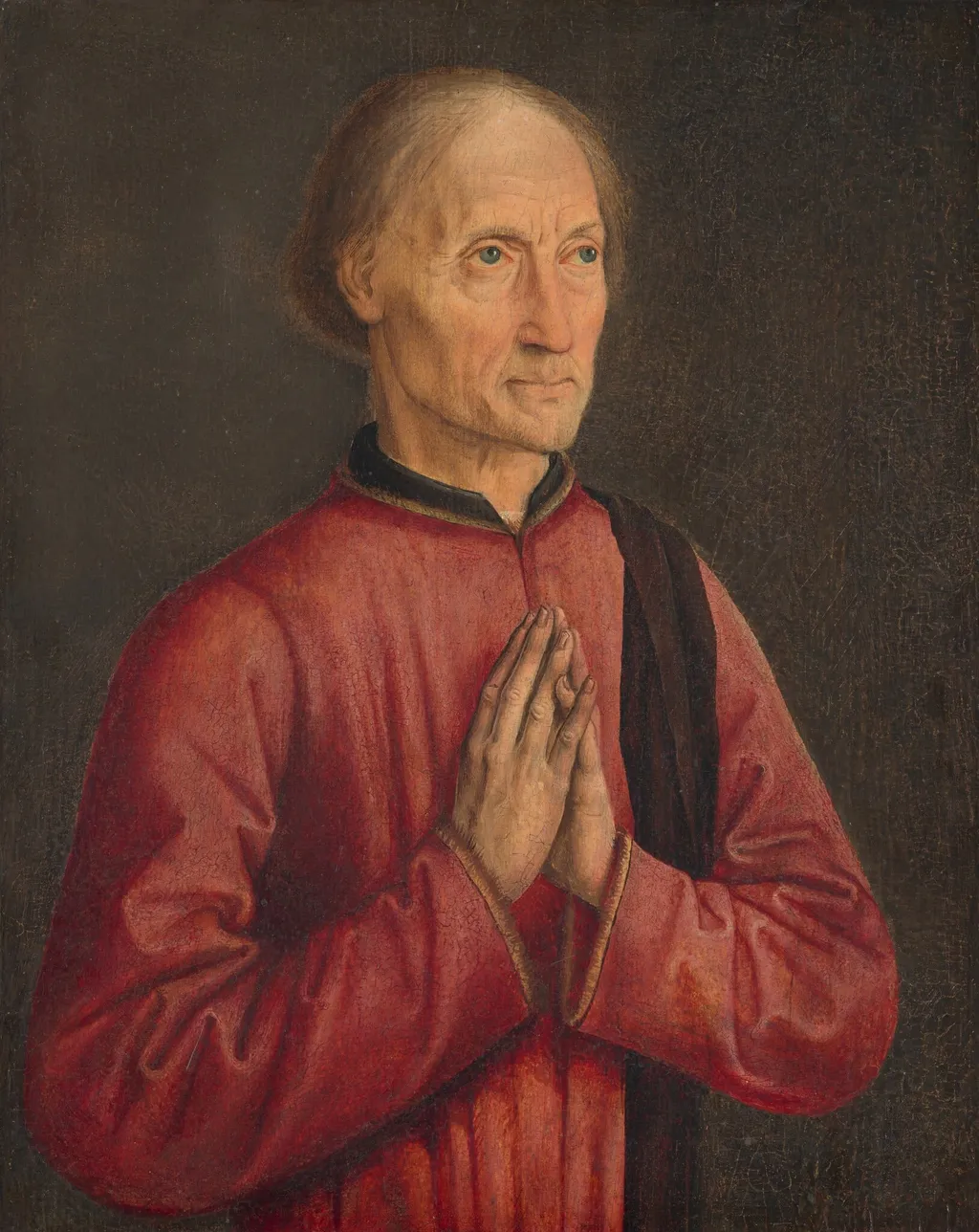
Portrait of a Donor is an oil painting by the Northern Renaissance artist Follower of Dirck Bouts. It dates from 1472 and is held in the collection of the National Gallery of Art.
About this work
Technique & Style
The painting passed through several owners, including John Osmaston, Alfred Brown, and various dealers, before being acquired by the Samuel H.
The work is an oil painting on hardboard that had been transferred from a wooden panel; it is dated to 1472 and classified as a portrait. The medium consists of oil paint applied to the hardboard support. The painting passed through several owners, including John Osmaston, Alfred Brown, and various dealers, before being acquired by the Samuel H. Kress Foundation, which gifted it to the National Gallery of Art in Washington, D.C. The work remains in the museum's collection as part of the Kress Collection.
History & Provenance
The painting is dated to 1472. Its provenance is documented from 1879, when it was owned by John Osmaston at Osmaston Manor, Derbyshire, and exhibited that year at the Royal Academy of the Arts in London as a work by Jan van Eyck. By 1906 it had passed to Alfred Brown of Brighton, who lent it to an exhibition at the Guildhall Art Gallery, again attributed to Jan van Eyck.
It subsequently belonged to Mrs. M. A. T. Slark, who sold it at Christie's, London, on 25 June 1948. The David M. Koetser Gallery acquired it at that sale. By 1950 the painting was with M. Knoedler & Co., New York, which held it jointly with Thomas Agnew and Sons, London, and Pinakos, Inc.
(Rudolf Heinemann), New York. The Samuel H. Kress Foundation purchased it in February 1952 and gifted it to the National Gallery of Art in 1961.
Context
The Portrait of a Donor, painted circa 1472 in oil on hardboard transferred from panel, is generally discussed as an anonymous Netherlandish portrait within the early Netherlandish tradition. Scholarship traces its attribution history from 19th-century listings as a Jan van Eyck work, through a 1906 identification with a Flemish school piece, to a 1948 Christie's sale that retained the van Eyck label before the Kress Foundation acquired it in 1952; subsequent research linked the composition to an anonymous follower of Dirck Bouts rather than to van Eyck himself. Its provenance, recorded owners John Osmaston, Alfred Brown, and later dealers before the Kress purchase, illustrates the 20th-century art market circulation of Early Netherlandish works.
The painting's reception reflects shifting connoisseurship, emphasizing its role in understanding anonymous portraiture within the broader context of 15th-century Netherlandish art.
Overview
Titled "Portrait of a Donor," this oil painting depicts a man engaged in prayer. The artwork, originally executed on a wooden panel, has since been transferred to a hardboard support. The subject is shown with a solemn expression, his hands clasped, suggesting a devotional context.
This piece exemplifies a common type of portraiture from its period, often commissioned for religious settings or private contemplation.
Subject & Meaning
The painting presents an individual in a state of reverence, his hands brought together in a gesture of prayer. His serious demeanor is emphasized by his focused gaze. He is dressed in a red garment, accented by a black collar and a dark sash draped over his shoulder.
The title "Portrait of a Donor" indicates that the sitter likely commissioned or contributed to a religious institution, a common practice reflected in art of the era.
Artist & collection
Artist

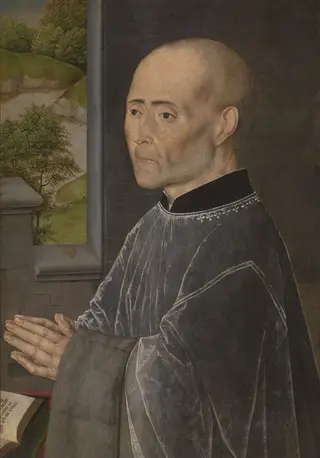 Portrait of a Canon
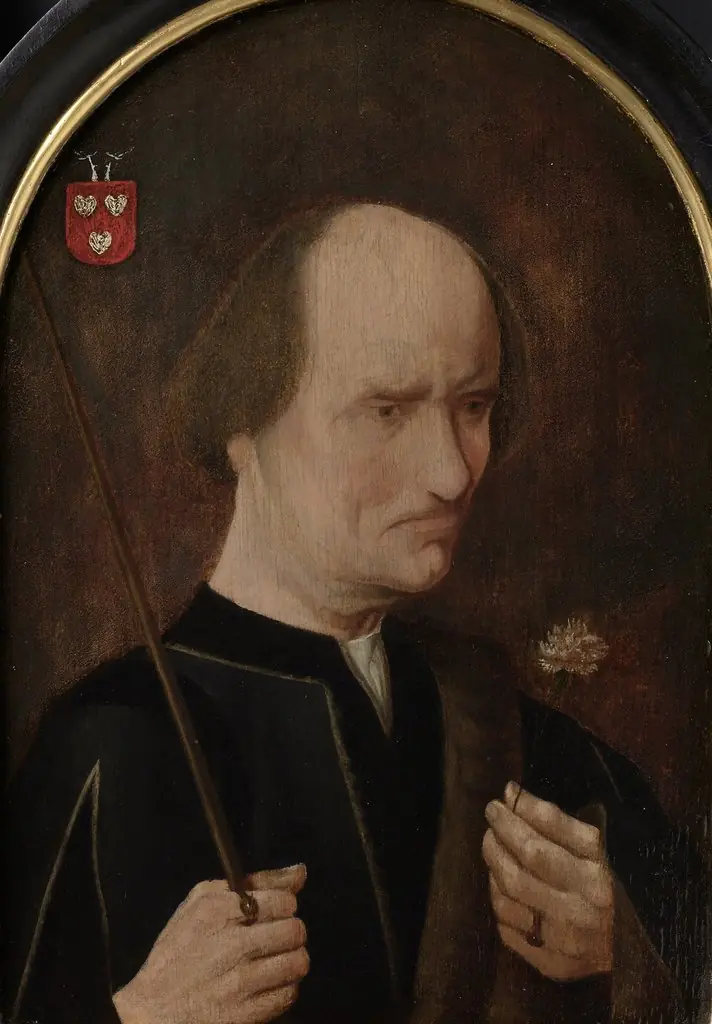 Portrait of Arent Franckensz van der Meer (?-1503), Lord of Papendrecht, nicknamed ‘malicious Aertje’
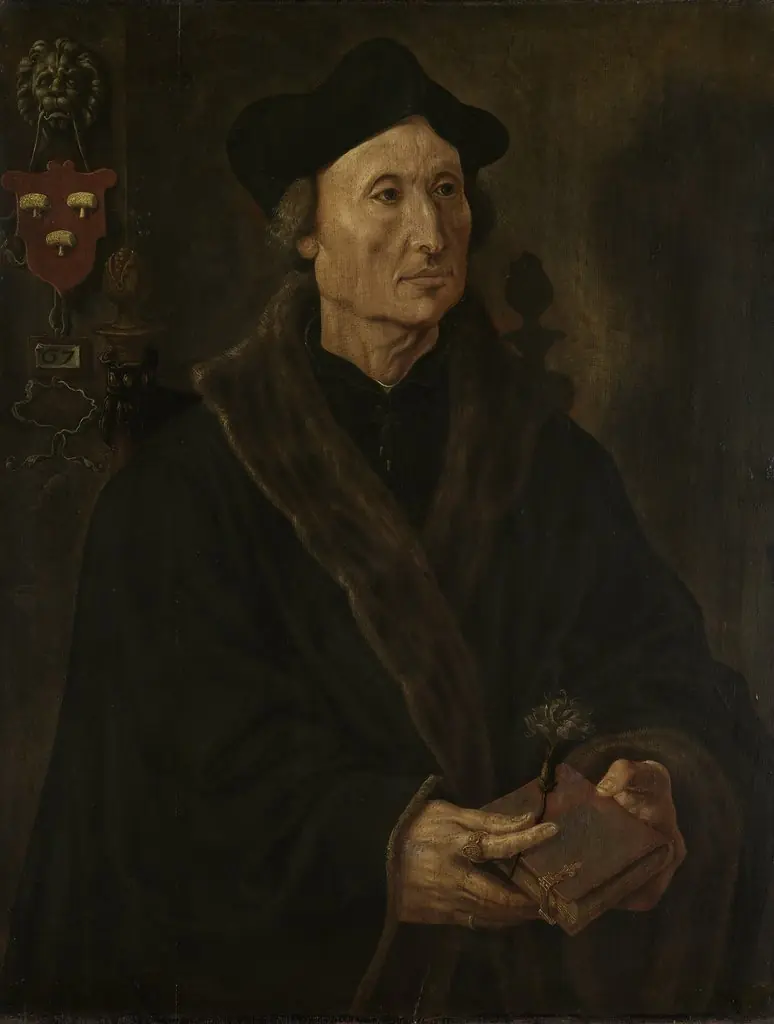 Portrait of Johannes Colmannus (1471-1538)
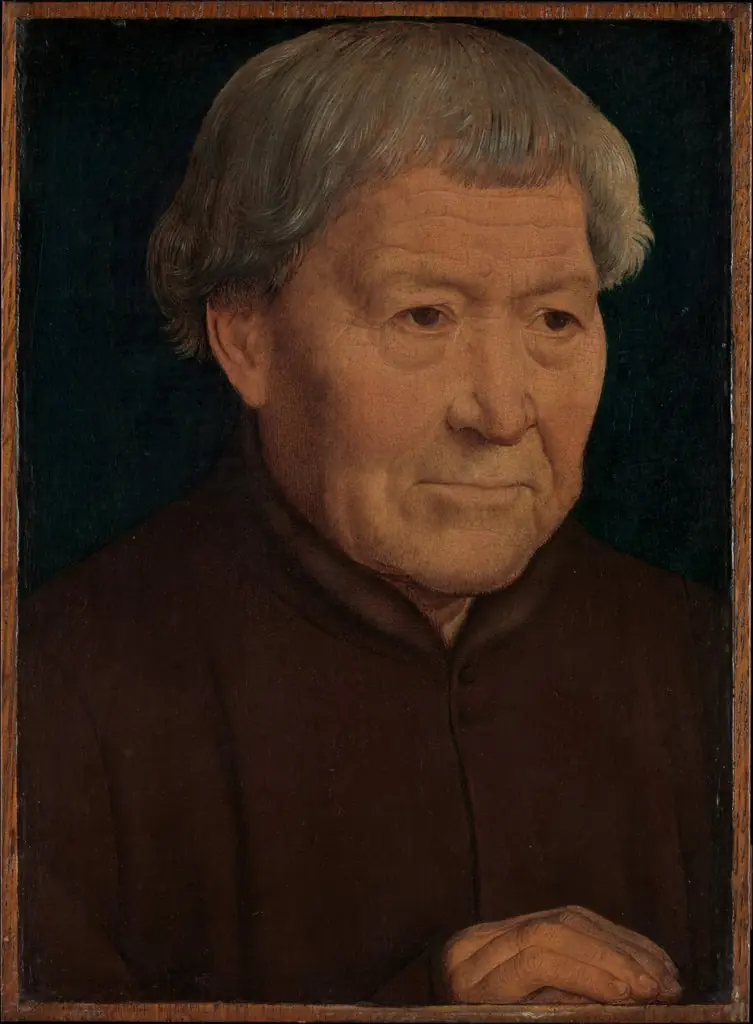 Portrait of an old man
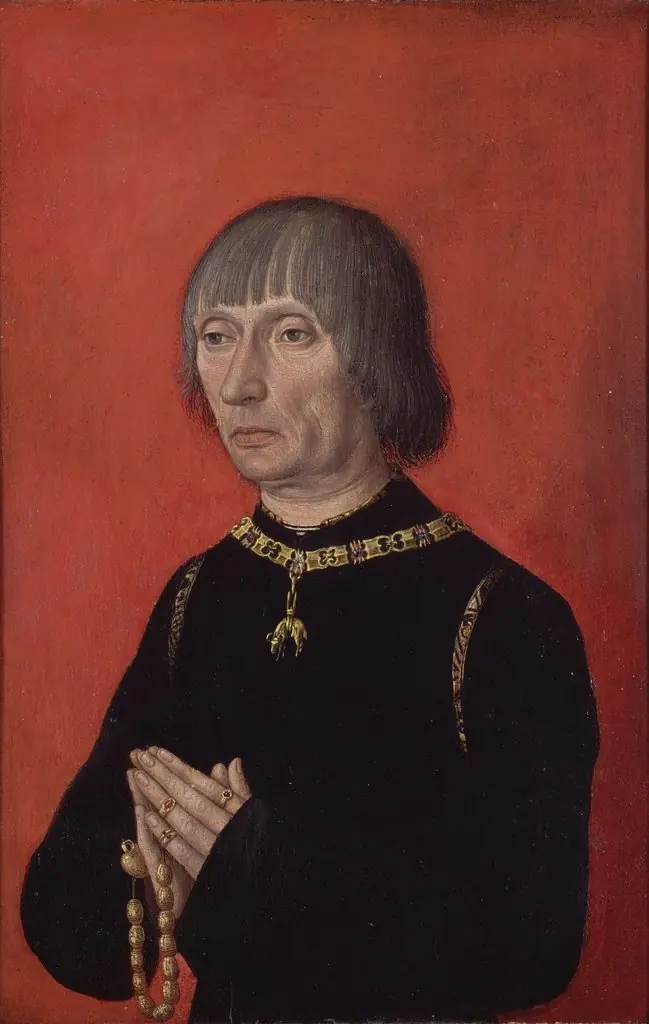 Portrait of Lodewijk van Gruuthuse
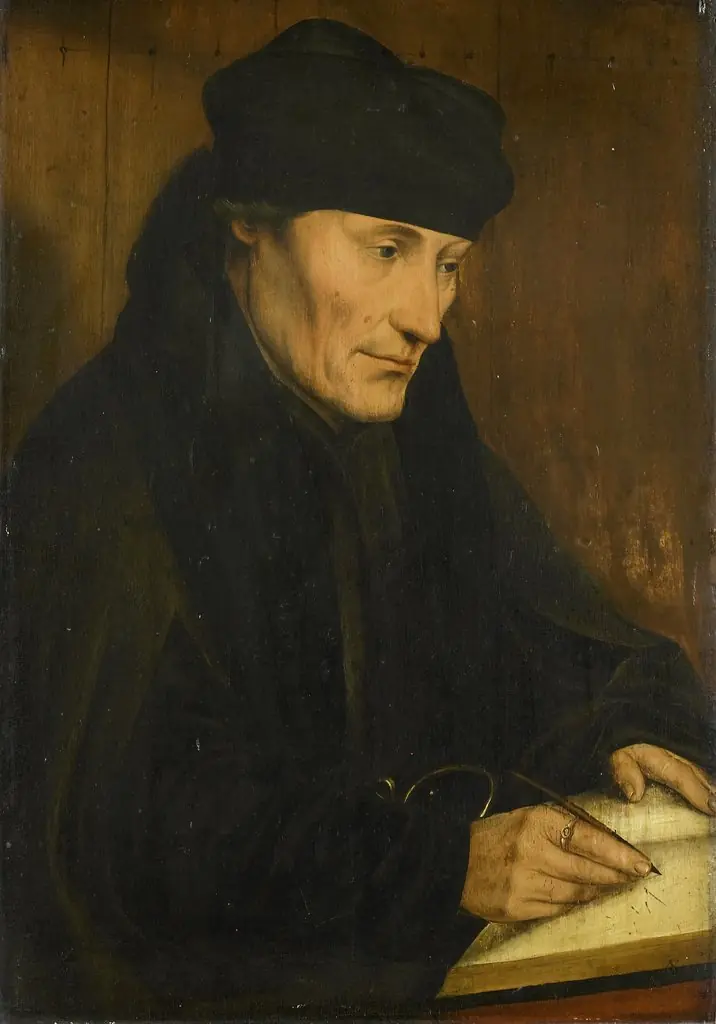 Portrait of Desiderius Erasmus (1469?-1536)
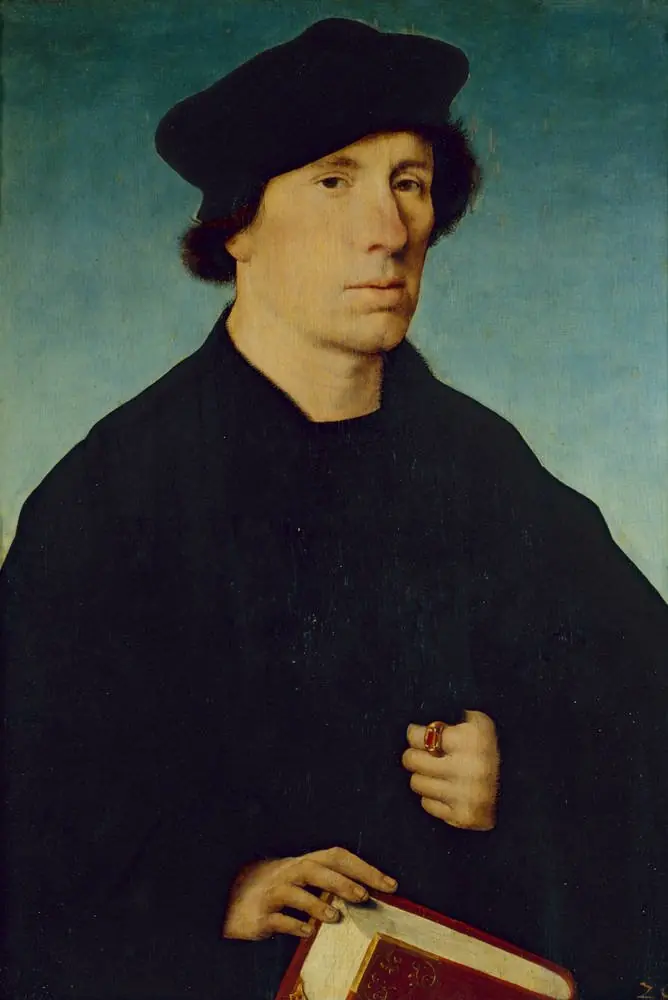 Portrait of a Beardless Man
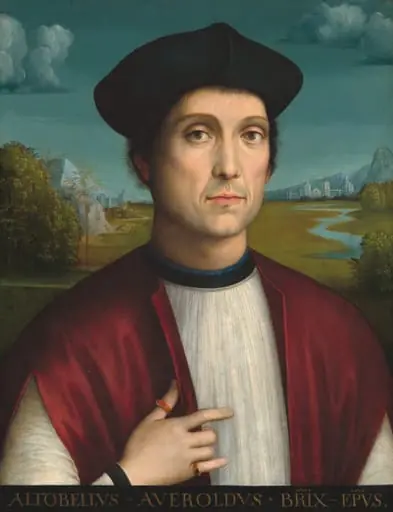 Bishop Altobello Averoldo
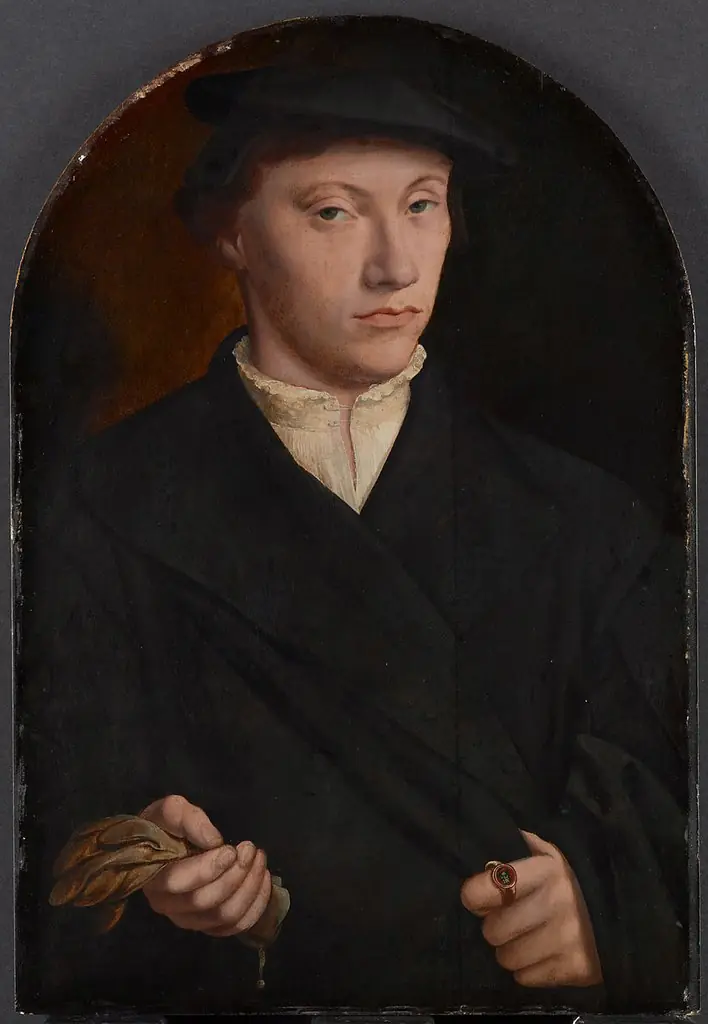 Portrait of a young man holding gloves
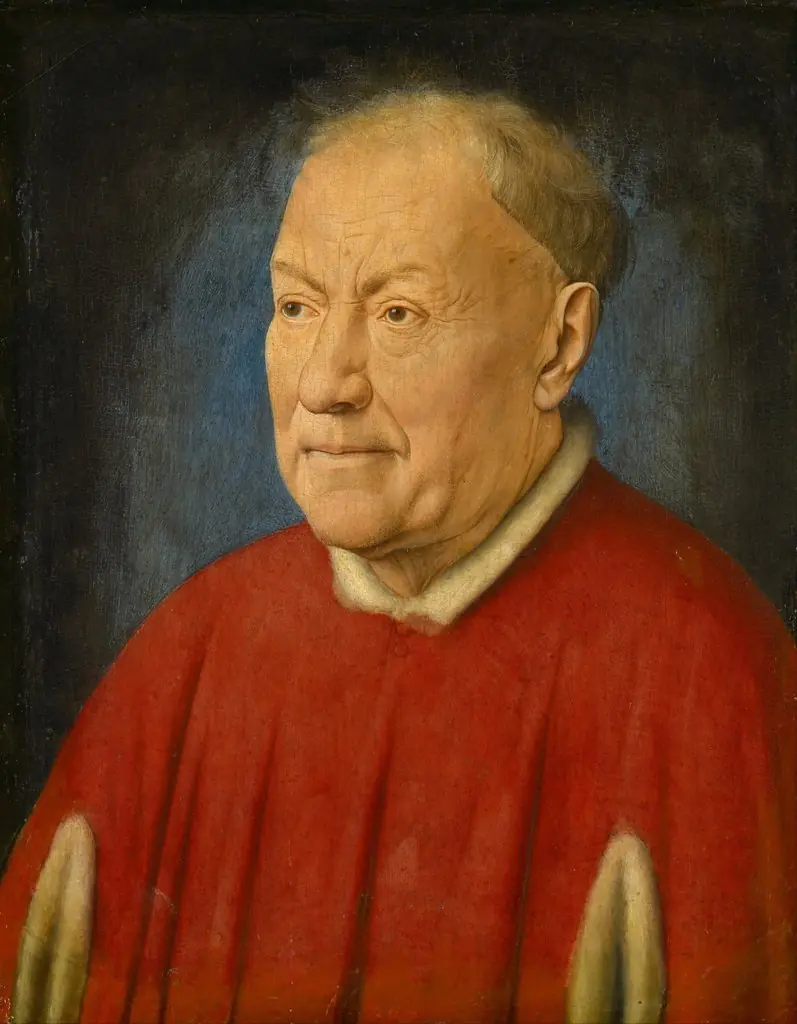 Portrait of Cardinal Niccolò Albergati
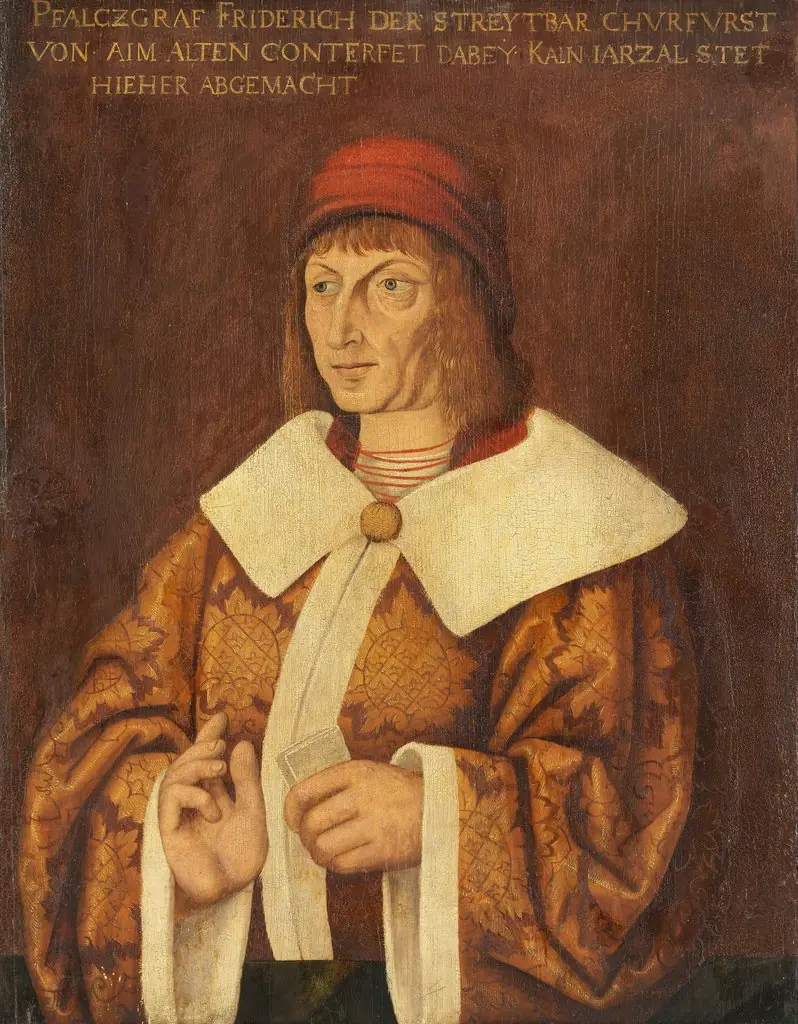 Kurfürst Friedrich I. der Siegreiche
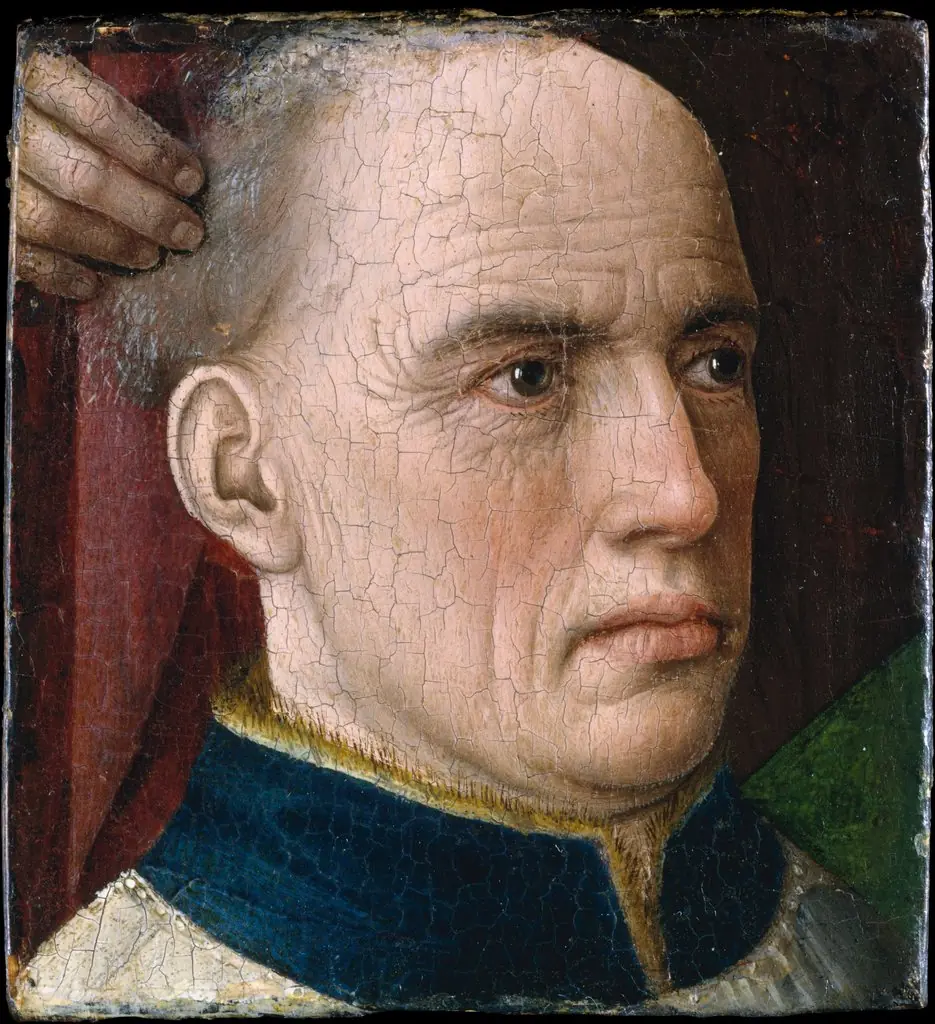
- Head of a Donor