Artwork
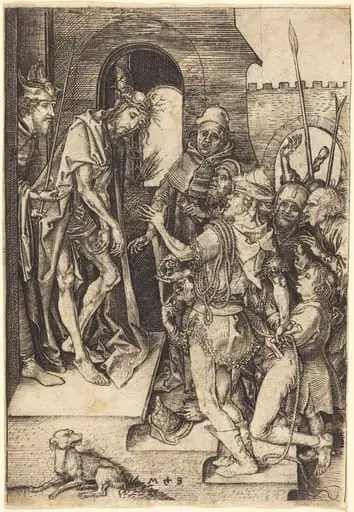
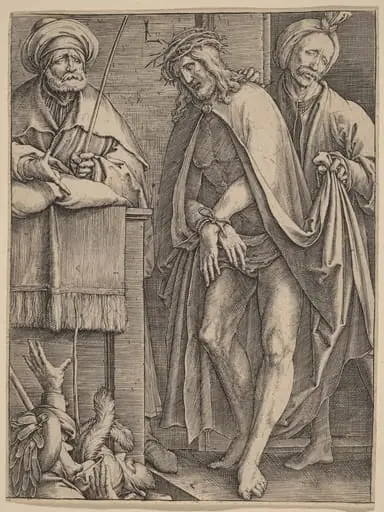
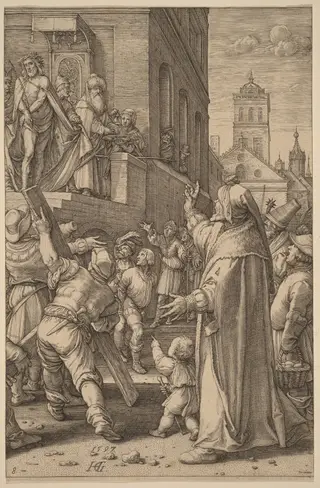
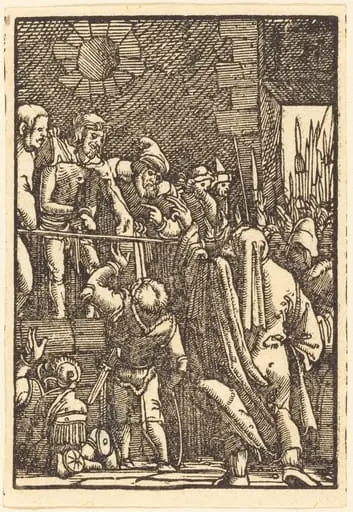
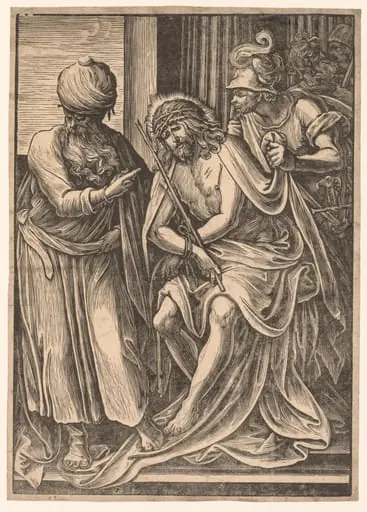
Ecce Homo
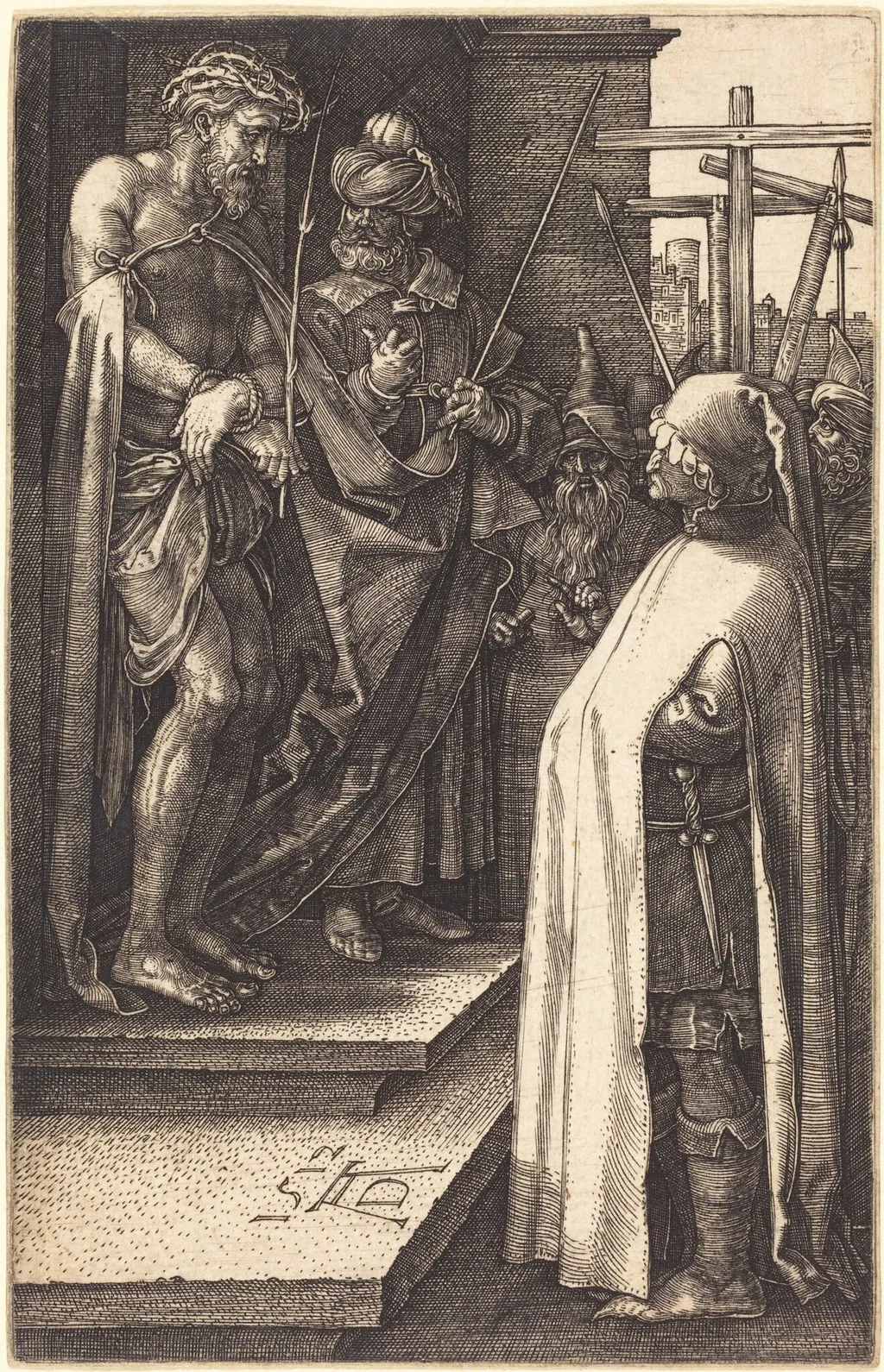
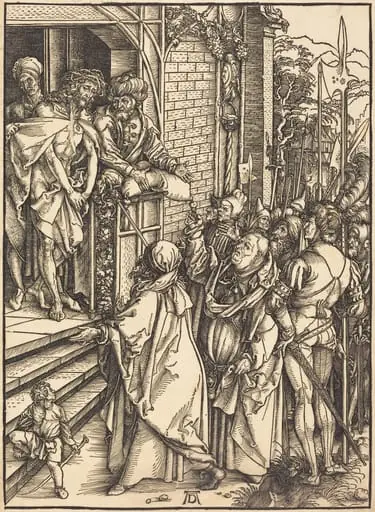
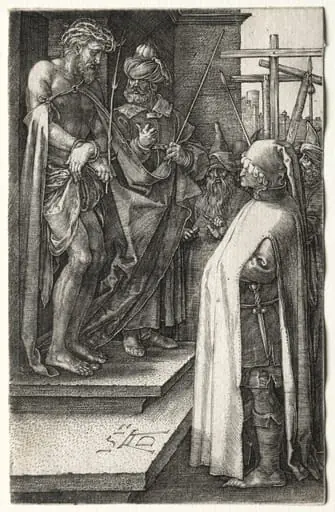
Ecce Homo is an ink print by the Northern Renaissance artist Albrecht Dürer. It dates from 1512 and is held in the collection of the Chester Beatty Library.
- Inscription
- Inscribed:in plate, lower center: 1512 / AD [artist's monogram]; verso, lower right, in graphite by a later hand: 14 [upside down]; verso, bottom left, in graphite by a later hand: NR [?] 25146; verso, bottom center, in graphite by a later hand: B.10
- Markings
- Marked:none
About this work
Subject & Meaning
The composition focuses entirely on the figure of Jesus, serving as a devotional object within the context of early 16th-century printmaking.
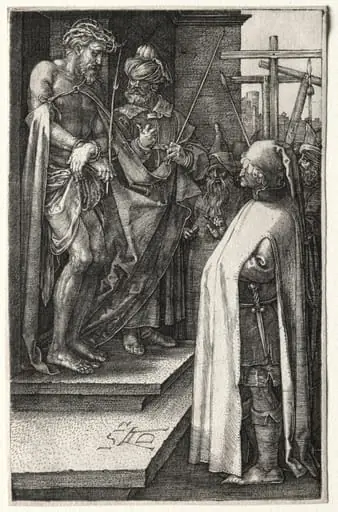
Albrecht Dürer's 1515 engraving depicts Jesus Christ as the central figure, illustrating the biblical scene known as Ecce Homo. Derived from the New Testament, the work belongs to the artist's Passion series and portrays the moment Christ is presented to the crowd. As a piece of religious art from the German Renaissance, the image conveys the theological significance of Christ's suffering and presentation prior to crucifixion.
The composition focuses entirely on the figure of Jesus, serving as a devotional object within the context of early 16th-century printmaking.
Technique & Style
Ecce Homo is an engraving on laid paper, a printmaking technique characteristic of Albrecht Dürer's graphic work from the German Renaissance. The image is rendered on a small support measuring 11.6 cm in height by 7.5 cm in width. The religious subject of Jesus Christ is depicted through Dürer's precise handling of the engraved line, a hallmark of his printmaking practice. The work belongs to the series known as the Passion.
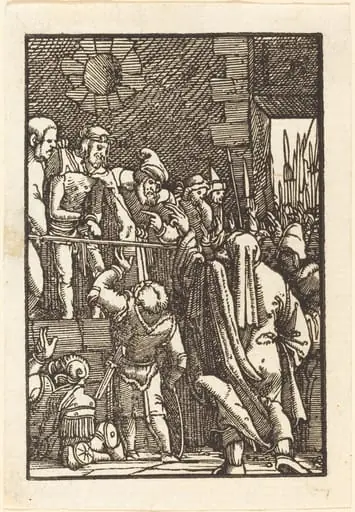
The print is held in several institutional collections, including the National Gallery of Art in Washington, D.C., the Rosenwald Collection, the Chester Beatty Library, and the Cleveland Museum of Art, indicating the survival of multiple impressions of the plate.
History & Provenance
The engraving was produced in 1515 during Albrecht Dürer’s mature period in Nuremberg. It belongs to the artist’s small Passion B series of ten prints, which depict episodes from the Passion of Christ in concise, expressive engravings.
By the early nineteenth century the sheet had entered the Brentano-Birckenstock Collection in Vienna and later moved to Frankfurt, where it carried the collector’s mark (Lugt 345). It subsequently passed to Arthur Friederich Theodor Bohnenberger of Stuttgart (Lugt 68) before being acquired by Lessing J. Rosenwald in 1928 (Lugt 1760b and 1932d). Rosenwald later donated the impression to the National Gallery of Art, Washington, D.C., in 1943.
This engraving is held in the Prints collection of the National Gallery of Art in Washington, D.C., where it entered the institution as part of the Rosenwald Collection. The work was acquired by Lessing J. Rosenwald in Jenkintown, Pennsylvania, in 1928 and subsequently gifted to the gallery in 1943. Prior to its acquisition by Rosenwald, the sheet belonged to the Brentano-Birckenstock Collection in Vienna and Frankfurt and was owned by Arthur Friederich Theodor Bohnenberger of Stuttgart.
Additional impressions of the 1515 print are located at the Chester Beatty Library and the Cleveland Museum of Art.
Legacy
Ecce Homo, an engraving by Albrecht Dürer created in 1515, has been recognized for its powerful portrayal of Jesus Christ and its significance within German Renaissance religious art. The work entered the National Gallery of Art through the Rosenwald Collection in 1943 and remains part of the institution's holdings. Its inclusion in major collections and scholarly attention underscores its enduring reputation as a key example of Dürer's mastery in printmaking and biblical subject matter.
Overview
Ecce Homo is a 1512 engraving on laid paper by Albrecht Dürer.
Own this work as a print
Artist & collection
Artist
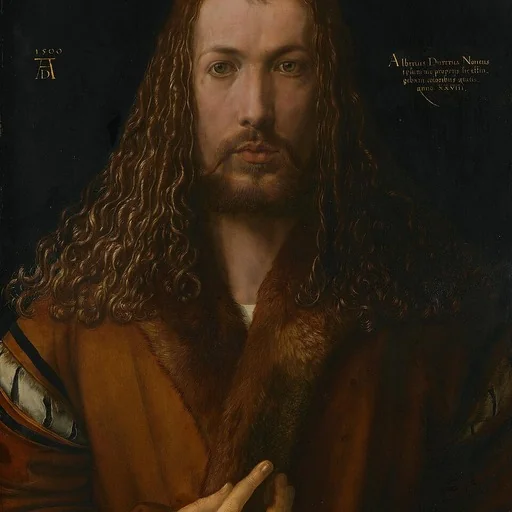
Albrecht Dürer spent his life in Nuremberg, a busy German city where artists traded prints like currency.

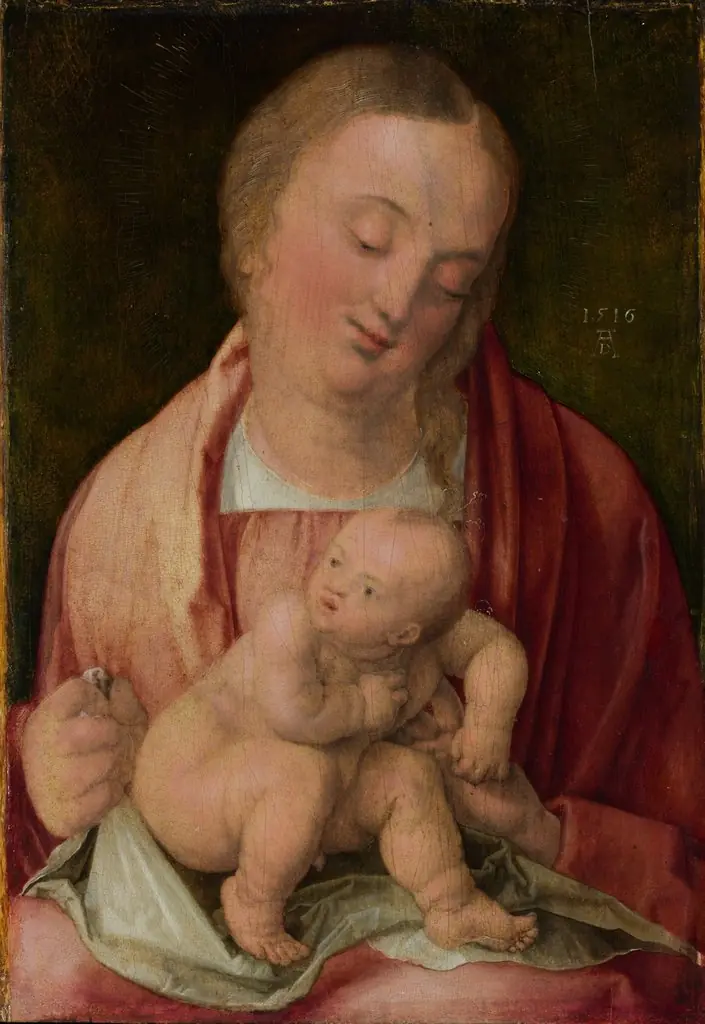
![Madonna and Child [obverse], by Albrecht Dürer](https://artifactworldgallery.com/img/albrecht-durer--madonna-and-child-obverse--d7b8ebf05d22ebe5-w320.webp)
![Lot and His Daughters [reverse], by Albrecht Dürer](https://artifactworldgallery.com/img/albrecht-durer--lot-and-his-daughters-reverse--b4ebf9b282faa17a-w320.webp)