Artwork
Madonna and Child
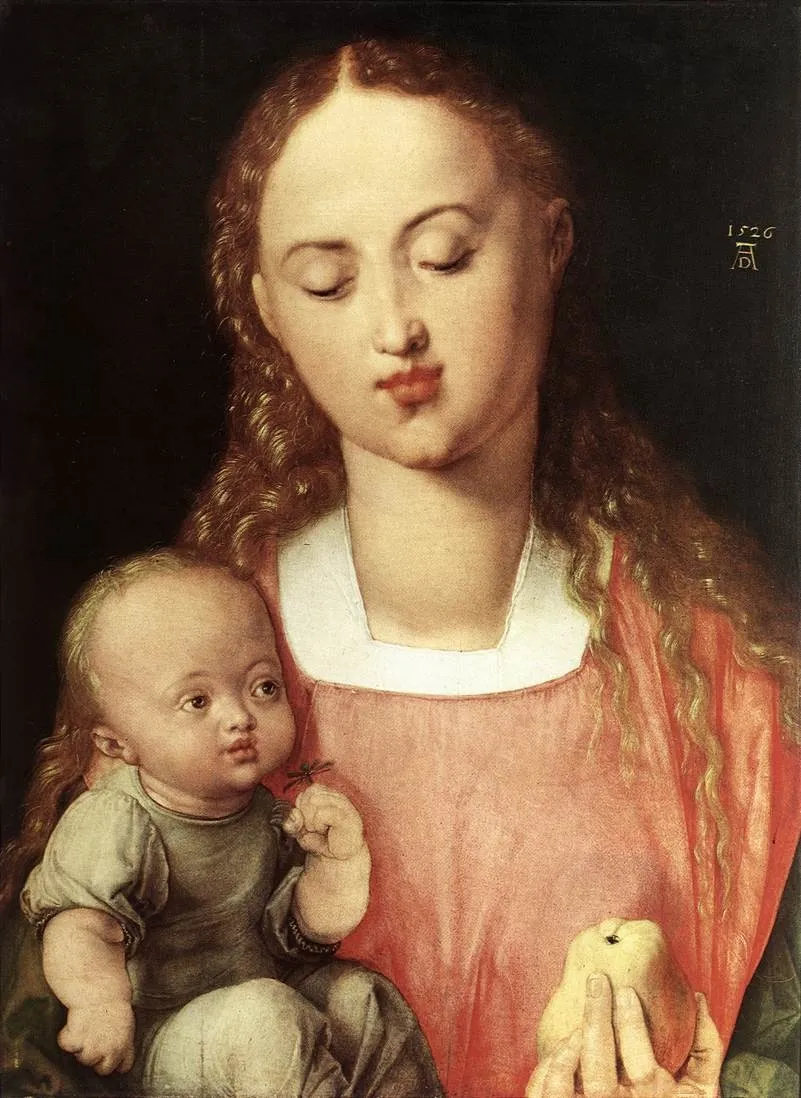
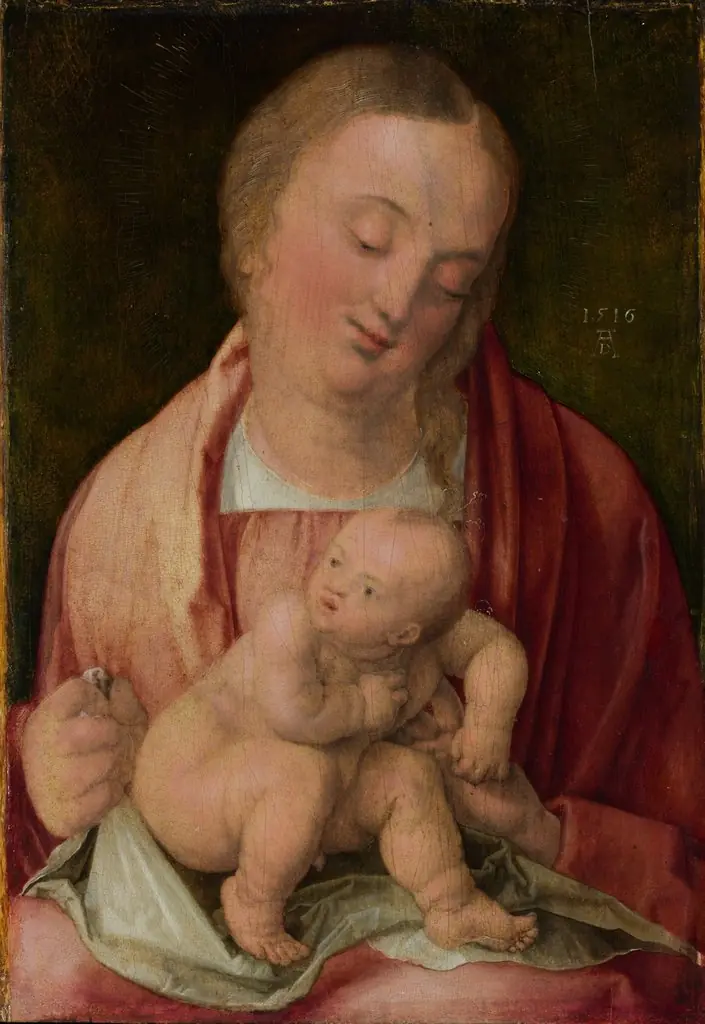
Madonna and Child is an oil painting by the Northern Renaissance artist Albrecht Dürer. It dates from 1526 and is held in the collection of the Uffizi Gallery.
About this work
Overview
Madonna and Child, also known as the Virgin of the Pear, is an oil on panel painting by the German Renaissance artist Albrecht Durer.
Madonna and Child, also known as the Virgin of the Pear, is an oil on panel painting by the German Renaissance artist Albrecht Durer. Created in 1526, it measures 43 by 31 centimeters. The work is signed and dated with a monogram in the upper right corner. It is recognized as the final Madonna painted by Durer and one of his very last works overall. The painting is currently held in the Uffizi Gallery in Florence.
Subject & Meaning
The painting depicts the Virgin Mary and the Christ Child in a tightly cropped, intimate composition against a dark background. Mary is shown without her traditional veil, her long wavy auburn hair parted at the center, wearing a white collar over a rose dress and a red draped garment. She holds a pear, which represents the forbidden fruit of original sin and symbolizes the redemption of the world through Christ. The child, wearing a gray green tunic, looks toward the pear while holding a small daisy between his thumb and forefinger. The daisy serves as a symbol of the mystical marriage between Jesus and the Church, the latter having been historically identified with Mary.
Technique & Style
Executed in oil on a wooden panel, the painting features a compact, half length composition with a continuous contour line that unifies the two figures and emphasizes their familial intimacy. Durer employed fine, controlled brushwork with particular attention to the texture of curling hair. The modeling is smooth, creating soft transitions between light and shadow. The palette consists of warm flesh tones, deep reds, and muted greens set against the uniformly dark ground. A pentimento is visible in the pear, which was initially conceived on a larger scale. The fluid and smooth style of this work anticipates Durer's late masterpiece, the Four Apostles in Munich. The composition reverses the arrangement found in Durer's Madonna of the Carnation, where the mother holds the flower and the son holds the fruit.
History & Provenance
Durer painted the work in Nuremberg in 1526, a year after the introduction of the Protestant Reformation had severely impacted the veneration of images of the Virgin and saints. The artist likely drew inspiration from a preparatory drawing of Saint Barbara, which he made upon returning from his trip to the Netherlands for a large altarpiece that was never constructed. The painting is documented in Florence from the seventeenth century, when it was located in the Medici Guardaroba. A century later it was moved to the Pitti Palace, and subsequently to the Medici Villa at Poggio a Caiano. It was finally transferred to the Uffizi Gallery in 1773.
Context
Created during the German Renaissance, the painting stands as a late work produced under the shadow of the Protestant Reformation, which had curtailed the traditional Catholic veneration of Marian imagery. Despite this shifting religious landscape, Durer produced this intimate devotional image, drawing upon designs from his unrealized Netherlandish altarpiece projects. The work represents the culmination of his long engagement with the Madonna subject, demonstrating the refined, smooth handling that characterizes his final period before his death.
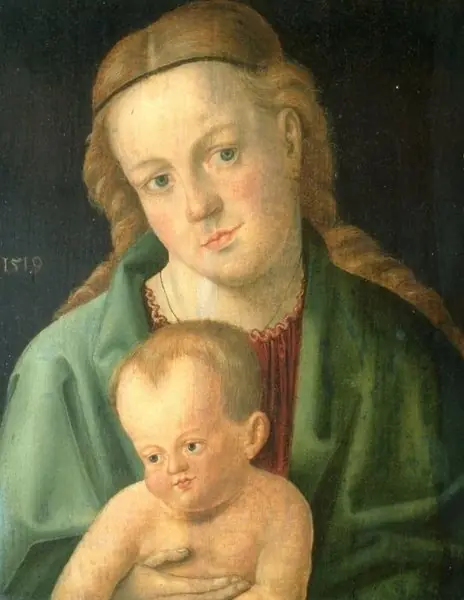
Artist & collection
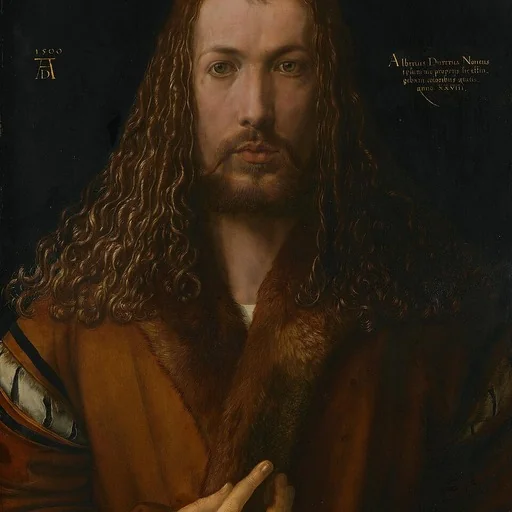
Artist
Albrecht Dürer spent his life in Nuremberg, a busy German city where artists traded prints like currency.

![Madonna and Child [obverse], by Albrecht Dürer](https://artifactworldgallery.com/img/albrecht-durer--madonna-and-child-obverse--d7b8ebf05d22ebe5-w320.webp)
![Lot and His Daughters [reverse], by Albrecht Dürer](https://artifactworldgallery.com/img/albrecht-durer--lot-and-his-daughters-reverse--b4ebf9b282faa17a-w320.webp)