Artwork
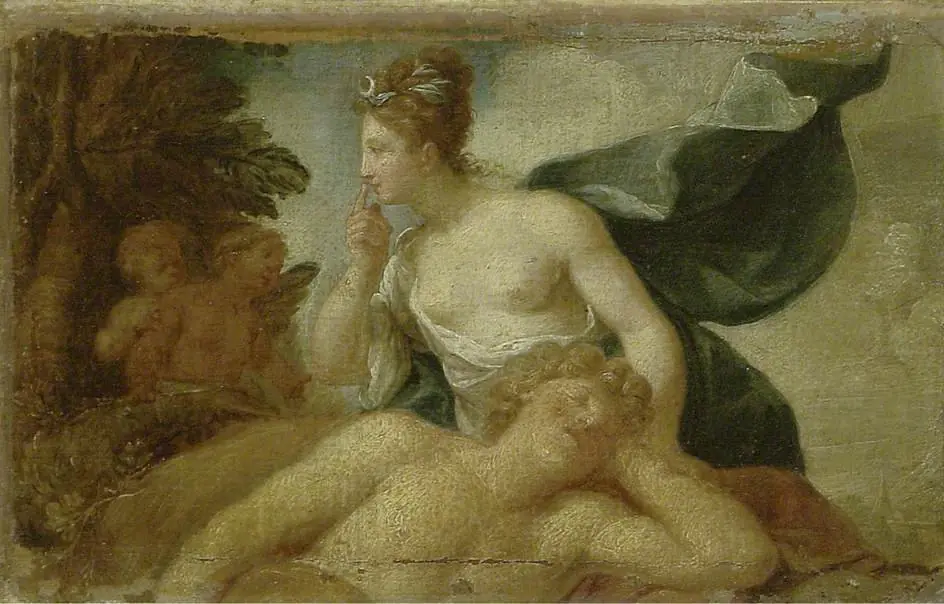
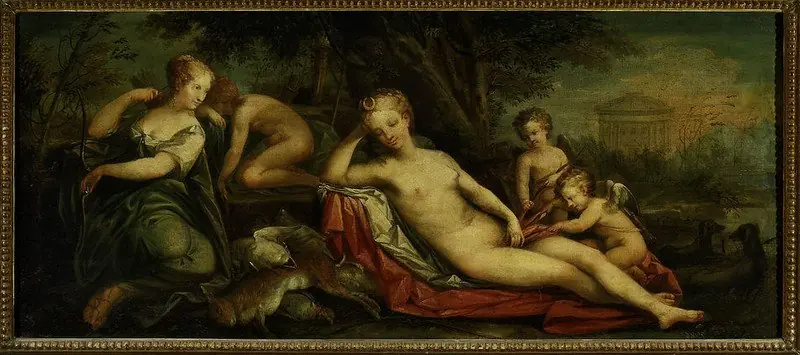
Diana Sleeping, with a Boy and Hounds
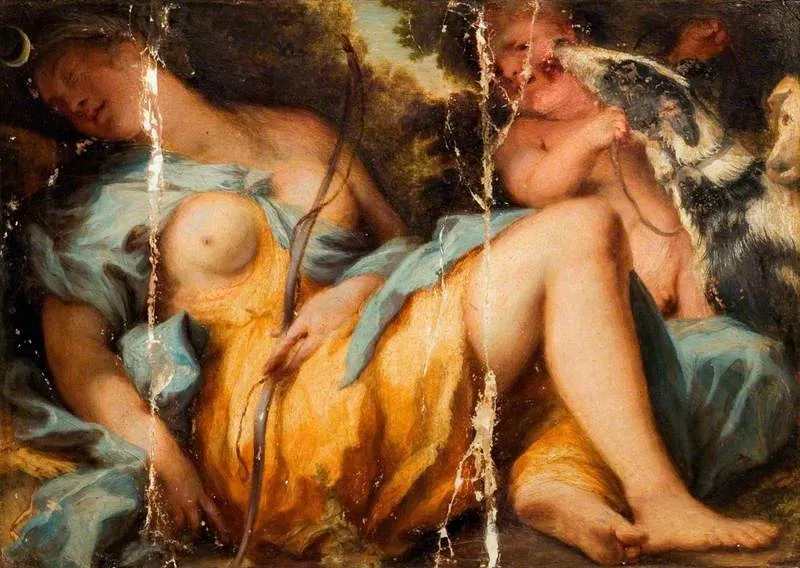
Diana Sleeping, with a Boy and Hounds is an unspecified painting by Alessandro Gherardini. It dates from 1700 and is held in the collection of the Victoria and Albert Museum.
About this work
Overview
Painted around 1700 by Alessandro Gherardini, this work belongs to a series of mythological subjects produced during his Florentine career.
Painted around 1700 by Alessandro Gherardini, this work belongs to a series of mythological subjects produced during his Florentine career. Though primarily known for religious frescoes in monastic settings, Gherardini also engaged with classical narratives, blending them with the quiet intimacy characteristic of late Baroque sensibility. The painting is now part of the Victoria and Albert Museum’s collection, where it represents a lesser-known facet of his output beyond ecclesiastical commissions.
Subject & Meaning
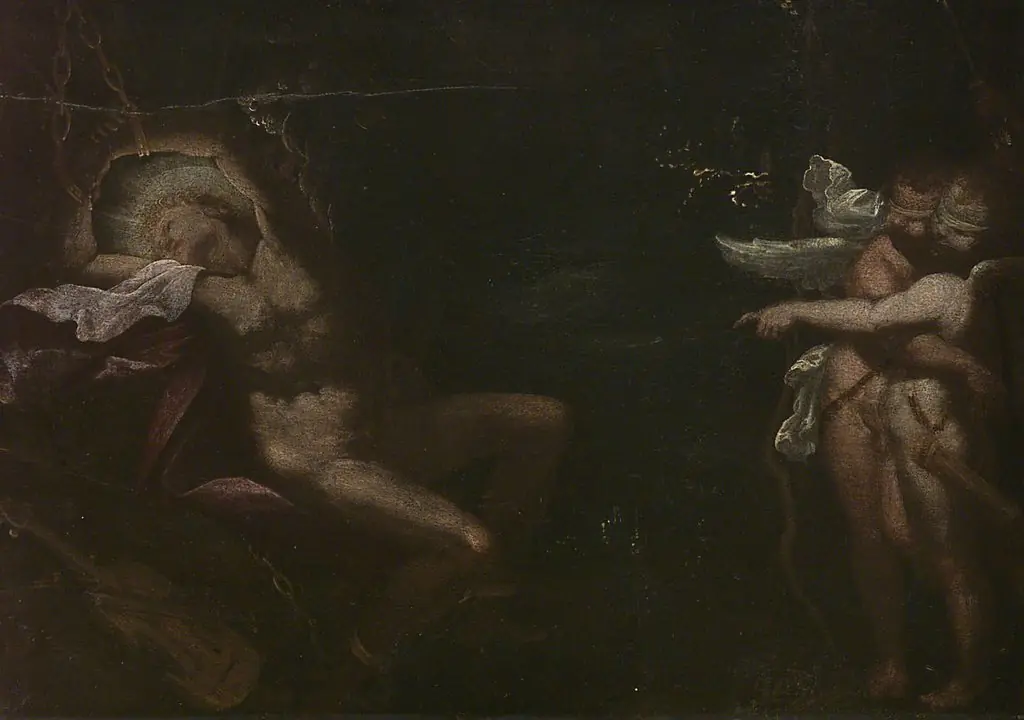
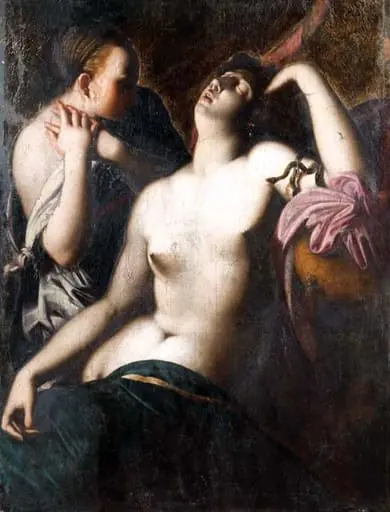
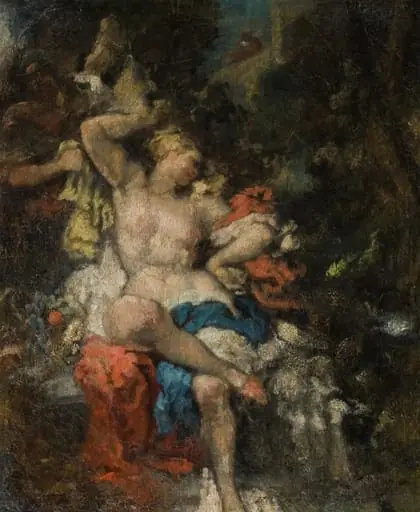
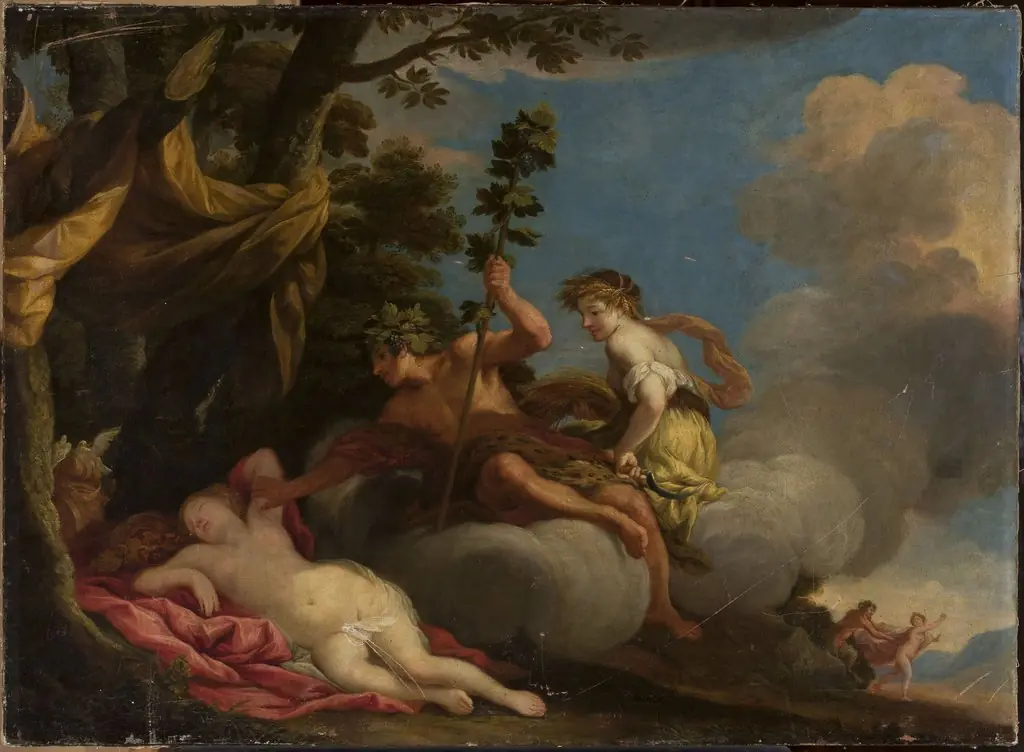
The scene portrays Diana, Roman goddess of the hunt, in a moment of repose, her body relaxed on the earth. A young attendant sits nearby, gently holding the leash of a hound, while other dogs rest around them. The composition suggests a pause in the hunt, emphasizing tranquility over action.
This depiction aligns with Renaissance and Baroque traditions that humanized deities, presenting them not as distant figures but as figures embedded in natural, contemplative moments.
Technique & Style
Gherardini employs soft chiaroscuro to model the figures against a dappled woodland backdrop, creating a sense of atmospheric depth. The flowing drapery of Diana’s robe is rendered with subtle tonal gradations, while the hounds are suggested with loose, attentive brushwork. The palette is restrained, earthy greens, muted golds, and pale flesh tones, enhancing the stillness of the scene.
Compositionally, the figures are arranged in a gentle diagonal, guiding the eye toward the sleeping goddess without overt drama.
History & Provenance
The painting was likely produced during Gherardini’s mature period, after his training under Alessandro Rosi and alongside his work on major Florentine fresco cycles. Its journey to the Victoria and Albert Museum remains undocumented in public records, but its presence there suggests acquisition during the 19th century, when British collectors increasingly sought Italian Baroque works. No early inventories or signatures have been conclusively linked to the piece.
Context
In early 18th-century Tuscany, mythological painting was often commissioned for private collections, serving as a display of classical learning and refined taste. While religious subjects dominated public spaces, mythological themes like Diana’s slumber offered artists room for lyrical interpretation. Gherardini’s treatment reflects a broader trend among Florentine painters to soften the grandeur of High Baroque into more intimate, poetic visions suited to domestic settings.
Legacy
Though Gherardini’s mythological works are less studied than his frescoes, this painting contributes to understanding the range of his practice. It exemplifies how Baroque artists in provincial centers adapted classical themes to suit quieter, more personal aesthetics. The work remains a quiet testament to the persistence of mythological subjects in post-Renaissance Italy, even as their public prominence waned in favor of more secular or domestic genres.
Artist & collection
Artist
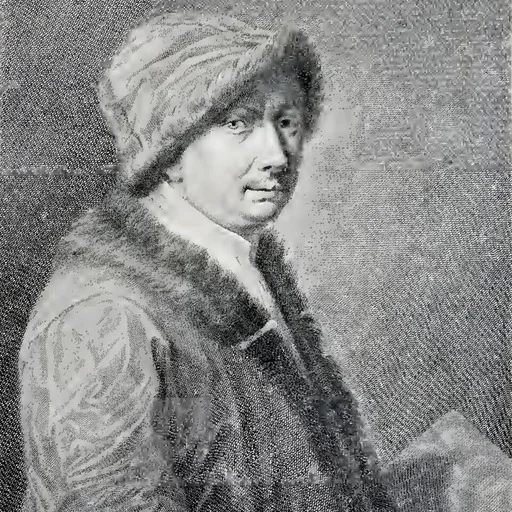
Alessandro Gherardini (16 November 1655 – 1726) was an Italian painter of the Baroque period, active mainly in Florence.