Artwork
Five apostles
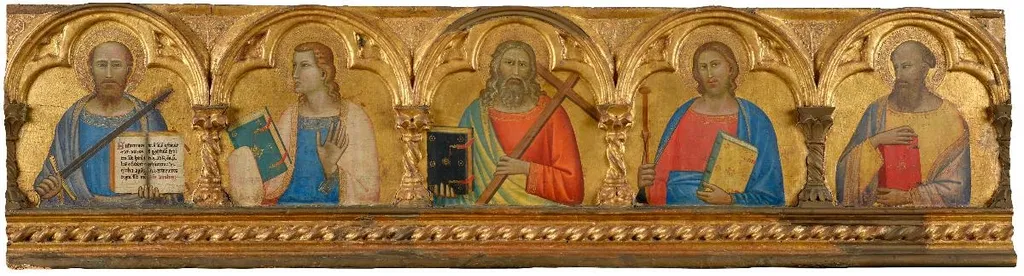
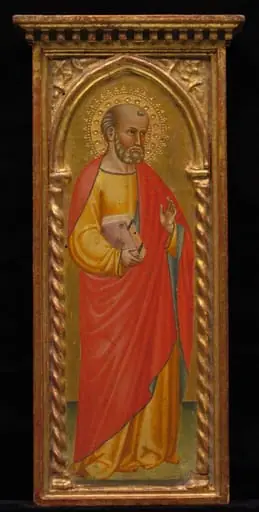
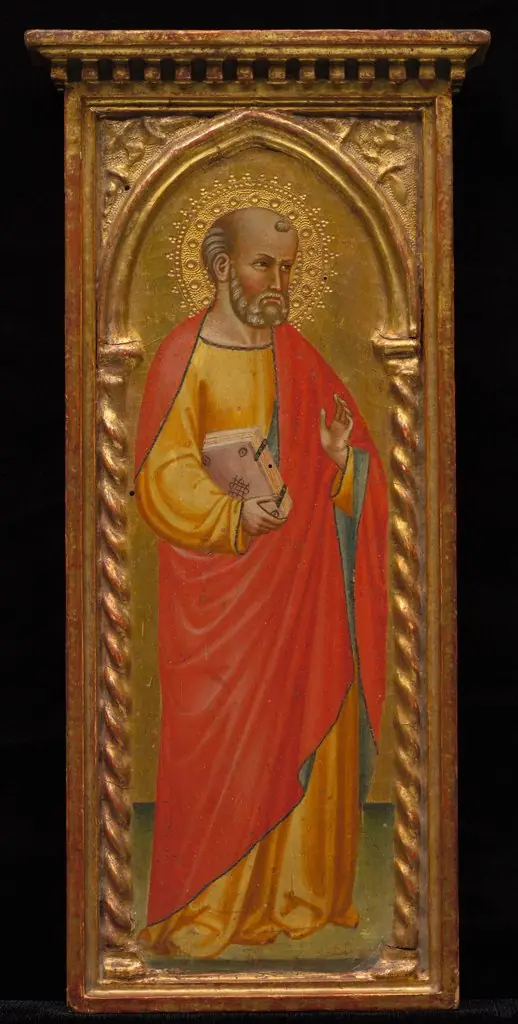
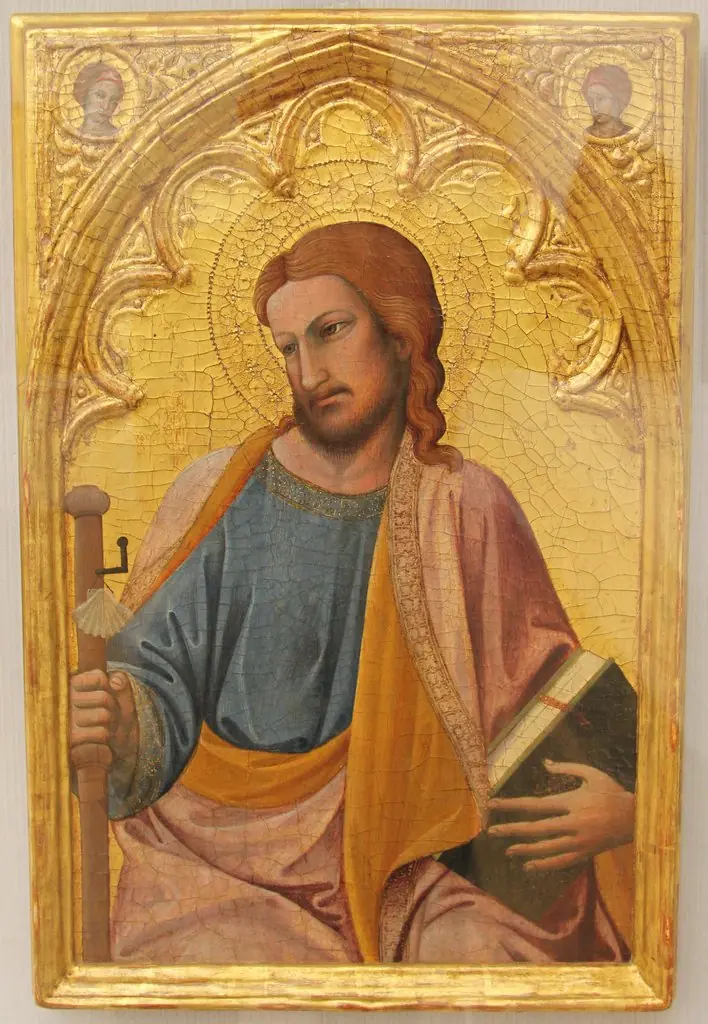
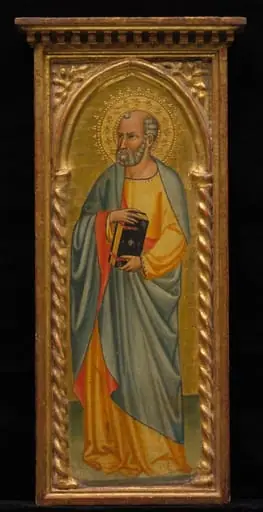
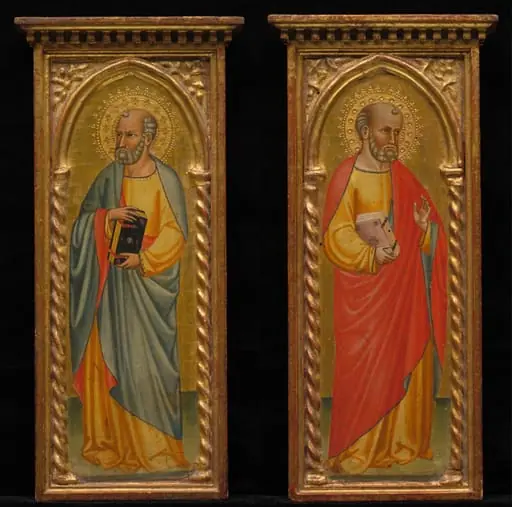
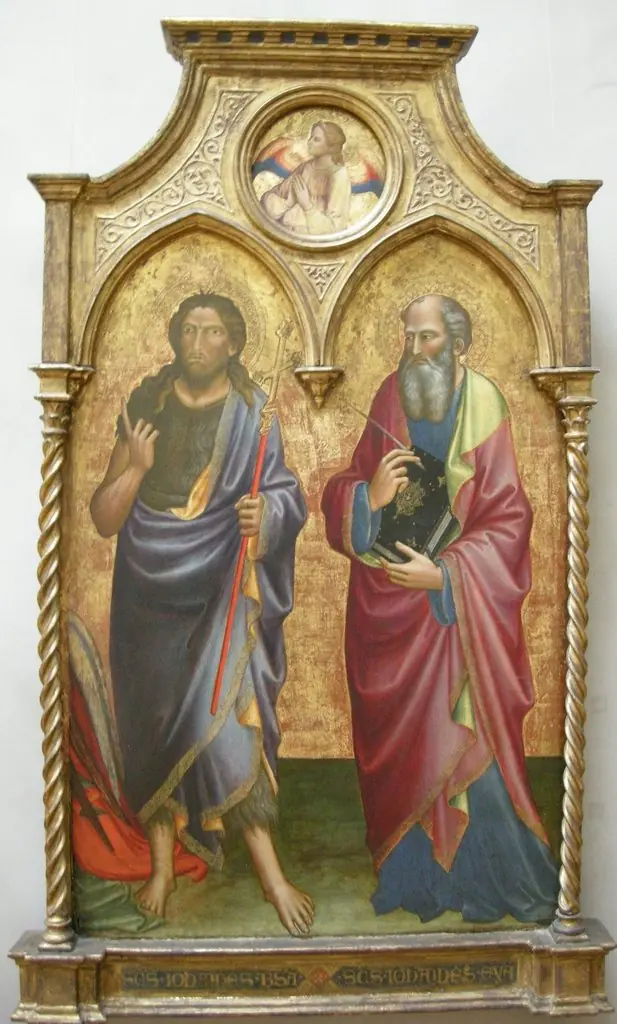
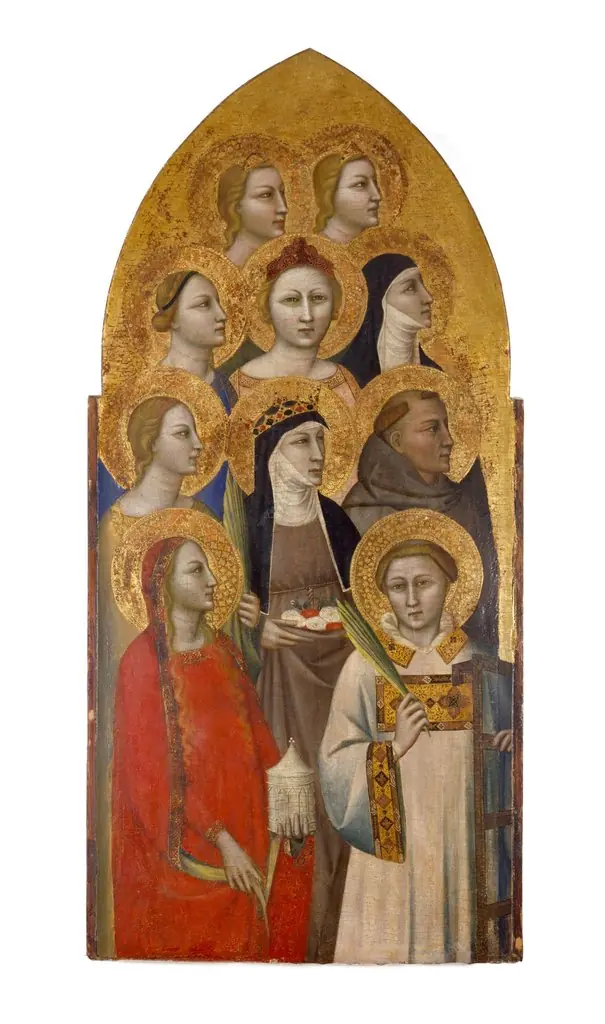
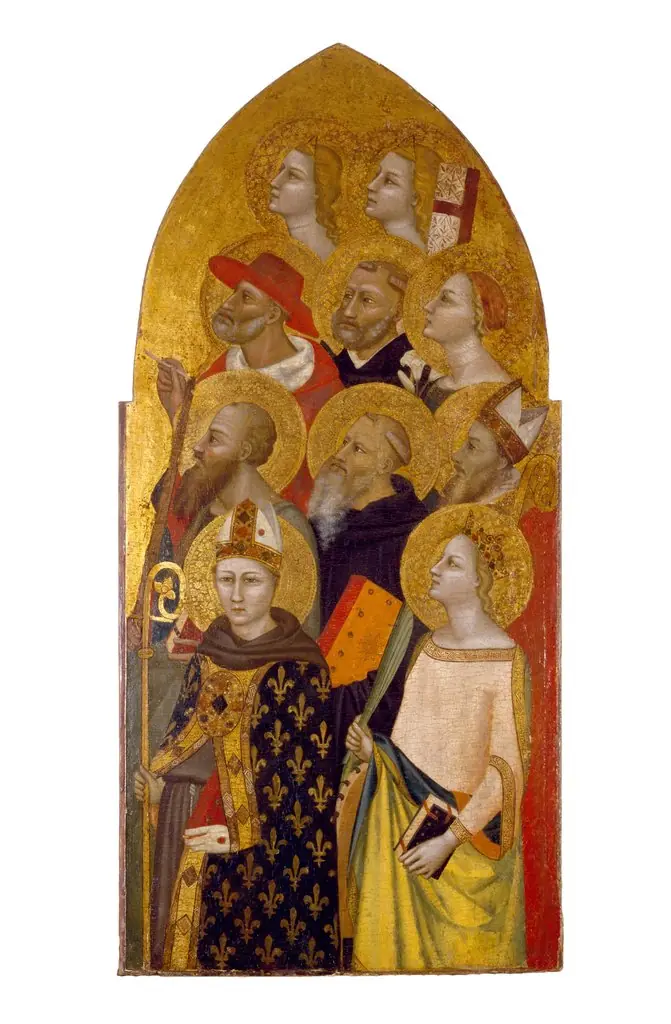
Five apostles is an unspecified painting by the Italo Byzantine artist Allegretto Nuzi. It dates from 1370 and is held in the collection of the Kunsthaus Zürich.
About this work
Overview
Nuzi, active in Fabriano, worked within the Italo-Byzantine tradition, blending devotional formality with emerging naturalism.
Painted in 1370 by Allegretto Nuzi, Five Apostles is a panel work from the late Gothic period in central Italy. Nuzi, active in Fabriano, worked within the Italo-Byzantine tradition, blending devotional formality with emerging naturalism. The painting resides in the collection of Kunsthaus Zürich and exemplifies the transitional phase in medieval religious art, where symbolic representation began to accommodate more individualized features.
Subject & Meaning
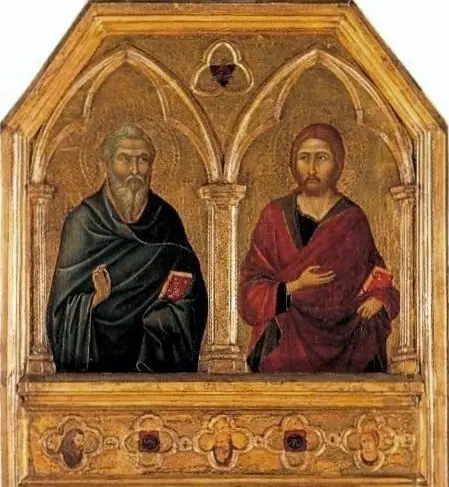
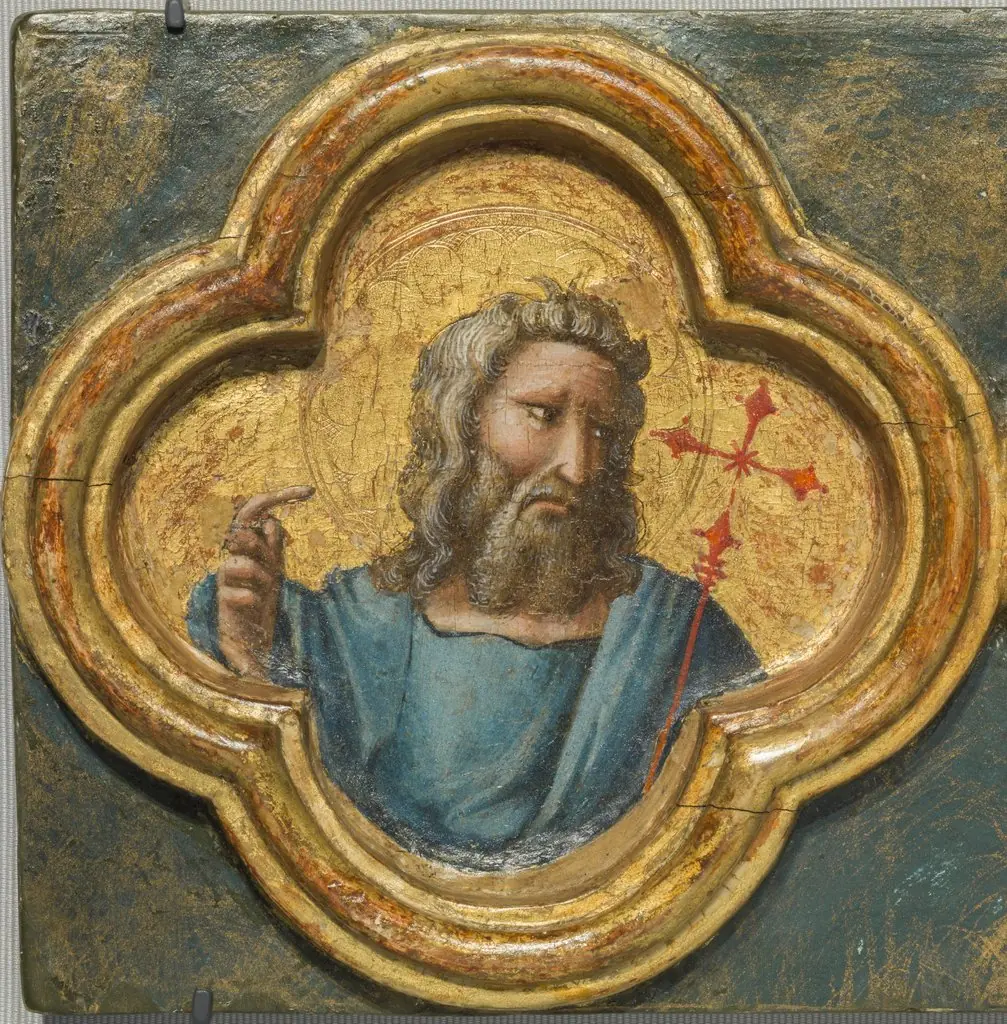
The five figures are identified as apostles, each distinguished by attributes such as books, staffs, or scrolls, signaling their roles in early Christian tradition. Their frontal arrangement and solemn expressions reflect liturgical function, likely intended for private devotion or altar use. The objects they hold serve as visual identifiers, grounding their spiritual authority in tangible symbols familiar to contemporary viewers.
Technique & Style
Rendered in tempera on wood, the figures exhibit careful modeling of faces and drapery, suggesting a move toward observed detail despite the rigid composition. The gold leaf background, decorated with fine tooling, enhances sacredness without narrative distraction. Unlike later Renaissance innovations, the work avoids chiaroscuro or spatial depth, maintaining the hierarchical scale and flatness typical of its era.
History & Provenance
Commissioned during Nuzi’s final years, the painting likely originated in a religious context in the Marche region. It entered the Kunsthaus Zürich collection in the 20th century, though its earlier ownership remains undocumented. Its survival through centuries reflects its durability as a panel painting and its continued value as a representative artifact of 14th-century Italian devotional art.
Context
Nuzi’s work emerged amid a flourishing of regional workshops in central Italy, where Byzantine conventions persisted alongside local innovations. While northern Europe developed more naturalistic trends, Italian painters like Nuzi retained symbolic structure while refining facial expression and textile detail. This painting reflects a broader trend: the slow integration of human presence into sacred imagery without abandoning theological convention.
Legacy
Though not widely known outside specialist circles, Five Apostles contributes to understanding the evolution of Italian religious painting before the full emergence of the Renaissance. Nuzi’s synthesis of stylized form and subtle realism offers insight into how medieval artists balanced spiritual ideals with emerging observational practices, influencing later regional developments in Marche and Umbria.

Artist & collection
Artist
Allegretto Nuzi or Allegretto di Nuzio (1315–1373) was an Italian painter, active in a Gothic style mainly around Fabriano, in the Province of Ancona.

![Saint Andrew and Saint Benedict with the Archangel Gabriel [left panel], by Agnolo Gaddi](https://artifactworldgallery.com/img/agnolo-gaddi--saint-andrew-and-saint-benedict-with-the-archangel-gabriel-l--ddd94720dea7e794-w320.webp)