Artwork
Standing Saint
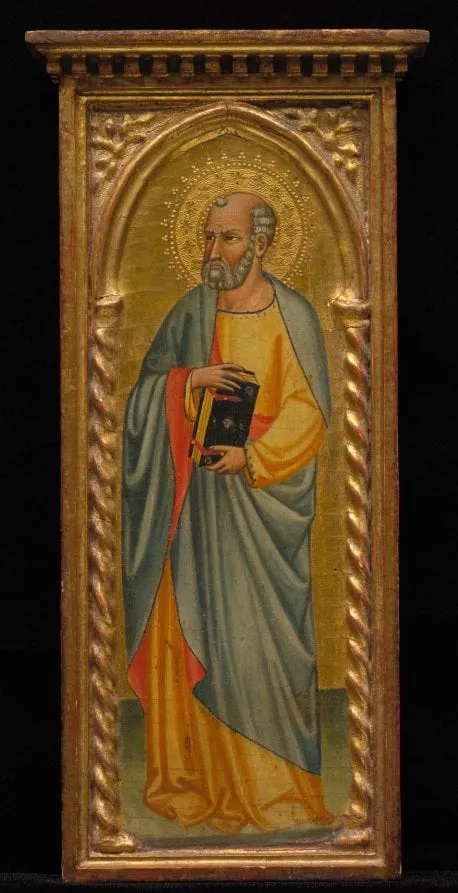
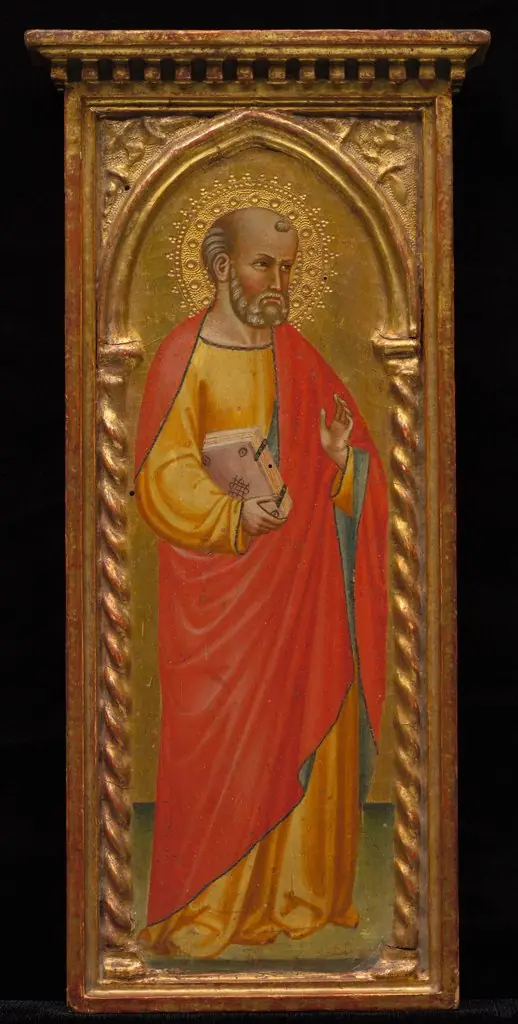
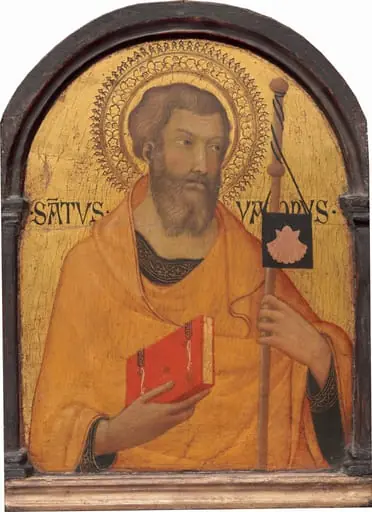
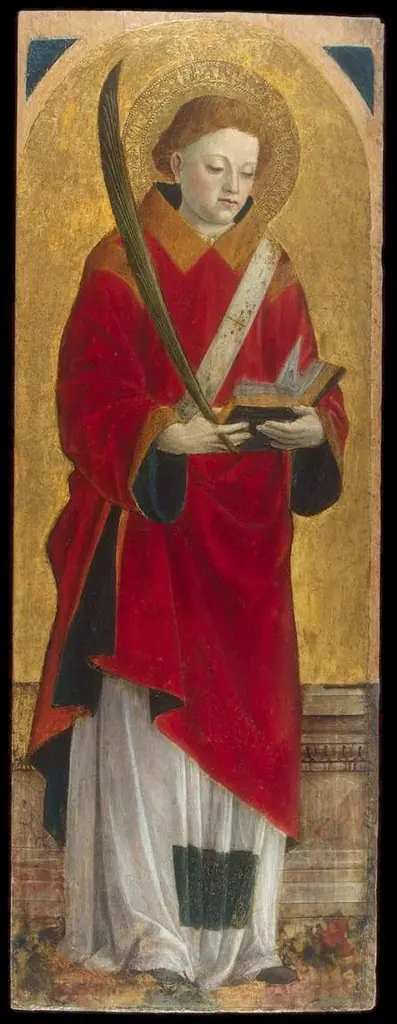
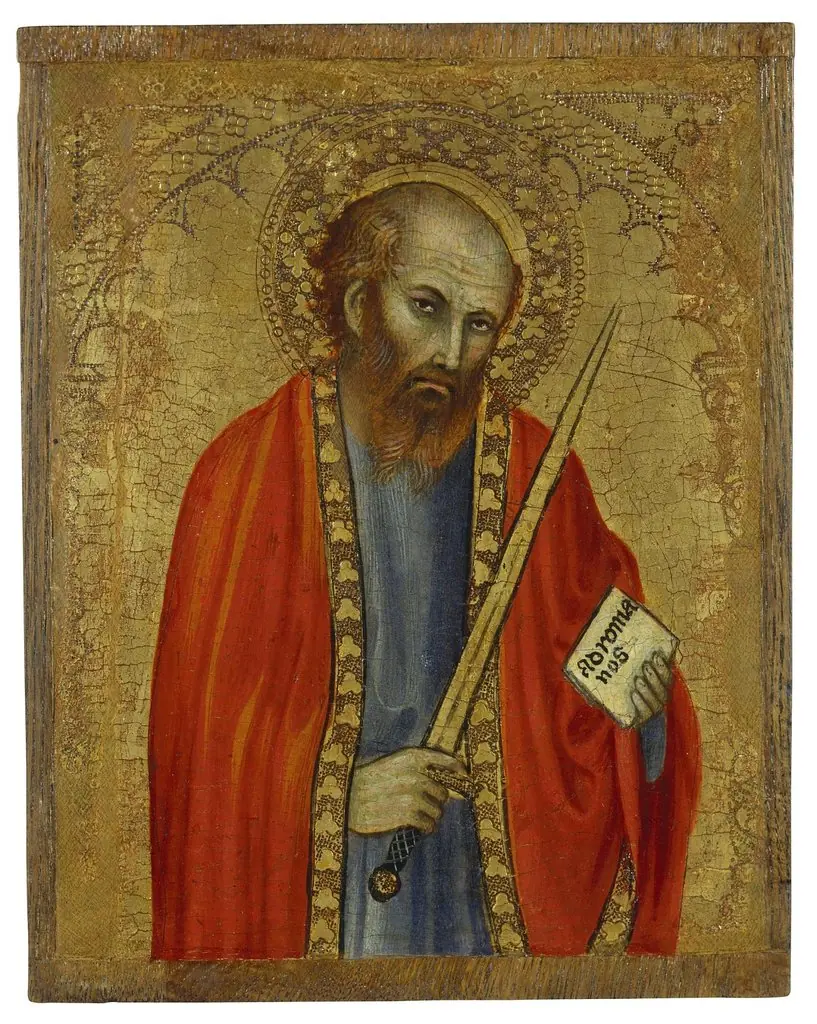
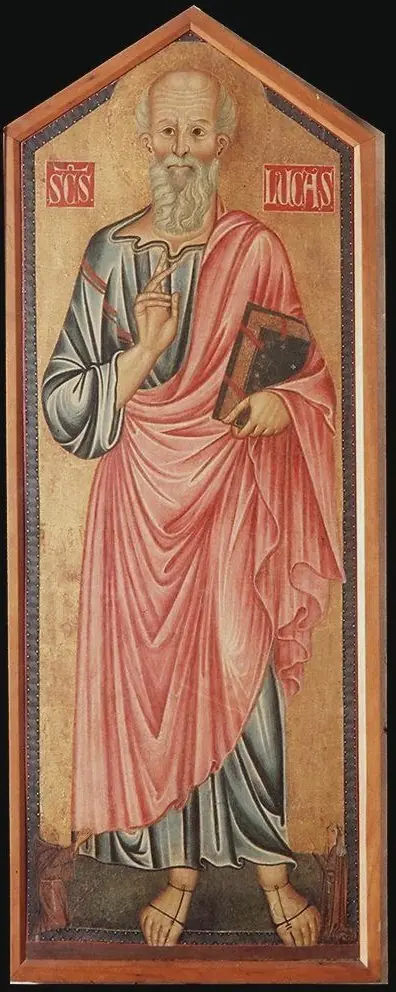
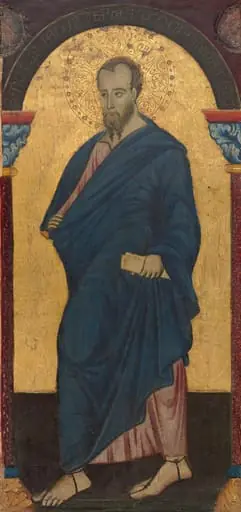
Standing Saint is an unspecified painting by the Impressionist artist Unknown. It dates from 1900 and is held in the collection of the Cleveland Museum of Art. This painting depicts a solitary male saint standing within a pointed arch, set against a flat gold background.
- Accession no.
- 1957.506.1
- Credit line
- The Mary Spedding Milliken Memorial Collection, Gift of William Mathewson Milliken
About this work
Overview
He wears a red sash over a yellow tunic, holds a closed book in his left hand, and bears a dark beard and solemn expression.
This painting depicts a solitary male saint standing within a pointed arch, set against a flat gold background. He wears a red sash over a yellow tunic, holds a closed book in his left hand, and bears a dark beard and solemn expression. A halo encircles his head, signaling sanctity.
The composition is restrained, with minimal modeling and no dramatic lighting, suggesting a deliberate move away from ornate medieval traditions toward a quieter, more direct visual language.
Subject & Meaning
The figure is likely a saint, identified by the halo and book, common symbols of divine wisdom and scriptural authority. The closed book may indicate contemplation or the completion of sacred teaching. His serious demeanor conveys solemnity rather than emotion, aligning with devotional imagery meant for private meditation. The lack of narrative context or accompanying figures focuses attention on the individual’s spiritual presence.
Technique & Style
The painting employs smooth, even brushwork with no visible impasto or chiaroscuro. Colors are muted and flat, applied in uniform layers without texture or depth. The gold background, typical of earlier religious panels, is rendered without ornamentation.
The absence of shadows and spatial recession gives the figure a frontal, almost iconic presence, reflecting a transitional style between medieval iconography and early Renaissance naturalism.
History & Provenance
The work’s origins are undocumented, but its stylistic features suggest it was created in the late 14th or early 15th century, possibly in Northern Europe. The simplified forms and lack of elaborate detail distinguish it from contemporaneous altarpieces. Its preservation in a gilded frame indicates it was once valued, though its modest scale and lack of inscription hint at private rather than public commission.
Context
During this period, religious imagery was shifting from rigid Byzantine models toward more humanized figures. This painting reflects that transition: it retains the gold background and halo of medieval tradition but reduces ornamentation and emotional expression. It may have served as a personal devotional object, contrasting with the grand narratives of church altars, and aligns with growing interest in quiet, individual piety.
Legacy
Though not widely known, this work exemplifies a quiet strand of late medieval painting that prioritized spiritual stillness over spectacle. Its restrained aesthetic anticipates later developments in Northern Renaissance portraiture, where inner character replaced symbolic grandeur. It stands as a modest but significant record of how religious imagery evolved toward intimacy and simplicity before the full emergence of realism.
Artist & collection









![Saint James Major [right panel], by Grifo di Tancredi](https://artifactworldgallery.com/img/grifo-di-tancredi--saint-james-major-right-panel--dc190378c0cddc8f-w320.webp)