Artwork
Jane Cutler Doane
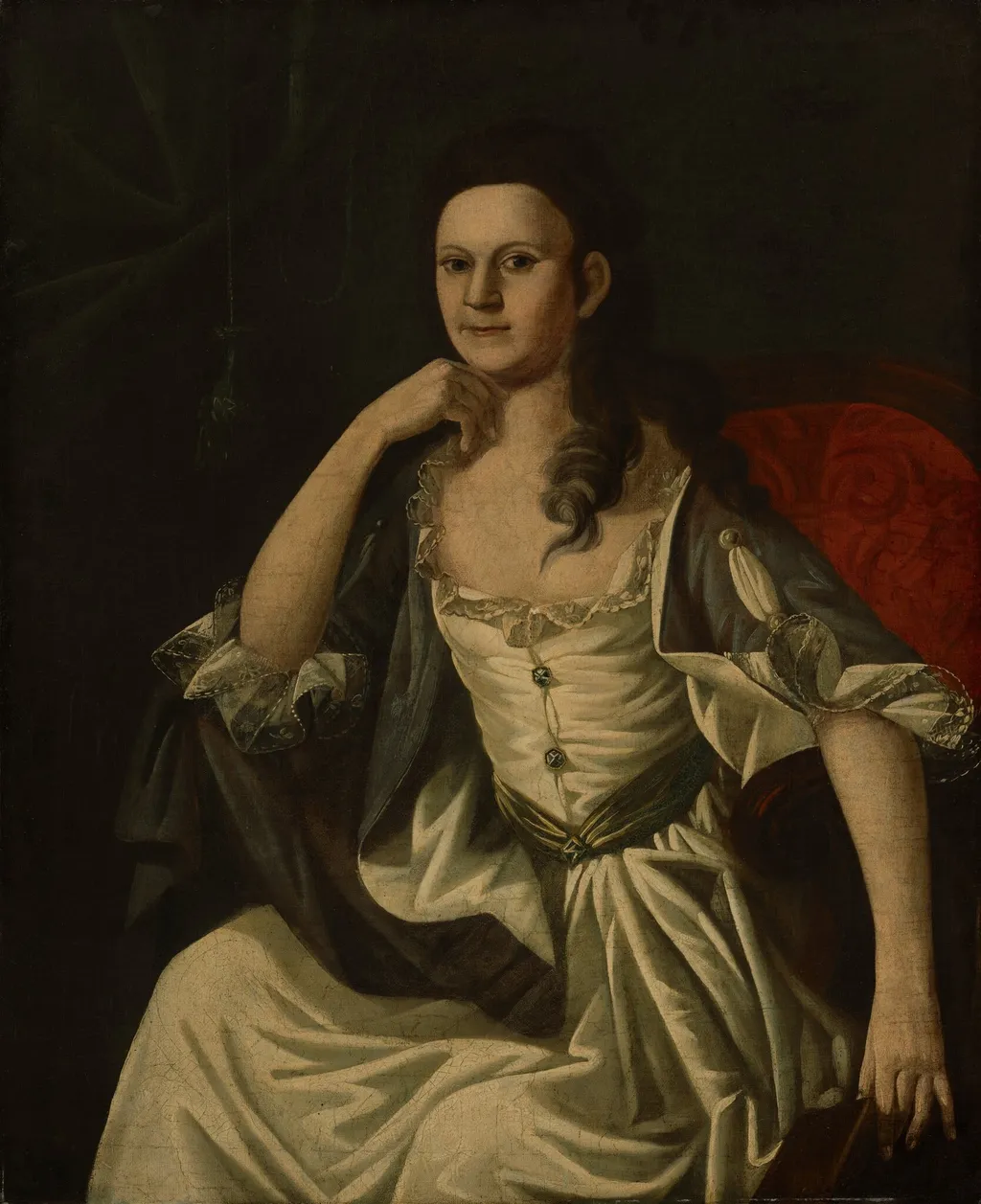
Jane Cutler Doane is an oil painting. It dates from 1783 and is held in the collection of the National Gallery of Art.
About this work
The painting is part of the collection at the National Gallery of Art, Washington.
The painting shows a woman sitting in a chair. She wears a white dress with a blue shawl and has her hand on her chin.
The woman's dress has a low neckline and short sleeves. Her hair is dark and pulled back. The chair has a red back.
The painting is part of the collection at the National Gallery of Art, Washington. If you like this, you might also want to check out works by American 18th Century.
Technique & Style
The work is an oil painting on canvas measuring 102.2 cm in height and 83.5 cm in width, created in 1783. The surface exhibits a relatively smooth application of oil paint with visible brushwork that contributes to a restrained, naturalistic rendering of the sitter. The composition is balanced and formal, reflecting the stylistic conventions of mid-18th-century American portraiture, while the handling of light and coloration maintains a subdued tonal palette consistent with the period's emphasis on realism and clarity.
History & Provenance
The painting Jane Cutler Doane entered the Doane family through the sitter's lineage, passing from her son James Cutler Doane in Cohasset, Massachusetts, to his granddaughter Harriet Doane in Southboro, Massachusetts, before being sold circa 1920 to dealer Dwight Prouty in Boston and subsequently to collectors Brooks Reed and Israel Sack in New York. It was then acquired by dealer James P. Labey, whose name appears on a 1929 sale record at auction in New York, and later entered the Chester Dale collection before being gifted to the National Gallery of Art in 1943. The work was created in 1783 as an oil on canvas portrait, documented through correspondence and auction records that trace its movement from the Doane family to public institutions.
The provenance chain is supported by family correspondence, auction catalogs, and dealer records, including a 1929 sale at James P. Silo and a 1943 gift from Chester Dale. The painting's creation date of 1783 is confirmed by archival documentation and material analysis, consistent with its classification as an 18th-century American work.
The chain of ownership reflects a documented transition from familial possession to the American art market, with multiple dealers facilitating its sale prior to institutional acquisition.
The portrait is held by the National Gallery of Art, Washington, D.C., accessioned as 1943.6.1.
Its provenance traces from James Cutler Doane, the sitter’s son, to his granddaughter Harriet Doane, who sold it around 1920 to Dwight Prouty. It passed through Brooks Reed, Israel Sack, and James P. Labey before being auctioned in New York on 16 February 1929 (lot 334). Chester Dale acquired it and donated it to the National Gallery of Art in 1943.
Context
The work was painted in 1783 by an American artist of the eighteenth century and now resides in the National Gallery of Art in Washington, D.C. Its provenance traces from the sitter's son James Cutler Doane through his granddaughter Harriet Doane to Dwight Prouty, Brooks Reed, Israel Sack, James P. Labey, and finally to Chester Dale before being gifted to the museum in 1943. The painting measures 102.2 cm by 83.5 cm and is executed in oil on canvas.
Overview
Jane Cutler Doane, rendered in oil on canvas, depicts a seated woman in a simple interior. She is dressed in a white gown accented by a blue shawl, her hand supporting her chin in a contemplative pose. The composition includes a red-backed chair and a dark, pulled‑back hairstyle, presenting a quiet, domestic scene characteristic of 19th‑century portraiture.
Subject & Meaning
The figure appears to be a portrait of a young woman, perhaps a member of the Doane family, captured in a moment of repose. The low neckline and short sleeves of her dress, together with the thoughtful gesture, suggest a blend of modesty and personal introspection, inviting viewers to consider the sitter’s inner life within the constraints of her era.
Artist & collection

 Sally Sanford Perit
 Mrs. David Chesebrough
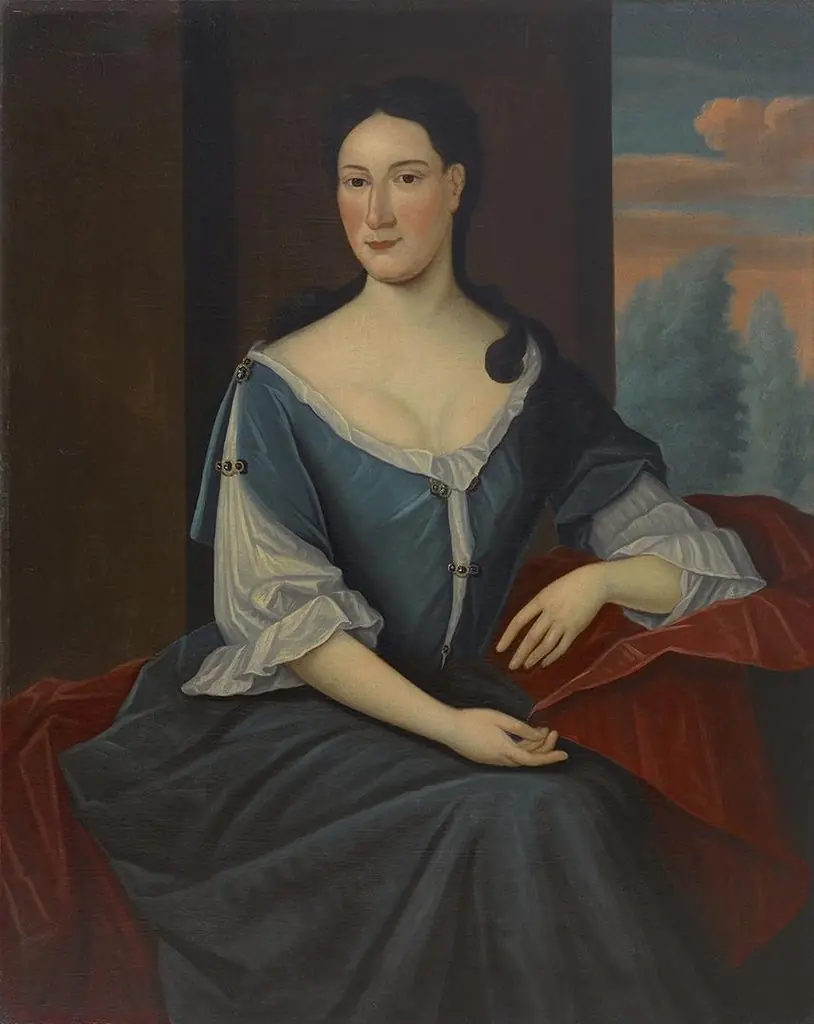 Mrs. Jacob Franks (Abigaill Levy)
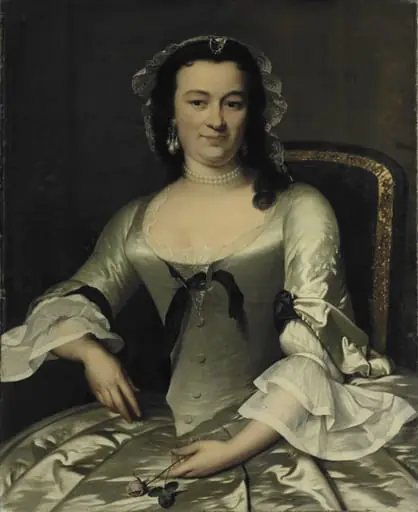 Portrait of Maria Henriëtte van de Pol, Wife of Willem Sautijn
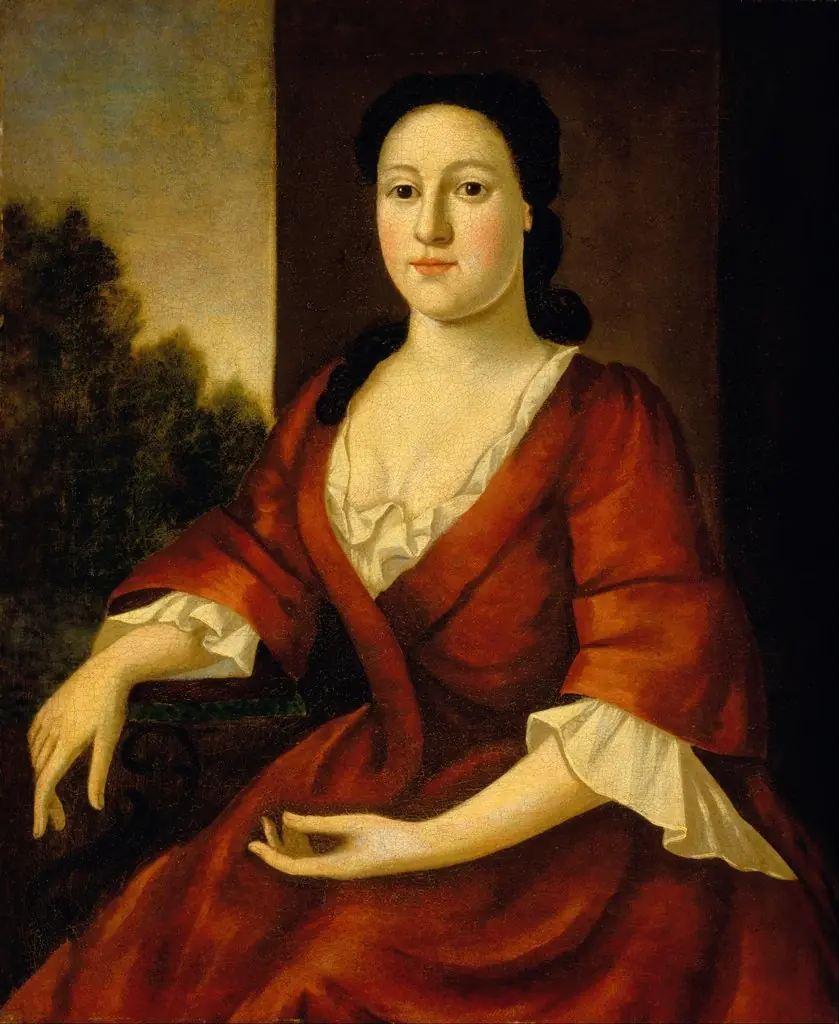 Portrait of Mrs. John Greenleaf (Priscilla Brown, born 1725)
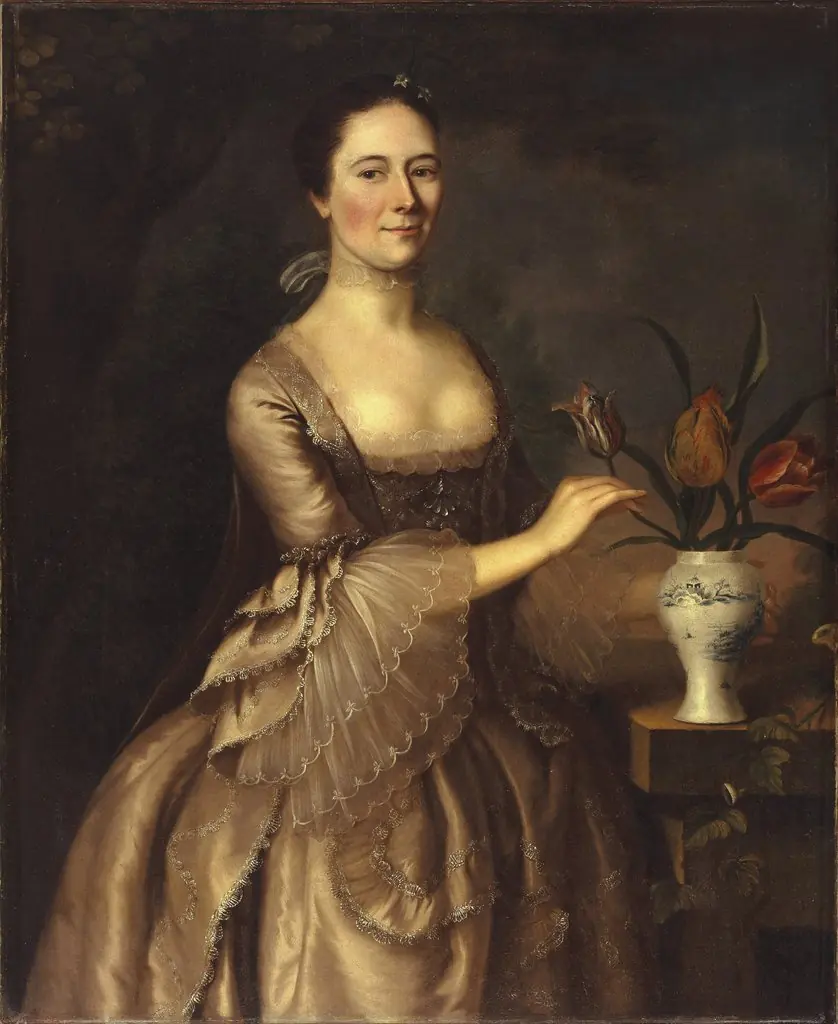 Portrait of a Woman
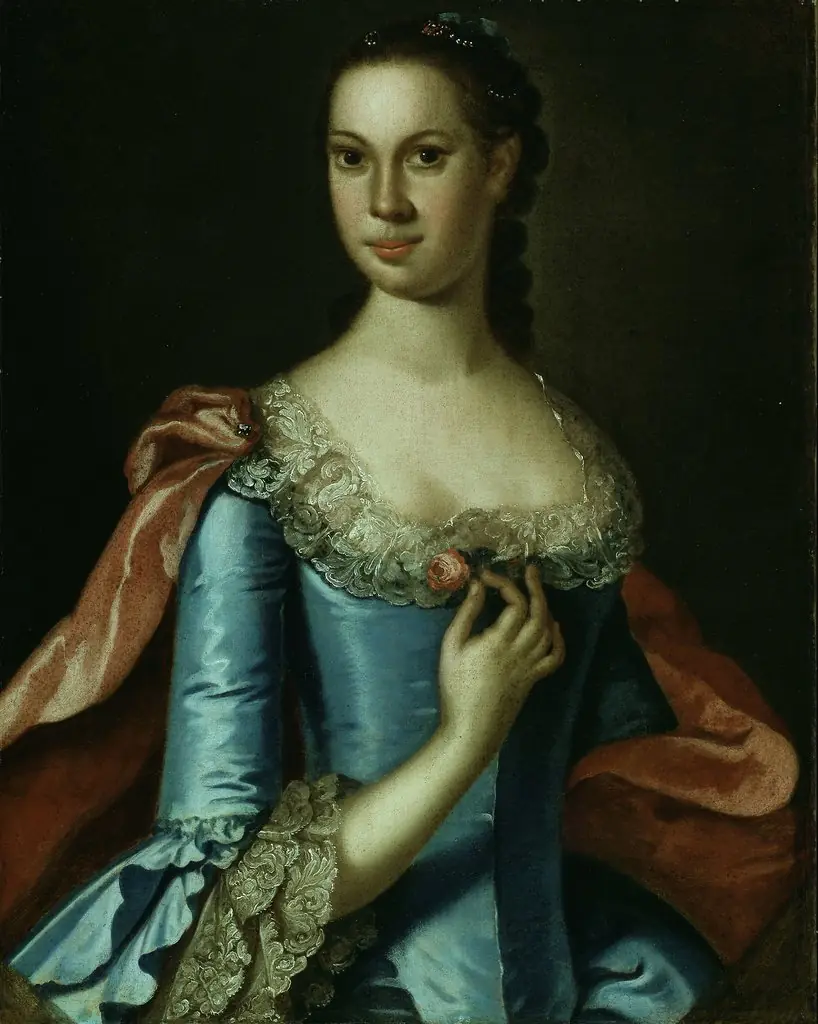 Mrs. William Carmichael
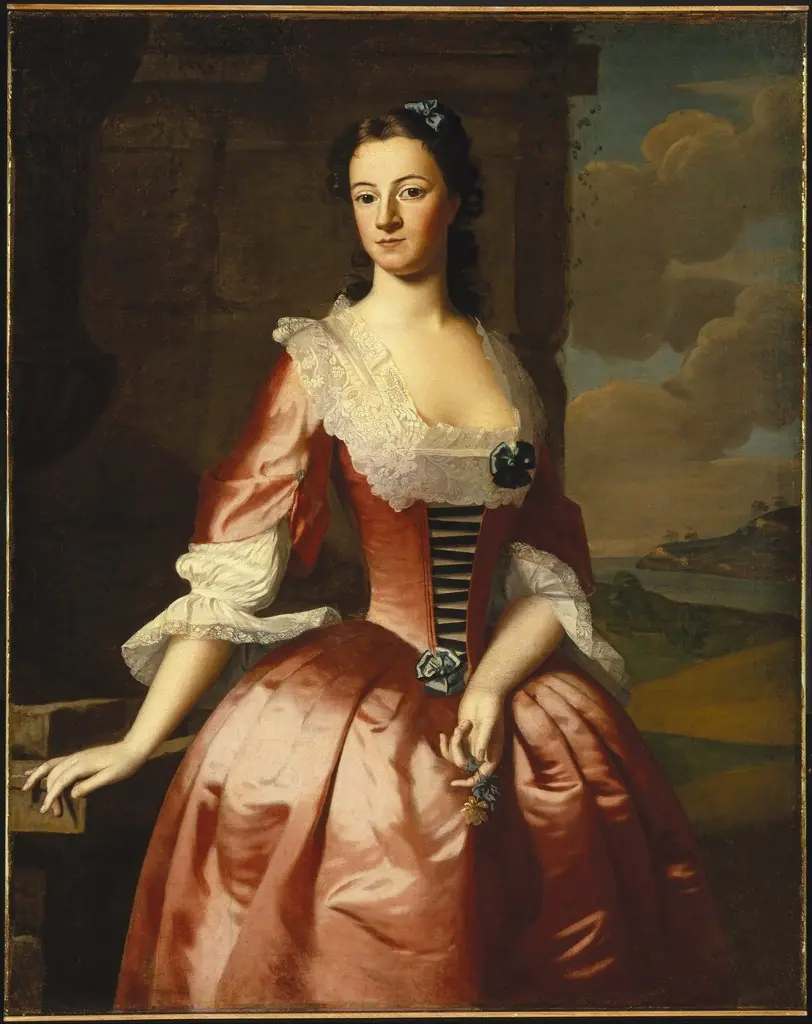 Portrait of a Woman
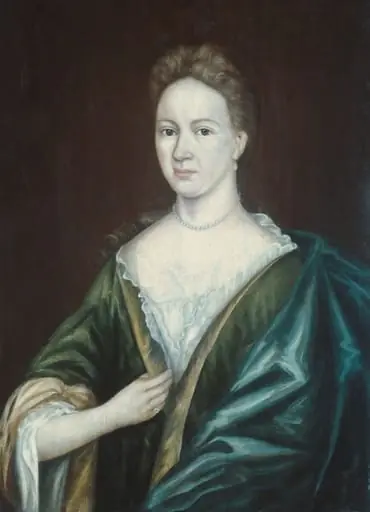 Mrs. Augustus Jay
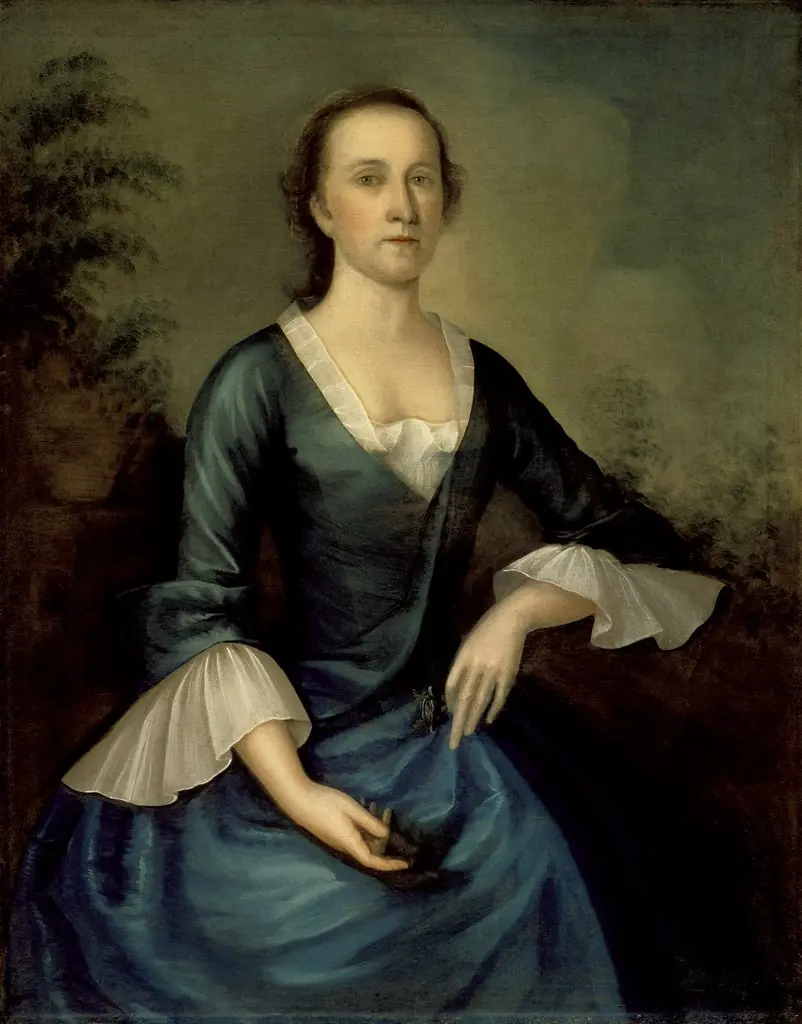 Portrait of Sarah Larrabee Edes