Artwork
Maria
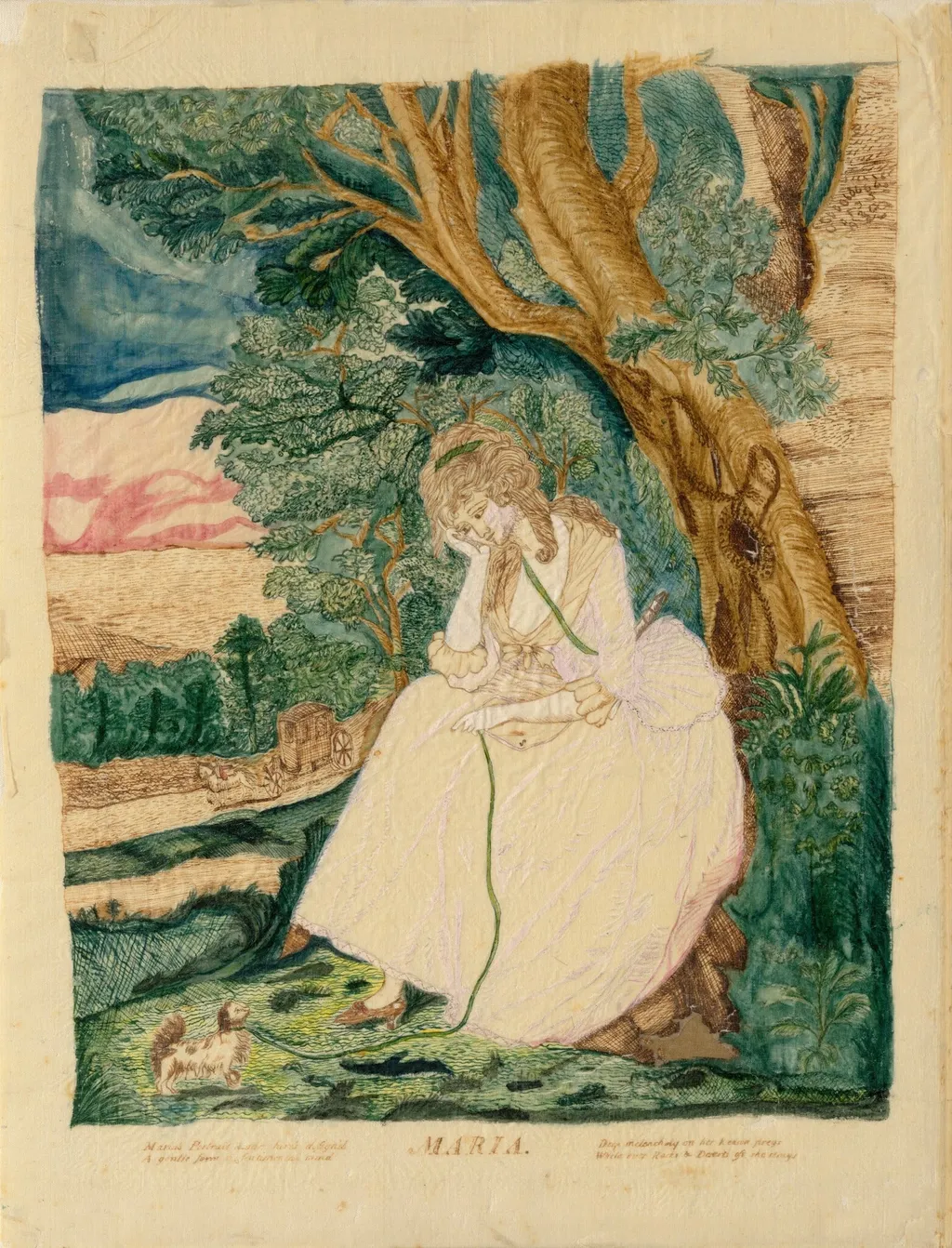
Maria is a watercolor painting. It dates from 1790 and is held in the collection of the National Gallery of Art.
- Inscription
- Inscribed:lower left: Maria's Portrait Reader here's design'd / A gentle form a sentimental mind; lower center: MARIA.; lower right: Deep melancholy on her Reason preys / While over Rocks and Deserts oft she strays
About this work
Technique & Style
The fine, controlled line of the pen outlines the sitter’s features, while the watercolor washes provide delicate modeling of the face and costume.
Executed in watercolor and pen with ink on a silk support, the work dates to 1790 and belongs to an eighteenth-century American tradition of miniature portraiture rendered on fabric.
The fine, controlled line of the pen outlines the sitter’s features, while the watercolor washes provide delicate modeling of the face and costume. The silk support contributes a subtle sheen that complements the refined, intimate character typical of the period’s portrait miniatures.
The palette is restrained, relying on muted flesh tones and subdued costume colors to emphasize the sitter’s presence against the plain background.
History & Provenance
The watercolor portrait titled Maria, executed on silk with pen and ink, is dated to 1790 and attributed to an American artist active in the 18th century. The work was recorded as originating from New York before entering the collection of Edgar William and Bernice Chrysler Garbisch, who purchased it in 1948. In 1953, the Garbishes donated the piece to the National Gallery of Art in Washington, D.C., where it remains part of the permanent collection.
The watercolor painting Maria is held in the collection of the National Gallery of Art in Washington, D.C. The work entered the museum's holdings in 1953 as a gift from Edgar William and Bernice Chrysler Garbisch, who had purchased it five years earlier in 1948. Prior to their acquisition, the piece was recorded as originating from New York. While the artwork dates to 1790, the provided records do not list specific exhibition history or an inventory accession number.
Legacy
The painting Maria by American 18th Century is held in the collection of the National Gallery of Art in Washington, D.C., where it has been part of the institution's holdings since a 1953 gift, establishing its lasting presence in a major public collection. Its inclusion in the National Gallery of Art's collection underscores its significance within the narrative of early American art, contributing to scholarly discussions of the period's artistic output and the development of American visual culture. The work's provenance, tracing from New York to the Garbisch donation and subsequent acquisition by the National Gallery of Art, reflects a documented path that highlights its cultural importance and the role of private collectors in preserving early American works for public access.
The painting's dimensions of 38.4 cm in height and 29.2 cm in width, recorded in the National Gallery of Art's collection data, provide precise physical context for its study and display, reinforcing its material authenticity and historical specificity within the corpus of 18th-century American paintings.
Overview
The work titled Maria is a small-scale painting executed in watercolor, pen, and ink upon silk. It depicts a woman in a white, flowing dress positioned beneath a tree, her hands cradling a book or sheet of paper against her chest while the other hand rests lightly on her head. A winding path, distant dog, and gently rolling hills compose a tranquil, sunset‑tinged landscape in the background.
Subject & Meaning
The central figure appears contemplative, perhaps engaged in reading or study, suggested by the held paper. The serene setting and the figure’s modest posture convey a quiet, introspective moment, emphasizing themes of solitude and gentle domesticity within a natural environment.
Context
Works on silk were popular among certain East Asian artistic traditions, where the smooth fabric allowed for fine brushwork and luminous washes. The combination of watercolor and ink reflects a hybrid approach, merging painterly color with the precision of drawing.
Artist & collection

- Gunakali ragini
 Young Woman Under a Tree
 La umbra copacilor
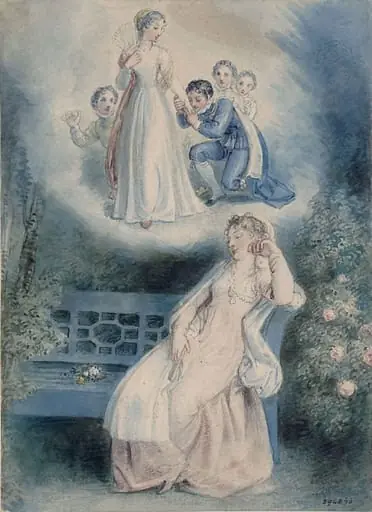 The Lady's Dream
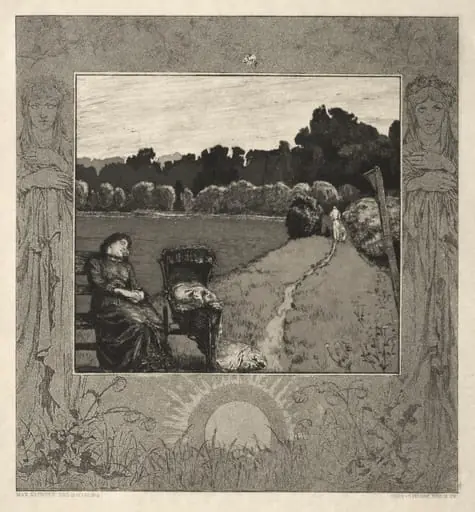 Child, from On Death, Part I, Opus XI (Kind, Vom Tode, Erster Teil, Opus XI)
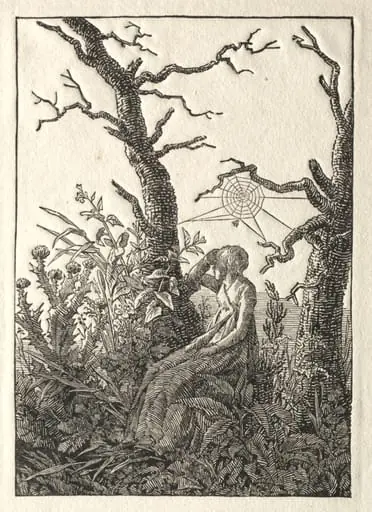 The Woman with the Spider Web between Bare Trees
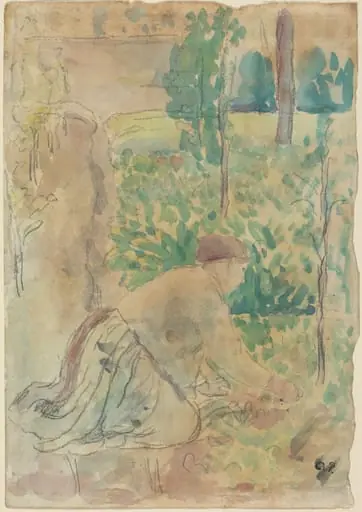 Woman Working in a Garden
 Boys Bathing
 The Watercress Girl
 The Tuileries Garden
![Arearea no Varua Ino (Words of the Devil) [recto], by Paul Gauguin](https://artifactworldgallery.com/img/paul-gauguin--arearea-no-varua-ino-words-of-the-devil-recto--0bfcd29d383e4267-w320.webp) Arearea no Varua Ino (Words of the Devil) [recto]
Arearea no Varua Ino (Words of the Devil) [recto] Obraz haftowany paciorkami szklanymi