Artwork
Mrs. Samuel Chandler
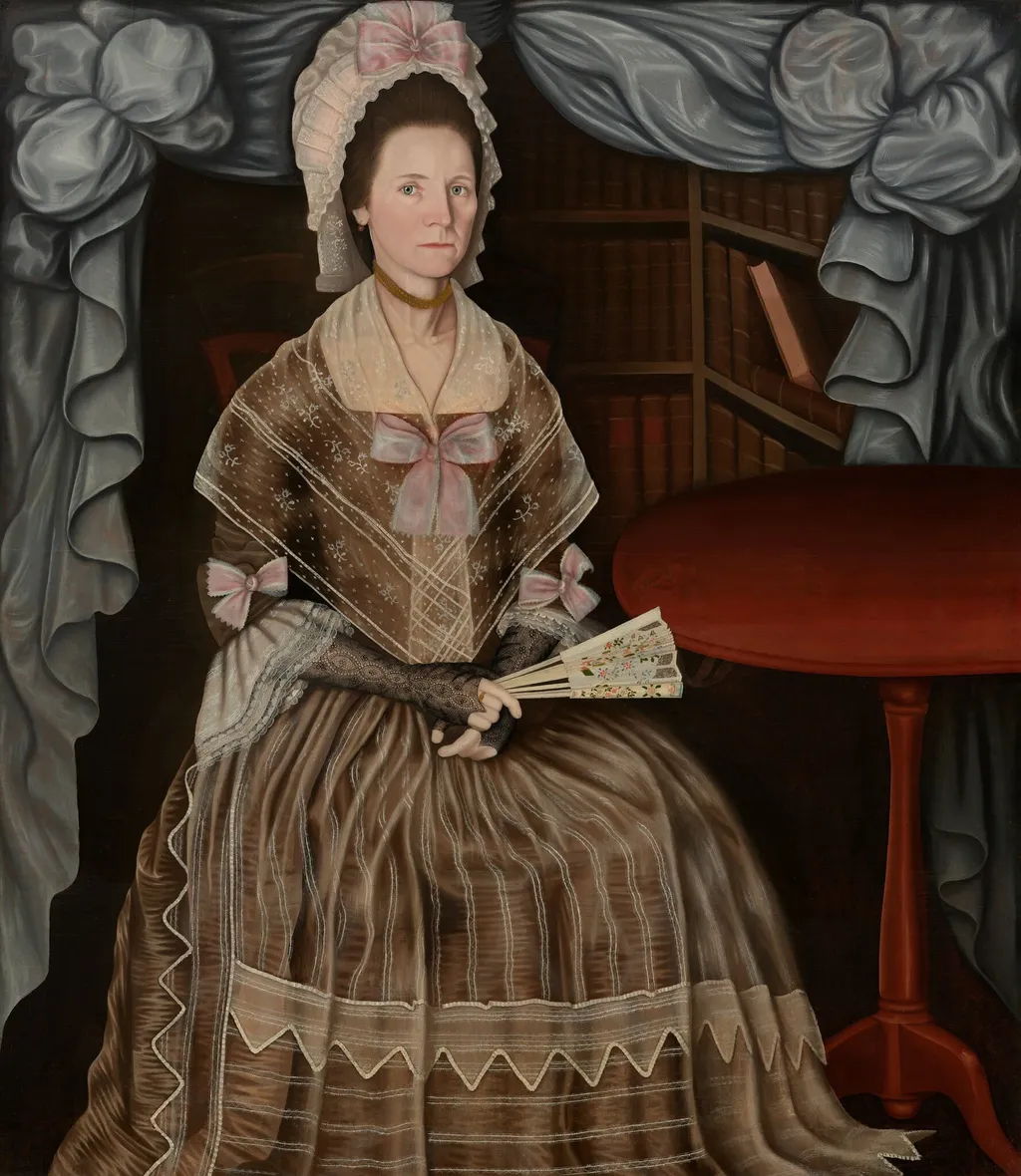
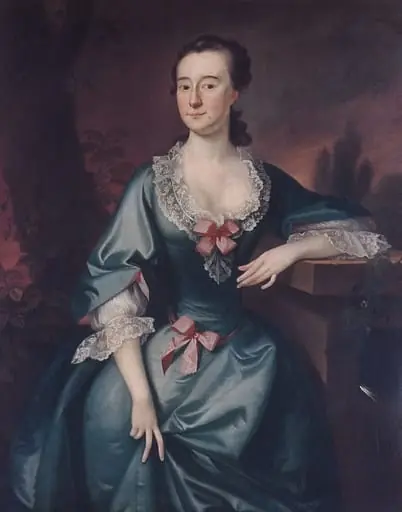
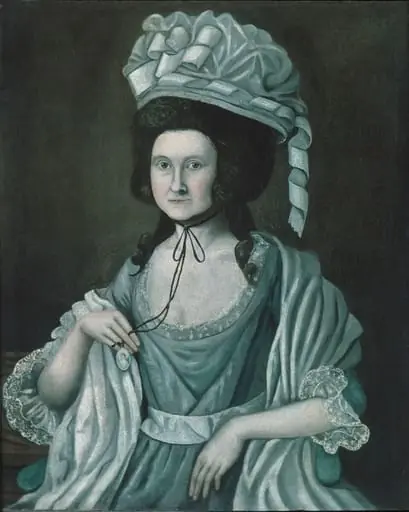
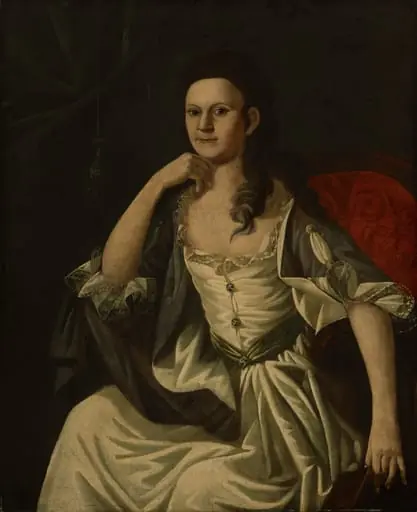
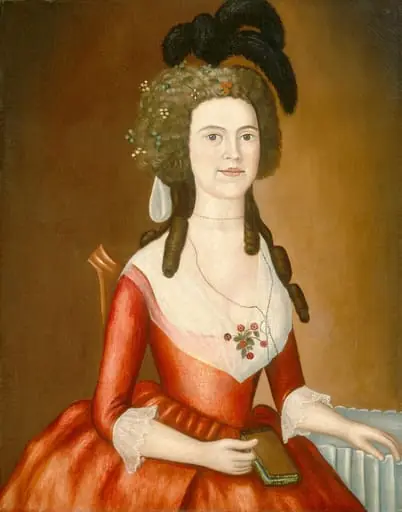
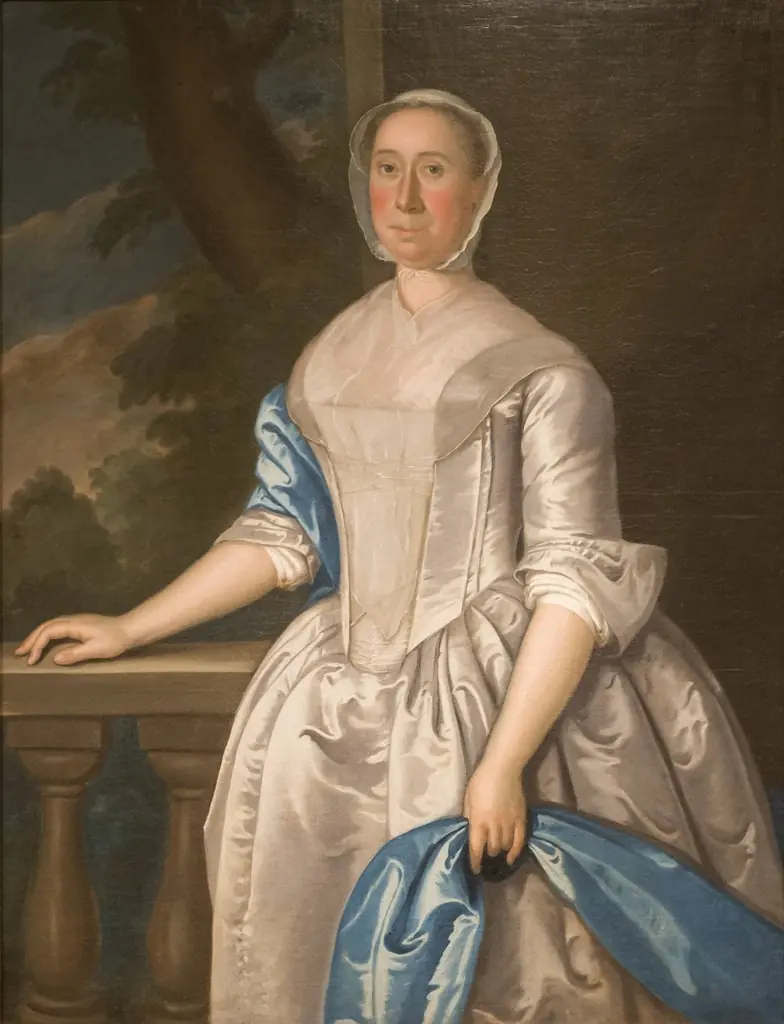
Mrs. Samuel Chandler is an oil painting by the Rococo painting artist Winthrop Chandler. It dates from 1780 and is held in the collection of the National Gallery of Art.
About this work
A woman sits in a chair in old-fashioned dress and a hat, calm and still. Winthrop Chandler noted the details of her gown and accessories and kept the palette simple, which holds the quiet. Oil on canvas, 1780.
Subject & Meaning
According to the catalog entry, the portrait was made to record her likeness and to affirm her role within a distinguished New England lineage.
The work shows Anna Paine Chandler Whitney, the wife of Samuel Chandler, as the central figure. According to the catalog entry, the portrait was made to record her likeness and to affirm her role within a distinguished New England lineage. Its iconography is limited to conventional portraiture, yet the inclusion of familial references in the provenance, such as inheritance through Anna's nephew and subsequent ownership by her descendants, highlights the painting's function as a visual record of inheritance and social standing.
The subject's depiction thus conveys both personal identity and the broader theme of familial continuity within the Chandler-Paine family.
Technique & Style
Winthrop Chandler's Mrs. Samuel Chandler (1780) is executed in oil on canvas, a medium typical of eighteenth-century American portraiture. The support measures 139.1 by 121.7 centimeters, providing a substantial surface for the life-sized depiction of Anna Paine Chandler Whitney. Chandler's handling exhibits a controlled, linear precision, particularly evident in the fine detailing of lace, embroidery, and facial features, reflecting the influence of colonial limners.
Stylistically, the portrait aligns with Chandler's characteristic blend of flat planar modeling and subtle tonal gradations, eschewing dramatic chiaroscuro in favor of a more restrained, decorative approach. As housed in the National Gallery of Art, the work appears stable, though no specific conservation reports are cited in the available sources.
History & Provenance
The portrait of Mrs. Samuel Chandler was painted by Winthrop Chandler in 1780. It depicts Anna Paine Chandler Whitney, wife of Captain Samuel Chandler of Woodstock, Connecticut, where the work was likely created. The painting descended through family inheritance: after Captain Samuel Chandler's death, it passed to his nephew John Paine, then to John Paine Jr., John Merrick Paine, and Dr. Robert Child Paine of Thompson, Connecticut.
Following Dr. Paine's death, his widow and children, Mrs. Prudence Paine Kwiecien, Hamilton Child Paine, and Agnes C. Paine, lent the work to the Worcester Art Museum from 1947 to 1955. It was purchased in 1955 by Edgar William and Bernice Chrysler Garbisch and gifted to the National Gallery of Art in 1964.
The portrait is held at the National Gallery of Art, Washington, D.C., accessioned 1964.1.36 as a gift of Edgar William and Bernice Chrysler Garbisch.
Overview
Winthrop Chandler's oil on canvas portrait, Mrs. Samuel Chandler, dates to approximately 1780. This work exemplifies the artist's practice as an American portraitist during the late 18th century. It depicts Anna Paine Chandler Whitney, a relative of the artist, and showcases the rococo style prevalent in his commissions, which often focused on family members and local figures. The painting offers insight into both the era's fashion and Chandler's artistic approach.
Context
As an American portraitist active in the late 18th century, Winthrop Chandler frequently depicted individuals from his own family and local community. While also engaged in ornamental painting, his primary output consisted of portraits like this one. Mrs. Samuel Chandler is characteristic of his work, illustrating his consistent focus on capturing the likenesses of those within his immediate sphere, often in a rococo manner.
Own this work as a print
Artist & collection

Artist
Winthrop Chandler (April 6, 1747 – July 29, 1790) was an American artist known for his portraits, mainly of family members and neighbors, and a few landscapes. He also worked as an ornamental artist.