Artwork
Miss Van Alen
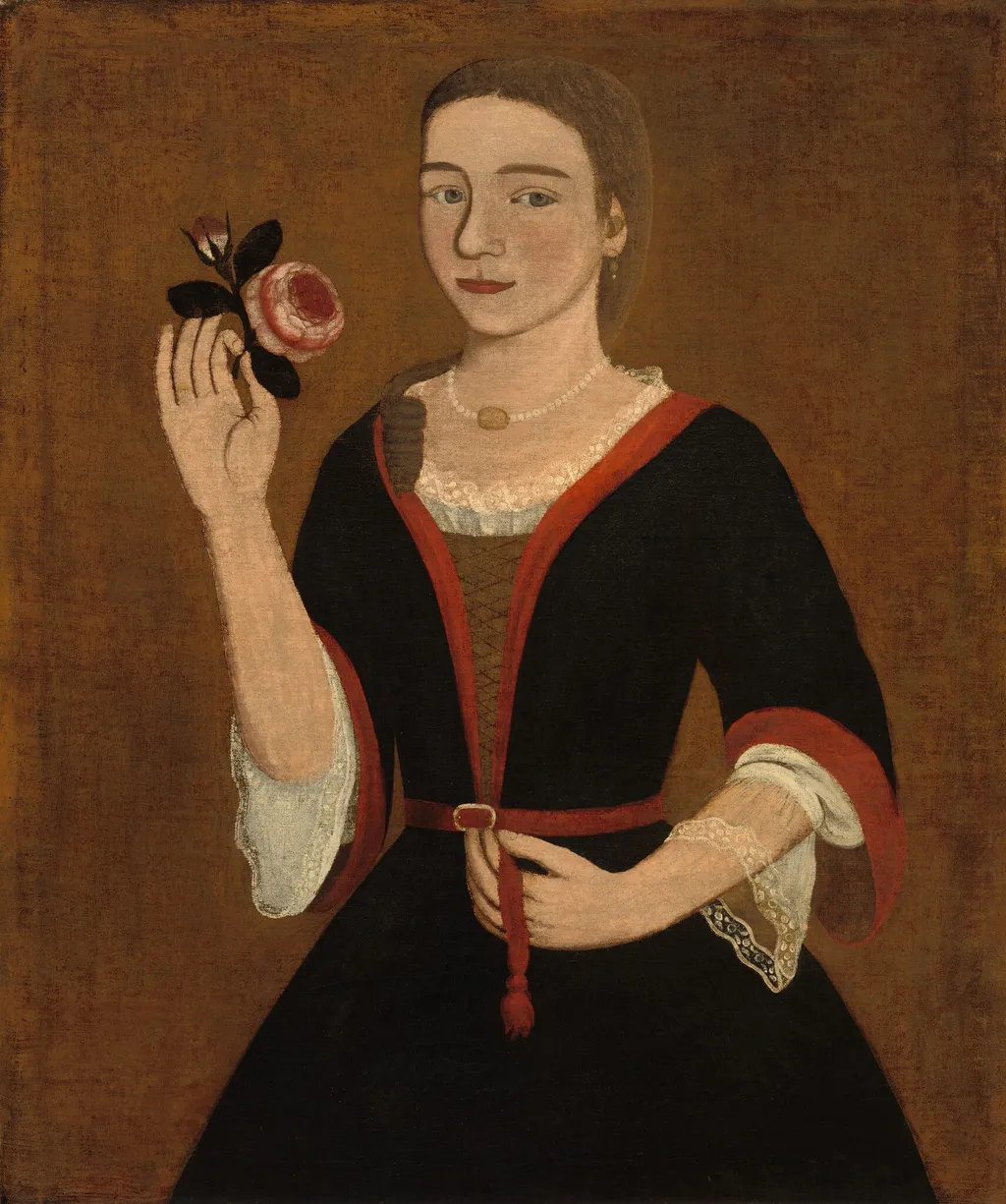
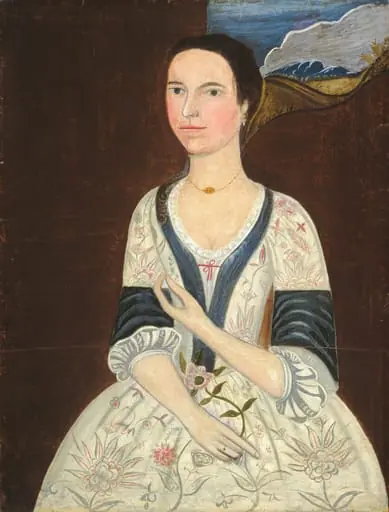
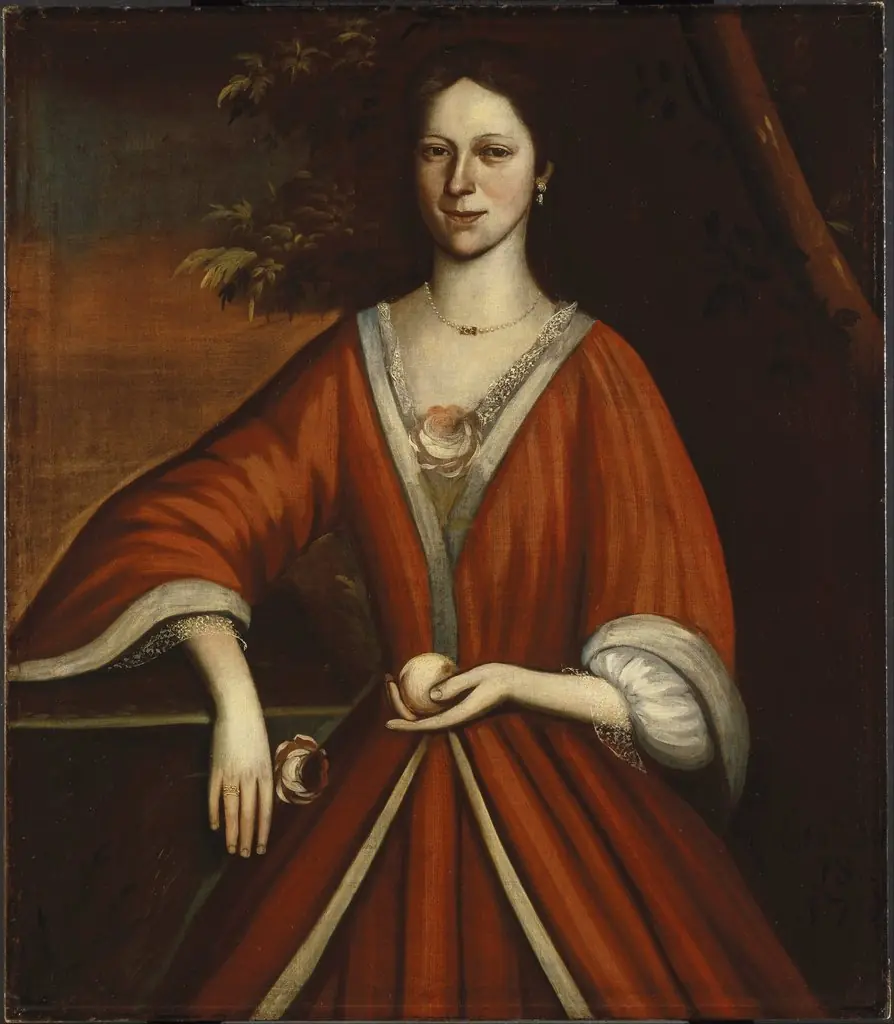
Miss Van Alen is an oil painting by the Baroque artist The Gansevoort Limner. It dates from 1735 and is held in the collection of the National Gallery of Art.
About this work
Technique & Style
No specific information regarding the painting's current condition, handling history, or detailed stylistic analysis is provided in the available sources.
Miss Van Alen is executed in oil on canvas, a standard support for early eighteenth-century American portraiture. The painting measures 79.2 by 66.4 centimeters, an intimate scale suited to private domestic display. Its attribution to the anonymous Gansevoort Limner places it within a small body of limner-style portraits produced in the Hudson Valley region, characterized by simplified modeling and a direct, frontal presentation of the sitter.
The work is classified as a portrait painting and is held in the collection of the National Gallery of Art in Washington, D.C.
No specific information regarding the painting's current condition, handling history, or detailed stylistic analysis is provided in the available sources.
History & Provenance
The portrait Miss Van Alen by the Gansevoort Limner was painted in 1735.
Its early provenance traces to Kinderhook, New York, where it was recorded as belonging to the Van Alen family. Edith Gregor Halpert of the Downtown Gallery acquired the work and sold it in 1947 to collectors Edgar William and Bernice Chrysler Garbisch. In 1956, the Garbischs donated the painting to the National Gallery of Art, Washington, D.C.
The painting has been held by the National Gallery of Art in Washington, D.C., since 1956, having been gifted to the institution by Edgar William and Bernice Chrysler Garbisch. Prior to this acquisition, the work was owned by the Garbisches following its purchase in 1947 from Edith Gregor Halpert of The Downtown Gallery, who had possessed it from 1932. Early records indicate the portrait was discovered in Kinderhook, New York, though gallery archives suggest it may have been purchased in Ridgefield, Connecticut.
The work was included in the 1933 exhibition American Ancestors organized by The Downtown Gallery.
Context
The portrait Miss Van Alen, painted in 1735 by the itinerant artist known as the Gansevoort Limner, exemplifies early American portraiture that blends colonial subjectivity with European compositional strategies derived from Pieter Vanderlyn. Its early ownership in Kinderhook, New York, and later acquisition through Edith Halpert’s Downtown Gallery illustrate the 20th‑century rediscovery of regional folk art and the role of dealers in shaping aesthetic narratives. Scholarship on the work often situates it within the broader transatlantic exchange that defined colonial visual culture, emphasizing the artist’s role as a bridge between European-trained technique and American provincial identity.
The painting’s presence in the National Gallery of Art’s collection since 1956 underscores its accepted significance in the historiography of early American portraiture.
Overview
This oil on canvas painting, titled Miss Van Alen, was created around 1735 by the artist known as The Gansevoort Limner. It presents a formal portrait of a woman, rendered with a quiet dignity that reflects the artistic conventions of its period. The work exemplifies the portraiture style prevalent in colonial America during the early 18th century, capturing the subject's refined demeanor through careful attention to her dress and expression.
Subject & Meaning
The sitter, identified as Miss Van Alen, is depicted in a dark gown accented with red trim, a white lace collar, and matching cuffs. A pearl necklace adorns her neck, and a brown belt cinches her waist. She holds a single rose in her right hand, a detail that adds a subtle symbolic element to her composed posture.
Her dark hair is neatly pulled back, and a gentle smile plays on her lips, conveying an impression of quiet elegance and refined character.
Own this work as a print
Artist & collection