Artwork
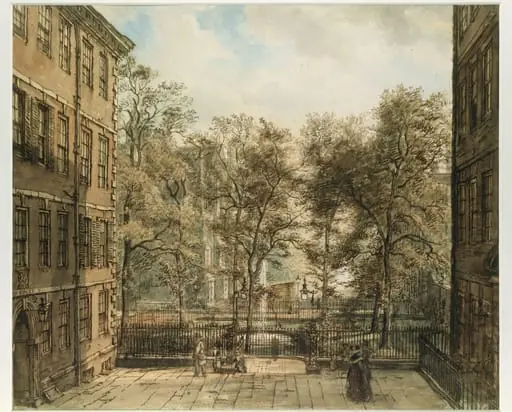
A View from an East Window in the Old Sugar House, No.3 Norris' Alley, Philadelphia
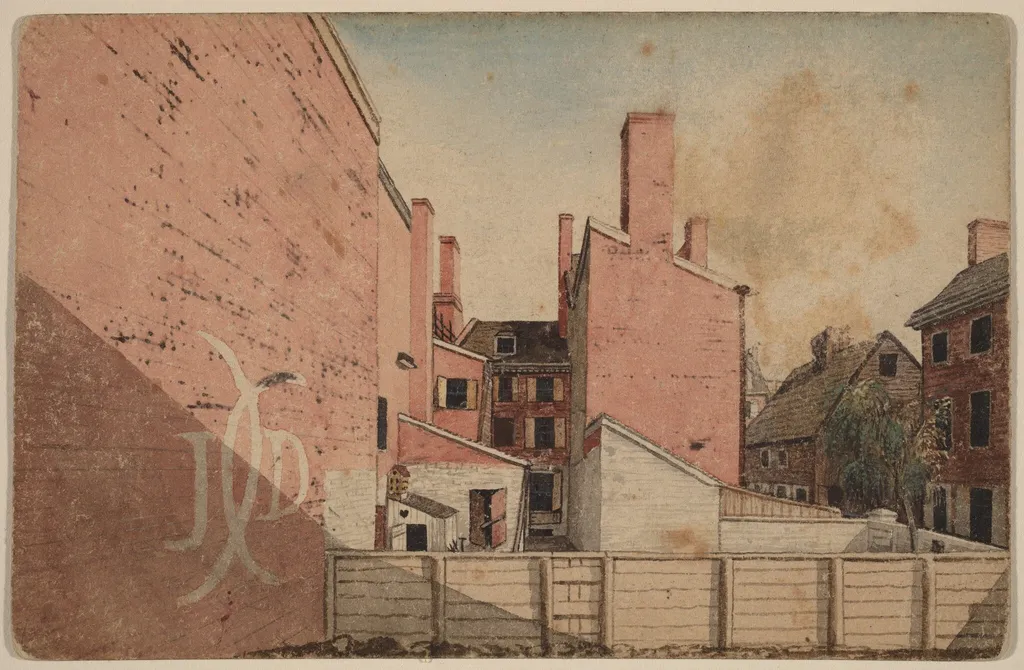
A View from an East Window in the Old Sugar House, No.3 Norris' Alley, Philadelphia is an ink drawing by the Romanticist artist American 19th Century. It dates from 1811 and is held in the collection of the National Gallery of Art. The drawing, titled A View from an East Window in the Old Sugar House, No.
- Inscription
- Inscribed:lower right on wall: JD; upper center verso in brown ink: No.5. / A View from an East Window in the old Sugar House No3.Norris's Alley / Philadelphia.; lower right verso in brown ink: April.1811.; uRv//in graphite: [T6?] 7120.2; lCv//in graphite: From 68 S. Front to 87 Second-1811 /
About this work
Overview
The composition captures the texture of weathered walls, uneven rooftops, and a low wooden fence, while a few trees intrude from the right side.
The drawing, titled A View from an East Window in the Old Sugar House, No.3 Norris' Alley, Philadelphia, presents a narrow urban passage framed by aging brick structures. The composition captures the texture of weathered walls, uneven rooftops, and a low wooden fence, while a few trees intrude from the right side. A muted sky hovers above, rendered in soft pinks, browns, and grays that convey the scene’s subdued atmosphere.
Subject & Meaning
The work records a specific Philadelphia locale, Norris' Alley, situated behind the historic Old Sugar House. By focusing on the alley’s cramped dimensions and the patina of its buildings, the artist emphasizes the everyday urban environment of the period, highlighting the interplay between built forms and modest natural elements such as the bordering trees.
Technique & Style
Executed with pen and ink complemented by watercolor washes on paperboard, the drawing employs thin, layered glazes to build tonal depth. Rather than relying solely on line, the artist applies translucent washes that blend softly, creating a sense of volume and materiality in the brickwork and rooftops. The restrained palette and delicate glazing reinforce the scene’s realism while maintaining a sketch-like immediacy.
History & Provenance
The piece originates from a series of observational studies made by the artist while positioned in the east-facing window of the Old Sugar House. It documents a particular moment in Philadelphia’s architectural history, though details of its acquisition by museums or private collections remain unrecorded in the available sources.
Artist & collection

Artist
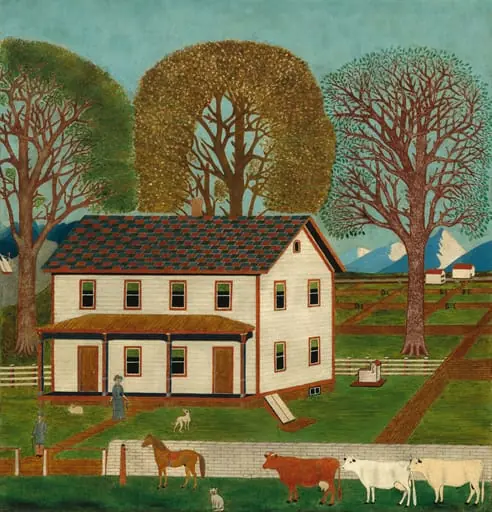
Scenes of everyday American life in the 1800s. Farmhouse in Mahantango Valley is a quiet, sunlit view of rural Pennsylvania; Boy and Girl shows two children standing close, faces turned outward. A small woodcut, The…

 The Sewer
 Shop and Warehouse of Duncan Phyfe, 168–172 Fulton Street, New York City
 Tremont Street, Boston
 Ericsson's House, Beach Street
 A cottage set among trees
 The Dog Killer
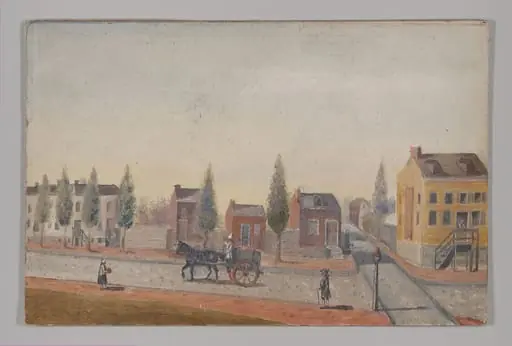 The Garbage Cart
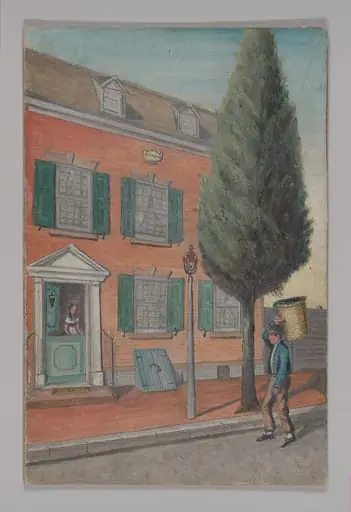 Tea Rusk and Brick House
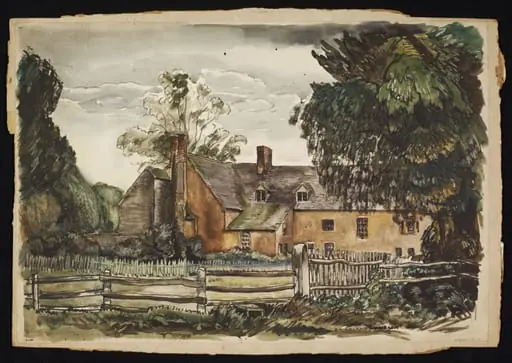 Wilcote Manor
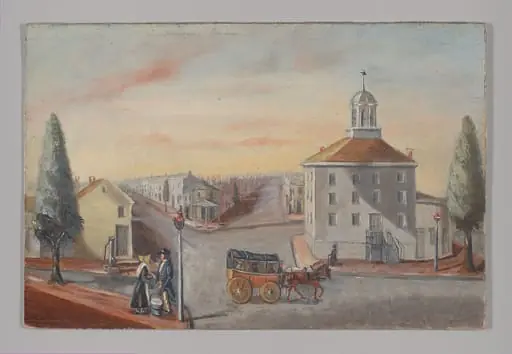 Hot Corn Seller
 New Court, the Temple, London
- Fourth Street, Meeting House, Philadelphia