Artwork
Aurora
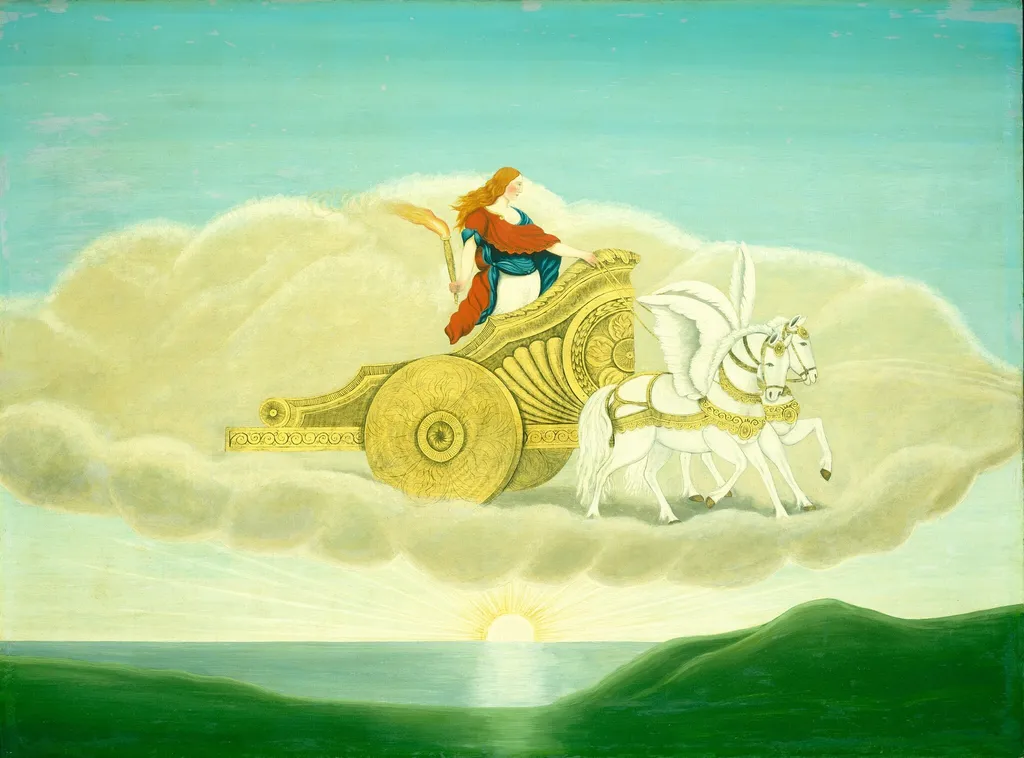
Aurora is an oil painting. It dates from 1850 and is held in the collection of the National Gallery of Art.
About this work
Subject & Meaning
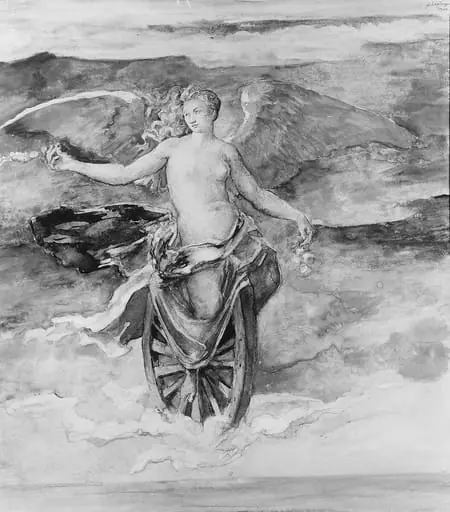
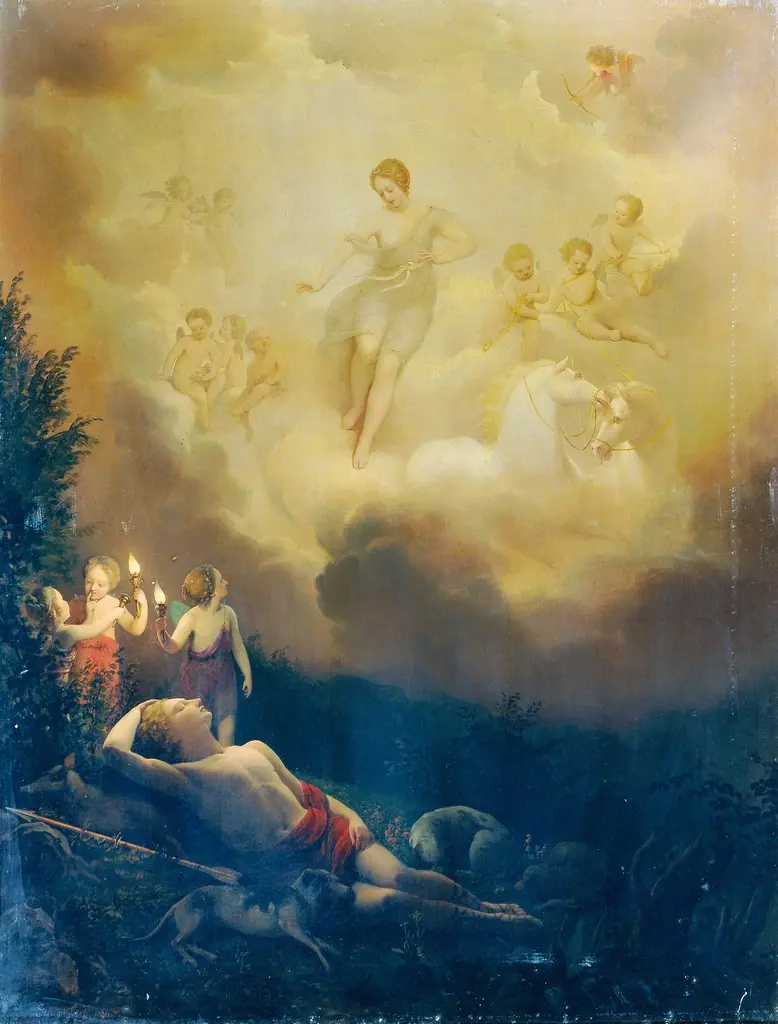
The painting Aurora portrays the mythological figure of the dawn goddess, a personification of the first light of day.
The painting Aurora portrays the mythological figure of the dawn goddess, a personification of the first light of day. As a mythological subject rendered in oil on wood, the work measures 61 cm by 81.9 cm and was completed in 1850.
It entered the National Gallery of Art in Washington, D.C., after being gifted by Edgar William and Bernice Chrysler Garbisch in 1957. In iconographic terms, Aurora is associated with sunrise, renewal, and the transition from night to day, themes that the composition conveys through the play of light across the figure. The painting’s classification as a mythological work underscores its narrative focus on classical deities.
Technique & Style
Created in 1850, Aurora is an oil painting executed on a wood panel support. The work measures 61 cm in height and 81.9 cm in width. Stylistically, the piece is classified as a mythological painting, with the goddess Aurora serving as its primary subject.
The composition reflects the artistic conventions of nineteenth-century American art, utilizing oil paint to render the figurative scene on a rigid wooden surface rather than canvas.
History & Provenance
The painting Aurora was created in 1850 by an unidentified American artist of the 19th century. It is recorded as originating from Hartford, Connecticut.
Ownership shifted to Edgar William and Bernice Chrysler Garbisch, who acquired it in 1951. In 1957, they donated the work to the National Gallery of Art, Washington, D.C., where it remains in the collection.
The painting Aurora is held in the collection of the National Gallery of Art in Washington, D.C. Its provenance traces back to Hartford, Connecticut, before being acquired in 1951 by Edgar William and Bernice Chrysler Garbisch. The couple subsequently donated the work to the museum in 1957.
No specific exhibition history or inventory accession numbers are provided in the available records.
Context
Aurora (1850) exemplifies the mid-19th-century American fascination with classical mythology, a trend that aligned with broader transatlantic Romantic movements. While the artist’s identity remains unattributed in contemporary scholarship, the work reflects the era’s revival of allegorical and mythological themes, often employed to convey ideals of renewal and transcendence. Its modest scale and oil-on-panel medium suggest a domestic or private commission, typical of American mythological paintings of the period, which rarely achieved the monumental ambitions of European counterparts.
Within the National Gallery of Art’s holdings, Aurora occupies a niche as a rare surviving example of American mythological painting from the 1850s. Scholars have noted its stylistic affinity with contemporaneous Hudson River School landscapes, particularly in its luminous skies and idealized naturalism, though its subject distinguishes it from that movement’s dominant focus on American scenery. The painting’s provenance, emerging from Hartford, Connecticut, and later entering the collection via the Garbisch gift, further underscores its role in tracing the circulation of mythological imagery in 19th-century American art markets.
Overview
This oil painting on wood, titled "Aurora," depicts a classical figure embodying the dawn. A red-haired woman, adorned in a blue and red gown, sits on an elaborate golden chariot, holding a torch aloft. She guides two white horses through a cloud-filled sky, with the sun ascending over verdant hills in the distance.
The composition captures the dynamic moment of daybreak, rendered with attention to detail and a sense of celestial motion.
Artist & collection