Artwork
William Crook Rudman, Jr.
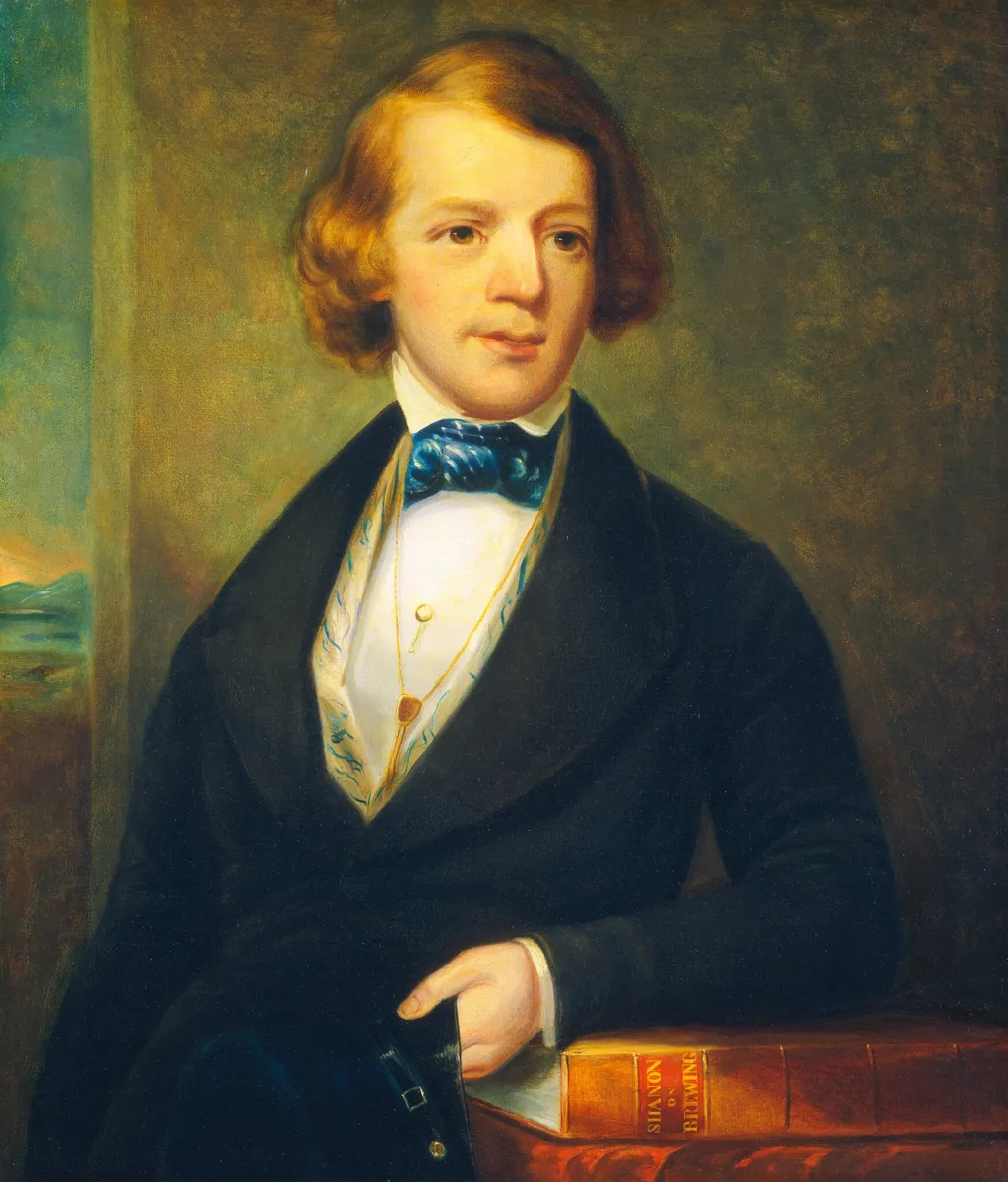
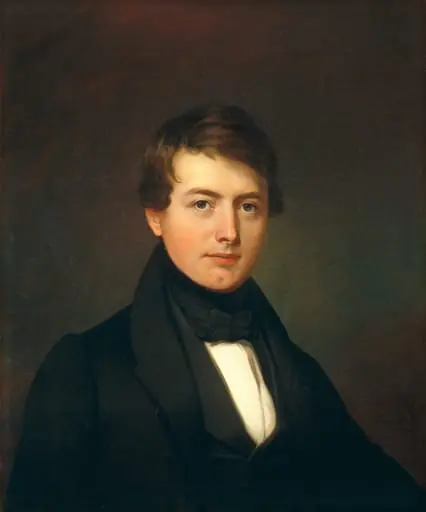
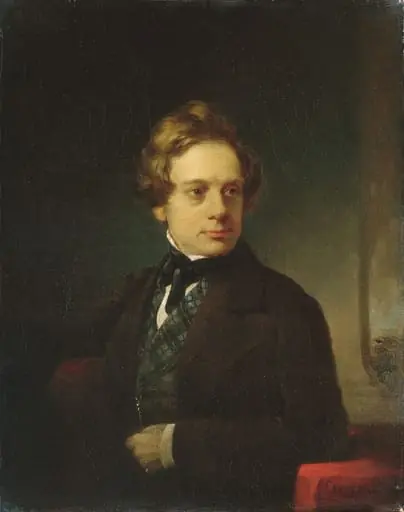
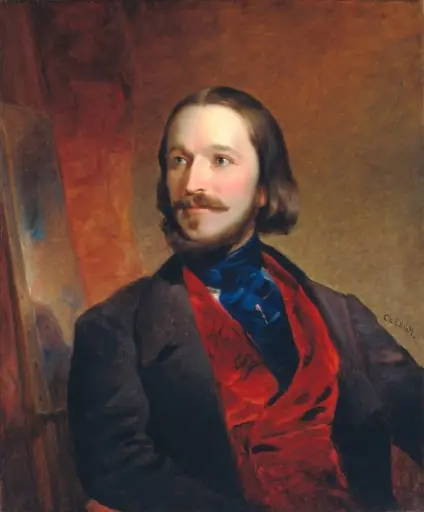
William Crook Rudman, Jr. is an oil painting. It dates from 1845 and is held in the collection of the National Gallery of Art. The work is an oil painting on canvas depicting a young, light‑skinned man with short, light‑brown hair.
About this work
Technique & Style
The portrait is executed in oil on canvas, a standard support for mid-19th-century American portraiture. The composition is frontal, with the figure positioned centrally and the background kept subdued to focus attention on the sitter.
History & Provenance
Executed in 1845, this oil-on-canvas portrait descended in the sitter's family to Carlotta Herring Broune, the sitter's niece, of Bryn Mawr, Pennsylvania.
Executed in 1845, this oil-on-canvas portrait descended in the sitter's family to Carlotta Herring Broune, the sitter's niece, of Bryn Mawr, Pennsylvania. The work appeared at auction through Stan V. Henkels in Philadelphia on June 30 and July 1, 1921, where it was incorrectly attributed to John Neagle. Thomas B. Clarke of New York subsequently acquired the painting.
Following Clarke's death, his estate sold the piece via M. Knoedler & Co. on January 29, 1936, to the A. W. Mellon Educational and Charitable Trust in Pittsburgh. The trust donated the artwork to the National Gallery of Art in Washington, D.C., in 1947.
Context
The portrait entered the National Gallery of Art through the Andrew W. Mellon collection in 1947, having been acquired from the estate of Thomas B. Clarke and sold by M. Knoedler & Co. in 1936. At its 1921 auction the painting had been incorrectly attributed to John Neagle; it is now catalogued as the work of an unidentified American artist. It remains part of the museum's permanent collection in Washington, D.C., where it is displayed within the broader narrative of 19th-century American portraiture.
Legacy
The portrait, painted in 1845 by an unidentified American artist, entered the National Gallery of Art through the Andrew W. Mellon Educational and Charitable Trust’s gift of 1947 and remains in the institution’s permanent collection in Washington, D.C. Its attribution history reflects evolving scholarship: early sale documentation misattributed the work to John Neagle, a designation later set aside. The painting, which measures 76.4 cm in height and 64 cm in width, is studied as an example of nineteenth-century American portraiture, and the National Gallery’s catalogue documents its provenance and attribution.
Overview
The work is an oil painting on canvas depicting a young, light‑skinned man with short, light‑brown hair. He is dressed in a black jacket over a white shirt, a blue bow tie, and a gold necklace. A wall forms the backdrop, with a landscape visible on the left side.
Subject & Meaning
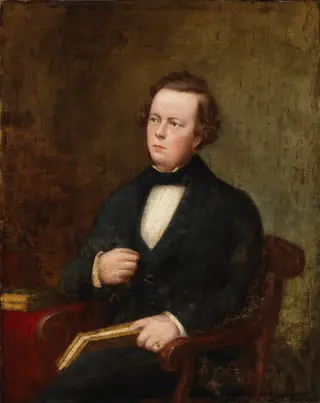
The sitter rests his right hand on an open book whose cover bears the title “SHANNON ON BREWING” rendered in gold lettering, suggesting an association with brewing or an interest in the subject. The composition conveys a formal, refined presentation of the individual.
Artist & collection