Artwork
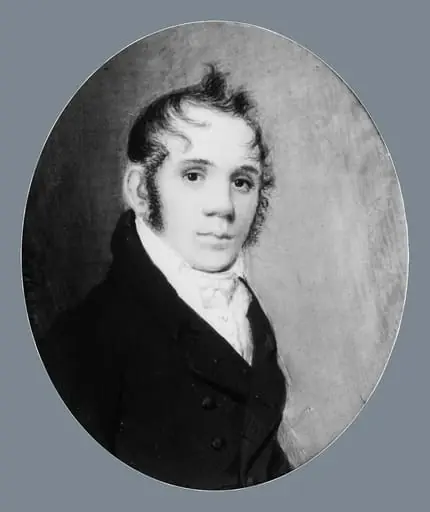
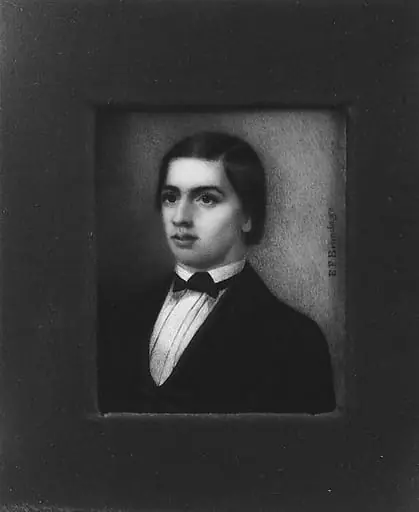
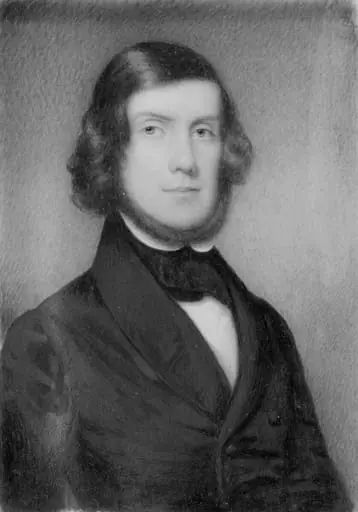
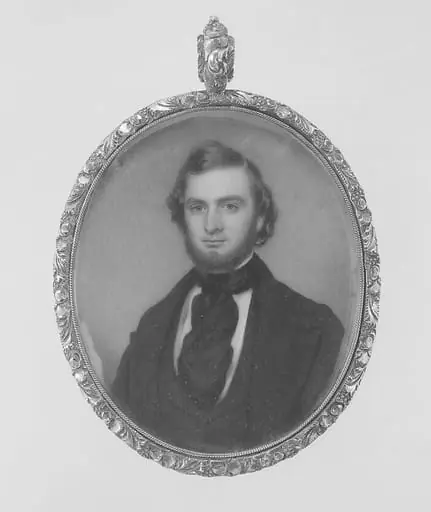
Portrait of a Gentleman
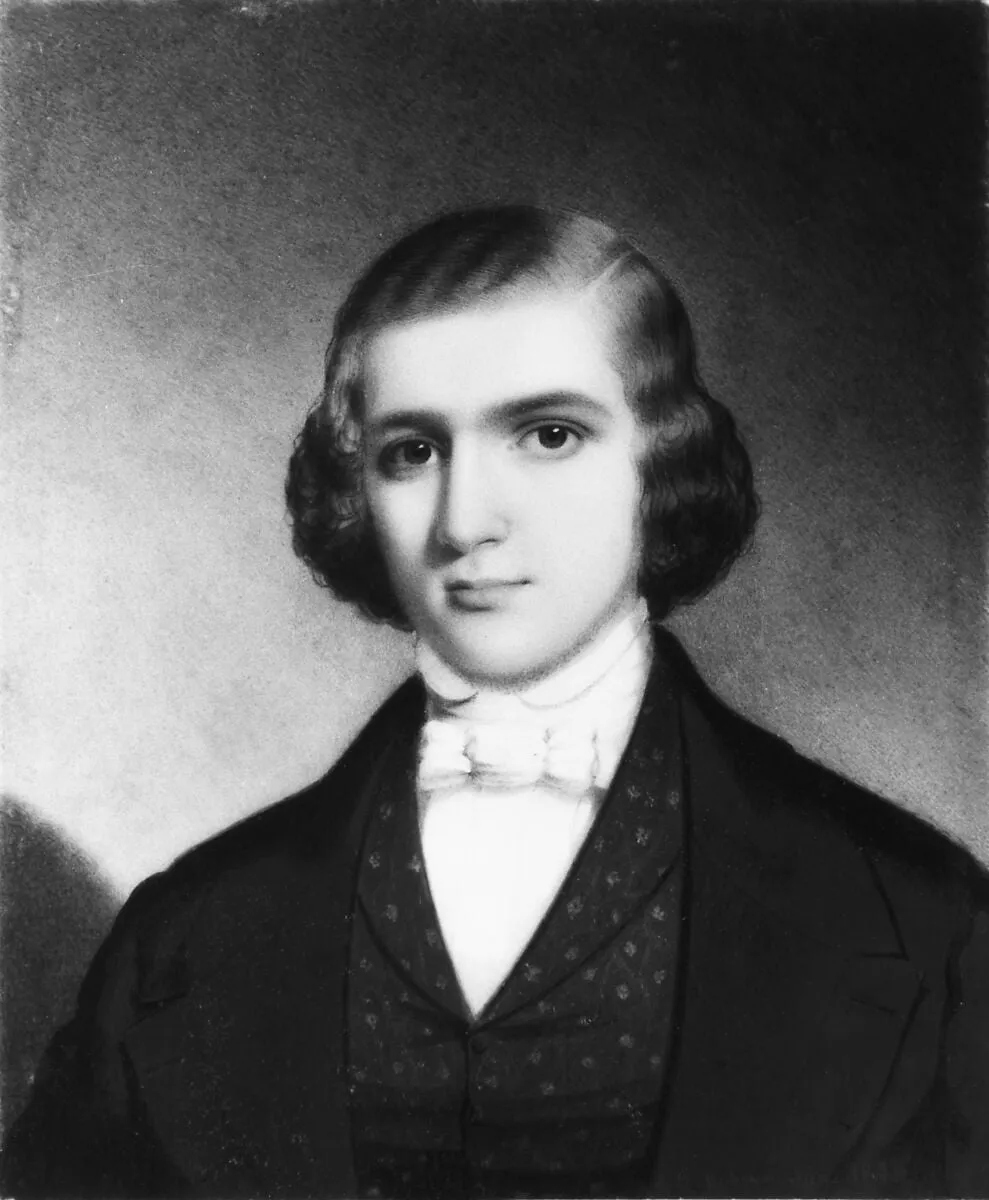
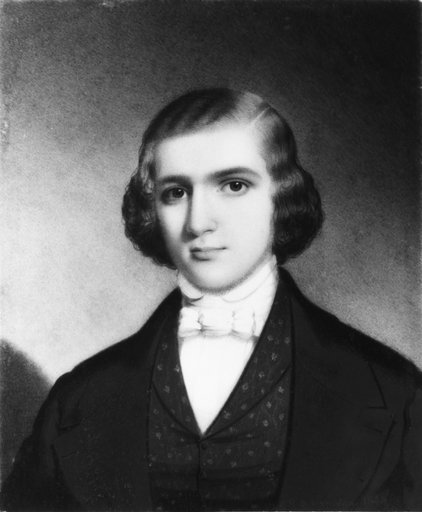
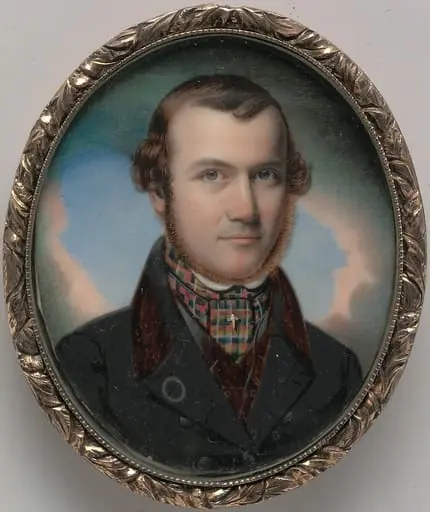
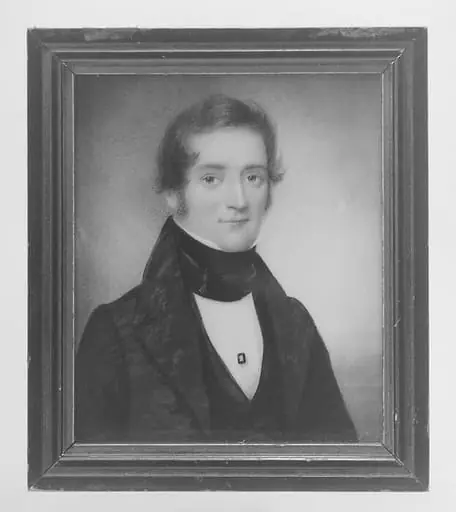
Portrait of a Gentleman is a watercolor painting by the British Romanticist artist John Henry Brown. It dates from 1845 and is held in the collection of the Metropolitan Museum of Art.
- Accession no.
- 68.222.16
- Credit line
- Gift of J. William Middendorf II, 1968
About this work
Subject & Meaning
The composition therefore conveys the sitter’s respectability and the cultural value placed on visual self‑presentation among the American aristocracy.
The Portrait of a Gentleman, painted by John Henry Brown in 1845, is a watercolor on ivory held in the Metropolitan Museum of Art’s American Wing. It depicts a seated man rendered in the conventional portrait genre, emphasizing dignified posture and refined attire that signal social standing. Iconographically the work contains no overt allegorical symbols; instead, its meaning derives from the representation of elite masculine identity in mid‑nineteenth‑century America, where portraiture functioned as a visual record of status and personal reputation.
The composition therefore conveys the sitter’s respectability and the cultural value placed on visual self‑presentation among the American aristocracy.
Technique & Style
Executed in 1845 by John Henry Brown, this portrait utilizes watercolor applied to an ivory support, a medium characteristic of miniature painting traditions. The work's physical dimensions are modest, measuring approximately 7.3 by 6 units, consistent with the intimate scale required for ivory miniatures. As a piece housed within the American Wing of the Metropolitan Museum of Art, the object represents a specific genre of portraiture focused on depicting a male subject.
The selection of ivory as a ground allows for the luminous quality typical of watercolor techniques from this period, though specific details regarding the artist's brushwork, current conservation status, or distinct stylistic handling are not elaborated upon in the available records beyond the fundamental material composition.
History & Provenance
The miniature is held in the collection of the Metropolitan Museum of Art, New York. It is recorded with the accession number 48.133.3, assigned upon its acquisition by the Museum. The work has been exhibited at the Metropolitan Museum of Art as part of its American Wing holdings, where it remains on view.
Overview
Created in 1845 by American artist John Henry Brown, this work is a miniature portrait executed in watercolor on ivory. The composition features a single male subject dressed in a dark suit, positioned against a neutral background to emphasize his facial features. The sitter gazes directly forward, engaging the viewer with a steady, composed expression.
Brown utilizes the translucent quality of the ivory support to achieve a luminous effect in the flesh tones, a hallmark of the miniature tradition that sought to replicate the delicacy of life before the advent of photography. The small scale of the piece, typical for the genre, suggests it was intended for intimate viewing or personal commemoration. Painted during the mid-19th century, this work reflects Brown's engagement with the prevailing American portrait miniature style, which prioritized psychological presence and technical refinement in a compact format.
The piece stands as a representative example of Brown's portraiture from this period, demonstrating the continued relevance of hand-painted miniatures in an era transitioning toward mechanical reproduction.
Context
Miniature portraits like this one served as cherished personal keepsakes for affluent patrons in the mid-19th century. Prior to the widespread availability of photography, these small, portable artworks offered a means to carry an image of a loved one or to commemorate an individual. John Henry Brown specialized in creating such intimate mementos, catering to a demand for highly detailed and personal representations.
Artist & collection