Artwork
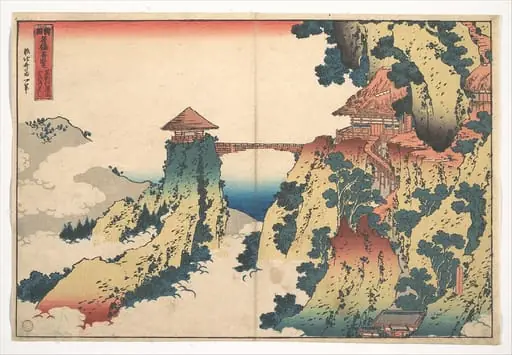
諸國名橋奇覧 三河の八ツ橋の古図|Ancient View of Yatsuhashi in Mikawa Province (Mikawa no Yatsuhashi no kozu), from the series Remarkable Views of Bridges in Various Provinces (Shokoku meikyō kiran)
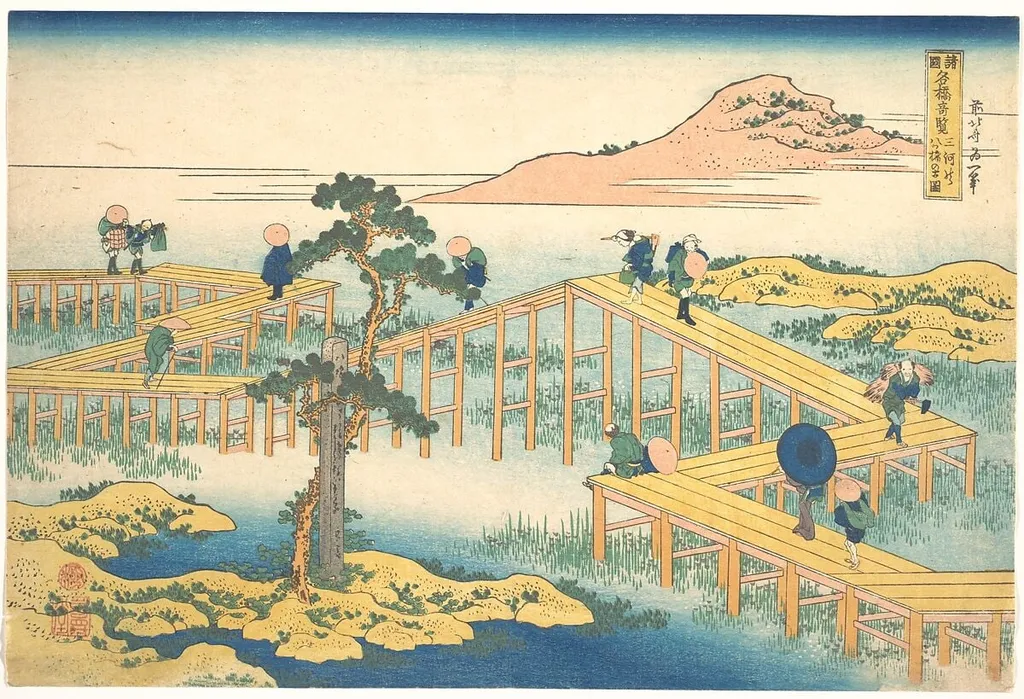
諸國名橋奇覧 三河の八ツ橋の古図|Ancient View of Yatsuhashi in Mikawa Province (Mikawa no Yatsuhashi no kozu), from the series Remarkable Views of Bridges in Various Provinces (Shokoku meikyō kiran) is an ink print by the Japonisme artist Katsushika Hokusai. It dates from 1830 and is held in the collection of the Metropolitan Museum of Art.
About this work
Overview
This woodblock print, created around 1830 by Katsushika Hokusai, is part of a series depicting notable bridges across Japan’s provinces. Rendered in ink and color on paper, it captures a quiet moment at Yatsuhashi Bridge in Mikawa Province. The composition emphasizes stillness and spatial harmony, with minimal depth and restrained hues that suggest age and atmosphere rather than vivid realism.
Subject & Meaning
The scene portrays Yatsuhashi Bridge, a wooden structure spanning a gentle river, with figures moving and pausing along its length.
The scene portrays Yatsuhashi Bridge, a wooden structure spanning a gentle river, with figures moving and pausing along its length. Their small scale and subdued gestures integrate them into the landscape, reflecting a contemplative view of daily life. The lone pine by the water and the soft hills beyond evoke a sense of place rooted in local geography, not grandeur. The image invites quiet observation rather than narrative drama.
Technique & Style
Hokusai employs flat planes, clean outlines, and muted tones, faded blues, greens, and earth tones, to create a serene, almost timeless atmosphere. There is no modeling of light or shadow; forms are defined by contour and subtle color gradations. Cross-hatching appears in the water and foliage, adding texture without depth. The perspective is deliberately shallow, aligning with traditional Japanese compositional principles.
History & Provenance
The print originates from Hokusai’s late series 'Remarkable Views of Bridges in Various Provinces,' produced during his final decades. It was likely published in the early 1830s, a period when he focused on landscape and topographical subjects. The work entered The Metropolitan Museum of Art’s collection through documented acquisitions, preserving its place within the broader canon of ukiyo-e prints from the Edo period.
Context
This print emerged during a time when travel and regional identity were growing in public consciousness, aided by improved roads and printed guides. Hokusai’s series responded to this interest by documenting lesser-known sites with precision and poetic restraint. Unlike dramatic landscapes, these works emphasize quiet familiarity, reflecting a shift in his artistic focus toward everyday topography and enduring natural forms.
Legacy
Though less celebrated than his later 'Thirty-Six Views of Mount Fuji,' this print exemplifies Hokusai’s mature style: disciplined composition, emotional restraint, and a deep sensitivity to place. Its influence can be seen in later Japanese printmakers who favored subtle, atmospheric scenes over spectacle. Today, it remains a quiet testament to the artist’s ability to find significance in the ordinary.
Artist & collection

Artist
Katsushika Hokusai spent his life in Edo, now Tokyo, where he drew and carved prints for a living.

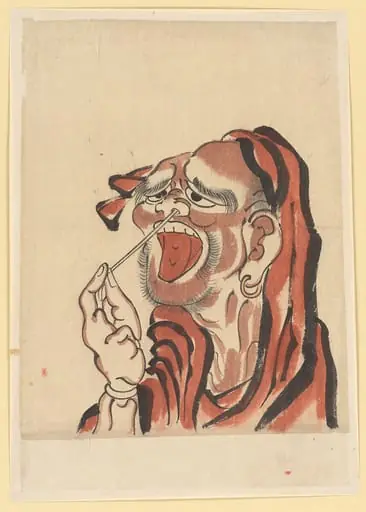
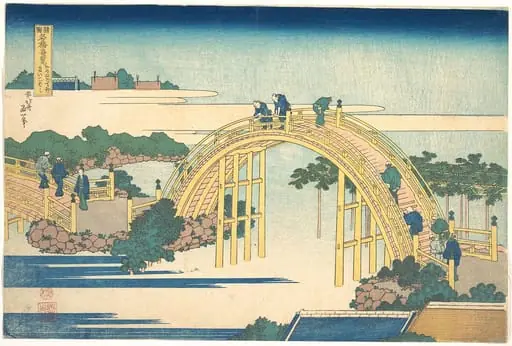
- 諸國名橋奇覧 かめゐど天神たいこはし|The Arched Bridge at Kameido Tenjin Shrine (Kameido Tenjin Taikobashi), from the series Remarkable Views of Bridges in Various Provinces (Shokoku meikyō kiran)
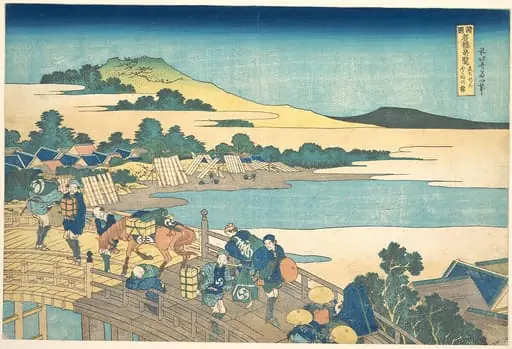 諸國名橋奇覧 ゑちぜんふくゐの橋|Fukui Bridge in Echizen Province (Echizen Fukui no hashi), from the series Remarkable Views of Bridges in Various Provinces (Shokoku meikyō kiran)
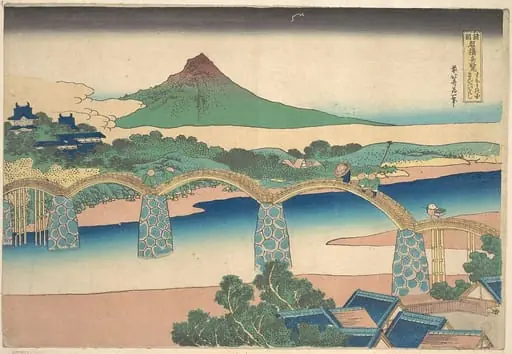 諸國名橋奇覧 すほうの国きんたいはし|Kintai Bridge in Suō Province (Suō no kuni Kintaibashi), from the series Remarkable Views of Bridges in Various Provinces (Shokoku meikyō kiran)
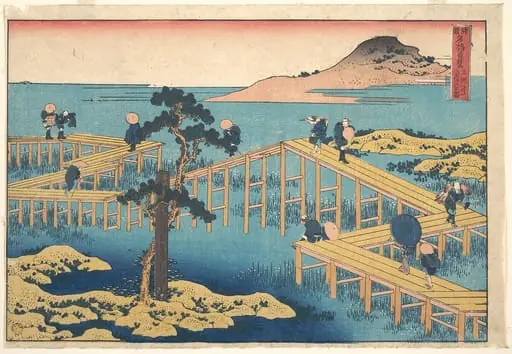 諸國名橋奇覧 三河の八ツ橋の古図|Ancient View of Yatsuhashi in Mikawa Province (Mikawa no Yatsuhashi no kozu), from the series Remarkable Views of Bridges in Various Provinces (Shokoku meikyō kiran)
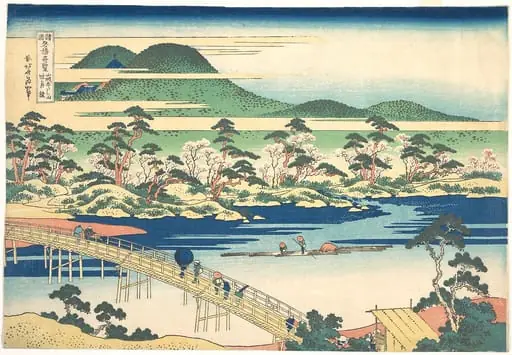 諸國名橋奇覧 山城あらし山吐月橋 |Togetsu Bridge at Arashiyama in Yamashiro, from the series Remarkable Views of Bridges in Various Provinces (Shokoku meikyō kiran)
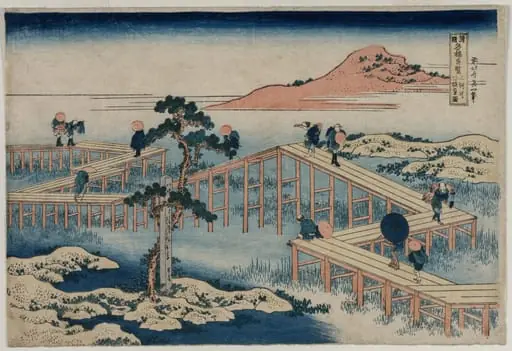 An Ancient Picture of the Eight Part Bridge in Mikawa Province (from the series Curious Views of Famous Bridges in the Provinces)
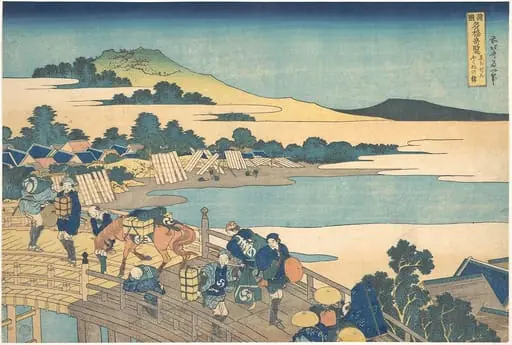 諸國名橋奇覧 ゑちぜんふくゐの橋|Fukui Bridge in Echizen Province (Echizen Fukui no hashi), from the series Remarkable Views of Bridges in Various Provinces (Shokoku meikyō kiran)
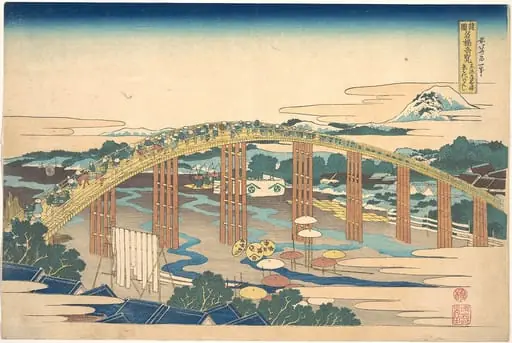 諸國名橋奇覧 東海道岡崎矢はぎのはし|Yahagi Bridge at Okazaki on the Tōkaidō (Tōkaidō Okazaki Yahagi no hashi), from the series Remarkable Views of Bridges in Various Provinces (Shokoku meikyō kiran)
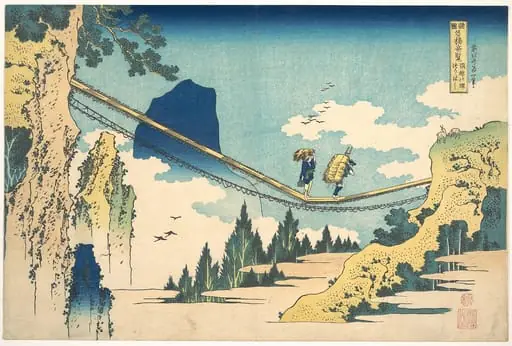 諸國名橋奇覧 飛越の堺つりはし|The Suspension Bridge on the Border of Hida and Etchū Provinces (Hietsu no sakai tsuribashi), from the series Remarkable Views of Bridges in Various Provinces (Shokoku meikyō kiran)
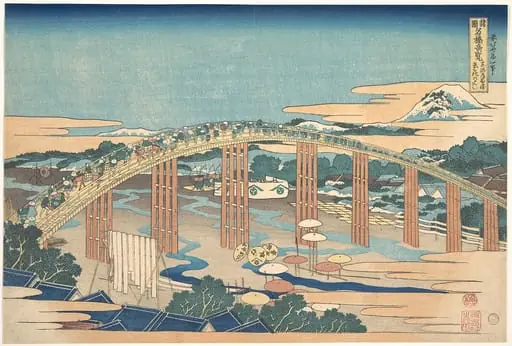 諸國名橋奇覧 東海道岡崎矢はぎのはし|Yahagi Bridge at Okazaki on the Tōkaidō (Tōkaidō Okazaki Yahagi no hashi), from the series Remarkable Views of Bridges in Various Provinces (Shokoku meikyō kiran)
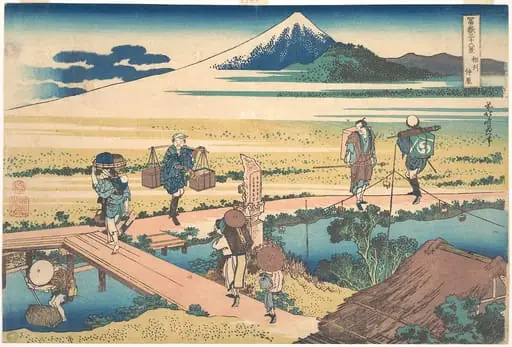 冨嶽三十六景 相州仲原|Nakahara in Sagami Province (Sōshū Nakahara), from the series Thirty-six Views of Mount Fuji (Fugaku sanjūrokkei)
 諸國名橋奇覧 足利行道山くものかけはし|The Hanging-cloud Bridge at Mount Gyōdō near Ashikaga (Ashikaga Gyōdōzan kumo no kakehashi), from the series Remarkable Views of Bridges in Various Provinces (Shokoku meikyō kiran)