Artwork
The parable of the Lord's vineyard
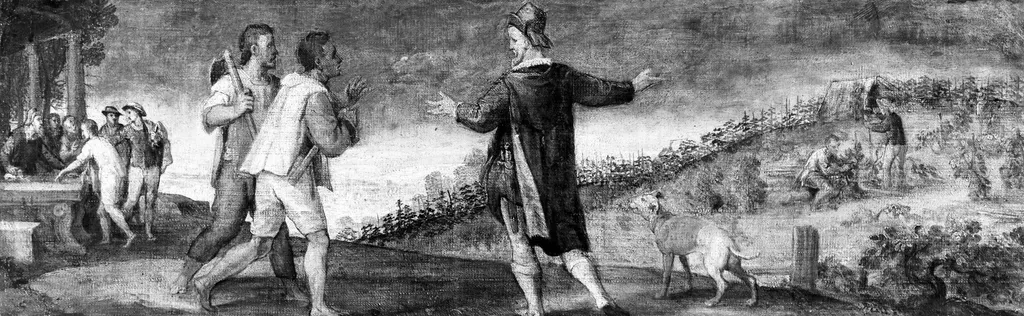
The parable of the Lord's vineyard is a paint painting by the Mannerist artist Andrea Schiavone. It dates from 1555 and is held in the collection of the Gemäldegalerie Berlin.
About this work
The painting's use of chiaroscuro creates a sense of depth and volume, with strong contrasts between light and dark areas.
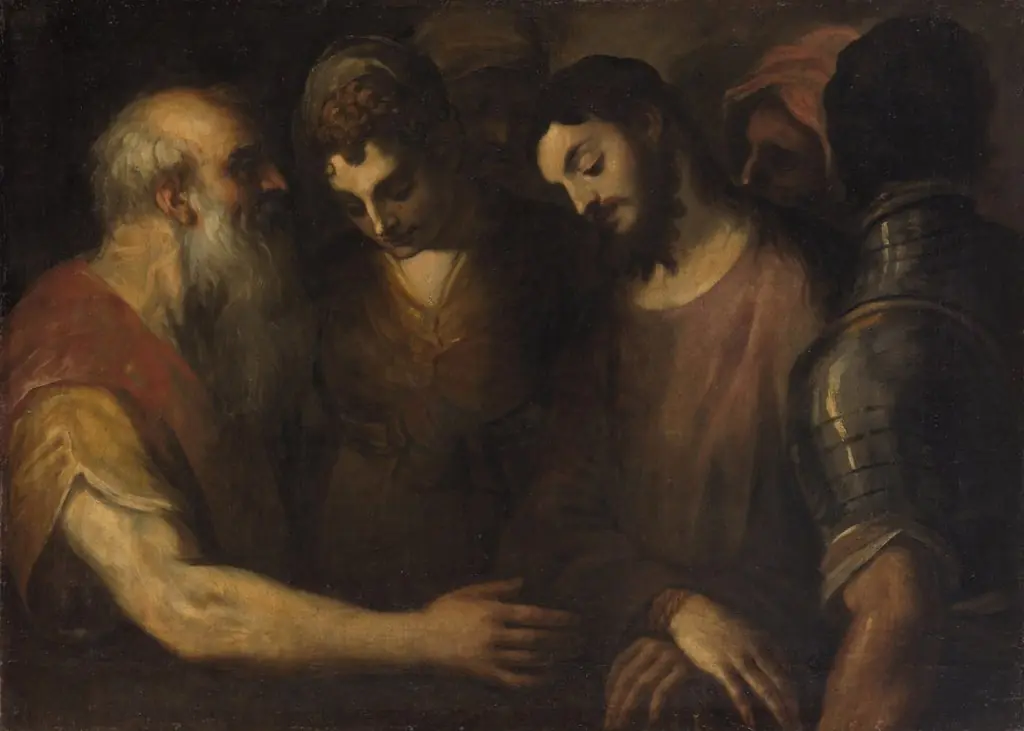
This painting depicts a scene from the parable of the Lord's vineyard. In the foreground, a man in a dark robe gestures towards a group of men working in the vineyard. The background features a landscape with trees, hills, and a distant cityscape.
The painting's use of chiaroscuro creates a sense of depth and volume, with strong contrasts between light and dark areas. The artist's brushwork is visible, adding texture to the scene.
The Gemäldegalerie Berlin is home to this painting, offering a glimpse into the artistic styles of the 16th century.
Overview
Painted in 1555 by Andrea Schiavone, this work illustrates the biblical Parable of the Lord’s Vineyard. Executed in oil on panel, it reflects the artist’s synthesis of Venetian colorism and the elongated forms of Mannerism. Though rooted in Venice’s artistic traditions, Schiavone’s approach diverges from naturalism, favoring stylized gestures and spatial complexity. The painting resides today in the Gemäldegalerie, Berlin.
Subject & Meaning
The scene portrays Christ, identified by his dark robe and outstretched hand, addressing laborers in a vineyard. This references Matthew 20:1–16, where workers hired at different hours receive equal pay, illustrating divine grace beyond human merit. The composition isolates the central figure amid a group of varied postures, emphasizing moral instruction over narrative detail.
Technique & Style
Schiavone employs chiaroscuro to model figures with sculptural weight, while his brushwork remains visible, lending texture to fabric and terrain. Figures are elongated and posed with deliberate artifice, characteristic of Mannerism. The landscape recedes in layered planes, hills, trees, distant towers, yet lacks perspectival rigor, prioritizing rhythmic arrangement over spatial accuracy.
History & Provenance
Born Andrea Meldolla in Dalmatia, Schiavone settled in Venice by the 1530s, absorbing Titian’s palette and compositional fluency. This painting emerged during his mature phase, when he increasingly fused Venetian luminosity with northern Mannerist tendencies. It entered the Berlin collection in the 19th century, likely through acquisitions of Italian Renaissance works.
Context
In mid-16th century Venice, religious painting was often dominated by Titian’s naturalism. Schiavone’s departure into stylized forms and emotional tension placed him at odds with prevailing trends. His work appealed to collectors seeking intellectual complexity, reflecting broader European shifts away from High Renaissance harmony toward expressive experimentation.
Legacy
Schiavone’s synthesis of Venetian color and Mannerist distortion influenced later artists in northern Italy and beyond. Though less celebrated than his contemporaries, his ability to adapt regional styles into personal expressions contributed to the diversity of 16th-century religious art. The painting remains a key example of Venice’s underappreciated Mannerist strand.
Artist & collection
Artist
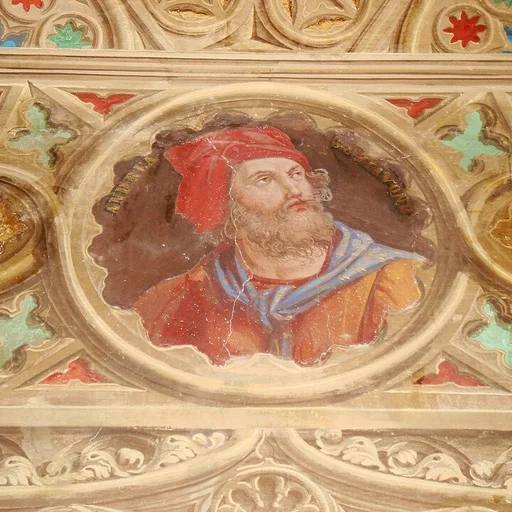
Andrea Meldolla (Croatian: Andrija Medulić), also known as Andrea Schiavone or Andrea lo Schiavone, literally "Andrew the Slav", (c.

![Noli Me Tangere [verso], by German 16th Century](https://artifactworldgallery.com/img/german-16th-century--noli-me-tangere-verso--a8a7d37387dd2c01-w320.webp)