Artwork
Woman and Cupid
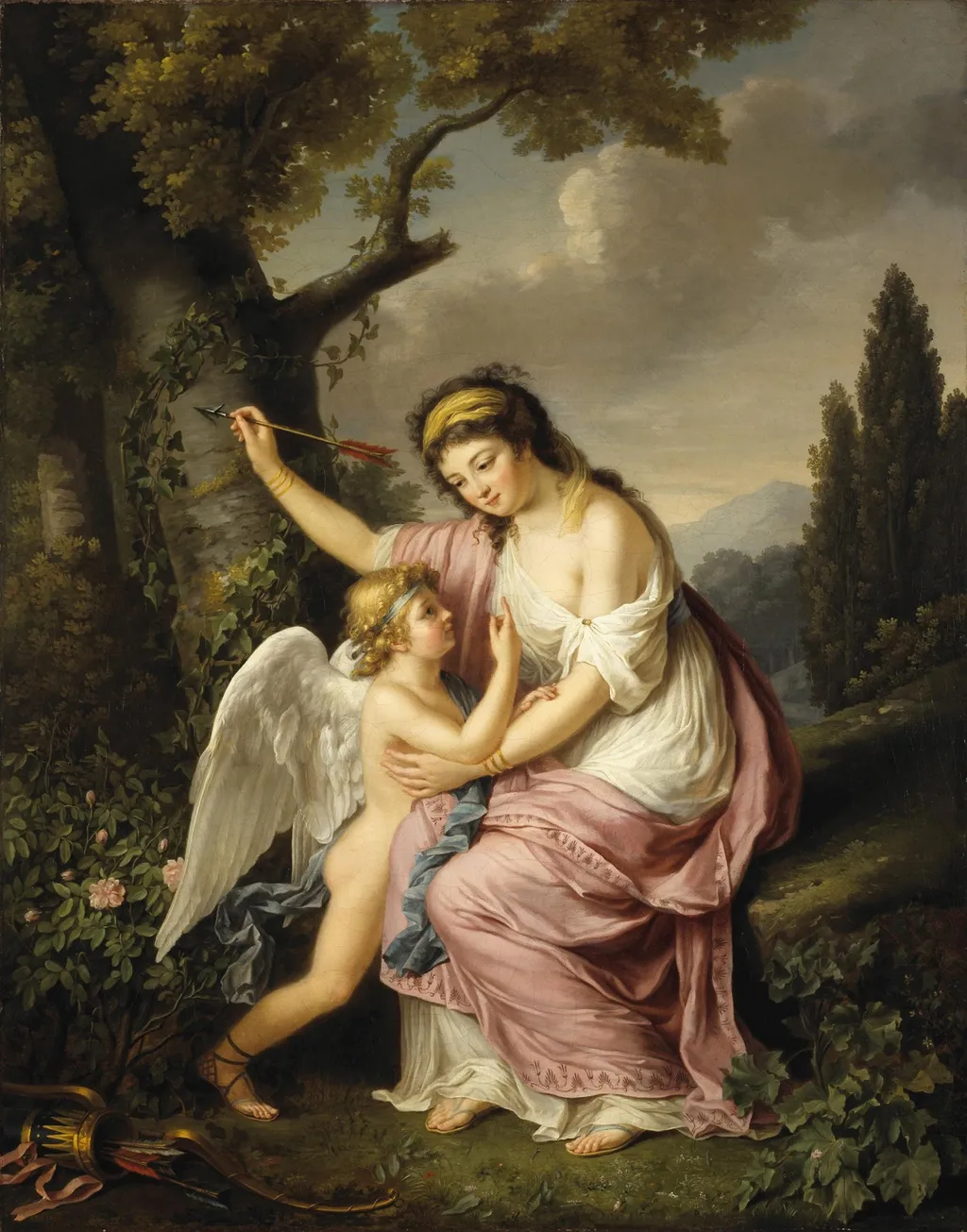
Woman and Cupid is an oil painting by the Neoclassicist artist Marie-Victoire Lemoine. It dates from 1796 and is held in the collection of the Hermitage Museum.
About this work
Subject & Meaning
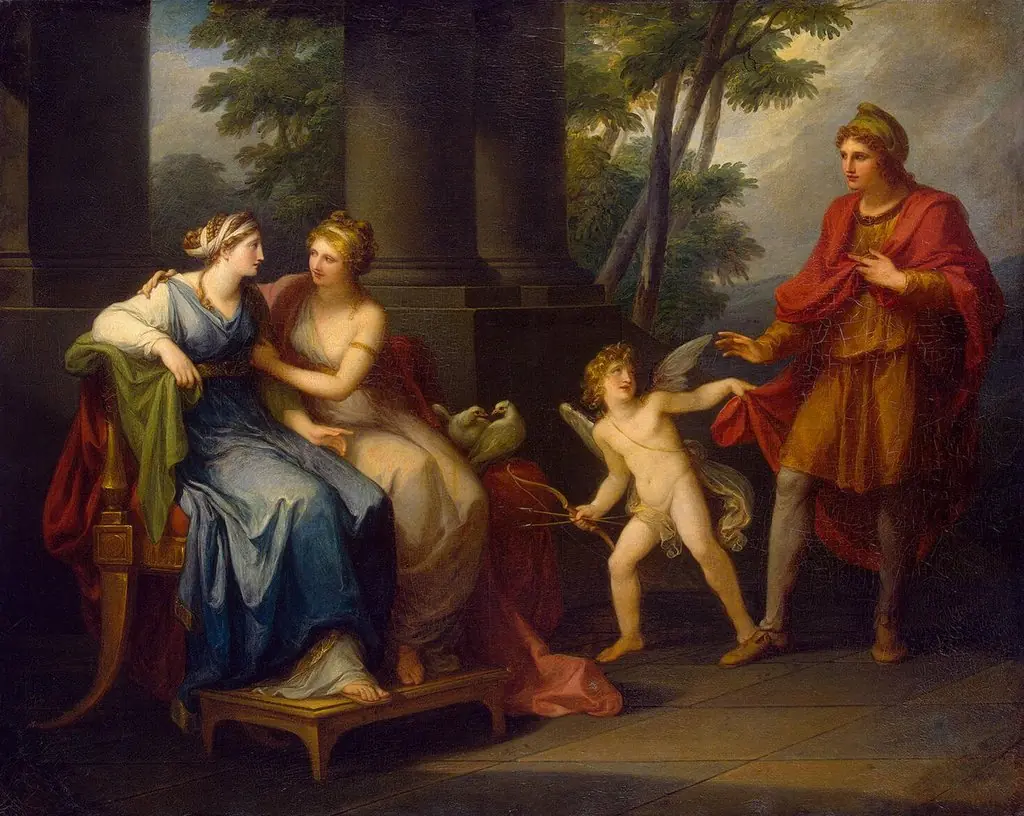
The painting depicts a mythological scene featuring a woman accompanied by Cupid, also known as Eros. Created in 1792 by Marie-Victoire Lemoine, the work is classified within the genre of mythological painting. The composition centers on the interaction between the female figure and the god of love, adhering to traditional iconographic themes associated with these characters in art history.
Technique & Style
Woman and Cupid is an oil painting executed on canvas, reflecting the mythological genre through its depiction of a woman alongside Eros.
Woman and Cupid is an oil painting executed on canvas, reflecting the mythological genre through its depiction of a woman alongside Eros. The work measures 92.5 cm in height and 73 cm in width, created in France in 1792. It is housed in the Hermitage Museum and was featured in the exhibition Peintres femmes, 1780-1830. Naissance d'un combat, highlighting its historical and stylistic context.
The formal qualities of the painting demonstrate a restrained composition and delicate rendering characteristic of late 18th-century French academic practice, with careful attention to the interplay of gesture and symbolic narrative.
History & Provenance
Woman and Cupid was created by Marie-Victoire Lemoine in 1792, executed in oil paint on canvas in France. The work entered the collection of the Hermitage Museum, where it remains held. It was later included in the exhibition "Peintres femmes, 1780-1830. Naissance d'un combat."
Context
The painting Woman and Cupid by Marie-Victoire Lemoine was created in 1792 and depicts a mythological scene featuring Eros or Cupid alongside a woman. It is part of the Hermitage Museum's collection in Saint Petersburg, Russia, where it has been exhibited as part of scholarly examinations of women artists in 18th-century France, specifically within the context of the exhibition Peintres femmes, 1780-1830. Naissance d'un combat.
The work exemplifies neoclassical approaches to mythological subjects through its composition and use of oil paint on canvas, reflecting broader Enlightenment-era artistic engagements with classical themes.
Overview
Marie-Victoire Lemoine’s oil painting Woman and Cupid, executed in 1796, presents a quiet mythological scene. A young woman in a pale pink dress and white shawl sits outdoors, cradling a winged child identified as Cupid on her lap. The composition is framed by trees, low bushes and a lightly clouded sky, situating the figures within a serene natural setting.
Own this work as a print
Artist & collection
Artist
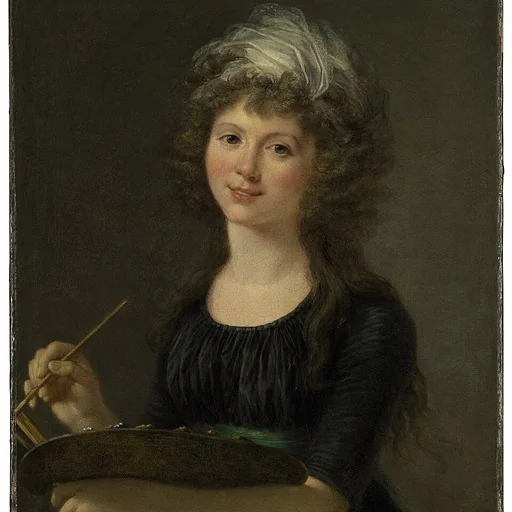
Marie-Victoire Lemoine was born in Paris in 1754, the eldest daughter of Charles Lemoine and Marie-Anne Rousselle.

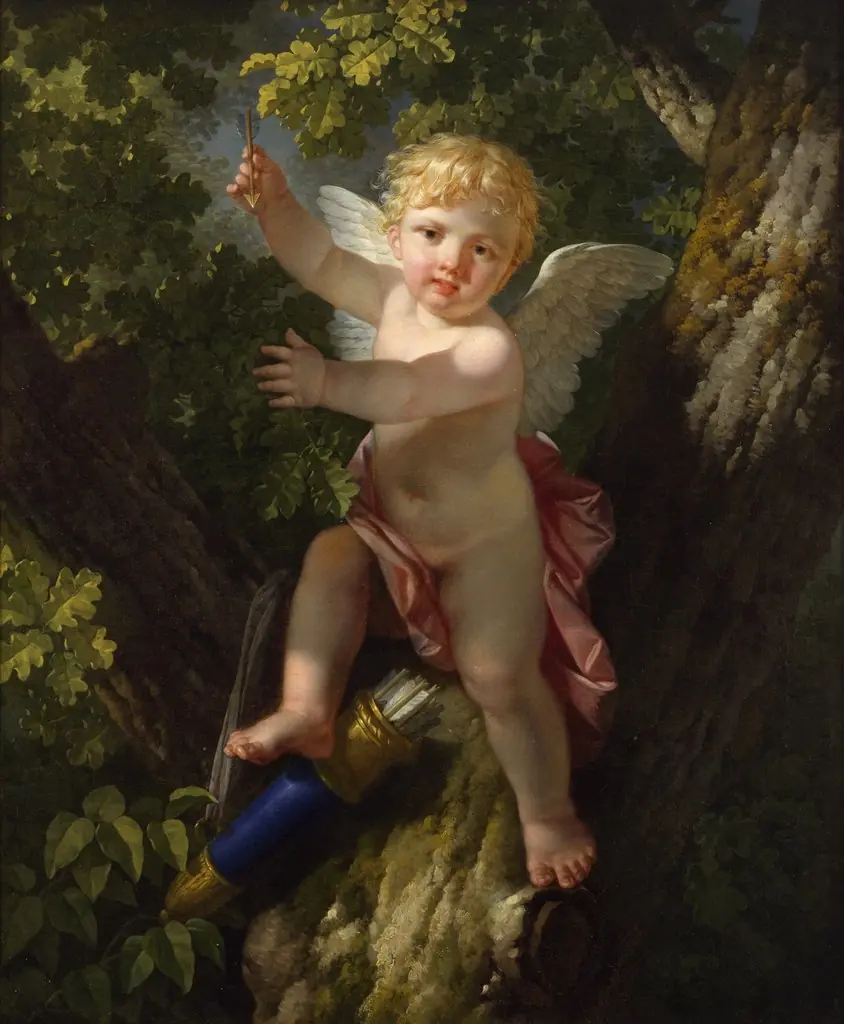 Cupid in a Tree
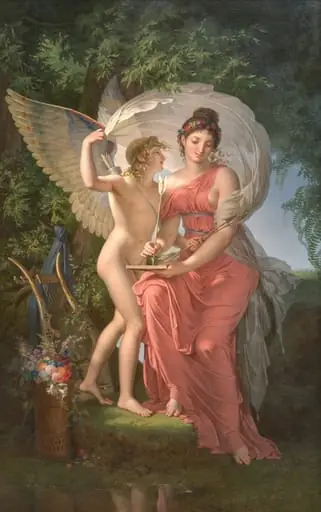 Erato, Muse of Lyrical Poetry
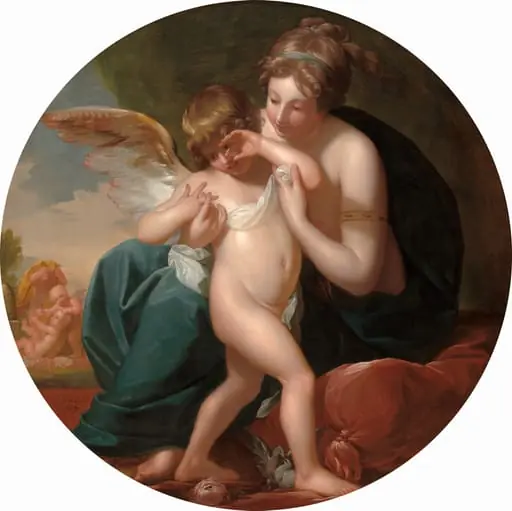 Cupid, Stung by a Bee, Is Cherished by his Mother
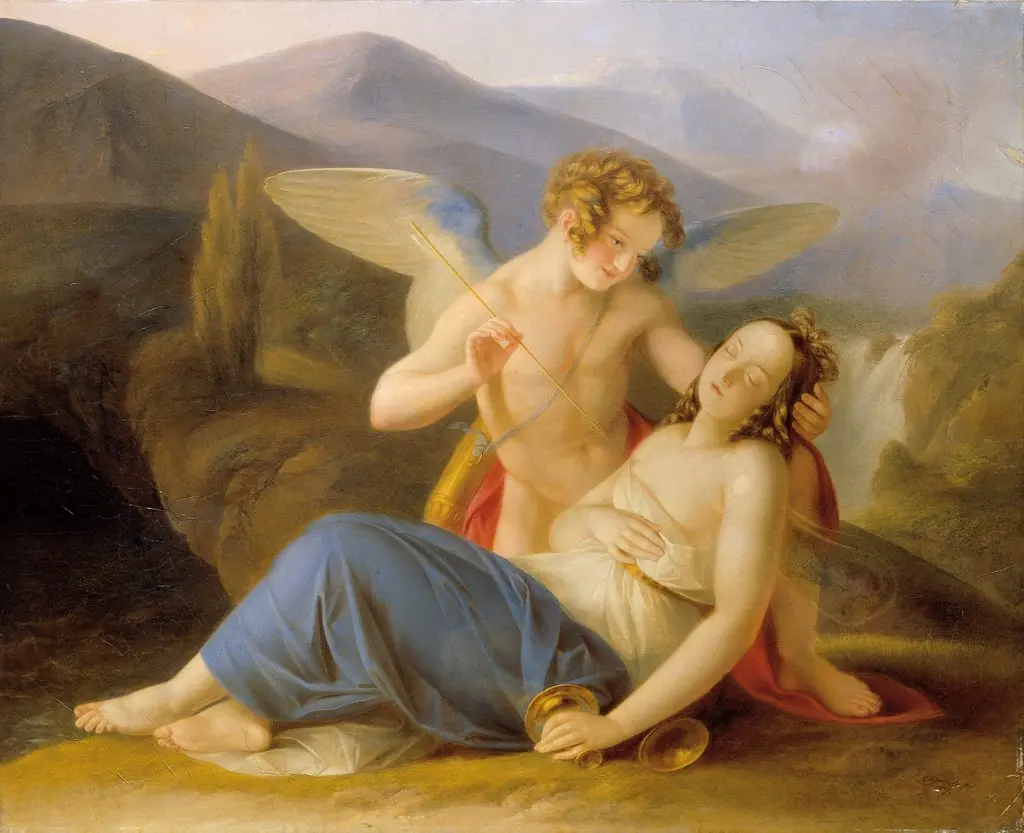 Psyche is awakened from fainting by Cupid's arrow
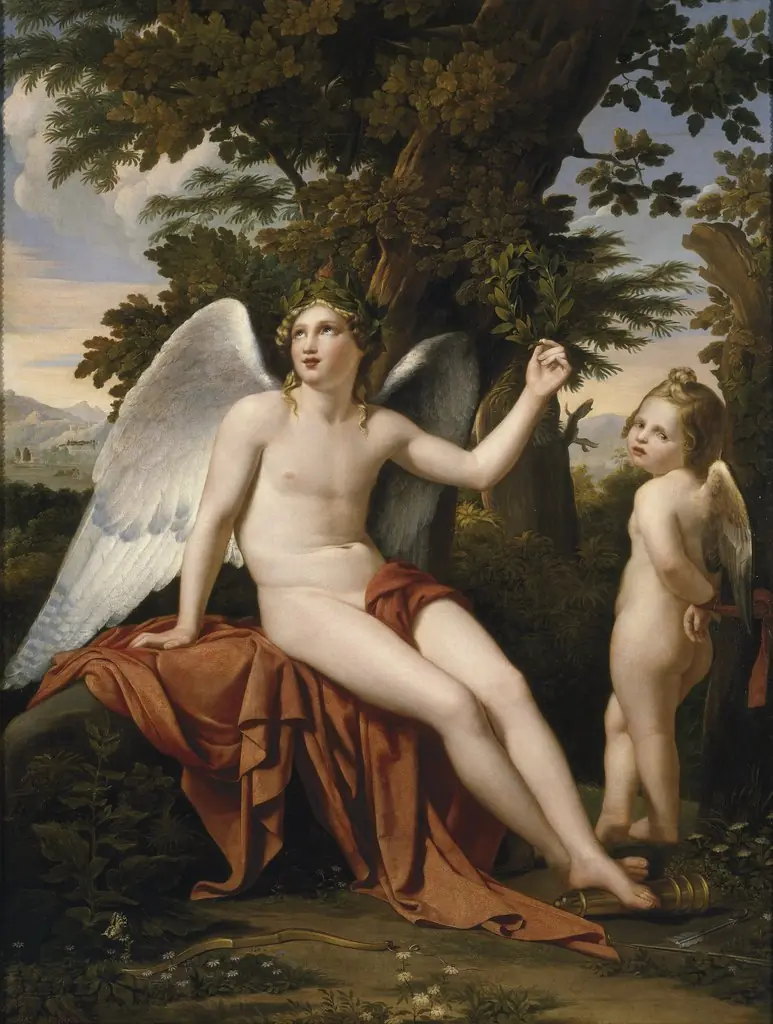 Divine and Profane Love
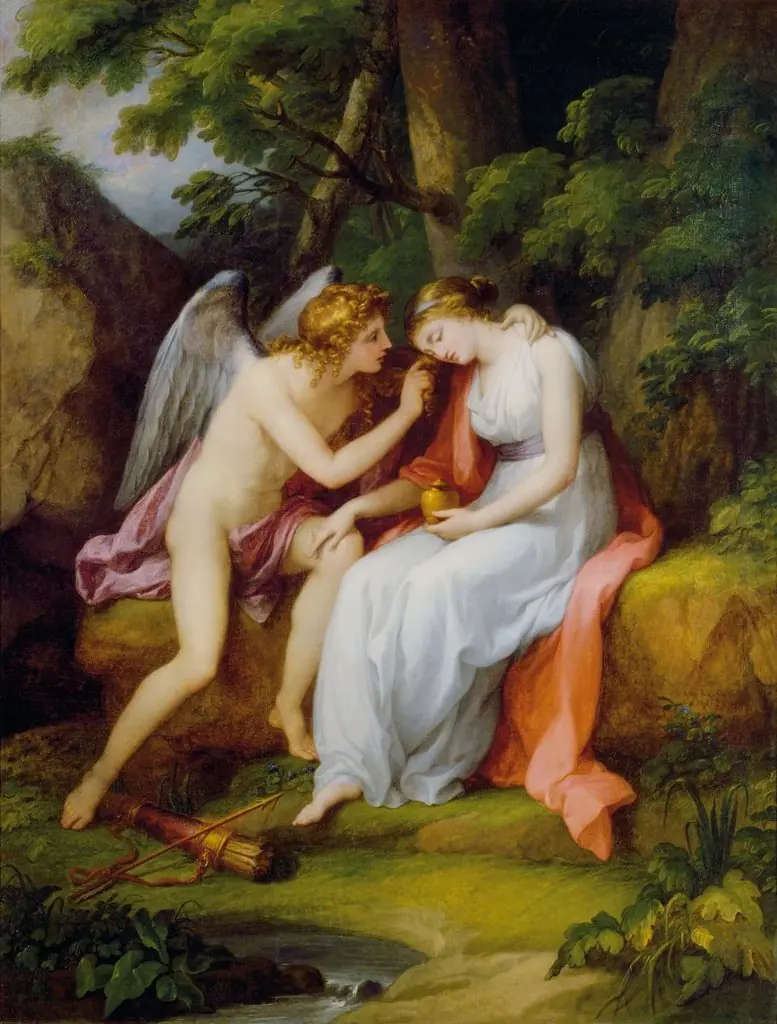 Amor und Psyche
 Venus and a Sleeping Cupid
 Bacchus and Ariadne
 The Victory of Eros
 Saint Catherine
 Venus Induces Helen to Fall in Love with Paris
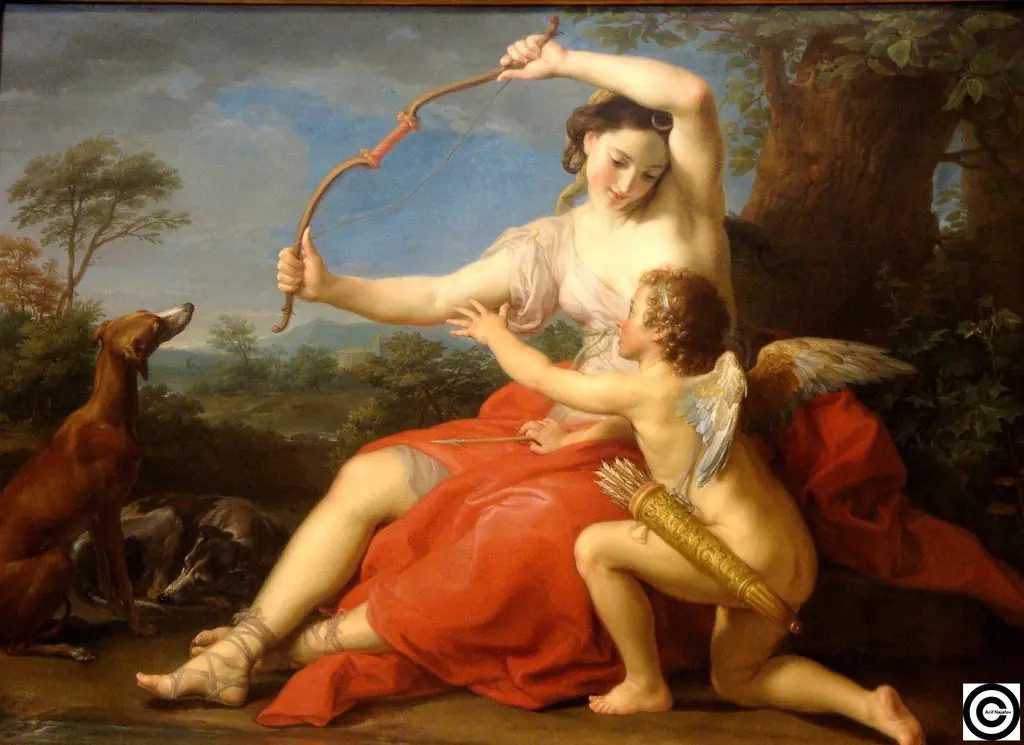
- Diana and Cupid