Artwork
Portrait of Cardinal Niccolò Albergati
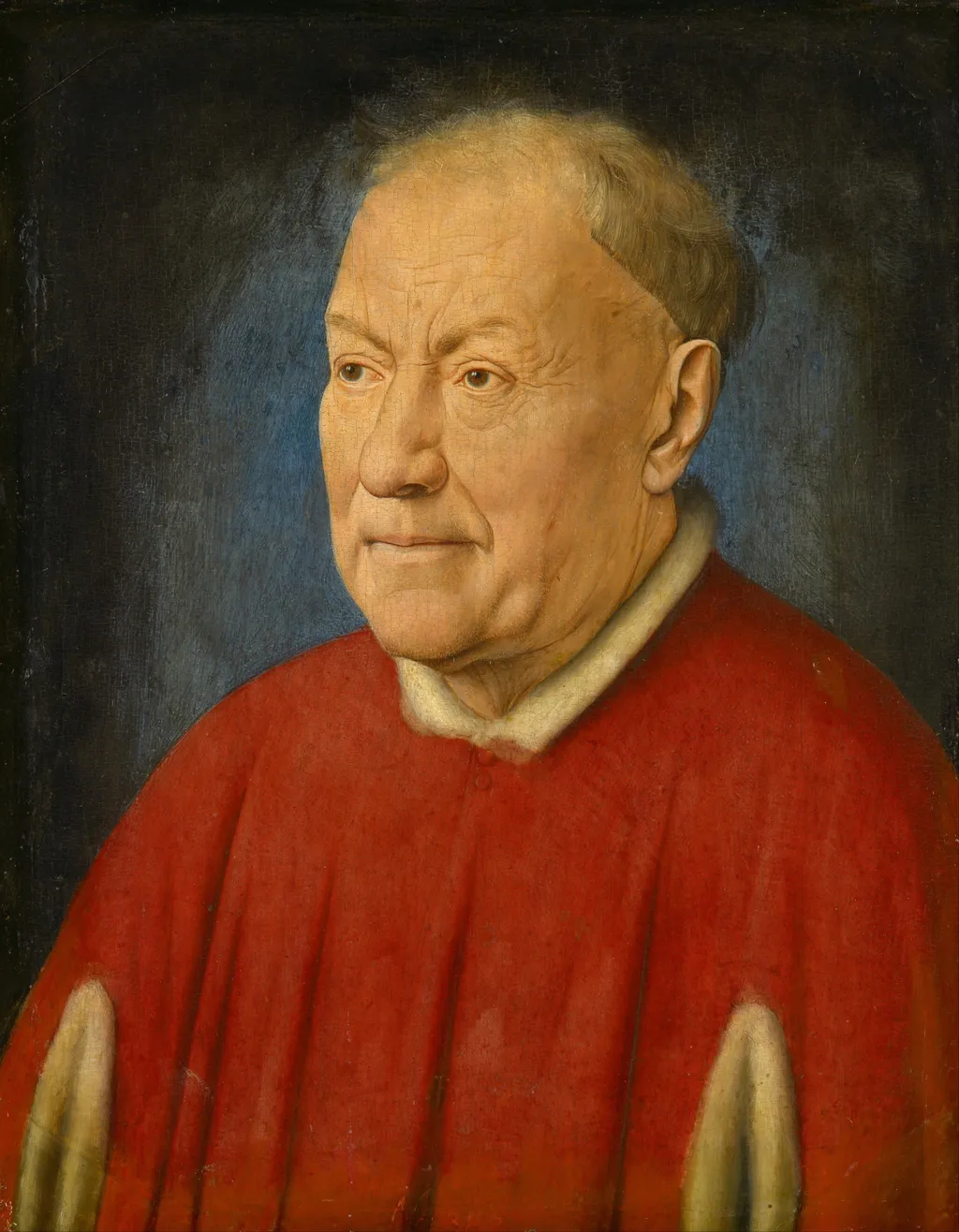
Portrait of Cardinal Niccolò Albergati is an oil painting by the Northern Renaissance artist Jan van Eyck. It dates from 1438 and is held in the collection of the Kunsthistorisches Museum.
About this work
This painting is a portrait of Cardinal Niccolò Albergati. It's an oil paint work by Jan van Eyck.
The painting is dated to 1438, but it's also noted to have been created around 1431. This suggests some uncertainty about the exact date of completion.
To learn more about the style and methods used in this portrait, look up the technique of glazing.
Overview
The Portrait of Cardinal Niccolò Albergati is an oil painting on oak panel by the Early Netherlandish master Jan van Eyck, executed around 1438 and now held in the Kunsthistorisches Museum, Vienna. Measuring 34 by 27.5 centimetres, this bust-length depiction of an elderly cardinal ranks among the most psychologically penetrating portraits of the Northern Renaissance, demonstrating van Eyck's revolutionary command of oil technique to achieve unprecedented realism in the rendering of human character and physical aging. The work occupies a pivotal position in the history of European portraiture as an early exemplar of the three-quarter view that became standard in Flemish painting, and it survives together with a preparatory silverpoint study in Dresden that illuminates the artist's working method.
Subject & Meaning
He served as a diplomat under Pope Martin V, notably travelling to Burgundy in 1431 to mediate between the English and French crowns and the Duke of Burgundy.
The sitter is traditionally identified as Niccolò Albergati, a Carthusian monk who became Bishop of Bologna in 1417 and was elevated to cardinal in 1426. He served as a diplomat under Pope Martin V, notably travelling to Burgundy in 1431 to mediate between the English and French crowns and the Duke of Burgundy. According to this account, van Eyck was commissioned by Philip the Good to portray the cardinal during his diplomatic mission. The cardinal is shown in the voluminous red robe of his office, lined with white ermine fur at the collar and cuffs, garments that signal his elevated ecclesiastical rank. The dark background, transitioning from deep brown-black at the edges to a softer blue-gray halo immediately behind the head, serves to isolate and dignify the figure. The iconography is deliberately restrained: the cardinal's contemplative expression, with deeply lined forehead, prominent cheekbones, and thin pressed lips, conveys spiritual authority and psychological weight rather than temporal power. Some scholars have questioned the traditional identification, proposing alternatively that the sitter might be Henry Beaufort, which would make this the earliest realistic portrait of an Englishman. Others have noted discrepancies between the sitter's appearance and contemporary descriptions of Albergati as an ascetic who lived in extreme sobriety, though the traditional attribution remains the dominant view.
Technique & Style
Van Eyck executed the portrait in oil on oak panel, employing the layered glazing technique for which he became renowned. The paint surface shows fine, smooth brushwork in the face, with visible craquelure throughout, while broader, softer handling characterises the drapery and background. Light falls from the left, illuminating the left side of the face and casting subtle shadows that model the wrinkles and sagging skin with almost microscopic precision. The palette is dominated by the saturated red of the cardinal's robe, warm flesh tones, and the cool dark background. Comparison with the preparatory silverpoint drawing in Dresden, which measures 214 by 180 millimetres and bears colour notations by the artist, reveals significant adjustments made during the painting process. Van Eyck altered the depth of the shoulders, the lower curve of the nose, the depth of the mouth, and notably enlarged the ear, perhaps to enhance the impression of age and authority. The three-quarter pose, already conventional in Flemish painting by the 1430s, allowed van Eyck to achieve a sense of immediate presence and psychological engagement that the stricter profile or full-face formats could not provide. The extraordinary transparency and luminosity of the flesh tones result from successive layers of colours diluted with oil, a technique that permitted the deep optical effects characteristic of van Eyck's mature work.
History & Provenance
The painting's documented history begins with the Antwerp collector Peeter Stevens, who owned the work in 1648 and sold it that year to Archduke Leopold Wilhelm of Austria. Stevens's notes record the date of execution as 1438 and identify the sitter as Cardinal Niccolò Albergati, information that has formed the basis for subsequent attribution and dating, though some scholars prefer a date around 1431 connected to the cardinal's diplomatic mission. The painting entered the Habsburg collections and remains in the Kunsthistorisches Museum, Vienna, where it is accessioned as part of the museum's holdings of Early Netherlandish painting. The associated preparatory drawing, executed in silverpoint with colour annotations, is preserved in the Kupferstichkabinett of the Staatliche Kunstsammlungen, Dresden, providing rare documentary evidence of van Eyck's working practice. The drawing's dimensions and the colour notes inscribed upon it confirm its function as a study for the painted portrait, made from life during the cardinal's stay in the Low Countries.
Context
The portrait emerges from the intersection of Burgundian court patronage and papal diplomacy in the early fifteenth century. Philip the Good, Duke of Burgundy, employed van Eyck as his court painter from 1425, and the commission to portray a visiting papal legate reflects the prestige attached to such diplomatic encounters. The work exemplifies the broader transformation of portraiture in Early Netherlandish painting, where the three-quarter view, developed in the 1430s, replaced the more formal profile to create a new intimacy between viewer and subject. Scholarly attention has focused intensively on the relationship between the Dresden drawing and the Vienna painting, with the differences between them illuminating van Eyck's interpretive rather than merely reproductive approach to portraiture. The painting has also figured prominently in technical studies of Early Netherlandish oil technique and, more controversially, in debates about whether van Eyck employed optical devices. The Hockney-Falco theory proposing that van Eyck traced optically projected images was tested against this work, but subsequent research by Thomas Ketelsen and collaborators identified pinprick holes in the silverpoint consistent with the use of a reducing compass or proportional divider, a mechanical transfer method known since antiquity. Martin Kemp of Oxford University, while allowing that van Eyck may have been inspired by optically generated images, concluded that he probably did not use them directly in making his pictures.
Legacy
The Portrait of Cardinal Niccolò Albergati stands as a foundational work in the development of realistic portraiture in the Northern Renaissance. Van Eyck's achievement in capturing individual likeness and psychological depth established standards that influenced generations of portrait painters and contributed to the emergence of portraiture as an independent artistic genre. The work's emphasis on empirical observation, material specificity, and the faithful recording of individual character over idealised type set a paradigm for European portraiture that extended well beyond the fifteenth century. The survival of both preparatory study and finished painting offers an exceptionally rich case for understanding Renaissance artistic practice, and the work continues to serve as a touchstone in scholarship on Early Netherlandish technique, the history of portraiture, and the material culture of diplomatic exchange. Its home in the Kunsthistorisches Museum ensures its place among the most celebrated and frequently studied works of van Eyck's oeuvre.
Own this work as a print
Artist & collection

Artist
Jan van Eyck ( van EYEK; Dutch: ; c. before 1390 – 9 July 1441) was an early Netherlandish painter active in Bruges who was one of the early innovators of what became known as Early Netherlandish painting, and one of…

 Portrait of a Man
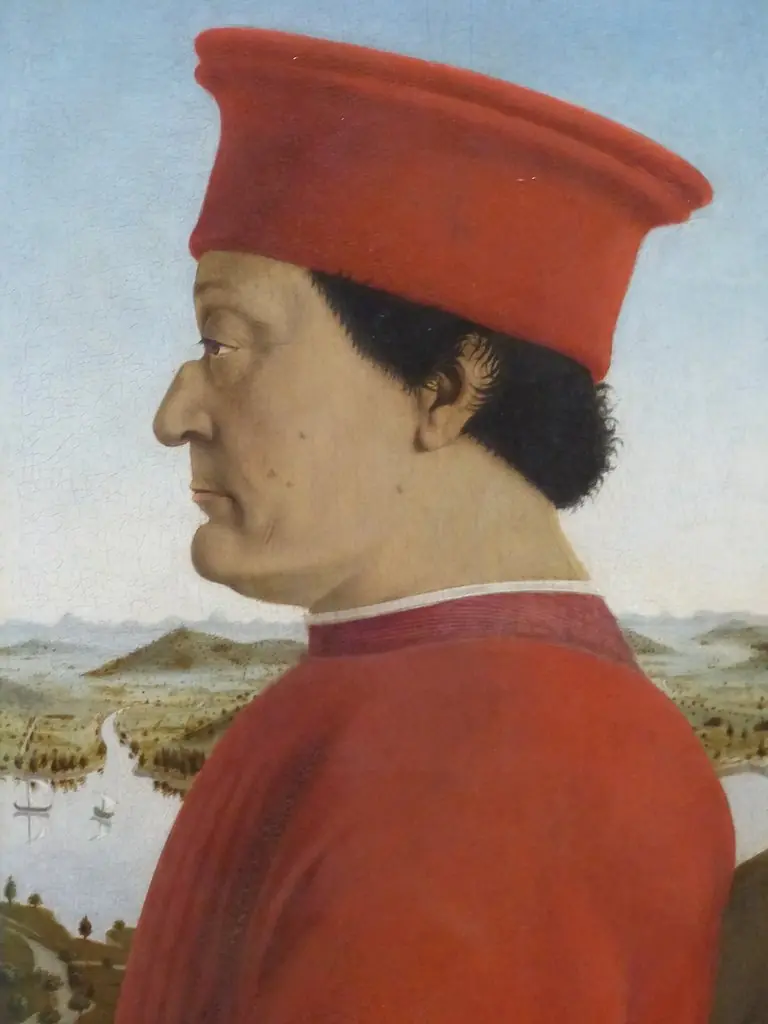 Portrait of Federico da Montefeltro
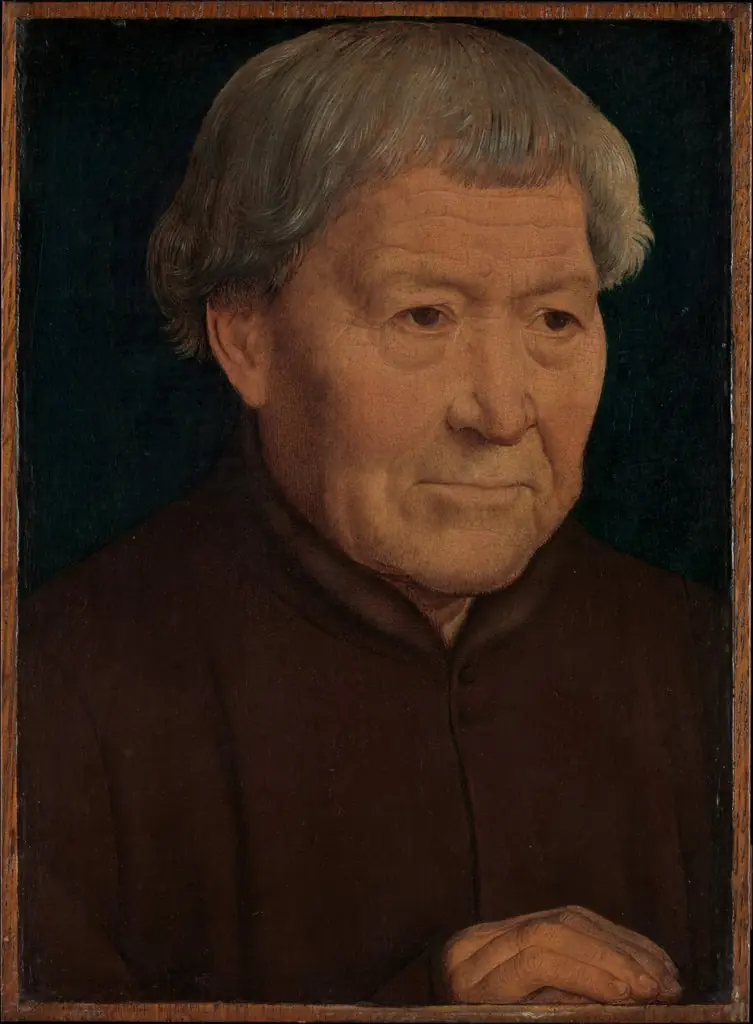 Portrait of an old man
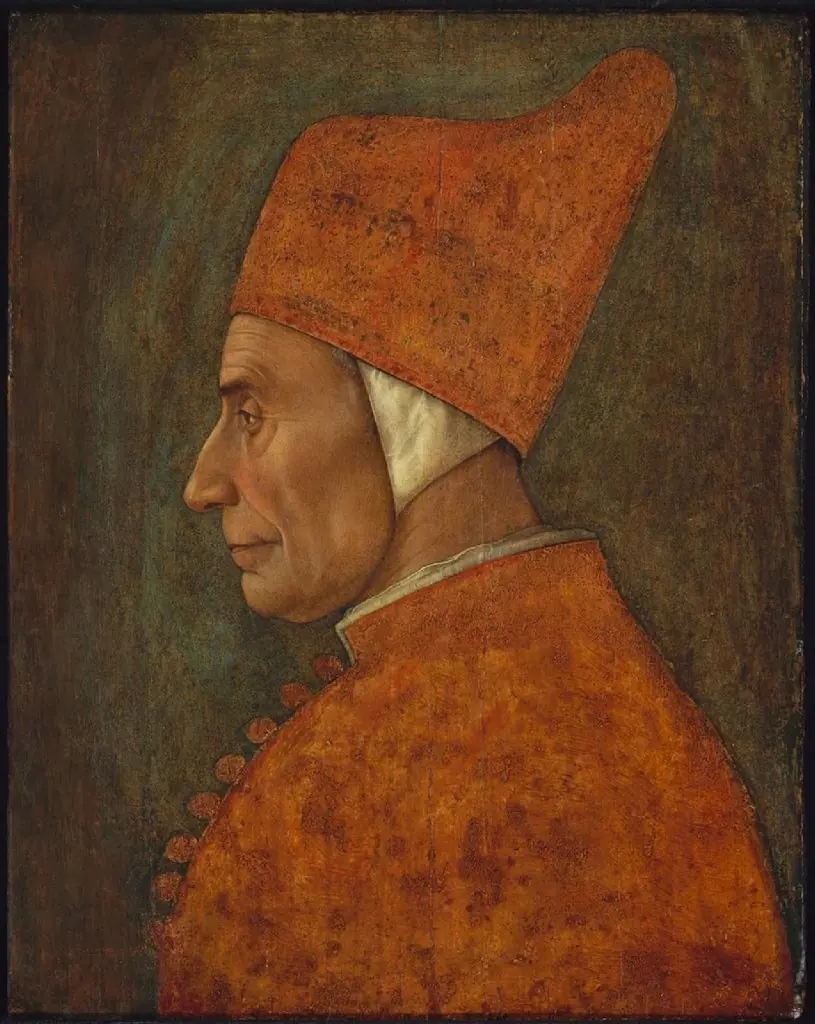 Portrait of a Doge, probably Pasquale Malipiero
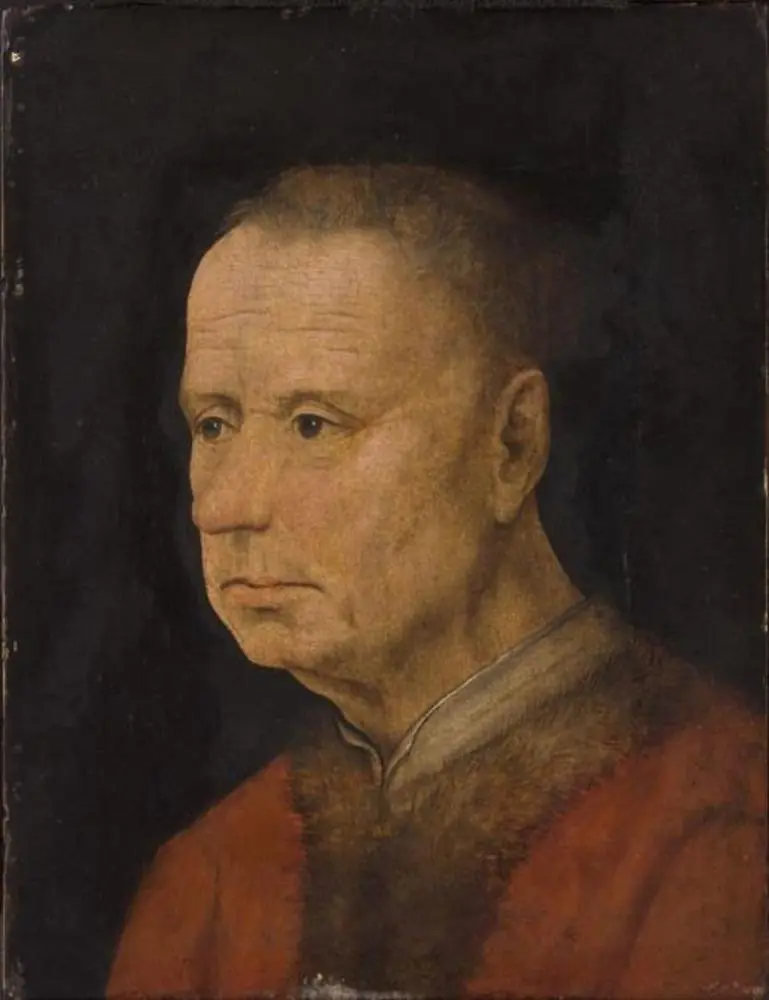 Portrait of a Man
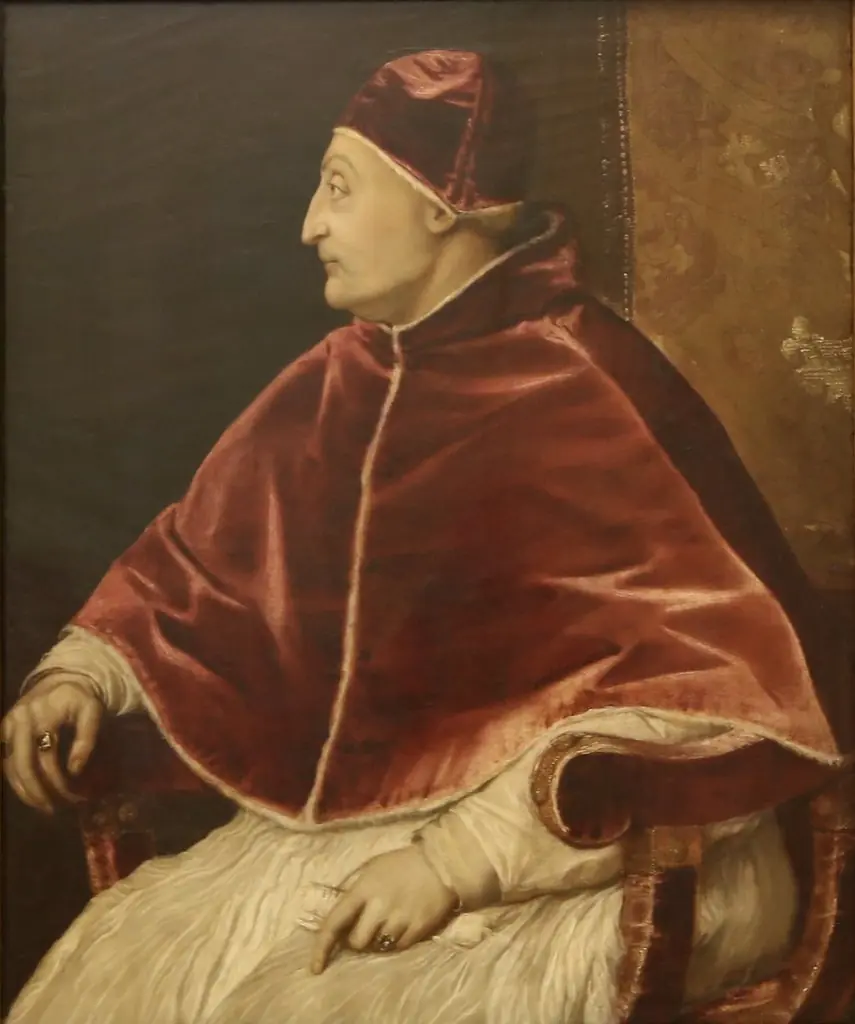 Portrait of Pope Sixtus IV
 Portrait of an Elderly Gentleman
 Pave Leo X og kardinalerne Ludovico de' Rossi og Giulio de' Medici. Kopi efter Rafael
 Portrait of Onophrius Scheit
 Portrait of Cardinal Ludovico Trevisan