Artwork
Portrait of Arent Franckensz van der Meer (?-1503), Lord of Papendrecht, nicknamed ‘malicious Aertje’
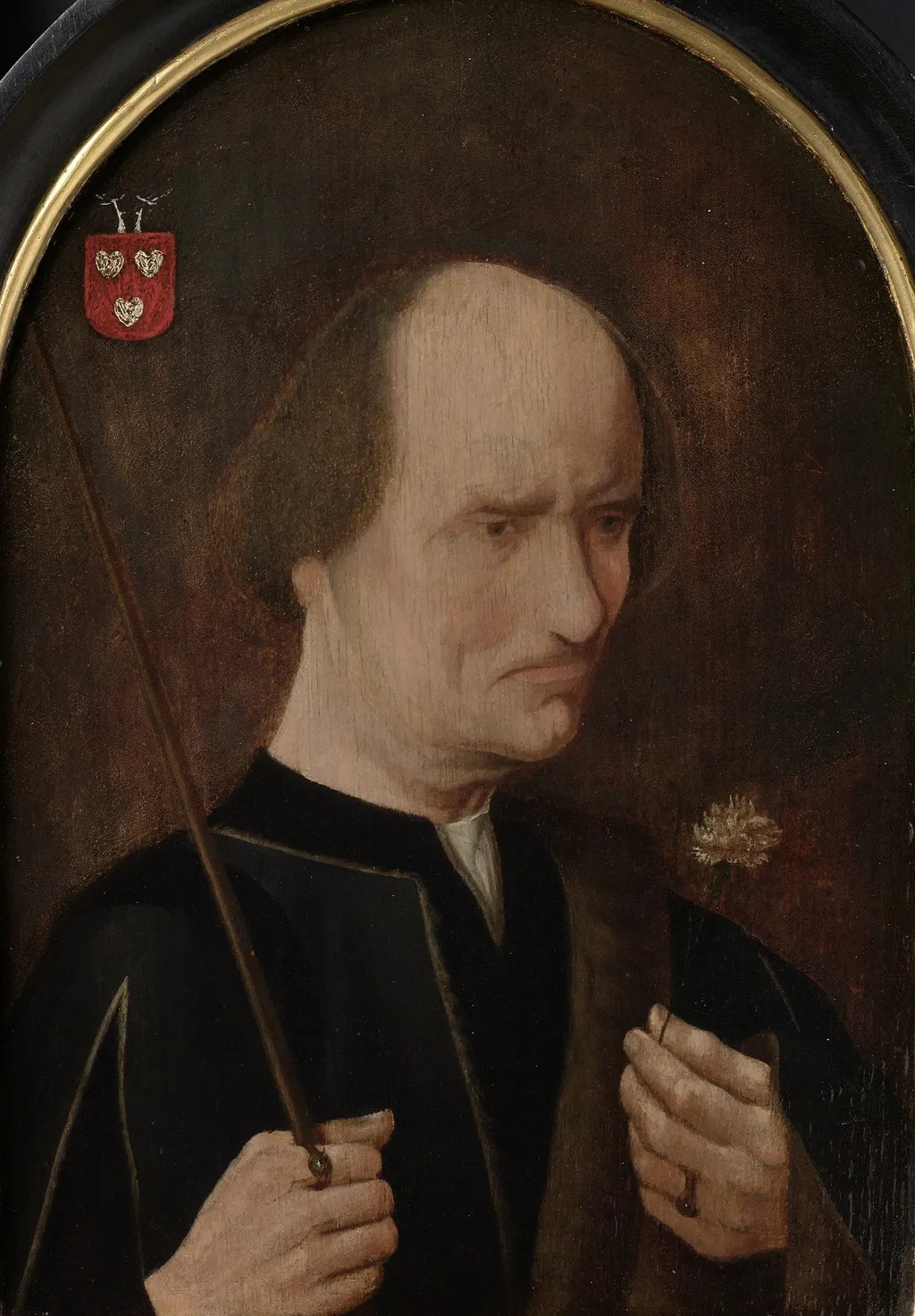
Portrait of Arent Franckensz van der Meer (?-1503), Lord of Papendrecht, nicknamed ‘malicious Aertje’ is an oil painting. It dates from 1550 and is held in the collection of the Rijksmuseum. The work is an oil painting portraying a balding gentleman in a dark robe, seated with his hands folded.
About this work
Subject & Meaning
The work depicts Arent Franckensz van der Meer (?–1503), Lord of Papendrecht, who was known by the nickname “malicious Aertje”. As a portrait, it presents the sitter as an individual male figure, emphasizing his personal identity and social status. The sources do not describe any additional iconographic elements or symbolic attributes beyond the representation of the man himself.
Technique & Style
The painting is dated to 1550 and classified as a portrait, with the medium recorded as oil paint and the support specified as panel.
The portrait is executed in oil paint on panel, a support combination typical of mid-sixteenth-century Netherlandish portraiture. According to the cataloguing data, the work measures 43 cm in height by 31.5 cm in width, presenting a modestly scaled, portrait-oriented panel suited to an intimate likeness. The painting is dated to 1550 and classified as a portrait, with the medium recorded as oil paint and the support specified as panel. No information is available in the provided sources regarding specific handling, brushwork, condition, or stylistic attributes.
History & Provenance
The portrait of Arent Franckensz van der Meer, Lord of Papendrecht, was created in 1550 using oil paint on a panel. The work is attributed to an anonymous artist and depicts the sitter, who died in 1503, several decades after his death. While the specific commissioning details and original ownership chain are not detailed in the available records, the painting has been part of the collection of the Rijksmuseum. The artwork measures 43 cm in height and 31.5 cm in width.
Context
The painting was created in 1550 and depicts Arent Franckensz van der Meer, a 16th-century Dutch nobleman known by the nickname 'malicious Aertje'. Executed in oil on panel, it measures 43 by 31.5 centimeters and belongs to the portrait genre. The work is part of the Rijksmuseum's collection and is cataloged as an anonymous painting within the institution's holdings.
Scholarship situates the portrait within the broader context of Dutch Renaissance portraiture, emphasizing its role in documenting elite identity and moral character through symbolic representation.
Overview
The work is an oil painting portraying a balding gentleman in a dark robe, seated with his hands folded. His expression is serious, bordering on a frown, and a small red shield bearing a white motif is attached near his shoulder. The composition emphasizes the figure against a dark background, drawing attention to his face and hands.
Artist & collection

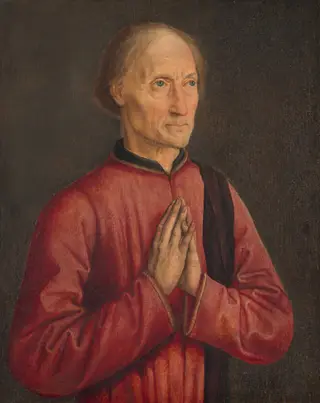
- Portrait of a Donor
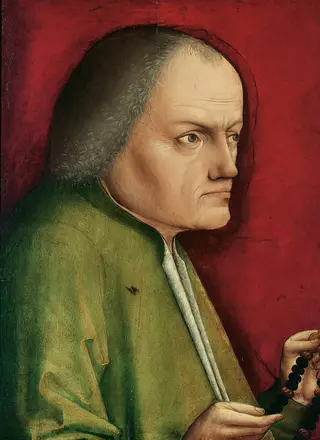 Bildnis Sigismund "der Münzreiche", Erzherzog von Tirol
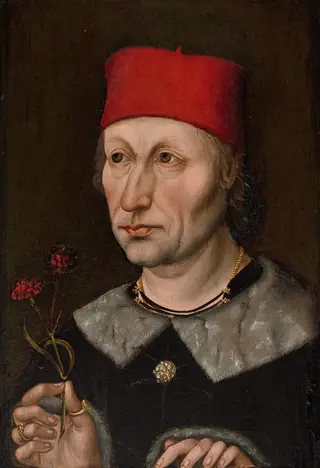 Man in a Red Cap Holding a Carnation
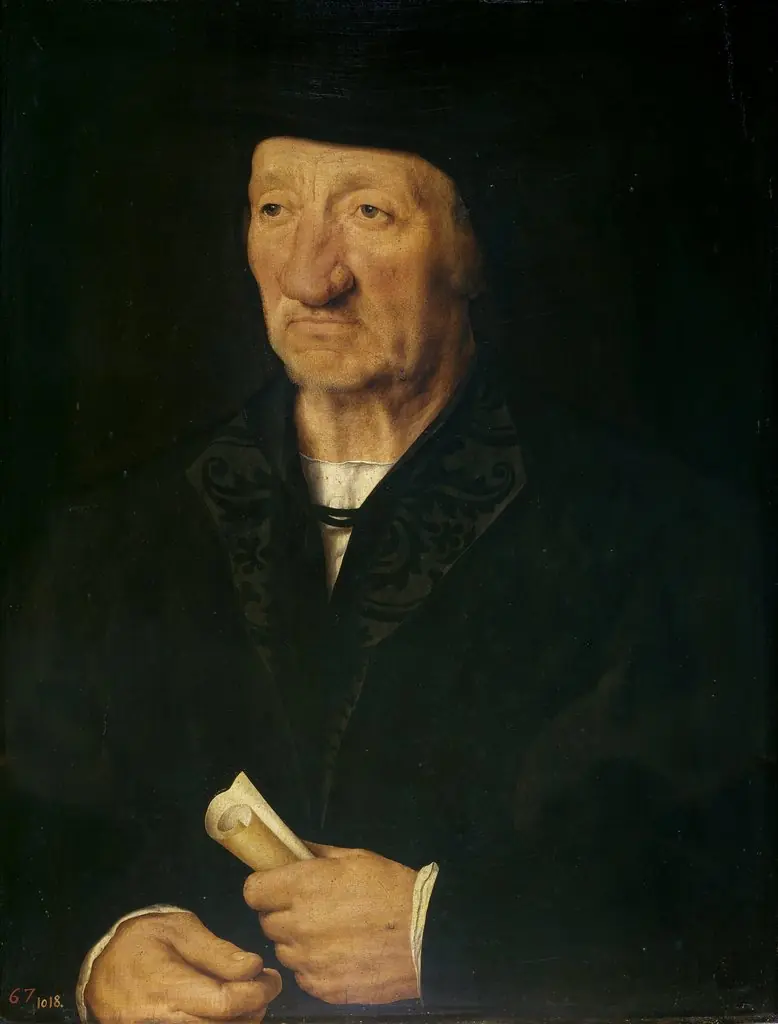 Portrait of an Old Man
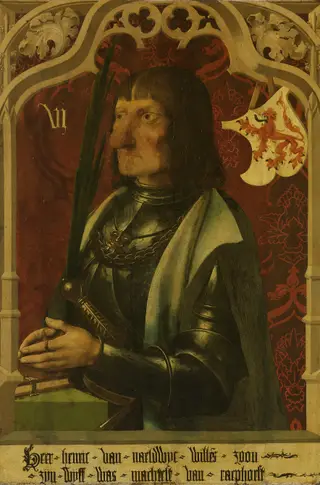 Portrait of Hendrik IV van Naaldwijk (c. 1430-96)
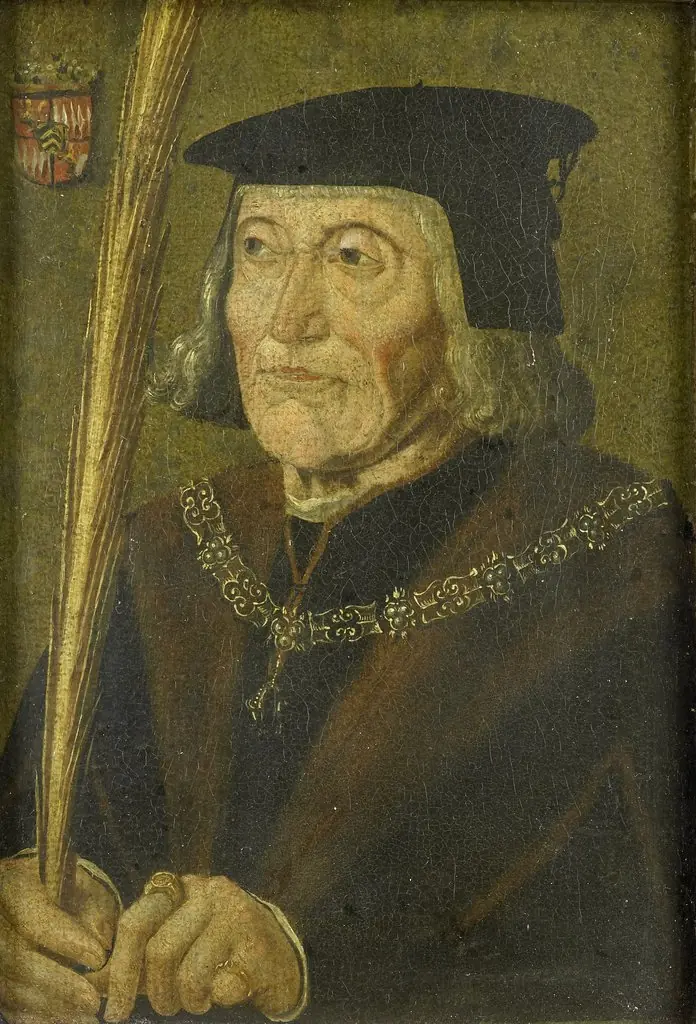 Portrait of Jan van Egmond (1438-1516), Count of Egmond
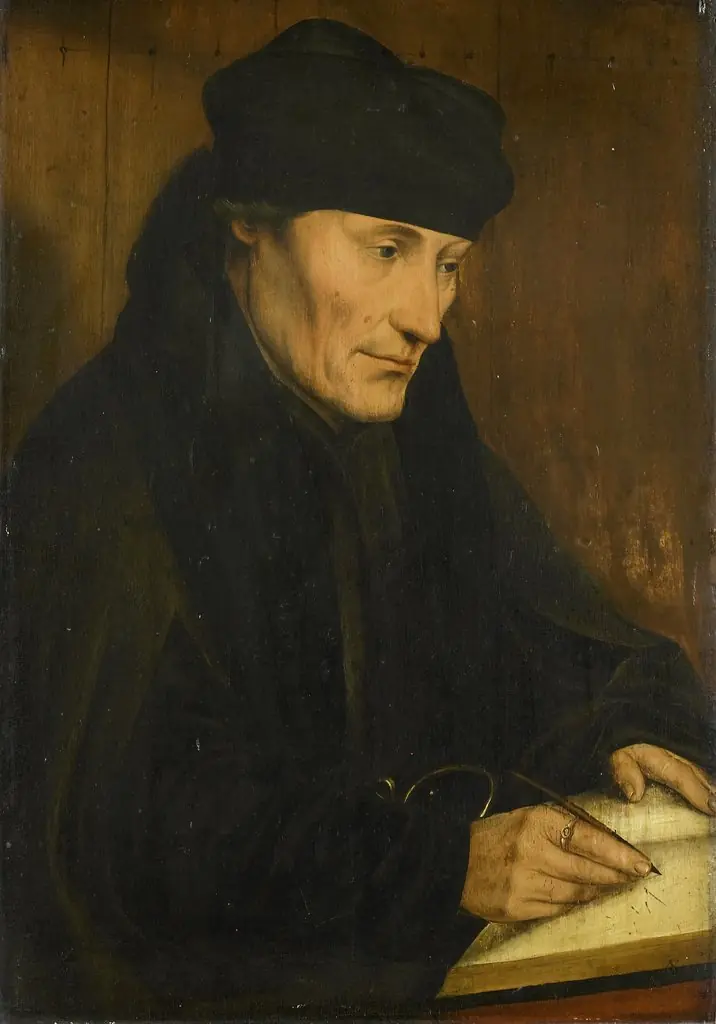 Portrait of Desiderius Erasmus (1469?-1536)
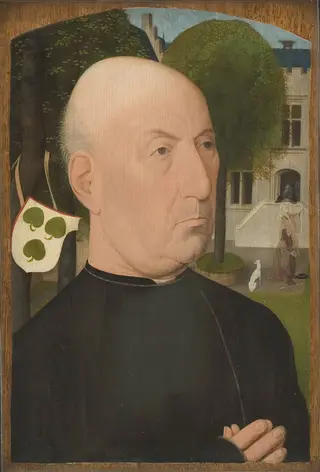 Portrait of Jacob Jansz van der Meer (?)
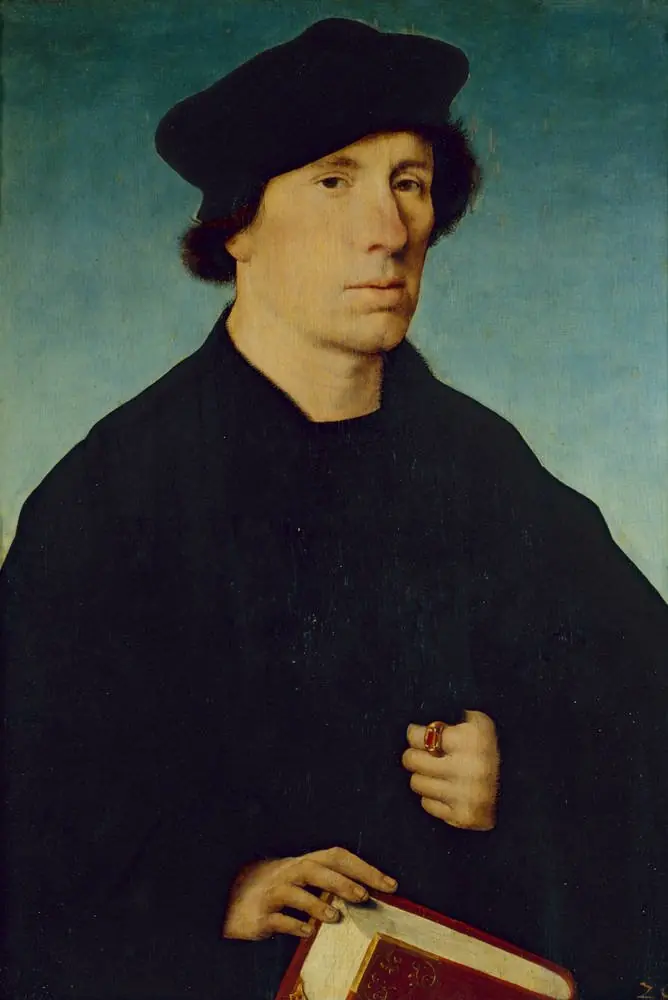 Portrait of a Beardless Man
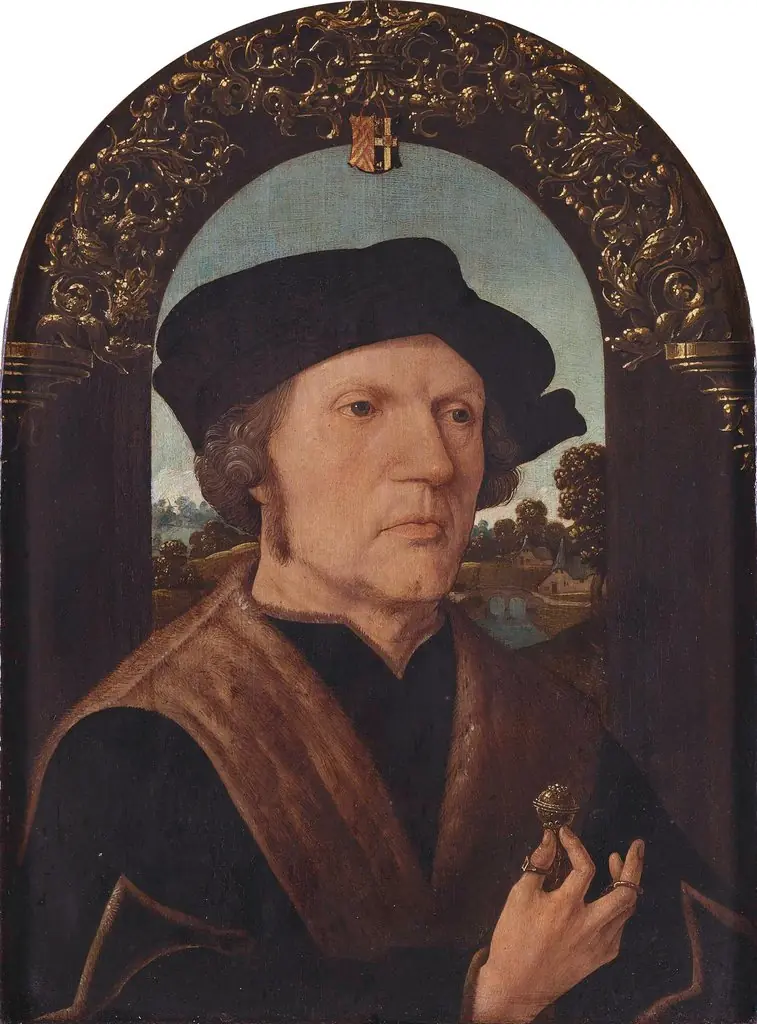 Portrait of Jan Gerritsz van Egmond van de Nijenburg (?-1523)
 Head of a Halberdier
 Portrait of Diego de Guevara (?)